Kirjojen hintavertailu. Mukana 12 595 353 kirjaa ja 12 kauppaa.

Kirjailija

Peter Giblin

Kirjat ja teokset yhdessä paikassa: 7 kirjaa, julkaisuja vuosilta 1993-2019, suosituimpien joukossa Local Features in Natural Images via Singularity Theory. Vertaile teosten hintoja ja tarkista saatavuus suomalaisista kirjakaupoista.

7 kirjaa

Kirjojen julkaisuhaarukka 1993-2019.

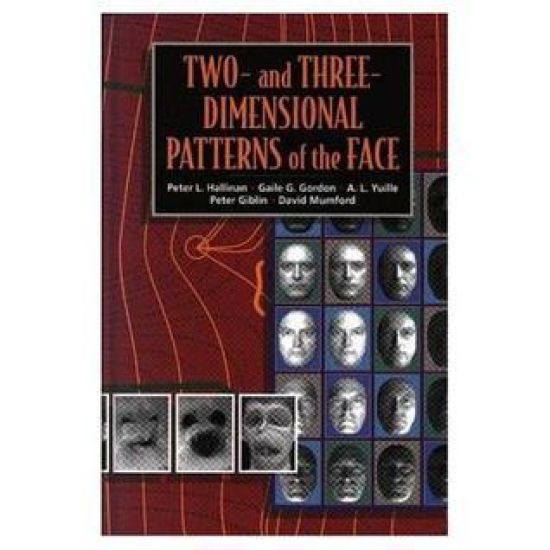
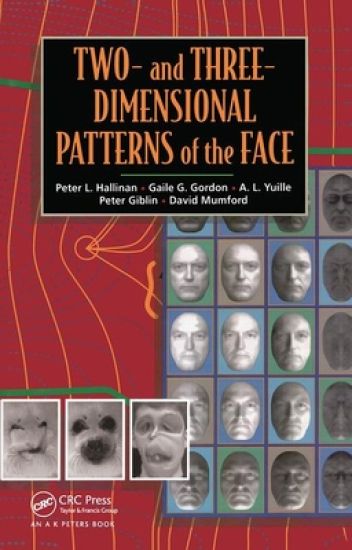
Two- and Three-Dimensional Patterns of the Face

Two- and Three-Dimensional Patterns of the Face

Peter W. Hallinan; Gaile Gordon; A. L. Yuille; Peter Giblin; David Mumford

CRC Press
2019
nidottu
The human face is perhaps the most familiar and easily recognized object in the world, yet both its three-dimensional shape and its two-dimensional images are complex and hard to characterize. This book develops the vocabulary of ridges and parabolic curves, of illumination eigenfaces and elastic warpings for describing the perceptually salient features of a face and its images. The book also explores the underlying mathematics and applies these mathematical techniques to the computer vision problem of face recognition, using both optical and range images.
Local Features in Natural Images via Singularity Theory

Local Features in Natural Images via Singularity Theory

James Damon; Peter Giblin; Gareth Haslinger

Springer International Publishing AG
2016
nidottu
This monograph considers a basic problem in the computer analysis of natural images, which are images of scenes involving multiple objects that are obtained by a camera lens or a viewer’s eye. The goal is to detect geometric features of objects in the image and to separate regions of the objects with distinct visual properties. When the scene is illuminated by a single principal light source, we further include the visual clues resulting from the interaction of the geometric features of objects, the shade/shadow regions on the objects, and the “apparent contours”. We do so by a mathematical analysis using a repertoire of methods in singularity theory. This is applied for generic light directions of both the “stable configurations” for these interactions, whose features remain unchanged under small viewer movement, and the generic changes which occur under changes of view directions. These may then be used to differentiate between objects and determine their shapes and positions.
Graphs, Surfaces and Homology

Graphs, Surfaces and Homology

Peter Giblin

Cambridge University Press
2010
pokkari
Homology theory is a powerful algebraic tool that is at the centre of current research in topology and its applications. This accessible textbook will appeal to mathematics students interested in the application of algebra to geometrical problems, specifically the study of surfaces (sphere, torus, Mobius band, Klein bottle). In this introduction to simplicial homology - the most easily digested version of homology theory - the author studies interesting geometrical problems, such as the structure of two-dimensional surfaces and the embedding of graphs in surfaces, using the minimum of algebraic machinery and including a version of Lefschetz duality. Assuming very little mathematical knowledge, the book provides a complete account of the algebra needed (abelian groups and presentations), and the development of the material is always carefully explained with proofs given in full detail. Numerous examples and exercises are also included, making this an ideal text for undergraduate courses or for self-study.
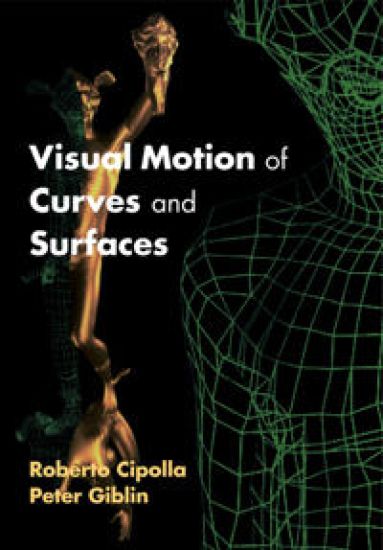
Visual Motion of Curves and Surfaces

Visual Motion of Curves and Surfaces

Roberto Cipolla; Peter Giblin

Cambridge University Press
2009
pokkari
Computer vision aims to detect and reconstruct features of surfaces from the images produced by cameras, in some way mimicking the way in which humans reconstruct features of the world around them by using their eyes. In this book the authors describe research in computer vision aimed at recovering the 3D shape of surfaces from image sequences of their 'outlines'. They provide all the necessary background in differential geometry (assuming knowledge of elementary algebra and calculus) and in the analysis of visual motion, emphasising intuitive visual understanding of the geometric techniques with computer-generated illustrations. They also give a thorough introduction to the mathematical techniques and the details of the implementations and apply the methods to data from real images using the most current techniques.
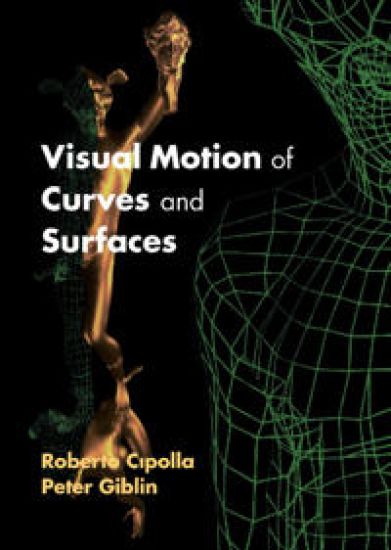
Visual Motion of Curves and Surfaces

Visual Motion of Curves and Surfaces

Roberto Cipolla; Peter Giblin

Cambridge University Press
1999
sidottu
Computer vision aims to detect and reconstruct features of surfaces from the images produced by cameras, in some way mimicking the way in which humans reconstruct features of the world around them by using their eyes. In this book the authors describe recent research in computer vision aimed at recovering the 3D shape of surfaces from image sequences of their ‘outlines’. They provide all the necessary background in differential geometry (assuming knowledge of elementary algebra and calculus) and in the analysis of visual motion, emphasising intuitive visual understanding of the geometric techniques with computer-generated illustrations. They also give a thorough introduction to the mathematical techniques and the details of the implementations, and apply the methods to data from real images using the most current techniques.
Two- and Three-Dimensional Patterns of the Face

Two- and Three-Dimensional Patterns of the Face

Peter W. Hallinan; Gaile Gordon; A. L. Yuille; Peter Giblin; David Mumford

A K Peters
1999
sidottu
The human face is perhaps the most familiar and easily recognized object in the world, yet both its three-dimensional shape and its two-dimensional images are complex and hard to characterize. This book develops the vocabulary of ridges and parabolic curves, of illumination eigenfaces and elastic warpings for describing the perceptually salient features of a face and its images. The book also explores the underlying mathematics and applies these mathematical techniques to the computer vision problem of face recognition, using both optical and range images.
Primes and Programming

Primes and Programming

P. J. Giblin; Peter Giblin

CAMBRIDGE UNIVERSITY PRESS_
1993
sidottu
Peter Giblin describes, in the context of an introduction to the theory of numbers, some of the more elementary methods for factorization and primality testing; that is, methods independent of a knowledge of other areas of mathematics. Indeed everything is developed from scratch so the mathematical prerequisites are minimal. An essential feature of the book is the large number of computer programs (written in Pascal) and a wealth of computational exercises and projects, in addition to more usual theory exercises. The theoretical development includes continued fractions and quadratic residues, directed always towards the two fundamental problems of primality testing and factorization. There is time, all the same, to include a number of topics and projects of a purely "recreational" nature.