Kirjojen hintavertailu. Mukana 12 595 353 kirjaa ja 12 kauppaa.

Kirjailija

Peter Goin

Kirjat ja teokset yhdessä paikassa: 12 kirjaa, julkaisuja vuosilta 2005-2022, suosituimpien joukossa Emerald Bay and Desolation Wilderness. Vertaile teosten hintoja ja tarkista saatavuus suomalaisista kirjakaupoista.

12 kirjaa

Kirjojen julkaisuhaarukka 2005-2022.

Peter Goin and the Photography of Environmental Change

Peter Goin and the Photography of Environmental Change

Cheryll Glotfelty; Peter Goin

TAYLOR FRANCIS LTD
2022
sidottu
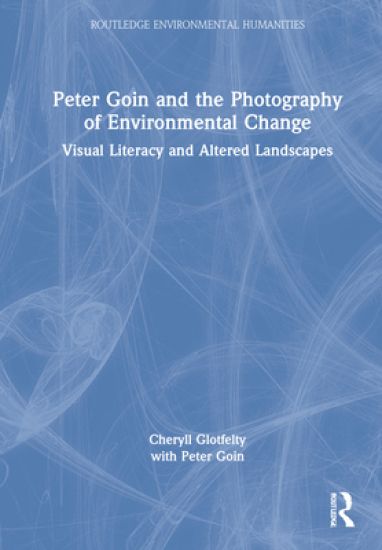
Peter Goin and the Photography of Environmental Change narrates the forty-year quest of award-winning and internationally exhibited contemporary photographer Peter Goin to document human-altered landscapes across America and beyond. It is a collaborative work between an artist and a literary critic, a retrospective of an accomplished environmental photographer, and an innovative education in visual reading. Enduring howling wind, pounding rain, and blistering sun, Goin bears witness to radioactive landscapes, abandoned mines, simulated swamps, rechanneled rivers, controlled burns, overgrown ruins, industrialized agriculture, shrinking reservoirs, feral spaces in the city, architected wilderness, sacred wastelands, contested borderlands, and more. Based on more than seventy hours of taped interviews with the artist spanning over a decade, trailblazing ecocritic Cheryll Glotfelty narrates the arc of Goin's career, sharing excerpts from their conversations that reveal his brilliant mind and piquant personality while situating his work within the broader context of environmental thinkers. This beautifully illustrated volume, with 200 images in color and black-and-white showcasing Goin’s work, will be a fascinating and insightful read for upper-level students, academics, and researchers in photography, environmental history and culture, landscape studies, and environmental humanities.
Peter Goin and the Photography of Environmental Change

Peter Goin and the Photography of Environmental Change

Cheryll Glotfelty; Peter Goin

TAYLOR FRANCIS LTD
2022
nidottu
Peter Goin and the Photography of Environmental Change narrates the forty-year quest of award-winning and internationally exhibited contemporary photographer Peter Goin to document human-altered landscapes across America and beyond. It is a collaborative work between an artist and a literary critic, a retrospective of an accomplished environmental photographer, and an innovative education in visual reading. Enduring howling wind, pounding rain, and blistering sun, Goin bears witness to radioactive landscapes, abandoned mines, simulated swamps, rechanneled rivers, controlled burns, overgrown ruins, industrialized agriculture, shrinking reservoirs, feral spaces in the city, architected wilderness, sacred wastelands, contested borderlands, and more. Based on more than seventy hours of taped interviews with the artist spanning over a decade, trailblazing ecocritic Cheryll Glotfelty narrates the arc of Goin's career, sharing excerpts from their conversations that reveal his brilliant mind and piquant personality while situating his work within the broader context of environmental thinkers. This beautifully illustrated volume, with 200 images in color and black-and-white showcasing Goin’s work, will be a fascinating and insightful read for upper-level students, academics, and researchers in photography, environmental history and culture, landscape studies, and environmental humanities.
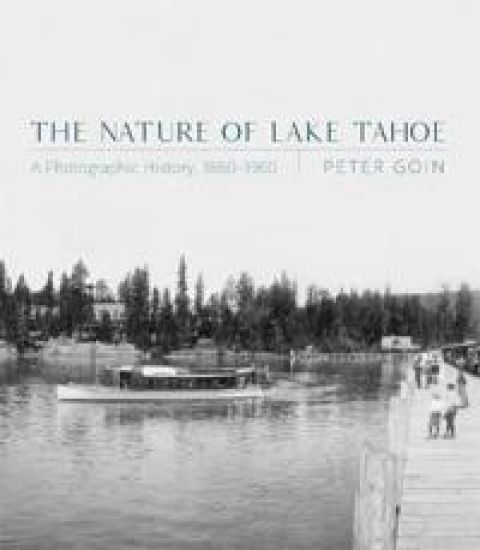
The Nature of Lake Tahoe

The Nature of Lake Tahoe

Peter Goin

University of New Mexico Press
2022
sidottu
The Sierra Nevada contains three national parks, twenty wilderness areas, and two national monuments. Lake Tahoe, the largest alpine lake in North America, is its crown jewel. A premier destination for tourists and environmentalists and the traditional home of the Washoe people, the history of Lake Tahoe and the Tahoe Basin is a complex mixture of geology, conquest and resettlement, industry, adventure, and grand vistas. Preserving this rich history through an extensive collection of archival images, Peter Goin presents a photographic history of the Tahoe Basin over a hundred-year period in The Nature of Lake Tahoe. With more than two hundred duotone and color photographs, this collection showcases Tahoe's elemental identity, including photographs never before reproduced and large-scale panoramic landscapes that appear in visually stunning gatefolds. Readers will be delighted by the many restored photographs that provide evidence that Lake Tahoe is what it is today in large part because of its dramatic visual history.
Emerald Bay and Desolation Wilderness

Emerald Bay and Desolation Wilderness

Peter Goin

Arcadia Publishing Library Editions
2018
sidottu
Emerald Bay sparkles as a diamond within the jeweled landscape known as Lake Tahoe. Designated a California State Park in 1953 and a National Natural Landmark in 1968, Emerald Bay is one of the most photographed landscapes in the Sierra, featuring California's first underwater park, dramatic Eagle Falls, and Lake Tahoe's only boat-in camp. Vikingsholm, nestled within the southwestern edge of the bay, is a 38-room mansion that is a dramatic example of historic Scandinavian architecture. A small stone teahouse steeped in fanciful lore is perched atop Emerald Bay's Fannette Island. The Desolation Wilderness, established in 1969, is one of the most popular wilderness-designated areas in the United States. The geographic area of the wilderness is just less than 100 square miles, includes 130 lakes scattered throughout the alpine topography, and contains countless waterfalls and streams intersecting the hiking trails and granite landscapes.
Dooby Lane

Dooby Lane

Gary Snyder; Peter Goin

Counterpoint
2016
sidottu
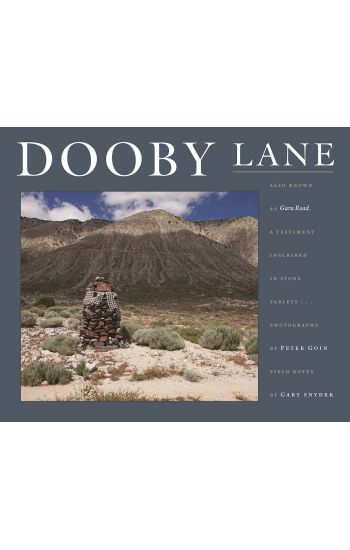
If left alone, what might a place say? If we must leave it, what must we leave behind? Guru Road, Dooby Lane. It was in this place where, nearly twenty years ago, Gary Snyder discovered, considered, and chronicled such latitudinal ruminations by way of one man, DeWayne  Dooby" Williams, and the coalesced stories and tributes which Williams faithfully etched upon granite, his elected canvas. When Snyder and his wife, Carole, were camping along the Black Rock playa, northwest of the Great Basin and northeast of the town of Gerlach, they deviated from their journey down a paved path to explore a little dirt road that glinted with intrigue. This spontaneous decision led Snyder to  this remarkable text of life and spirit" and to Williams who, retired and living with cancer, was creating the testament of a lifetime that which would transcend corporeal measures and touch the lives of countless people in endless moments for many years to come.DeWayne Williams created this work of Earth Art in the Black Rock desert, near the current site of the Burning Man gathering. This full-color book presents a series of photographs by Peter Goin, accompanied by the prose and poetry of Gary Snyder.
Time & Time Again

Time & Time Again

Peter Goin; Lucy R Lippard

Museum of New Mexico Press
2015
sidottu
This book is a visual exploration of Ancestral Pueblo sites at Chacon Canyon and its extension throughout the San Juan Basin into the northern reaches of Mesa Verde. Pairing early photographs of the Chacoan world with contemporary rephotographic images, Goin sets out to examine how "ruins", which J B Jackson famously wrote bring a sense of time scale to the landscape, are constructed and interpreted according to cultural ideas held by archaeologists and preservationists bound by the limits of their disciplines and sense of cultural ownership. The book asks, "why save things, and what should be saved"? Lucy R Lippard's detailed text draws on the vast literature and ongoing research on the so-called "mysteries" of Chaco. Conflicting narratives stem from the differing ways time is measured in different cultures -- astronomically, historically, and environmentally. The stories that have come down from the many Native nations that are heirs to the Chaco and Mesa Verde worlds (Including Keres, Zuni, Tewa, Navajo and Ute) are juxtaposed, like the photographs, against the "scientific" views of those who control the sites and the literature today, raising the question of cultural ownership. Whose story is it to tell? To whom does the past belong? Time and Time Again offers a kaleidoscopic view, considering the multiple truths that are known and can be hypothesised about Chaco and Mesa Verde. The juxtaposition of historical photographs with contemporary images attempts to go beneath the surface to investigate the role of time in archaeological sites, especially those that have been "preserved" and reconstructed. The idea that two photographs can stop time without considering the intervening years is intriguing. The photographs -- primarily from the period of the late 19th century through the 1930s -- and rephotographed by Peter Goin provide two arbitrary points, paralleling the equally arbitrary choices made by historic preservationists working on ancient sites. The rephotograph shows what has happened but gives no hint about the interim or causes. Photography and tourism add another layer to the disjunctions between what is known and what is told. Another factor is an inquiry into how we measure time in these places -- astronomically, historically, as a narrative of natural change, and through stories told by generations of Hopi, Navajo, Keres and Tewa Pueblo people, who are variously heirs to the sites and the cultures. There is also the question of cultural "ownership". Whose story is it to tell? Whose ancestors built these structures and lived there? To whom does the past belong?
Lake Tahoe: A Maritime History

Lake Tahoe: A Maritime History

Peter Goin

Arcadia Publishing (SC)
2012
nidottu
Lake Tahoe's legendary scenic beauty is witnessed annually by millions of visitors. While the lake's first sighting (in 1843) by a nonnative was made from a mountain peak, the lake's maritime history began a scant seven years later. Although most of the early steamers were designed for industrial use, the sight of a boat venturing out into the vast, deep blue expanse of Lake Tahoe attracted the attention of residents and visitors alike. After the inevitable decline of extractive industries, tourism became the main economic engine in Lake Tahoe. The steamer era and the evolution of wooden-boat racing are celebrated today by the romantic races of the two paddle wheelers and the annual Concours d'Elegance boat show.
Field Guide to California Agriculture

Field Guide to California Agriculture

Paul Starrs; Peter Goin

University of California Press
2010
pokkari
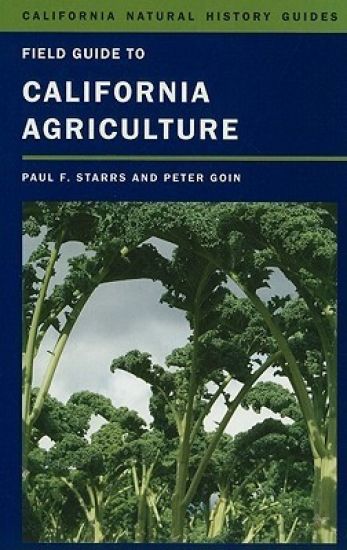
Anyone who travels California's byways sees the many faces of agriculture. A huge entwined business, farming and ranching are the state's dominant land use. Yet few Californians understand what animals and crops are raised or how agriculture reflects our relationship with nature. This fascinating and gorgeously illustrated field guide gathers essential information about agriculture and its environmental context, and answers the perennial question posed by California travelers: 'What is that, and why is it growing here?'. Paul F. Starrs' lively text explores the full range of the state's agriculture, deftly balancing agribusiness triumphalism with the pride of boutique producers, sketching meanwhile the darker shadows that can envelop California farming. Documented with diverse maps and Peter Goin's insightful photographs, "A Field Guide to California Agriculture" captures the industry's energy and ingenuity and its wildly diverse iconography, from the mysteries of forbidden crops (like marijuana) to the majesties of scale in food production.
South Lake Tahoe

South Lake Tahoe

Peter Goin

Arcadia Publishing (SC)
2010
nidottu
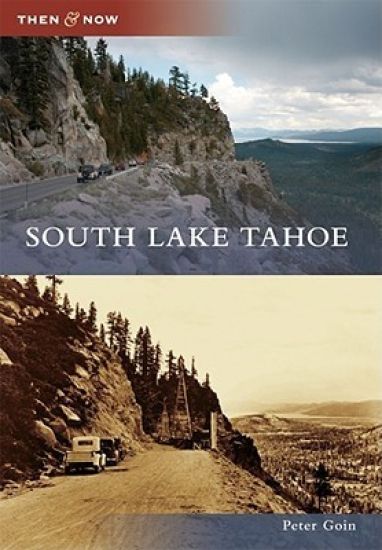
Known for its stunning surroundings, South Lake Tahoe has changed dramatically since its industrial-logging beginnings to today's tourist destination and mountain setting of natural splendor.
Lake Tahoe

Lake Tahoe

Peter Goin

Arcadia Publishing (SC)
2005
nidottu
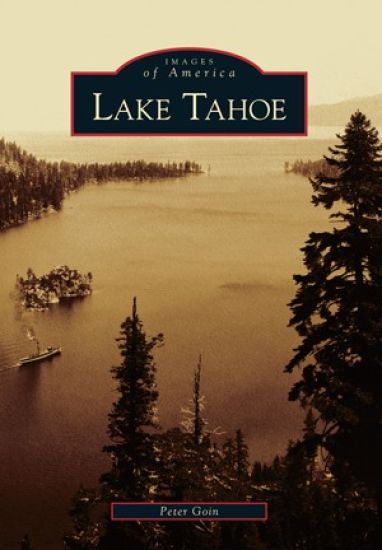
The Washoe Indians called it Tah-ve, an unfathomable liquid sapphire set in a 500 square-mile watershed of alpine snow and ice. Too deep and vast to freeze, Lake Tahoe's waters have, over time, reflected pristine forests, barren hillsides littered with slash and sawdust, managed restoration, and the glow of neon casino marquees. Its spectacular natural landscape, shared by both California and Nevada, is more designed than people realize. Humans transformed most of the old trees into mine shafts and cities. When the railroad, and later the automobile, domesticated the lake, putting it within recreational reach of the middle class, much of Lake Tahoe's shore became a managed wilderness. Its location along a political border created a unique merger of naturalist and gaming economies.