Kirjojen hintavertailu. Mukana 12 595 353 kirjaa ja 12 kauppaa.

Kirjailija

Peter Grose

Kirjat ja teokset yhdessä paikassa: 7 kirjaa, julkaisuja vuosilta 2001-2019, suosituimpien joukossa A Good Place to Hide: How One French Community Saved Thousands of Lives in World War II. Vertaile teosten hintoja ja tarkista saatavuus suomalaisista kirjakaupoista.

7 kirjaa

Kirjojen julkaisuhaarukka 2001-2019.

A Good Place to Hide: How One French Community Saved Thousands of Lives in World War II
Nobody asked questions, nobody demanded money. Villagers lied, covered up, procrastinated, and concealed, but most importantly they welcomed.This is the story of an isolated community in the upper reaches of the Loire Valley that conspired to save the lives of 3,500 Jews under the noses of the Germans and the soldiers of Vichy France. It is the story of an eighteen-year-old Jewish boy from Nice who forged 5,000 sets of false identity papers to save other Jews and French Resistance fighters from the Nazi concentration camps. And it is the story of a community of good men and women who offered sanctuary, kindness, solidarity and hospitality to people in desperate need, knowing full well the consequences to themselves.Powerful and richly told, A Good Place to Hide speaks to the goodness and courage of ordinary people in extraordinary circumstances.
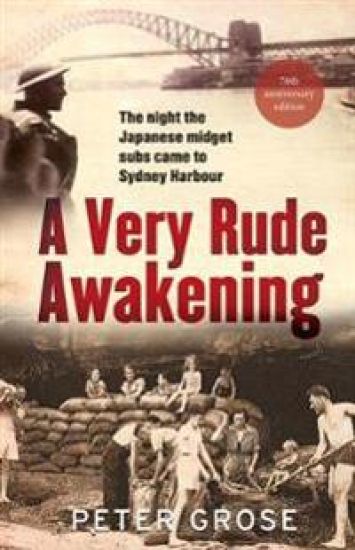
A Very Rude Awakening

A Very Rude Awakening

Peter Grose

Allen Unwin
2018
nidottu
On the night of 31 May 1942, Sydney was doing what it does best: partying. The theatres, restaurants, dance halls, illegal gambling dens, clubs and brothels offered plenty of choice to roistering sailors, soldiers and airmen on leave in Australia's most glamorous city. The war seemed far away. Newspapers devoted more pages to horse racing than to Hitler.That Sunday night the party came to a shattering halt when three Japanese midget submarines crept into the harbour, past eight electronic indicator loops, past six patrolling Royal Australian Navy ships, and past an anti-submarine net stretched across the inner harbour entrance. Their arrival triggered a night of mayhem, courage, chaos and high farce which left 27 sailors dead and a city bewildered. The war, it seemed, was no longer confined to distant desert and jungle. It was right here at Australia's front door.Written at the pace of a thriller and based on new first person accounts and previously unpublished official documents, A Very Rude Awakening is a ground-breaking and myth-busting look at one of the most extraordinary stories ever told of Australia at war.
After the Roundup

After the Roundup

Joseph Weismann; Thomas Keneally; Peter Grose

Indiana University Press
2017
sidottu
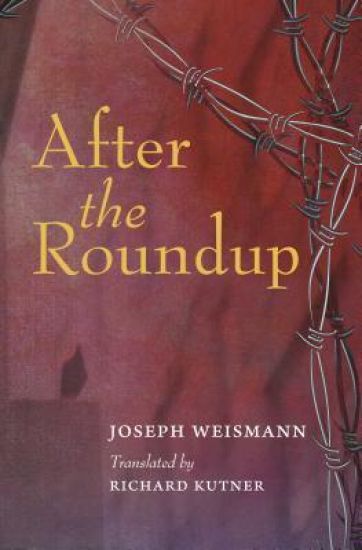
On the nights of July 16 and 17, 1942, French police rounded up eleven-year-old Joseph Weismann, his family, and 13,000 other Jews. After being held for five days in appalling conditions in the Vélodrome d'Hiver stadium, Joseph and his family were transported by cattle car to the Beaune-la-Rolande internment camp and brutally separated: all the adults and most of the children were transported on to Auschwitz and certain death, but 1,000 children were left behind to wait for a later train. The French guards told the children left behind that they would soon be reunited with their parents, but Joseph and his new friend, Joe Kogan, chose to risk everything in a daring escape attempt. After eluding the guards and crawling under razor-sharp barbed wire, Joseph found freedom. But how would he survive the rest of the war in Nazi-occupied France and build a life for himself? His problems had just begun. Until he was 80, Joseph Weismann kept his story to himself, giving only the slightest hints of it to his wife and three children. Simone Veil, lawyer, politician, President of the European Parliament, and member of the Constitutional Council of France—herself a survivor of Auschwitz—urged him to tell his story. In the original French version of this book and in Roselyne Bosch's 2010 film La Rafle, Joseph shares his compelling and terrifying story of the Roundup of the Vél' d'Hiv and his escape. Now, for the first time in English, Joseph tells the rest of his dramatic story in After the Roundup.
After the Roundup

After the Roundup

Joseph Weismann; Thomas Keneally; Peter Grose

Indiana University Press
2017
pokkari
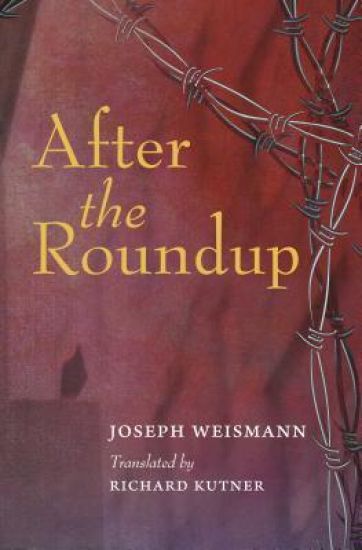
On the nights of July 16 and 17, 1942, French police rounded up eleven-year-old Joseph Weismann, his family, and 13,000 other Jews. After being held for five days in appalling conditions in the Vélodrome d'Hiver stadium, Joseph and his family were transported by cattle car to the Beaune-la-Rolande internment camp and brutally separated: all the adults and most of the children were transported on to Auschwitz and certain death, but 1,000 children were left behind to wait for a later train. The French guards told the children left behind that they would soon be reunited with their parents, but Joseph and his new friend, Joe Kogan, chose to risk everything in a daring escape attempt. After eluding the guards and crawling under razor-sharp barbed wire, Joseph found freedom. But how would he survive the rest of the war in Nazi-occupied France and build a life for himself? His problems had just begun. Until he was 80, Joseph Weismann kept his story to himself, giving only the slightest hints of it to his wife and three children. Simone Veil, lawyer, politician, President of the European Parliament, and member of the Constitutional Council of France—herself a survivor of Auschwitz—urged him to tell his story. In the original French version of this book and in Roselyne Bosch's 2010 film La Rafle, Joseph shares his compelling and terrifying story of the Roundup of the Vél' d'Hiv and his escape. Now, for the first time in English, Joseph tells the rest of his dramatic story in After the Roundup.
A Good Place to Hide

A Good Place to Hide

Peter Grose

Nicholas Brealey Publishing
2016
pokkari
During the occupation of France in WWII the villages around Le Chambon-sur-Lignon pulled off an astonishing and largely unknown feat. Risking everything, they underwent a long-running battle of nerves and daring to hide 5,000 men, women and children, 3,500 of them Jews, from the Nazis and their Vichy stooges. Despite the danger, a whole community rallied together, from the pacifist pastor who defied orders to the glamorous female agent with a wooden leg, from the 18-year-old master forger to the schoolgirl who ran suitcases stuffed with money for the Resistance.Told using first-hand testimonies of many of the survivors and face-to-face interviews conducted by the author, A Good Place to Hide is the thrilling story of ordinary people who thwarted the Nazis and sheltered strangers in desperate need.
Council on Foreign Relations at 75

Council on Foreign Relations at 75

Peter Grose

Brookings Institution
2006
pokkari
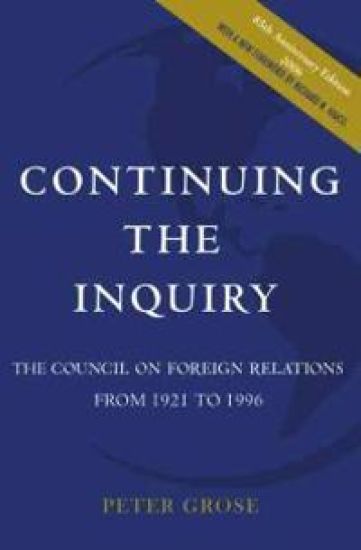
Heir to the academic think-tank called The Inquiry that prepared Woodrow Wilson for the Paris Peace Conference in 1919, the Council on Foreign Relations has ever since filled a unique and often controversial place in the history of America's 20th century. Private and nonpartisan, endowed and financed over the decades by invited members, the New York-based Council has been called an incubator of ideas. From its book-lined meeting rooms and the pages of its publication Foreign Affairs has come much of the most provocative thought about foreign policy since the isolationist era of the 1920s, through World War II and the Cold War--and now beyond. This fresh and informal history of the Council's first 75 years reflects the diverse voices of Council members, who have been influential in both political parties, all presidential administrations following Wilson's, and on competing sides of major issues. Records of Council meetings reveal spirited discord and dissent on the problems of the day: to enter the war against fascism or put America First, about ideology and economics in the containment of communism, the influence of nuclear weapons upon diplomacy, recognition of communist China, the American war in Vietnam, and now the shape of the post-Cold War international order. The Council in its deliberations mirrors, as well as defines, the competing options for the society at large.
Operation Rollback

Operation Rollback

Peter Grose

Mariner Books
2001
pokkari
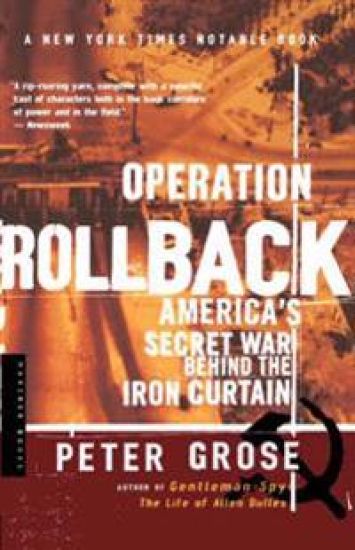
After the collapse of Nazi power in 1945, the United States and the Soviet Union started secretly mobilizing forces against each other, building intricate networks of spies and digging in for the postwar era." "America's secret action plan was known as Rollback, an audacious strategy of espionage, subversion, and sabotage to foment insurrection in the Soviet satellite countries. The architect of the plan, an enigmatic American diplomat first known to the world under the pseudonym "X," publicly advocated an effort to "contain" communism. But following his legendary Long Telegram, Mr. X - George Kennan - devised a program of active confrontation with the Soviets through covert action. Within the secret councils of the Truman administration, hidden from the public as well as from most of the government, Kennan and his colleagues set in motion a series of daring and dramatic, though ultimately failed, secret missions behind the Iron Curtain.