Kirjojen hintavertailu. Mukana 12 595 353 kirjaa ja 12 kauppaa.
Kirjailija
Peter Hacker
Kirjat ja teokset yhdessä paikassa: 8 kirjaa, julkaisuja vuosilta 2007-2024, suosituimpien joukossa Neurowissenschaft und Philosophie. Vertaile teosten hintoja ja tarkista saatavuus suomalaisista kirjakaupoista.
In this Beginner’s Guide, Peter Hacker, the leading authority on the philosophy of Wittgenstein and author of a dozen books on his work, introduces the later philosophy of Wittgenstein to those with an enquiring mind. It selects an array of topics that will capture the interest of all educated readers: the nature of language and linguistic meaning, the analysis of necessity and its roots in convention, the relation of thought and language, the nature of the mind and its relation to behavior, self-consciousness, and knowledge of other minds. No philosophical knowledge is presupposed – only curiosity and a willingness to shed prejudices. Written in a laid-back colloquial style and interspersed by dialogues between the author and questioners, the book is amusing and entertaining to read. Nothing comparable to this exists in the literature on Wittgenstein. Wittgenstein’s ideas are presented in all their profundity for the widest possible audience, in a style that is intellectually stimulating and provocative.
In this Beginner’s Guide, Peter Hacker, the leading authority on the philosophy of Wittgenstein and author of a dozen books on his work, introduces the later philosophy of Wittgenstein to those with an enquiring mind. It selects an array of topics that will capture the interest of all educated readers: the nature of language and linguistic meaning, the analysis of necessity and its roots in convention, the relation of thought and language, the nature of the mind and its relation to behavior, self-consciousness, and knowledge of other minds. No philosophical knowledge is presupposed – only curiosity and a willingness to shed prejudices. Written in a laid-back colloquial style and interspersed by dialogues between the author and questioners, the book is amusing and entertaining to read. Nothing comparable to this exists in the literature on Wittgenstein. Wittgenstein’s ideas are presented in all their profundity for the widest possible audience, in a style that is intellectually stimulating and provocative.
Peter Hacker’s Insight and Illusion is a thoroughly comprehensive examination of the evolution of Wittgenstein’s thought from the Tractatus to his later ‘mature’ phase. This is a reprint of the revised and corrected 1989 edition, with a new foreword by Constantine Sandis. Hacker’s book is now widely regarded as the best single volume study covering both the ‘early’ and the ‘later’ Wittgenstein. Until this third edition, the book had been out of print for 25 years.
Peter Hacker’s Insight and Illusion is a thoroughly comprehensive examination of the evolution of Wittgenstein’s thought from the Tractatus to his later ‘mature’ phase. This is a reprint of the revised and corrected 1989 edition, with a new foreword by Constantine Sandis. Hacker’s book is now widely regarded as the best single volume study covering both the ‘early’ and the ‘later’ Wittgenstein. Until this third edition, the book had been out of print for 25 years.
'Nothing is so difficult as not deceiving oneself' WittgensteinWittgenstein overturned centuries of philosophical reflection on the nature of 'the inner', of our subjective experience and of our knowledge of self and others. Traditional conceptions of 'the outer', of human behaviour, were equally distorted and so too was the relation between the inner and the outer.This highly accessible account offers an illuminating introduction to Wittgenstein's philosophy of mind and to his conception of philosophy, showing how Wittgenstein's examination of our use of words clarifies our notions of mind, body and behaviour.W&NNON-FICTIONPHILOSOPHYUK £3.99
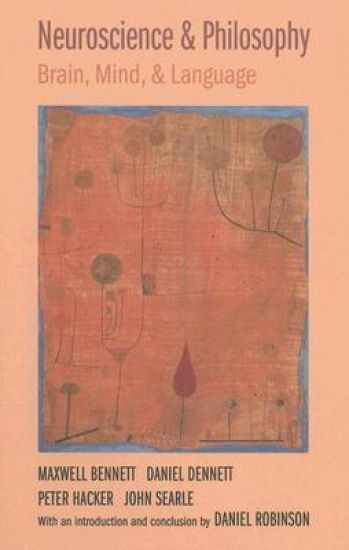
In Neuroscience and Philosophy three prominent philosophers and a leading neuroscientist clash over the conceptual presuppositions of cognitive neuroscience. The book begins with an excerpt from Maxwell Bennett and Peter Hacker's Philosophical Foundations of Neuroscience (Blackwell, 2003), which questions the conceptual commitments of cognitive neuroscientists. Their position is then criticized by Daniel Dennett and John Searle, two philosophers who have written extensively on the subject, and Bennett and Hacker in turn respond. Their impassioned debate encompasses a wide range of central themes: the nature of consciousness, the bearer and location of psychological attributes, the intelligibility of so-called brain maps and representations, the notion of qualia, the coherence of the notion of an intentional stance, and the relationships between mind, brain, and body. Clearly argued and thoroughly engaging, the authors present fundamentally different conceptions of philosophical method, cognitive-neuroscientific explanation, and human nature, and their exchange will appeal to anyone interested in the relation of mind to brain, of psychology to neuroscience, of causal to rational explanation, and of consciousness to self-consciousness. In his conclusion Daniel Robinson (member of the philosophy faculty at Oxford University and Distinguished Professor Emeritus at Georgetown University) explains why this confrontation is so crucial to the understanding of neuroscientific research. The project of cognitive neuroscience, he asserts, depends on the incorporation of human nature into the framework of science itself. In Robinson's estimation, Dennett and Searle fail to support this undertaking; Bennett and Hacker suggest that the project itself might be based on a conceptual mistake. Exciting and challenging, Neuroscience and Philosophy is an exceptional introduction to the philosophical problems raised by cognitive neuroscience.
In Neuroscience and Philosophy three prominent philosophers and a leading neuroscientist clash over the conceptual presuppositions of cognitive neuroscience. The book begins with an excerpt from Maxwell Bennett and Peter Hacker's Philosophical Foundations of Neuroscience (Blackwell, 2003), which questions the conceptual commitments of cognitive neuroscientists. Their position is then criticized by Daniel Dennett and John Searle, two philosophers who have written extensively on the subject, and Bennett and Hacker in turn respond. Their impassioned debate encompasses a wide range of central themes: the nature of consciousness, the bearer and location of psychological attributes, the intelligibility of so-called brain maps and representations, the notion of qualia, the coherence of the notion of an intentional stance, and the relationships between mind, brain, and body. Clearly argued and thoroughly engaging, the authors present fundamentally different conceptions of philosophical method, cognitive-neuroscientific explanation, and human nature, and their exchange will appeal to anyone interested in the relation of mind to brain, of psychology to neuroscience, of causal to rational explanation, and of consciousness to self-consciousness. In his conclusion Daniel Robinson (member of the philosophy faculty at Oxford University and Distinguished Professor Emeritus at Georgetown University) explains why this confrontation is so crucial to the understanding of neuroscientific research. The project of cognitive neuroscience, he asserts, depends on the incorporation of human nature into the framework of science itself. In Robinson's estimation, Dennett and Searle fail to support this undertaking; Bennett and Hacker suggest that the project itself might be based on a conceptual mistake. Exciting and challenging, Neuroscience and Philosophy is an exceptional introduction to the philosophical problems raised by cognitive neuroscience.