Kirjojen hintavertailu. Mukana 12 152 606 kirjaa ja 12 kauppaa.

Kirjailija

Peter Hall

Kirjat ja teokset yhdessä paikassa: 66 kirjaa, julkaisuja vuosilta 1982-2026, suosituimpien joukossa Ductor Vindogladieusis, An Historical And Descriptive Guide To The Town Of Wimborne-minster [by P. Hall.]. Vertaile teosten hintoja ja tarkista saatavuus suomalaisista kirjakaupoista.

66 kirjaa

Kirjojen julkaisuhaarukka 1982-2026.

Cost Effectiveness Modelling for Health Technology Assessment

Cost Effectiveness Modelling for Health Technology Assessment

Richard Edlin; Christopher McCabe; Claire Hulme; Peter Hall; Judy Wright

Adis
2015
sidottu
This book provides an introduction to decision analytic cost-effectiveness modelling, giving the theoretical and practical knowledge required to design and implement analyses that meet the methodological standards of health technology assessment organisations. The book guides you through building a decision tree and Markov model and, importantly, shows how the results of cost-effectiveness analyses are interpreted.Given the complex nature of cost-effectiveness modelling and the often unfamiliar language that runs alongside it, we wanted to make this book as accessible as possible whilst still providing a comprehensive, in-depth, practical guide that reflects the state of the art – that includes the most recent developments in cost-effectiveness modelling. Although the nature of cost effectiveness modelling means that some parts are inevitably quite technical, across the 13 chapters we have broken down explanations of theory and methods into bite-sized pieces that you can work through at your own pace; we have provided explanations of terms and methods as we use them. Importantly, the exercises and online workbooks allow you to test your skills and understanding as you go along.
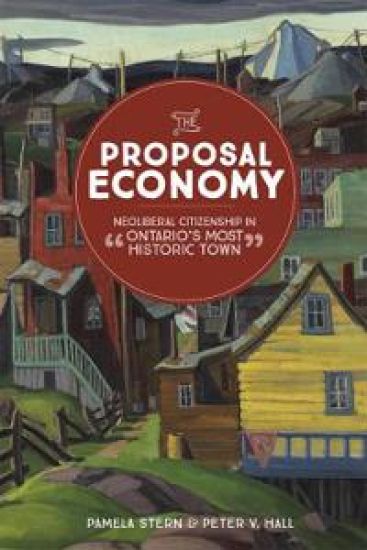
The Proposal Economy

The Proposal Economy

Pamela Stern; Peter Hall

University of British Columbia Press
2015
pokkari
In 2001 the northern Ontario town of Cobalt won a competition to be named the province's "Most Historic Town." This honour, though purely symbolic, came as Cobalters were also applying for and winning federal and provincial development grants to remake this once important silver mining centre as a destination for mining heritage tourism.This book, based on extended ethnographic and multi-method research in Cobalt, examines the multiple ways that development proposal writing is intertwined with neoliberal citizenship. Under current forms of neoliberal governance, proposal making and applying for grants have become normalized activities for individuals, non-profit organizations, schools, and municipalities. The authors argue that the residents of Cobalt have become entrenched in a "proposal economy," a system that empowers them to imagine, engage, and propose but not to count on the state to provide certain services.The Proposal Economy makes an empirical and theoretical contribution to the literature on citizenship and neoliberal governance. In addition to the detailed and nuanced ethnography, it provides new perspectives on the ways that citizenship is produced and reproduced under conditions of neoliberalism.
The Proposal Economy

The Proposal Economy

Pamela Stern; Peter Hall

University of British Columbia Press
2015
sidottu
In 2001 the northern Ontario town of Cobalt won a competition to be named the province's "Most Historic Town." This honour, though purely symbolic, came as Cobalters were also applying for and winning federal and provincial development grants to remake this once important silver mining centre as a destination for mining heritage tourism.This book, based on extended ethnographic and multi-method research in Cobalt, examines the multiple ways that development proposal writing is intertwined with neoliberal citizenship. Under current forms of neoliberal governance, proposal making and applying for grants have become normalized activities for individuals, non-profit organizations, schools, and municipalities. The authors argue that the residents of Cobalt have become entrenched in a "proposal economy," a system that empowers them to imagine, engage, and propose but not to count on the state to provide certain services.The Proposal Economy makes an empirical and theoretical contribution to the literature on citizenship and neoliberal governance. In addition to the detailed and nuanced ethnography, it provides new perspectives on the ways that citizenship is produced and reproduced under conditions of neoliberalism.
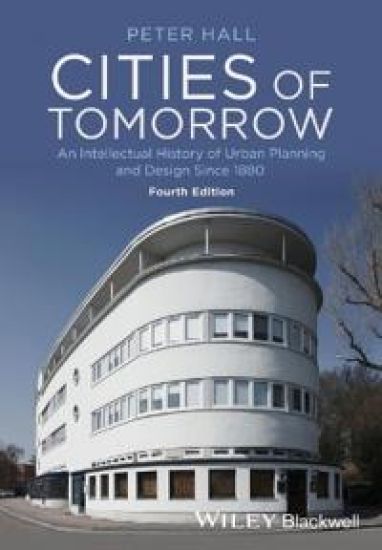
Cities of Tomorrow

Cities of Tomorrow

Peter Hall

JOHN WILEY AND SONS LTD
2014
nidottu
Peter Hall’s seminal Cities of Tomorrow remains an unrivalled account of the history of planning in theory and practice, as well as of the social and economic problems and opportunities that gave rise to it. Now comprehensively revised, the fourth edition offers a perceptive, critical, and global history of urban planning and design throughout the twentieth-century and beyond. A revised and updated edition of this classic text from one of the most notable figures in the field of urban planning and designOffers an incisive, insightful, and unrivalled critical history of planning in theory and practice, as well as of the underlying socio-economic challenges and opportunitiesComprehensively revised to take account of abundant new research published over the last decadeReviews the development of the modern planning movement over the entire span of the twentieth-century and beyondDraws on global examples throughout, and weaves the author’s own fascinating experiences into the text to illustrate this authoritative story of urban growth
Sociable Cities

Sociable Cities

Peter Hall; Colin Ward

Routledge
2014
sidottu
Peter Hall and Colin Ward wrote Sociable Cities to celebrate the centenary of publication of Ebenezer Howard’s To-morrow: A Peaceful Path to Real Reform in 1998 – an event they then marked by co-editing (with Dennis Hardy) the magnificent annotated facsimile edition of Howard’s original, long lost and very scarce, in 2003. In this revised edition of Sociable Cities, sadly now without Colin Ward, Peter Hall writes: ‘the sixteen years separating the two editions of this book seem almost like geological time. Revisiting the 1998 edition is like going back deep into ancient history’. The glad confident morning following Tony Blair’s election has been followed by political disillusionment, the fiscal crash, widespread austerity and a marked anti-planning stance on the part of the Coalition government.But – closely following the argument of Good Cities, Better Lives: How Europe discovered the Lost Art of Urbanism (Routledge 2013), to which this book is designed as a companion – Hall argues that the central message is now even stronger: we need more planning, not less. And this planning needs to be driven by broad, high-level strategic visions – national, regional – of the kind of country we want to see. Above all, Hall shows in the concluding chapters, Britain’s escalating housing crisis can be resolved only by a massive programme of planned decentralization from London, at least equal in scale to the great Abercrombie plan seventy years ago. He sets out a picture of great new city clusters at the periphery of South East England, sustainably self-sufficient in their daily patterns of living and working, but linked to the capital by new high-speed rail services.This is a book that every planner, and every serious student of policy-making, will want to read. Published at a time when the political parties are preparing their policy manifestos, it is designed to make a major contribution to a major national debate.
Sociable Cities

Sociable Cities

Peter Hall; Colin Ward

Routledge
2014
nidottu
Peter Hall and Colin Ward wrote Sociable Cities to celebrate the centenary of publication of Ebenezer Howard’s To-morrow: A Peaceful Path to Real Reform in 1998 – an event they then marked by co-editing (with Dennis Hardy) the magnificent annotated facsimile edition of Howard’s original, long lost and very scarce, in 2003. In this revised edition of Sociable Cities, sadly now without Colin Ward, Peter Hall writes: ‘the sixteen years separating the two editions of this book seem almost like geological time. Revisiting the 1998 edition is like going back deep into ancient history’. The glad confident morning following Tony Blair’s election has been followed by political disillusionment, the fiscal crash, widespread austerity and a marked anti-planning stance on the part of the Coalition government.But – closely following the argument of Good Cities, Better Lives: How Europe discovered the Lost Art of Urbanism (Routledge 2013), to which this book is designed as a companion – Hall argues that the central message is now even stronger: we need more planning, not less. And this planning needs to be driven by broad, high-level strategic visions – national, regional – of the kind of country we want to see. Above all, Hall shows in the concluding chapters, Britain’s escalating housing crisis can be resolved only by a massive programme of planned decentralization from London, at least equal in scale to the great Abercrombie plan seventy years ago. He sets out a picture of great new city clusters at the periphery of South East England, sustainably self-sufficient in their daily patterns of living and working, but linked to the capital by new high-speed rail services.This is a book that every planner, and every serious student of policy-making, will want to read. Published at a time when the political parties are preparing their policy manifestos, it is designed to make a major contribution to a major national debate.
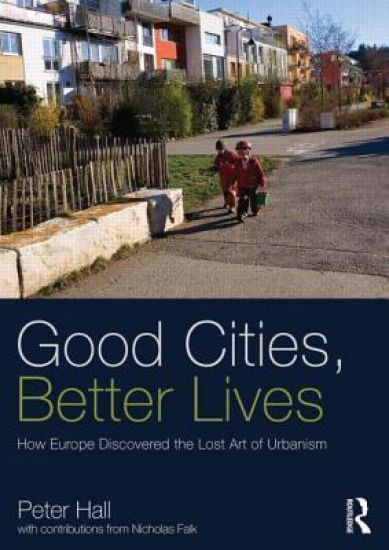
Good Cities, Better Lives

Good Cities, Better Lives

Peter Hall

Routledge
2013
sidottu
This book has one central theme: how, in the United Kingdom, can we create better cities and towns in which to live and work and play? What can we learn from other countries, especially our near neighbours in Europe? And, in turn, can we provide lessons for other countries facing similar dilemmas? Urban Britain is not functioning as it should. Social inequalities and regional disparities show little sign of going away. Efforts to generate growth, and spread it to the poorer areas of cities, have failed dismally. Much new urban development and redevelopment is not up to standard. Yet there are cities in mainland Europe, which have set new standards of high-quality sustainable urban development. This book looks at these best-practice examples – in Germany, the Netherlands, France and Scandinavia, – and suggests ways in which the UK and other countries could do the same.The book is in three parts. Part 1 analyses the main issues for urban planning and development – in economic development and job generation, sustainable development, housing policy, transport and development mechanisms – and probes how practice in the UK has fallen short. Part Two embarks on a tour of best-practice cities in Europe, starting in Germany with the country’s boosting of its cities’ economies, moving to the spectacularly successful new housing developments in the Netherlands, from there to France’s integrated city transport, then to Scandinavia’s pursuit of sustainability for its cities, and finally back to Germany, to Freiburg – the city that ‘did it all’. Part Three sums up the lessons of Part Two and sets out the key steps needed to launch a new wave of urban development and regeneration on a radically different basis.
Good Cities, Better Lives

Good Cities, Better Lives

Peter Hall

Routledge
2013
nidottu
This book has one central theme: how, in the United Kingdom, can we create better cities and towns in which to live and work and play? What can we learn from other countries, especially our near neighbours in Europe? And, in turn, can we provide lessons for other countries facing similar dilemmas? Urban Britain is not functioning as it should. Social inequalities and regional disparities show little sign of going away. Efforts to generate growth, and spread it to the poorer areas of cities, have failed dismally. Much new urban development and redevelopment is not up to standard. Yet there are cities in mainland Europe, which have set new standards of high-quality sustainable urban development. This book looks at these best-practice examples – in Germany, the Netherlands, France and Scandinavia, – and suggests ways in which the UK and other countries could do the same.The book is in three parts. Part 1 analyses the main issues for urban planning and development – in economic development and job generation, sustainable development, housing policy, transport and development mechanisms – and probes how practice in the UK has fallen short. Part Two embarks on a tour of best-practice cities in Europe, starting in Germany with the country’s boosting of its cities’ economies, moving to the spectacularly successful new housing developments in the Netherlands, from there to France’s integrated city transport, then to Scandinavia’s pursuit of sustainability for its cities, and finally back to Germany, to Freiburg – the city that ‘did it all’. Part Three sums up the lessons of Part Two and sets out the key steps needed to launch a new wave of urban development and regeneration on a radically different basis.
Antennas and Propagation for Body-Centric Wireless Communications, Second Edition
Get ready for the tidal wave of "body centric" electronic systems that will take mobile communications and computing to new heights! Now in a newly updated and revised edition, this timely resource provides you with complete and current details on the theory, design, and applications of wireless antennas for on-body electronic systems. The Second Edition offers readers brand new material on important developments like advances in physical phantom design and production, simulation methods and numerical phantoms, descriptions of methods for simulation of moving bodies, and the use of the body as a transmission channel. This cutting-edge volume brings practitioners the state-of-the-art in existing applications like Bluetooth headsets together with detailed treatment of techniques, tools, and challenges in developing on-body antennas for an array of medical, emergency response, law enforcement, personal entertainment, and military applications on the horizon. It covers on-body communication channels at microwave frequency and low frequency bands, as well as ultra wideband systems for WPANs and WBANs.This volume is indispensable to all engineers involved in designing, testing, and improving body-centric communication systems.
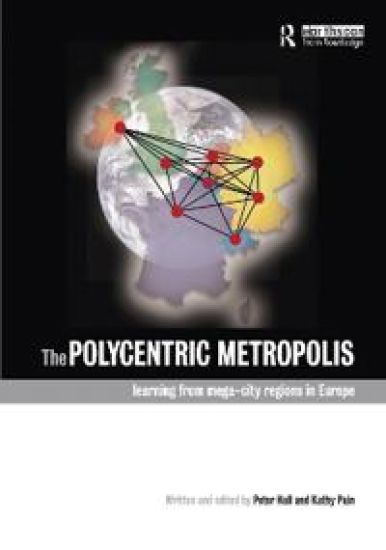
The Polycentric Metropolis

The Polycentric Metropolis

Peter Hall; Kathy Pain

Earthscan Ltd
2009
nidottu
A new 21st century urban phenomenon is emerging: the networked polycentric mega-city region. Developed around one or more cities of global status, it is characterized by a cluster of cities and towns, physically separate but intensively networked in a complex spatial division of labour. This book describes and analyses eight such regions in North West Europe. For the first time, this work shows how businesses interrelate and communicate in geographical space - within each region, between them, and with the wider world. It goes on to demonstrate the profound consequences for spatial planning and regional development in Europe - and, by implication, other similar urban regions of the world. The Polycentric Metropolis introduces the concept of a mega-city region, analyses its characteristics, examines the issues surrounding regional identities, and discusses policy ramifications and outcomes for infrastructure, transport systems and regulation. Packed with high quality maps, case study data and written in a clear style by highly experienced authors, this will be an insightful and significant analysis suitable for professionals in urban planning and policy, environmental consultancies, business and investment communities, technical libraries, and students in urban studies, geography, economics and town/spatial planning.
Sagmeister: Made You Look

Sagmeister: Made You Look

Stefan Sagmeister; Peter Hall

Abrams
2009
nidottu
Just as film, art, music, and literature have the power to move people, Stefan Sagmeister's innovative work shows that graphic design, too, can cut to the emotional quick. His desire is to transform stale thinking, and Sagmeister: Made You Look does just that.Compelling, honest, and intensely personal, Made You Look covers 20 years of Sagmeister's graphic design. With a text by design historian Peter Hall and annotated with Sagmeister's own writing, the book features images from the studio archive, as well as specific influences and reference points for his projects and ideas. Fully illustrated with a red PVC slipcase and silver-gilded pages, this monograph is a compilation of practically all the work Sagmeister and his studio ever designed up to 2001, even the bad stuff
Peter Hall's 'Bacchai'

Peter Hall's 'Bacchai'

Jonathan Croall; Peter Hall

Oberon Books Ltd
2008
nidottu
"Bacchai is one of the top dozen plays ever written. Whenever it's performed, it seems extraordinarily timely. It's haunted me all my life.' Peter Hall After huge successes with Aeschylus' The Oresteia and Sophocles' The Oedipus Plays, Peter Hall turned to Bacchai, Euripides' powerful tragedy about the cult of Dionysus. On the National's Olivier stage he presented a stunningly imaginative production played in masks, using a new translation by Colin Teevan, with original music by Harrison Birtwhistle, and designs by Alison Chitty. Jonathan Croall observed the rehearsal process in minute detail, regularly interviewing the actors and creative team as the production moved from readthrough to preview. His book offers an intimate and absorbing picture of how a team of world-class theatrical talents brought one of the masterpieces of Greek theatre to the stage. This new edition includes an extra chapter on the production's visit to the ancient theatre of Epidaurus in Greece, and a new foreward by Peter Hall."