

Kirjailija
Peter Handke
Kirjat ja teokset yhdessä paikassa: 168 kirjaa, julkaisuja vuosilta 1969-2026, suosituimpien joukossa Noch einmal vom Neunten Land. Vertaile teosten hintoja ja tarkista saatavuus suomalaisista kirjakaupoista.
168 kirjaa
Kirjojen julkaisuhaarukka 1969-2026.


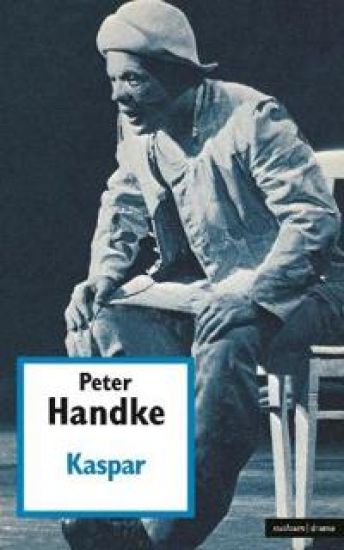
'Kaspar is based on the historical case of a 16-year-old boy who appeared from nowhere in Nuremberg in 1828 and who had to be taught to speak from scratch . . . Handke's play is a downright attack on the way language is used by a corrupt society to depersonalise the individual'. - Michael Billington, the Guardian.'Handke's most sustained study in social indoctrination . . . there could be no better introduction to Handke.' - Irving Wardle, The Times.Kaspar is the most extraordinary and impressive play to date by Peter Handke. First staged in Germany in 1968, it was hailed by Max Frisch as 'the play of the decade'. The central character is Kaspar, a figure based on the historical Kaspar Hauser, an autistic adolescent, who is guided and taught until he speaks 'normally', by the voices of unseen prompters. As the words begin to coincide with reality, Kaspar learns to manipulate both. In the latter part of the play the tension between the individual and 'the others' is further expressed through the image of the original Kaspar surrounded by a host of identical 'Kaspars'.Having chosen language as a vehicle, Peter Handke explores it as a means of oppression - a means of creating artificial uniformity by teaching people to comprehend the world only in terms of the speech patterns they are given.


Nobel Prize winner Peter Handke's first full-length drama, hailed in Europe as "the play of the decade" and compared in importance to Waiting for Godot Kaspar is the story of an autistic adolescent who finds himself at a complete existential loss on the stage, with but a single sentence to call his own. Drilled by prompters who use terrifyingly funny logical and alogical language-sequences, Kaspar learns to speak "normally" and eventually becomes creative--"doing his own thing" with words; for this he is destroyed. In Offending the Audience and Self-Accusation, one-character "speak-ins," Handke further explores the relationship between public performance and personal identity, forcing us to reconsider our sense of who we are and what we know.
