Kirjojen hintavertailu. Mukana 12 595 353 kirjaa ja 12 kauppaa.

Kirjailija

Peter Hore

Kirjat ja teokset yhdessä paikassa: 11 kirjaa, julkaisuja vuosilta 2009-2024, suosituimpien joukossa Bangor University - Physical Chemistry Pack. Vertaile teosten hintoja ja tarkista saatavuus suomalaisista kirjakaupoista.

11 kirjaa

Kirjojen julkaisuhaarukka 2009-2024.

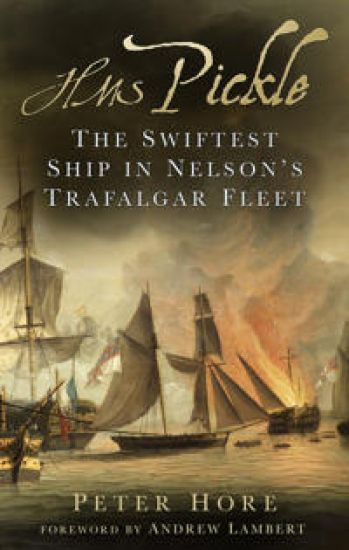
HMS Pickle

HMS Pickle

Peter Hore; Andrew Lambert

THE HISTORY PRESS LTD
2024
pokkari
The curiously named HMS Pickle was the second-smallest British ship in Nelson’s fleet at the Battle of Trafalgar. She acquired enduring fame, however, as the ship that carried Lord Collingwood’s dispatch announcing the death, in the midst of battle, of Nelson.A topsail schooner and deemed too small to take part in the line of battle, Pickle and ships like it were essential in the transmission of communication. Relaying messages between admiral and Admiralty, the rapid movement of these ships pioneered an early worldwide web of information that helped secure a British victory over Napoleon.In this revised and updated edition, Captain Peter Hore describes the Pickle’s beginnings as a civilian vessel, her arming for naval use and the pivotal role she played in Admiral Cornwallis’s inshore squadron keeping watch over the French and Spanish. This full and captivating history narrates a colourful story of one small ship and the courage and resolution of her determined crew.
Bletchley Park's Secret Source

Bletchley Park's Secret Source

Peter Hore

Greenhill Books
2021
sidottu
The World War II codebreaking station at Bletchley is well-known and its activities documented in detail. Its decryption capabilities were vital to the war effort, significantly aiding Allied victory. But where did the messages being deciphered come from in the first place? This is the extraordinary untold story of the Y-Service, a secret even more closely guarded than Bletchley Park. The Y-Service was the code for the chain of wireless intercept stations around Britain and all over the world. A few hundreds of wireless operators, many of them who were civilians, listened to German, Italian and Japanese radio networks and meticulously logged everything they heard. Some messages were then used tactically but most were sent on to Station X - Bletchley Park - where they were deciphered, translated and consolidated to build a comprehensive overview of the enemy's movements and intentions. Peter Hore delves into the fascinating history of the Y-service, with particular reference to the girls of the Women's Royal Naval Service: Wrens who escaped from Singapore to Colombo as the war raged, only to be torpedoed in the Atlantic on their way back to Britain; the woman who had a devastatingly true premonition that disaster would strike on her way to Gibraltar; the Australian who went from being captain of the English Women's Cricket team to a WWII Wren to the head of Abbotleigh girls school in Sydney; how the Y-service helped to hunt the German battleship Bismarck in the North Atlantic, and how it helped to torpedo a Japanese cruiser in the Indian Ocean. Together, these incredible stories build a picture of World War II as it has never been viewed before.
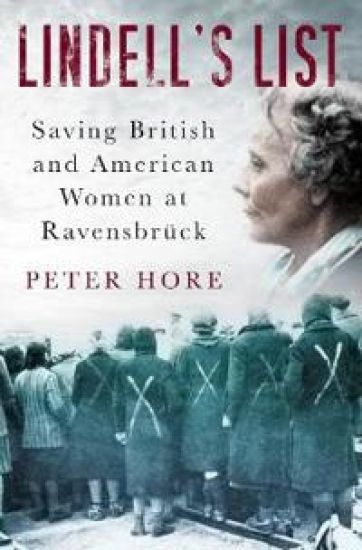
Lindell's List

Lindell's List

Peter Hore

The History Press Ltd
2019
nidottu
Already a decorated heroine of the First World War, British-born Mary Lindell, Comtesse de Milleville, was one of the most colourful and courageous agents of the Second World War, yet her story has almost been forgotten. Evoking the spirit of Edith Cavell, and taking the German occupation of Paris in 1940 as a personal affront, she led an escape line for patriotic Frenchmen and British soldiers. After imprisonment, escape to England, a secret return to France and another arrest, she began to witness the horrors of German-run prisons and concentration camps.In April 1945, a score of British and American women emerged from the Women’s Hell – Ravensbrück concentration camp – who had been kept alive by the willpower and the strength of one woman, Mary Lindell. She combined a passion for adventure with blunt speech and persistently displayed the greatest personal bravery in the face of great adversity. To counter German claims that they had no British or American prisoners, Mary smuggled out a plea for rescue and produced her list from her pinafore pocket, compiled in secret from the camp records. This vital list contained the names of captured women, many of whom were agents of British Military Intelligence, the Special Operations Executive or the French Resistance.Poignantly supported by first-hand testimony, Lindell’s List tells the moving story of Mary Lindell’s heroic leadership and the endurance of a group of women who defied the Nazis in the Second World War.
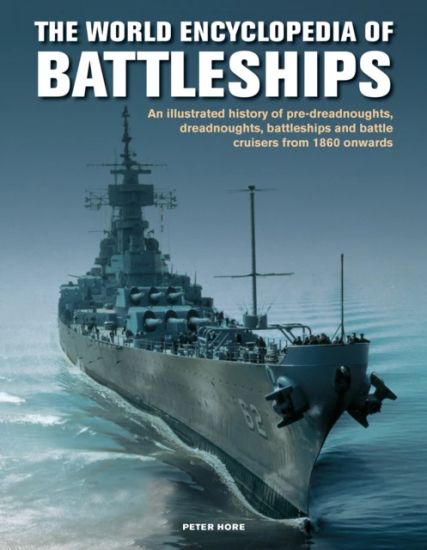
The Battleships, World Encyclopedia of
An illustrated history of battleships, their origins and evolution, this meticulously researched book begins with a history of the battleship, from the first ironclad wooden-hulled ships of the 19th century to the revolutionary Dreadnoughts of World War I and the mighty battleships and battle cruisers of World War II. It includes a country-by-country directory of battleships, with details about each vessel’s history, construction, appearance and function. Featuring more than 150 ships – including Dreadnought, Hood, New Jersey, Bismarck and Nagato – specification boxes provide at-a-glance information about each ship’s country of origin, launch date, size, weight, armament, power, performance and complement, and includes facts and anecdotes about the famous battles and naval operations in which these ships played a role. Featuring over 550 photographs from naval and military sources worldwide, many rarely seen before, this is a must-have reference book for everyone interested in the battleships that have helped to make history.
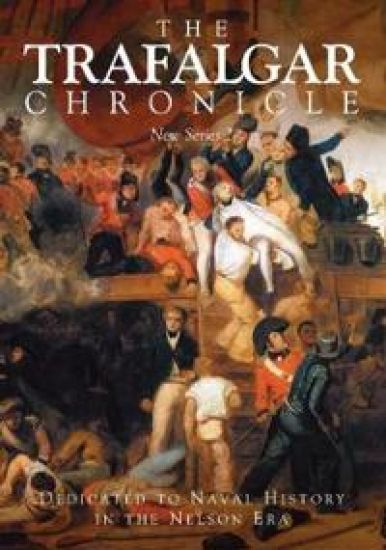
The Trafalgar Chronicle

The Trafalgar Chronicle

Peter Hore

Seaforth Publishing
2017
nidottu
_The Trafalgar Chronicle_, the yearbook of The 1805 Club, has established itself as a prime source of information and the publication of choice for new research about the Georgian navy, sometimes also loosely called Nelson's navy. Successive editors have widened the scope to include all sailing navies of the period, while a recurring theme is the Trafalgar campaign and the epic battle of 21 October 1805. Contributors to _The_ _Trafalgar Chronicle_ have included leading experts in their field, whether they are Professor John Hattendorf from the US Naval War College in Newport, RI, Professor Andrew Lambert from Kings College, London, or antiquarians and enthusiasts. Each volume is themed and this new edition looks in detail at the Royal Marines and the United States Marine Corps. The RM were founded in 1664, but their royal title was only granted to them on 29 April 1802\. The USMC traces its roots to the Continental Marines of the American Revolutionary War (or American War of Independence), when two battalions were formed by Captain Samuel Nicholas after a resolution of the Second Continental Congress on 10 November 1775\. Both corps have similar duties, then and now, and in this volume there are newly researched articles about their common roles in the age of sail. The main piece has been written by Major General Julian Thompson, and there are leading articles by American and British scholars including Dr Charles P Neimeyer, the Director and Chief of Marine Corps History at Marine Corps University, Quantico, Virginia. There is also a unique autobiography by a marine who took part in the battle of Trafalgar, the War of 1812, the bombardment of Algiers and the First Ashanti War. Other issues are investigated, including _Victory_ s true colours in which Andrew Baines, ?Head of Historic Ships at the National Museum of the Royal Navy, describes the research which went into revealing how Nelson s flagship looked in 1805. Scholars and students, experts and enthusiasts fascinated by the era of the sailing navy will be absorbed by this handsomely illustrated journal.
Lindell's List

Lindell's List

Peter Hore

The History Press Ltd
2016
sidottu
Already a decorated heroine of the First World War, British-born Mary Lindell, Comtesse de Milleville, was one of the most colourful and courageous agents of the Second World War, yet her story has almost been forgotten. Evoking the spirit of Edith Cavell, and taking the German occupation of Paris in 1940 as a personal affront, she led an escape line for patriotic Frenchmen and British soldiers. After imprisonment, escape to England, a secret return to France and another arrest, she began to witness the horrors of German-run prisons and concentration camps. In April 1945, a score of British and American women emerged from the Women’s Hell – Ravensbrück concentration camp – who had been kept alive by the willpower and the strength of one woman, Mary Lindell. She combined a passion for adventure with blunt speech and persistently displayed the greatest personal bravery in the face of great adversity. To counter German claims that they had no British or American prisoners, Mary smuggled out a plea for rescue and produced her list from her pinafore pocket, compiled in secret from the camp records. This vital list contained the names of captured women, many of whom were agents of British Military Intelligence, the Special Operations Executive or the French Resistance. Poignantly supported by first-hand testimony, Lindell’s List tells the moving story of Mary Lindell’s heroic leadership and the endurance of a group of women who defied the Nazis in the Second World War.
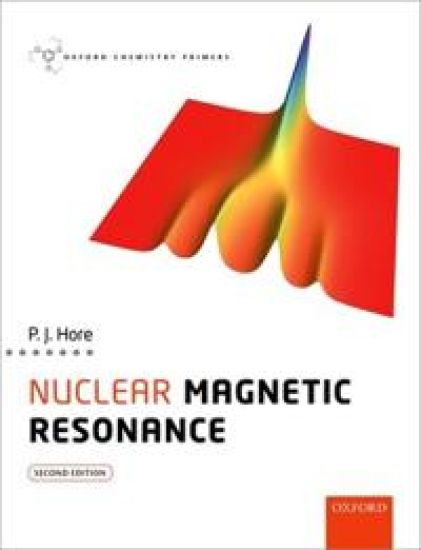
Nuclear Magnetic Resonance

Nuclear Magnetic Resonance

Peter Hore

Oxford University Press
2015
nidottu
The renowned Oxford Chemistry Primers series, which provides focused introductions to a range of important topics in chemistry, has been refreshed and updated to suit the needs of today's students, lecturers, and postgraduate researchers. The rigorous, yet accessible, treatment of each subject area is ideal for those wanting a primer in a given topic to prepare them for more advanced study or research. Moreover, cutting-edge examples and applications throughout the texts show the relevance of the chemistry being described to current research and industry. The learning features provided, including questions at the end of every chapter and online multiple-choice questions, encourage active learning and promote understanding. Furthermore, frequent diagrams, margin notes, and glossary definitions all help to enhance a student's understanding of these essential areas of chemistry. Nuclear Magnetic Resonance offers a concise and accessible introduction to the physical principles of liquid-state NMR, a powerful technique for probing molecular structures. Examples, applications, and exercises are provided throughout to enable beginning undergraduates to get to grips with this important analytical technique. Online Resources The online resources to accompany Nuclear Magnetic Resonance feature: For registered adopters of the text: · Figures from the book available to download For students: · Multiple-choice questions for self-directed learning · Full worked solutions to the end-of-chapter exercises
NMR: The Toolkit

NMR: The Toolkit

Peter Hore; Jonathan Jones; Stephen Wimperis

Oxford University Press
2015
nidottu
The renowned Oxford Chemistry Primer series, which provides focused introductions to a range of important topics in chemistry, has been refreshed and updated to suit the needs of today's students, lecturers, and postgraduate researchers. The rigorous, yet accessible, treatment of each subject area is ideal for those wanting a primer in a given topic to prepare them for more advanced study or research. Moreover, cutting-edge examples and applications throughout the texts show the relevance of the chemistry being described to current research and industry. The learning features provided, including questions at the end of every chapter and online multiple-choice questions, encourage active learning and promote understanding. Furthermore, frequent diagrams, margin notes, further reading, and glossary definitions all help to enhance a student's understanding of these essential areas of chemistry. NMR: The Toolkit describes succinctly the range of NMR techniques commonly used in modern research to probe the structures and properties of molecules in liquids. Emphasis is placed throughout on how these experiments actually work, giving a unique perspective on this powerful experimental tool. Online Resources The online resources to accompany NMR The Toolkit: How Pulse Sequences Work feature: For registered adopters of the text: · Figures from the book available to download For students: · Full worked solutions to the end-of-chapter exercises
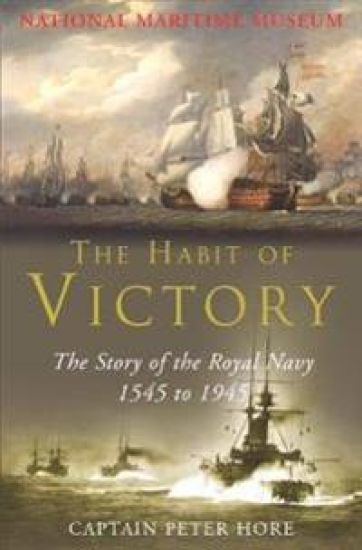
The Habit of Victory

The Habit of Victory

Peter Hore

Macmillan
2013
pokkari
From the Middle Ages through the glorious defeat of the Armada, the triumphs of Nelson and the battles of the First and Second World Wars, this entertaining history describes how the Royal Navy turned this country into the world's foremost sea power. Based on never-before-published material from the archives of the National Maritime Museum, including letters, journals and despatches, we see life in the navy as it was experienced by commanders and ordinary seamen alike. More than just a story of battles, this book shows how changes in technology were key to the development of the navy's power, from broadside gunnery to copper-sheathed hulls, from paddle-steamers and iron Dreadnoughts to the invention of submarines and aircraft carriers. We see how the navy played a key role in exploration, from Drake's circumnavigation of the globe and Cook's voyages of discovery to Fraser's search for the North-west Passage. Filled with colourful characters - the infamous Captain Kidd, Captain Bligh, Samuel Pepys and Jackie Fisher, Blake, Beatty and Jellicoe - this is an exciting account of heroes and villains, innovators and adventurers, battles lost and won that vividly illustrates one of the most fascinating stories in British military history.
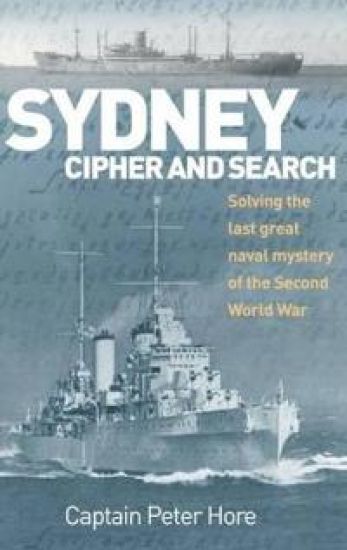
Sydney Cipher and Search

Sydney Cipher and Search

Peter Hore

Seafarer Books
2009
pokkari
In November 1941 the Australian light cruiser HMAS Sydney, with a crew of 645, disappeared off the coast of Western Australia. When German sailors picked up from lifeboats claimed that their ship, the Kormoran, a lightly merchant raider, had sunk the pride of the Australian navy theories sprang up to explain the loss. Had a second German warship been involved, or a Japanese submarine, even though Japan was not yet in the war? Based on the German coded accounts and interviews with German survivors, this book pieces together what really happened in the desperate fight between the two ships, whose wrecks were finally located 10,000 feet down on the floor of the Indian Ocean in March 2008.