Kirjojen hintavertailu. Mukana 12 390 323 kirjaa ja 12 kauppaa.

Kirjailija

Peter J. Ahrensdorf

Kirjat ja teokset yhdessä paikassa: 9 kirjaa, julkaisuja vuosilta 1995-2024, suosituimpien joukossa Greek Tragedy and Political Philosophy. Vertaile teosten hintoja ja tarkista saatavuus suomalaisista kirjakaupoista.

9 kirjaa

Kirjojen julkaisuhaarukka 1995-2024.

Homer and the Tradition of Political Philosophy

Homer and the Tradition of Political Philosophy

Peter J. Ahrensdorf

Cambridge University Press
2024
pokkari
In this book, Peter Ahrensdorf explores an overlooked but crucial role that Homer played in the thought of Plato, Machiavelli, and Nietzsche concerning, notably, the relationship between politics, religion, and philosophy; and in their debates about human nature, morality, the proper education for human excellence, and the best way of life. By studying Homer in conjunction with these three political philosophers, Ahrensdorf demonstrates that Homer was himself a philosophical thinker and educator. He presents the full force of Plato's critique of Homer and the paramount significance of Plato's achievement in winning honor for philosophy. Ahrensdorf also makes possible an appreciation of the powerful concerns expressed by Machiavelli and Nietzsche regarding that achievement. By uncovering and bringing to life the rich philosophic conversation among these four foundational thinkers, Ahrensdorf shows that there are many ways of living a philosophic life. His book broadens and deepens our understanding of what a philosopher is.
Homer and the Tradition of Political Philosophy

Homer and the Tradition of Political Philosophy

Peter J. Ahrensdorf

Cambridge University Press
2022
sidottu
In this book, Peter Ahrensdorf explores an overlooked but crucial role that Homer played in the thought of Plato, Machiavelli, and Nietzsche concerning, notably, the relationship between politics, religion, and philosophy; and in their debates about human nature, morality, the proper education for human excellence, and the best way of life. By studying Homer in conjunction with these three political philosophers, Ahrensdorf demonstrates that Homer was himself a philosophical thinker and educator. He presents the full force of Plato's critique of Homer and the paramount significance of Plato's achievement in winning honor for philosophy. Ahrensdorf also makes possible an appreciation of the powerful concerns expressed by Machiavelli and Nietzsche regarding that achievement. By uncovering and bringing to life the rich philosophic conversation among these four foundational thinkers, Ahrensdorf shows that there are many ways of living a philosophic life. His book broadens and deepens our understanding of what a philosopher is.
Homer on the Gods and Human Virtue

Homer on the Gods and Human Virtue

Peter J. Ahrensdorf

Cambridge University Press
2019
pokkari
This book seeks to restore Homer to his rightful place among the principal figures in the history of political and moral philosophy. Through this fresh and provocative analysis of the Iliad and the Odyssey, Peter J. Ahrensdorf examines Homer's understanding of the best life, the nature of the divine, and the nature of human excellence. According to Ahrensdorf, Homer teaches that human greatness eclipses that of the gods, that the contemplative and compassionate singer ultimately surpasses the heroic warrior in grandeur, and that it is the courageously questioning Achilles, not the loyal Hector or even the wily Odysseus, who comes closest to the humane wisdom of Homer himself. Thanks to Homer, two of the distinctive features of Greek civilization are its extraordinary celebration of human excellence, as can be seen in Greek athletics, sculpture, and nudity, and its singular questioning of the divine, as can be seen in Greek philosophy.
Homer on the Gods and Human Virtue

Homer on the Gods and Human Virtue

Peter J. Ahrensdorf

Cambridge University Press
2014
sidottu
This book seeks to restore Homer to his rightful place among the principal figures in the history of political and moral philosophy. Through this fresh and provocative analysis of the Iliad and the Odyssey, Peter J. Ahrensdorf examines Homer's understanding of the best life, the nature of the divine, and the nature of human excellence. According to Ahrensdorf, Homer teaches that human greatness eclipses that of the gods, that the contemplative and compassionate singer ultimately surpasses the heroic warrior in grandeur, and that it is the courageously questioning Achilles, not the loyal Hector or even the wily Odysseus, who comes closest to the humane wisdom of Homer himself. Thanks to Homer, two of the distinctive features of Greek civilization are its extraordinary celebration of human excellence, as can be seen in Greek athletics, sculpture, and nudity, and its singular questioning of the divine, as can be seen in Greek philosophy.
Greek Tragedy and Political Philosophy

Greek Tragedy and Political Philosophy

Peter J. Ahrensdorf

Cambridge University Press
2011
pokkari
In this book, Peter Ahrensdorf examines Sophocles' powerful analysis of a central question of political philosophy and a perennial question of political life: should citizens and leaders govern political society by the light of unaided human reason or religious faith? Through an examination of Sophocles' timeless masterpieces - Oedipus the Tyrant, Oedipus at Colonus and Antigone - Ahrensdorf offers a sustained challenge to the prevailing view, championed by Nietzsche in his attack on Socratic rationalism, that Sophocles is an opponent of rationalism. Ahrensdorf argues that Sophocles is a genuinely philosophical thinker and a rationalist, albeit one who advocates a cautious political rationalism. Ahrensdorf concludes with an incisive analysis of Nietzsche, Socrates and Aristotle on tragedy and philosophy. He argues, against Nietzsche, that the rationalism of Socrates and Aristotle incorporates a profound awareness of the tragic dimension of human existence and therefore resembles in fundamental ways the somber and humane rationalism of Sophocles.
Greek Tragedy and Political Philosophy

Greek Tragedy and Political Philosophy

Peter J. Ahrensdorf

Cambridge University Press
2009
sidottu
In this book, Peter Ahrensdorf examines Sophocles' powerful analysis of a central question of political philosophy and a perennial question of political life: should citizens and leaders govern political society by the light of unaided human reason or religious faith? Through an examination of Sophocles' timeless masterpieces - Oedipus the Tyrant, Oedipus at Colonus and Antigone - Ahrensdorf offers a sustained challenge to the prevailing view, championed by Nietzsche in his attack on Socratic rationalism, that Sophocles is an opponent of rationalism. Ahrensdorf argues that Sophocles is a genuinely philosophical thinker and a rationalist, albeit one who advocates a cautious political rationalism. Ahrensdorf concludes with an incisive analysis of Nietzsche, Socrates and Aristotle on tragedy and philosophy. He argues, against Nietzsche, that the rationalism of Socrates and Aristotle incorporates a profound awareness of the tragic dimension of human existence and therefore resembles in fundamental ways the somber and humane rationalism of Sophocles.
Justice Among Nations

Justice Among Nations

Thomas L. Pangle; Peter J. Ahrensdorf

University Press of Kansas
1999
sidottu
This text provides an introduction to conceptions of international justice, spanning 2500 years of intellectual history from Thucydides and Plato to Morgenthau and Waltz. It shows how older traditions of political philosophy remain relevant to contemporary debates in international relations.
Justice Among Nations

Justice Among Nations

Thomas L. Pangle; Peter J. Ahrensdorf

University Press of Kansas
1999
nidottu
This text provides an introduction to conceptions of international justice, spanning 2500 years of intellectual history from Thucydides and Plato to Morgenthau and Waltz. It shows how older traditions of political philosophy remain relevant to contemporary debates in international relations.
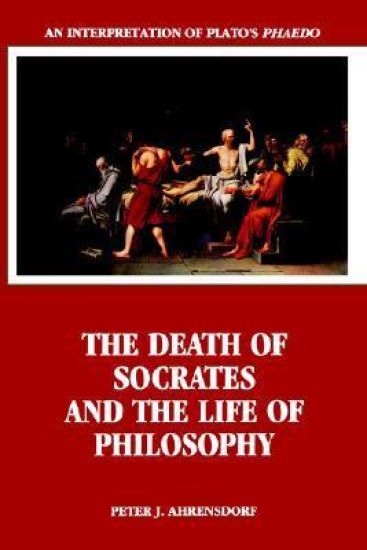
The Death of Socrates and the Life of Philosophy

The Death of Socrates and the Life of Philosophy

Peter J. Ahrensdorf

State University of New York Press
1995
pokkari
Shows that the dialogue in Plato's Phaedo is primarily devoted to presenting Socrates' final defense of the philosophical life against the theoretical and political challenge of religion.While the Phaedo is most famous for its moving portrayal of Socrates' death and its arguments for the immortality of the soul, Ahrensdorf argues that the dialogue is primarily devoted to presenting Socrates' final defense of the philosophic life against the theoretical and political challenge of religion. Through a careful analysis of both the historical context of the Phaedo and the arguments and drama of the dialogue, Ahrensdorf argues that Socrates' defense of rationalism is singularly undogmatic and that a study of that defense can lead us to a clearer understanding and a deeper and richer appreciation of the case both for and against rationalism.