Kirjailija
Peter J Leithart
Kirjat ja teokset yhdessä paikassa: 57 kirjaa, julkaisuja vuosilta 1999-2025, suosituimpien joukossa Dismissing Jesus. Vertaile teosten hintoja ja tarkista saatavuus suomalaisista kirjakaupoista.
Mukana myös kirjoitusasut: Peter J. Leithart
57 kirjaa
Kirjojen julkaisuhaarukka 1999-2025.
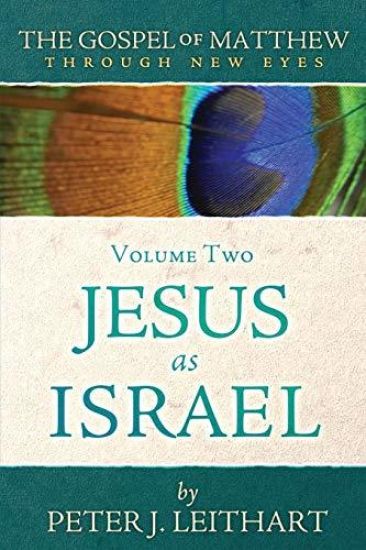
In the second volume of his commentary on the gospel of Matthew, Peter Leithart presents a close study of Matthew 13 through 28, underscoring Jesus' formation of a counter-kingdom that also retells the story of Israel. Jesus is the true Israel who takes on the roles of various Old Testament leaders: Moses the law-giver, Joshua the conqueror, Solomon the philosopher-king, Elisha the wonder-working prophet leading a company of prophets, as well as Jeremiah and Ezekiel warning of the temple's imminent destruction. Jesus' interactions with the leaders of Israel recapitulate Yahweh's tortured interactions with Israel in the Old Testament. In spite of Israel's repeated rejections, Yahweh never gave up on His beloved. His love is stronger than death, and He returns as the world-emperor to send His new Israel to disciple the nations.
Gratitude is often understood as etiquette rather than ethics, an emotion rather than politics. It was not always so. From Seneca to Shakespeare, gratitude was a public virtue. The circle of benefaction and return of service worked to make society strong. But at the beginning of the modern era, European thinkers began to imagine a political economy freed from the burdens of gratitude. Though this rethinking was part of a larger process of secularization, it was also a distorted byproduct of an impulse ultimately rooted in the teachings of Jesus and the apostle Paul. Christians believed that God stood at the center of the circle of gratitude. God was the object of thanksgiving and God gave graciously. Thus, Christians taught that grace cancelled the oppressive debts of a purely political gratitude. Gratitude: An Intellectual History examines changing conceptions of gratitude from Homer to the present. In so doing, Peter J. Leithart highlights the profound cultural impact of early Christian ""ingratitude,"" the release of humankind from the bonds of social and political reciprocity by a benevolent God who gave - and who continues to give - graciously.
The Book of Revelation is the last book in the canon of the New Testament, and its only apocalyptic document, though there are short apocalyptic passages in various places in the gospels and the epistles. This second of two volumes on Revelation offers a systematic and thorough interpretation of the latter chapters of the book. Revelation brings together the worlds of heaven, earth and hell in a final confrontation between the forces of good and evil. Its characters and images are both real and symbolic, spiritual and material, and it is frequently difficult to know the difference between them,Revelation's cryptic nature has ensure that it would always be a source of controversy. This commentary focuses on the theological content, gleaning the best from both the classical and modern commentary traditions and showing the doctrinal development of Scriptural truths. Scholarship on the book of Revelation has nonetheless not only endured, but even captured the imagination of generations of Bible students, both professionals and laypeople alike. Through its focus on the message of the book through scholarly analysis, this ITC reconnects to the ecclesial tradition of biblical commentary as an effort in ressourcement, though not slavish repetition.
The Book of Revelation is the last book in the canon of the New Testament, and its only apocalyptic document, though there are short apocalyptic passages in various places in the gospels and the epistles. This first of two volumes on Revelation offers systematic and thorough interpretation of the book of Revelation. Revelation brings together the worlds of heaven, earth and hell in a final confrontation between the forces of good and evil. Its characters and images are both real and symbolic, spiritual and material, and it is frequently difficult to know the difference between them. Revelation's cryptic nature has ensured that it would always be a source of controversy. This commentary focuses on the theological content, gleaning the best from both the classical and modern commentary traditions and showing the doctrinal development of Scriptural truths. Scholarship on the book of Revelation has nonetheless not only endured, but even captured the imagination of generations of Bible students, both professionals and laypeople alike. Through its focus on the message of the book through scholarly analysis, this International Theological Commentary reconnects to the ecclesial tradition of biblical commentary as an effort in ressourcement, though not slavish repetition.
Peter Leithart's exposition of the first twelve chapters of the gospel of Matthew is an enlightening and encouraging work. As usual Dr. Leithart provides the best of contemporary scholarship, coupled with the insights of the great students of God's Word throughout history, resulting in a fresh perspective on the inspired text. This is a commentary that pastors will find extremely helpful in their studies, and laymen will enjoy reading as they seek to grow in their understanding of God's Word. Dr. Leithart has again accomplished something unique by writing both an insightful commentary as well as an inspiring devotional work.
1 & 2 Kings
Peter J. Leithart; R. Reno; Robert Jenson; Robert Wilken; Ephraim Radner
BAKER PUBLISHING GROUP
2016
nidottu
Explore how the roots of the ancient Christian tradition inform and shape faithfulness todayThe Brazos Theological Commentary on the Bible enlists leading theologians to read and interpret scripture creedally for the twenty-first century, just as the church fathers, the Reformers, and other orthodox Christians did for their times and places. A rich resource for preachers, teachers, students, and study groups, the BTC provides guidance for reading the Bible under the rule of faith. Each volume in the series includes? a Christological focus and framework grounded in the Nicene Creed? connections between biblical interpretation and today's social issues? applications for contemporary faith and life? devotional depth for meditation and reflection? insights from literature, philosophy, culture, and moreUltimately the Brazos Theological Commentary on the Bible demonstrates the continuing intellectual and practical viability of theological interpretation of the Bible.
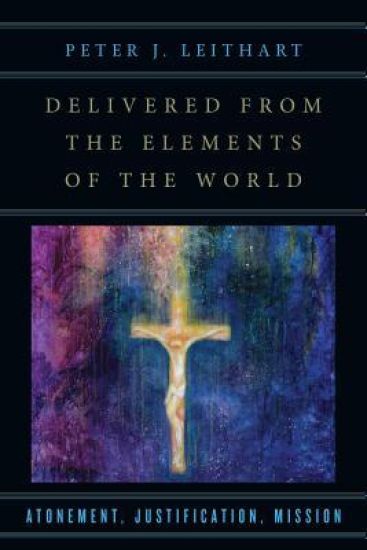
Delivered from the Elements of the World – Atonement, Justification, Mission
Peter J. Leithart
Inter-Varsity Press,US
2016
nidottu
In Delivered from the Elements of the World Peter Leithart reframes Anselm's question, "Why the God Man?" Instead he asks, "How can the death and resurrection of a Jewish rabbi of the first century . . . be the decisive event in the history of humanity, the hinge and crux and crossroads for everything?" With the question reframed for the wide screen, Leithart pursues the cultural and public settings and consequences of the cross and resurrection. He writes, "I hope to show that atonement theology must be social theory if it is going to have any coherence, relevance or comprehensibility at all." There are no small thoughts or cramped plot lines in this vision of the deep-down things of cross and culture. While much is recognizable as biblical theology projected along Pauline vectors, Leithart marshals a stunning array of discourse to crack open one of the big questions of Christian theology. This is a book on the atonement that eludes conventional categories, prods our theological imaginations and is sure to spark conversation and debate.
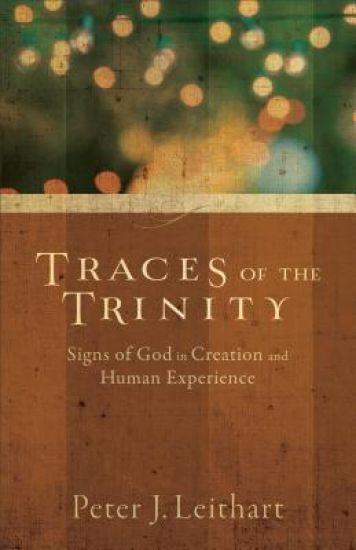
Traces of the Trinity – Signs of God in Creation and Human Experience
Peter J. Leithart
Brazos Press, Div of Baker Publishing Group
2015
nidottu
As the Triune God created the world, so creation bears the signs of its Creator. This evocative book by an influential Christian thinker explores the pattern of mutual indwelling that characterizes the creation at every level. Traces of the Trinity appear in myriad ways in everyday life, from our relations with the world and our relationships with others to sexuality, time, language, music, ethics, and logic. This small book with a big idea--the Trinity as the Christian theory of everything--changes the way we view and think about the world and places demands on the way we live together in community.
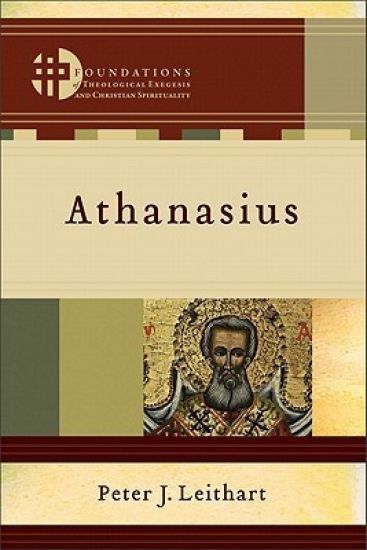
Athanasius
Peter J. Leithart; Hans Boersma; Matthew Levering
Baker Academic, Div of Baker Publishing Group
2011
nidottu
This volume by a respected theologian offers fresh consideration of the work of famous fourth-century church father Athanasius, giving specific attention to his use of Scripture, his deployment of metaphysical categories, and the intersection between the two. Peter Leithart not only introduces Athanasius and his biblical theology but also puts Athanasius into dialogue with contemporary theologians.This volume launches the series Foundations of Theological Exegesis and Christian Spirituality. Edited by Hans Boersma and Matthew Levering, the series critically recovers patristic exegesis and interpretation for contemporary theology and spirituality. Each volume covers a specific church father and illuminates the exegesis that undergirds the Nicene tradition. The series contributes to the growing area of theological interpretation and will appeal to both evangelical and Catholic readers.
Doubling as both scholar and guide, Leithart dives deep into the fascinating web woven by Matthew, Mark, Luke, and John. The Four covers everything from running themes within each book to more technical issues like the "synoptic problem." Written for high school students and beyond, this book includes review and thought questions throughout each chapter, as well as a bibliography and scripture index.
Defending Constantine – The Twilight of an Empire and the Dawn of Christendom
Peter J. Leithart
Inter-Varsity Press,US
2010
nidottu
We know that Constantine issued the Edict of Milan in 313outlawed paganism and made Christianity the official religion of the Roman Empiremanipulated the Council of Nicea in 325exercised absolute authority over the church, co-opting it for the aims of empire And if Constantine the emperor were not problem enough, we all know that Constantinianism has been very bad for the church. Or do we know these things? Peter Leithart weighs these claims and finds them wanting. And what's more, in focusing on these historical mirages we have failed to notice the true significance of Constantine and Rome baptized. For beneath the surface of this contested story there emerges a deeper narrative of the end of Roman sacrifice--a tectonic shift in the political theology of an empire--and with far-reaching implications. In this probing and informative book Peter Leithart examines the real Constantine, weighs the charges against Constantinianism, and sets the terms for a new conversation about this pivotal emperor and the Christendom that emerged.
Seeking to train readers to ""hear all that is being said"" within a written text, Peter Leithart advocates a hermeneutics of the letter that is not rigidly literalist and looks to learn to read--not just the Bible, but everything--from Jesus and Paul. Thus Deep Exegesis explores the nature of reading itself--taking clues from Jesus and Paul on the meaning of meaning, the functions of language, and proper modes of interpretation. By looking (and listening) closely, and by including passages from the Bible and other literary sources, Leithart aims to do for the text what Jesus did for the blind man in John 9: to make new by opening eyes. The book is a powerful invitation to enter the depths of a text.
The Mercersburg Theology and the Quest for Reformed Catholicity
W. Bradford Littlejohn; Peter J. Leithart
Wipf Stock Publishers
2009
pokkari