Kirjojen hintavertailu. Mukana 12 595 353 kirjaa ja 12 kauppaa.

Kirjailija

Peter J. Taylor

Kirjat ja teokset yhdessä paikassa: 22 kirjaa, julkaisuja vuosilta 1996-2026, suosituimpien joukossa Britain and the Cold War. Vertaile teosten hintoja ja tarkista saatavuus suomalaisista kirjakaupoista.

Mukana myös kirjoitusasut: Peter J Taylor

22 kirjaa

Kirjojen julkaisuhaarukka 1996-2026.

Advanced Introduction to Cities

Advanced Introduction to Cities

Peter J. Taylor

Edward Elgar Publishing Ltd
2021
nidottu
Elgar Advanced Introductions are stimulating and thoughtful introductions to major fields in the social sciences, business and law, expertly written by the world's leading scholars. Designed to be accessible yet rigorous, they offer concise and lucid surveys of the substantive and policy issues associated with discrete subject areas.This insightful Advanced Introduction explores the key attributes of cities, identifying their five basic characteristics; innate complexity, the agglomeration of activities, inter-city connectivities, the projection of power, and relations to states. Peter J. Taylor gives a broad and engaging overview of how these characteristics work and relate to each other, supplemented by ten short city insights which offer readers specific examples of cities and themes.Key features include:analysis of cities as the creative nodes of societiesdiscussion of both contemporary and historical citiesexploration of the different spaces created by cities and statesidentification of the demands of cities in relation to climate change.This Advanced Introduction will be a valuable guide for scholars and advanced students of urban studies, cities, urban geography, urban sociology, and social and cultural geography.
Advanced Introduction to Cities

Advanced Introduction to Cities

Peter J. Taylor

Edward Elgar Publishing Ltd
2021
sidottu
Elgar Advanced Introductions are stimulating and thoughtful introductions to major fields in the social sciences, business and law, expertly written by the world's leading scholars. Designed to be accessible yet rigorous, they offer concise and lucid surveys of the substantive and policy issues associated with discrete subject areas.This insightful Advanced Introduction explores the key attributes of cities, identifying their five basic characteristics; innate complexity, the agglomeration of activities, inter-city connectivities, the projection of power, and relations to states. Peter J. Taylor gives a broad and engaging overview of how these characteristics work and relate to each other, supplemented by ten short city insights which offer readers specific examples of cities and themes.Key features include:analysis of cities as the creative nodes of societiesdiscussion of both contemporary and historical citiesexploration of the different spaces created by cities and statesidentification of the demands of cities in relation to climate change.This Advanced Introduction will be a valuable guide for scholars and advanced students of urban studies, cities, urban geography, urban sociology, and social and cultural geography.
Geography of Elections

Geography of Elections

Peter J. Taylor; Ron Johnston

Routledge
2016
nidottu
Within an international framework, this work provides a fully comprehensive approach to the geographical coverage of elections. Numerous applications of ides and concepts from human geography are incorporated into a new political context, illustrating the manner in which electoral patterns reflect and help produce the overall geography of a region or state. Discussions of various topics are well supported by numerous maps and diagrams which help clarify arguemnts and serve to define elections within their basic geographical context.
Britain and the Cold War

Britain and the Cold War

Peter J. Taylor

Bloomsbury Academic
2016
sidottu
In 1945 Britain emerged from the Second World War exhausted and debilitated, but still a major global power, with enormous strategic commitments, imperial responsibilities and a sense of historical destiny as a major economic and political influence. This book charts how this role and self-image changed and how abruptly in 1945 the United States assumed Britain’s mantle of world leader. Taylor provides an alternative interpretation of how the Cold War arose, and how the reordering of the global economic, political and strategic system in the post-war world came about. It is essential reading for political geographers, historians, international relations experts and political scientists.
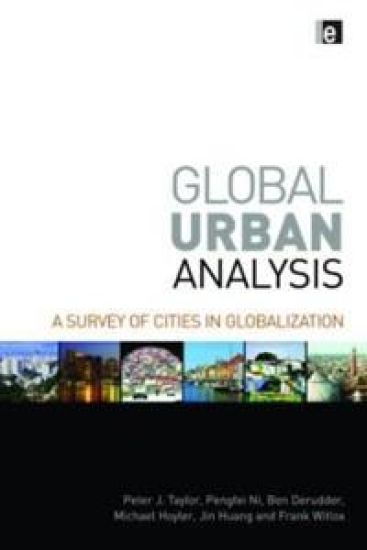
Global Urban Analysis

Global Urban Analysis

Peter J Taylor; Pengfei Ni; Ben Derudder; Michael Hoyler; Jin Huang; Frank Witlox

Routledge
2015
nidottu
Global Urban Analysis provides a unique insight into the contemporary world economy through a focus on cities. It is based upon a large-scale customised data collection on how leading businesses use cities across the world: as headquarter locations, for finance, for professional and creative services, for media. These data - involving up to 2000 firms and over 500 cities - provide evidence for both how the leading cities, sometimes called global cities, are coming to dominate the world economy, and how hundreds of other cities are faring in this brave new urban world. Thus can the likes of London, New York and Hong Kong be tracked as well as Manchester, Cleveland and Guangzhou, and even Plymouth, Chattanooga and Xi'an. Cities are assessed and ranked in terms of their importance for various functions such as for financial services, legal services and advertising, plus novel findings are reported for the geographical orientations of their connections. This is truly a comprehensive survey of cities in globalization covering global, world-regional, and national scales of analysis: - 4 key chapters outline the global structure of the world economy featuring the leading cities; - 9 regional chapters covering the whole world also feature the level of services provided by 'medium' cities; - 22 chapters on selected countries and sub-regions indicate global-ness and local-ness and feature an even wider range of cities. Written in an easy to understand style, this book is a must read for anybody interested in their own city in the world and how it relates to other cities.
Geography of Elections (Routledge Library Editions: Political Geography)
Within an international framework, this work provides a fully comprehensive approach to the geographical coverage of elections. Numerous applications of ideas and concepts from human geography are incorporated into a new political context, illustrating the manner in which electoral patterns reflect and help produce the overall geography of a region or state. Discussions of various topics are well supported by numerous maps and diagrams which help clarify arguments and serve to define elections within their basic geographical context.
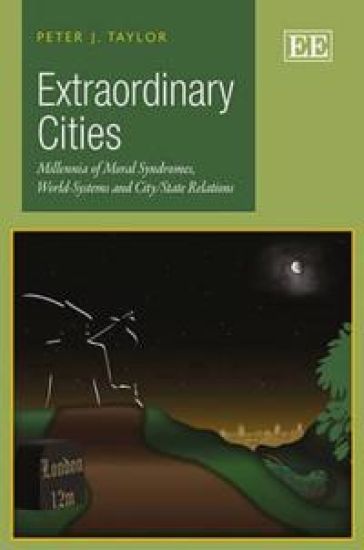
Extraordinary Cities

Extraordinary Cities

Peter J. Taylor

Edward Elgar Publishing Ltd
2014
nidottu
'Peter J. Taylor has produced a sweeping, empirically grounded, defense of cities as fundamental building blocks of long-term, large scale social structures; a way of freeing social science from state-centric bias; and indeed, mankind's hope. However, the single greatest strength of this complex, seductive, argument is the insistence on treating cities relationally, as process. Here the key to understanding the significance of cities is by studying them in terms of the dynamic networks they form and in their relations to states.'- Richard E. Lee, Binghamton University, USAccepting that cities are extraordinary, this book provides an original city-centred narrative of human creativity, past, present and future.In this innovative, ambitious and wide-ranging book, Peter Taylor demonstrates that cities are the epicenters of human advancement. In exploring cities as sites through which economies flourish, by harnessing the creative potential of myriad communication networks, the author considers cities from varying temporal and spatial perspectives. Four stories of cities are told: the origins of city networks; the domination of cities by world-empires; the genesis of a singular modern creative interval in which innovation culminates in today s globalised cities; and finally, the need for cities to act as centres for human creativity to produce a more resilient global society in the current crisis century.Providing a long-term view through which to consider the role of cities in attending to incipient crises of the twenty-first century, this closely argued thesis will prove essential for students and scholars of urban studies, geography and sociology, and all those with a professional interest in, or personal fascination for, cities.Contents: Preface Part I: Setting Down and Setting Up 1. A Cities' Perspective 2. Conceptual Toolkits Part II: Narrative I: Beginning Conjectures 3. City and State Beginnings: Western Asia's Great Creative Interlude 4. Geographies of Beginning Creative Interludes Part III: Narrative II: World-systems 5. Normal History 6. Making the Modern World-system: Western Europe's Great Creative Interlude Part IV: Narrative III: Prospective Conjectures - Where Are We and Where Are We Going? 7. Working in an Urban World 8. Towards Green Networks of Cities for the Twenty-first Century References Index
Extraordinary Cities

Extraordinary Cities

Peter J. Taylor

Edward Elgar Publishing Ltd
2013
sidottu
'Peter J. Taylor has produced a sweeping, empirically grounded, defense of cities as fundamental building blocks of long-term, large scale social structures; a way of freeing social science from state-centric bias; and indeed, mankind's hope. However, the single greatest strength of this complex, seductive, argument is the insistence on treating cities relationally, as process. Here the key to understanding the significance of cities is by studying them in terms of the dynamic networks they form and in their relations to states.'- Richard E. Lee, Binghamton University, USAccepting that cities are extraordinary, this book provides an original city-centred narrative of human creativity, past, present and future.In this innovative, ambitious and wide-ranging book, Peter Taylor demonstrates that cities are the epicenters of human advancement. In exploring cities as sites through which economies flourish, by harnessing the creative potential of myriad communication networks, the author considers cities from varying temporal and spatial perspectives. Four stories of cities are told: the origins of city networks; the domination of cities by world-empires; the genesis of a singular modern creative interval in which innovation culminates in today s globalised cities; and finally, the need for cities to act as centres for human creativity to produce a more resilient global society in the current crisis century.Providing a long-term view through which to consider the role of cities in attending to incipient crises of the twenty-first century, this closely argued thesis will prove essential for students and scholars of urban studies, geography and sociology, and all those with a professional interest in, or personal fascination for, cities.Contents: Preface Part I: Setting Down and Setting Up 1. A Cities' Perspective 2. Conceptual Toolkits Part II: Narrative I: Beginning Conjectures 3. City and State Beginnings: Western Asia's Great Creative Interlude 4. Geographies of Beginning Creative Interludes Part III: Narrative II: World-systems 5. Normal History 6. Making the Modern World-system: Western Europe's Great Creative Interlude Part IV: Narrative III: Prospective Conjectures - Where Are We and Where Are We Going? 7. Working in an Urban World 8. Towards Green Networks of Cities for the Twenty-first Century References Index
Global Urban Analysis

Global Urban Analysis

Peter J Taylor; Pengfei Ni; Ben Derudder; Michael Hoyler; Jin Huang; Frank Witlox

Earthscan Ltd
2010
sidottu
Global Urban Analysis provides a unique insight into the contemporary world economy through a focus on cities. It is based upon a large-scale customised data collection on how leading businesses use cities across the world: as headquarter locations, for finance, for professional and creative services, for media. These data - involving up to 2000 firms and over 500 cities - provide evidence for both how the leading cities, sometimes called global cities, are coming to dominate the world economy, and how hundreds of other cities are faring in this brave new urban world. Thus can the likes of London, New York and Hong Kong be tracked as well as Manchester, Cleveland and Guangzhou, and even Plymouth, Chattanooga and Xi'an. Cities are assessed and ranked in terms of their importance for various functions such as for financial services, legal services and advertising, plus novel findings are reported for the geographical orientations of their connections. This is truly a comprehensive survey of cities in globalization covering global, world-regional, and national scales of analysis: - 4 key chapters outline the global structure of the world economy featuring the leading cities; - 9 regional chapters covering the whole world also feature the level of services provided by 'medium' cities; - 22 chapters on selected countries and sub-regions indicate global-ness and local-ness and feature an even wider range of cities. Written in an easy to understand style, this book is a must read for anybody interested in their own city in the world and how it relates to other cities.
Unruly Complexity

Unruly Complexity

Peter J. Taylor

University of Chicago Press
2005
nidottu
Ambitiously identifying fresh issues in the study of complex systems, Peter J. Taylor, in a model of interdisciplinary exploration, makes these concerns accessible to scholars in the fields of ecology, environmental science, and science studies. Unruly Complexity explores concepts used to deal with complexity in three realms: ecology and socio-environmental change; the collective constitution of knowledge; and interpretations of science as they influence subsequent research. For each realm Taylor shows that unruly complexity - situations that lack definite boundaries, where what goes on "outside" continually restructures what is "inside," and where diverse processes come together to produce change - should not be suppressed by partitioning complexity into well-bounded systems that can be studied or managed from an outside vantage point. Using case studies from Australia, North America, and Africa, he encourages readers to be troubled by conventional boundaries - especially between science and the interpretation of science - and to reflect more self-consciously on the conceptual and practical choices researchers make.
Unruly Complexity

Unruly Complexity

Peter J. Taylor

University of Chicago Press
2005
sidottu
Ambitiously identifying fresh issues in the study of complex systems, Peter J. Taylor, in a model of interdisciplinary exploration, makes these concerns accessible to scholars in the fields of ecology, environmental science, and science studies. Unruly Complexity explores concepts used to deal with complexity in three realms: ecology and socio-environmental change; the collective constitution of knowledge; and interpretations of science as they influence subsequent research. For each realm Taylor shows that unruly complexity - situations that lack definite boundaries, where what goes on "outside" continually restructures what is "inside," and where diverse processes come together to produce change - should not be suppressed by partitioning complexity into well-bounded systems that can be studied or managed from an outside vantage point. Using case studies from Australia, North America, and Africa, he encourages readers to be troubled by conventional boundaries - especially between science and the interpretation of science - and to reflect more self-consciously on the conceptual and practical choices researchers make.
Modernities

Modernities

Peter J. Taylor

Polity Press
2003
sidottu
Taylor develops a geohistorical argument which focuses on the periods and places of modernities, offering a grounded analysis of what it is to be modern. He identifies three 'prime modernities' which have defined the development of our modern world: today's consumer modernity preceded by the industrial modernity of the nineteenth century which was itself preceded by mercantile modernity.
Modernities

Modernities

Peter J. Taylor

Polity Press
1999
nidottu
Taylor develops a geohistorical argument which focuses on the periods and places of modernities, offering a grounded analysis of what it is to be modern. He identifies three 'prime modernities' which have defined the development of our modern world: today's consumer modernity preceded by the industrial modernity of the nineteenth century which was itself preceded by mercantile modernity.
Changing Life

Changing Life

Peter J. Taylor

University of Minnesota Press
1997
nidottu
A fascinating look at how the culture of today’s life sciences affects our culture.In laboratories all over the world, life-even the idea of life-is changing. And with these changes, whether they result in square tomatoes or cyborgs, come transformations in our social order-sometimes welcome, sometimes troubling, depending on where we stand. Changing Life offers a close look at how the mutable forms and concepts of life link the processes of science to those of information, finance, and commodities.The contributors, drawn from disciplines within science and technology studies and from geography, ecology, and developmental biology, provide a range of interpretive angles on the metaphors, narratives, models, and practices of the life sciences. Their essays-about planetary management and genome sequencing, ecologies and cyborgs-address actual and imagined transformations at the center and at the margins of transnational relations, during the post-Cold War era and in times to come. They consider such topics as the declining regulatory state, ascendant transnational networks, and capital’s legal reign over intellectual property, life-form patents, and marketable pollution licenses.Changing Life argues that we cannot understand the power of the life sciences in modern society without exploring the intersections of science and technology with other cultural realms. To that end, this book represents a collective attempt to join the insights of science and technology studies and cultural studies. As a work of cultural politics, it makes a contribution to changing life in a context of changing social order. Contributors: Simon Cole, Cornell U; Scott Gilbert, Swarthmore College; Herbert Gottweis, U of Salzburg; YrjÖ Haila, U of Tampere, Finland; Rosaleen Love, Victoria U of Technology, Melbourne, Australia; and Richard A. Schroeder, Rutgers.
The Way the Modern World Works

The Way the Modern World Works

Peter J. Taylor

John Wiley Sons Inc
1996
nidottu
Is it America s historic destiny to be the last of the hegemons ? Hegemonic states are very special countries that have simultaneously dominated the world both economically and politically and it seems increasingly likely that no country can follow the USA in this role. In this intellectual and creative tour de force, Peter Taylor, famous as the creator of world-systems political geography, examines hegemony as a concept in social practices and by using the experience of the three classic hegemonies, 17th-century Holland, 19th-century Britain and 20th-century America to provide a breathtaking new perspective on world history, political ideas and the nature of modernity. Professor Taylor weaves a rich tapestry of historical insight with arresting detail and innovative synthesis to show how for each hegemon political and economic dominance led to cultural power which shaped the entire world system. But in a fin de siecle world with little prospect of a new hegemonic order, are we perhaps facing the end of the world as we know it? In this constantly challenging, intriguing and original book the reader will find a compelling, disturbing yet exhilarating distillation of history, politics, economics, culture and ideology of the last four centuries. It will be the key book for students of politics, geography and history and for the general reader who wants to understand where today s world has come from and where it is going.
Becoming Metropolitan

Becoming Metropolitan

Peter J. Taylor; Michael Barke; Zachary P. Neal

TAYLOR FRANCIS LTD
2026
sidottu
Using a unique data-rich study of Newcastle’s becoming of a metropolitan city-region in the 19th century, this book explores a new understanding of how successful cities attain a metropolitan status through disruptions of incessant economic advances being ameliorated by myriad social organizations to create a new vibrant urban environment. The book defines the specific process of ‘becoming metropolitan’ by bringing together economic and social urban studies to explain an interactive development that when successful, creates a metropolitan city region. In addition, a real example of this is meticulously described through a detailed case study that traces the process across decades to a metropolitan outcome. In doing so, it combines theoretical and empirical understandings within a single text and providing accessible information to a unique and large data set. Becoming Metropolitan will appeal to graduates and researchers of Geography, Sociology, Planning and History specializing in cities and urban studies. It will also be valuable to a larger public audience with interest in cities, as ‘metropolitan’ is a commonplace idea easily understood, and in the case-study city.
Political Geography

Political Geography

Colin Flint; Peter J. Taylor

TAYLOR FRANCIS LTD
2025
nidottu
The new and updated eighth edition of Political Geography once again shows itself fit to tackle a frequently and rapidly changing geopolitical landscape. It retains the intellectual clarity, rigour, and vision of previous editions based upon its world-systems approach and is complemented by the perspective of feminist geography. The book successfully integrates the complexity of individuals with the complexity of the world-economy by merging the compatible, but different, research agendas of the co-authors.This edition explores political geography within the context of US–China competition, Russia’s war with Ukraine, global climate change, new technologies, and challenges to democracy. It advances the discussion from the previous editions on the dynamics of the capitalist world-economy and the constant tension between the global scale of economic processes and the territorialization of politics in the current context of geopolitical change. The chapters have been updated with new examples – new sections on global climate change, populism, and the growing threat of global war. The book offers a framework to help students make their own judgements of how we got where we are today, and what may or should be done about it.Political Geography remains a core text for students of political geography, geopolitics, international relations, and political science, as well as more broadly across human geography and the social sciences.
Political Geography

Political Geography

Colin Flint; Peter J. Taylor

TAYLOR FRANCIS LTD
2025
sidottu
The new and updated eighth edition of Political Geography once again shows itself fit to tackle a frequently and rapidly changing geopolitical landscape. It retains the intellectual clarity, rigour, and vision of previous editions based upon its world-systems approach and is complemented by the perspective of feminist geography. The book successfully integrates the complexity of individuals with the complexity of the world-economy by merging the compatible, but different, research agendas of the co-authors.This edition explores political geography within the context of US–China competition, Russia’s war with Ukraine, global climate change, new technologies, and challenges to democracy. It advances the discussion from the previous editions on the dynamics of the capitalist world-economy and the constant tension between the global scale of economic processes and the territorialization of politics in the current context of geopolitical change. The chapters have been updated with new examples – new sections on global climate change, populism, and the growing threat of global war. The book offers a framework to help students make their own judgements of how we got where we are today, and what may or should be done about it.Political Geography remains a core text for students of political geography, geopolitics, international relations, and political science, as well as more broadly across human geography and the social sciences.
Methods for Ecological Research on Terrestrial Small Mammals

Methods for Ecological Research on Terrestrial Small Mammals

Robert McCleery; Ara Monadjem; L. Mike Conner; James D. Austin; Peter J. Taylor

Johns Hopkins University Press
2022
sidottu
All the information researchers, students, and practitioners need to conducted innovative, state-of-the-art research on small mammals.Rodents and insectivores constitute the vast majority of mammals on our planet, yet we often overlook the importance of this group. As seed dispersers, prey species, and disease regulators, these animals are critical to the functioning of our ecological systems. While considerable material exists that describes these species, there has been no dedicated guide explaining how to effectively research them—until now. Methods for Ecological Research on Terrestrial Small Mammals is a one-stop resource compiling all the information readers need to conduct state-of-the-art research on small terrestrial mammals across the globe. The authors cover the full spectrum of issues, from capture, handling, identification, reproduction, demography, and taxonomy to behavior, diet, evolution, diseases, movements, morphometrics, and more. They also:• highlight the latest techniques while carefully explaining the tried-and-tested methods needed to conduct rigorous scientific inquiries; • provide step-by-step examples and case studies, demonstrating how the methods discussed can be used in actual research projects; • compare and contrast methodologies, analytical techniques, and software packages, helping researchers determine which pathways and tools will yield the best results for their studies. A comprehensive and invaluable resource, Methods for Ecological Research on Terrestrial Small Mammals is a must-have for any ecologist working on small mammals.
Political Geography

Political Geography

Colin Flint; Peter J. Taylor

Routledge
2018
nidottu
The new and updated seventh edition of Political Geography once again shows itself fit to tackle a frequently and rapidly changing geopolitical landscape. It retains the intellectual clarity, rigour and vision of previous editions based upon its world-systems approach, and is complemented by the perspective of feminist geography. The book successfully integrates the complexity of individuals with the complexity of the world-economy by merging the compatible, but different, research agendas of the co-authors. This edition explores the importance of states in corporate globalization, challenges to this globalization, and the increasingly influential role of China. It also discusses the dynamics of the capitalist world-economy and the constant tension between the global scale of economic processes and the territorialization of politics in the current context of geopolitical change. The chapters have been updated with new examples – new sections on art and war, intimate geopolitics and geopolitical constructs reflect the vibrancy and diversity of the academic study of the subject. Sections have been updated and added to the material of the previous edition to reflect the role of the so-called Islamic State in global geopolitics. The book offers a framework to help students make their own judgements of how we got where we are today, and what may or should be done about it.Political Geography remains a core text for students of political geography, geopolitics, international relations and political science, as well as more broadly across human geography and the social sciences.