Kirjojen hintavertailu. Mukana 12 494 270 kirjaa ja 12 kauppaa.

Kirjailija

Peter Jordan

Kirjat ja teokset yhdessä paikassa: 24 kirjaa, julkaisuja vuosilta 1981-2025, suosituimpien joukossa Breslau Oder Wroclaw? Das Begriffspaar Endonym/Exonym ALS Kernthema Der Kritischen Toponomastik: Wie Politische Haltungen Den Gebrauch Geographischer. Vertaile teosten hintoja ja tarkista saatavuus suomalaisista kirjakaupoista.

24 kirjaa

Kirjojen julkaisuhaarukka 1981-2025.

Material Culture and Sacred Landscape

Material Culture and Sacred Landscape

Peter Jordan

AltaMira Press,U.S.
2003
nidottu
This study provides a concrete example of how foraging societies enculturate and transform the natural environment and, through the use of material objects, create sacred spaces and sites. Using ethnographic and ethnohistorical information about the Khanty of Siberia, Jordan shows the shortcomings of both interpretive and materialist anthropological theorizing about hunters and gatherers. He focuses on the rich and complex relationship between the symbolism of the Khanty, their material culture, and the bringing of meaning to physical places. His examination looks at the topic in both historical and contemporary contexts, and in scales from the core-periphery model of Russian colonialism to the portrait of a single yurt community. Jordan's work will be of importance to those studying cultural anthropology, archaeology, and comparative religion.

Staff Management in Library and Information Work

Staff Management in Library and Information Work

Peter Jordan; Caroline Lloyd

Ashgate Publishing Limited
2002
sidottu
This standard text has been fully revised and updated for its fourth edition to reflect continuing technological changes, as well as issues such as social inclusion, lifelong learning and European employment legislation. Chapter 1 on the working environment has been completely rewritten. The present environment brings problems of staff motivation, de-professionalization and the loss of control: Chapter 2 reminds readers of basic motivation theories, now presented in a more logical sequence, and how to deal with such problems. Chapter 3 on workforce planning has been retitled Human Resource Planning and revised to take into account the modes of staffing appropriate for today's turbulent environment. Effective human resource planning requires excellent selection and recruitment procedures: best practice and developments in this area are explored in Chapters 4, Job Descriptions and Person Specifications, and 5, Recruitment and Selection of Staff. In Chapter 6 on staff appraisal more attention has been given to multi-rating approaches, such as 360° whereby different aspects of work can be assessed by different groups of people, and to appraisal of junior by senior staff. The last decade has seen increased emphasis on training and development to deliver high quality services in a climate of constant change. Chapter 7 has therefore been reordered and expanded in order to reflect new approaches and changes in this area. In Chapter 8, Staff Supervision and Interpersonal Skills, recent emphasis on leadership and counselling skills are reflected, as is the growing need to do more with less through enhanced time management and stress management techniques. With this new edition, this core guide brings professionals involved in managing library and information staff up to date with how to cope with the most pressing problems and challenges in today's fast-changing environment.
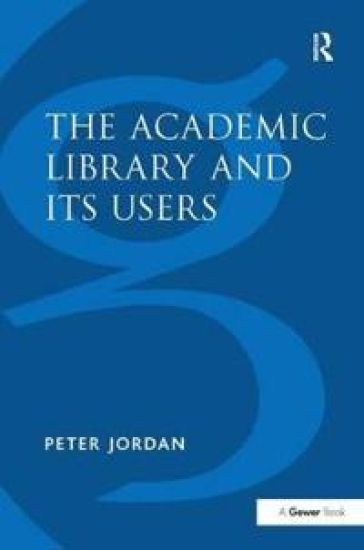
The Academic Library and Its Users

The Academic Library and Its Users

Peter Jordan

Gower Publishing Ltd
1998
sidottu
The many recent changes in higher and further education mean that it is more important than ever to analyse the needs of academic library users, and both promote and provide the service they require. This constructive book, pervaded throughout by the impact of IT on the learning environment, surveys the influences on today's academic library, and explains how to increase user satisfaction through quality management. The author focuses particularly on users' behaviour in the library, the problems they cause or encounter, and how libraries cope. The book examines the varying needs of undergraduate and graduate, mature and part-time students, overseas students, franchised students, distance learners and other groups with special needs, explaining ways in which these needs can be identified and the service evaluated. One chapter is devoted to research and researchers' information demands. The particular requirements of subject communities and their consequences for academic libraries are also investigated, as well as the requirements of teaching staff and ways in which the library can work with them. The author emphasizes the importance of user education programmes and explains how to promote the library effectively with limited resources. For librarians, heads of services and senior library managers in further and higher education, and those, such as subject librarians, responsible for specific student groups, this book provides a comprehensive and realistic guide to providing and promoting a quality service. Students of librarianship and information management will gain valuable insight from this book into user analysis and improving the performance of information provision.