Kirjojen hintavertailu. Mukana 12 595 353 kirjaa ja 12 kauppaa.

Kirjailija

Peter Keating

Kirjat ja teokset yhdessä paikassa: 10 kirjaa, julkaisuja vuosilta 2009-2026, suosituimpien joukossa Histoire humaine des Animaux. De l'Antiquité à nos jours.... Vertaile teosten hintoja ja tarkista saatavuus suomalaisista kirjakaupoista.

10 kirjaa

Kirjojen julkaisuhaarukka 2009-2026.

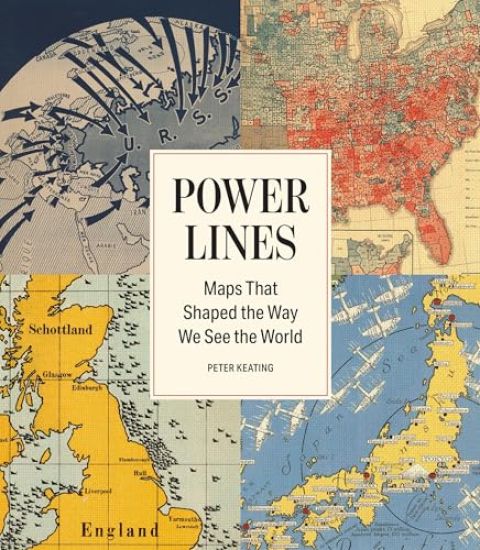
Power Lines: Maps That Shaped the Way We See the World

Power Lines: Maps That Shaped the Way We See the World

Peter Keating

Black Dog Leventhal Publishers
2026
sidottu
A collection of the greatest political maps in history and how these images have an unmatched power to influence our thinking--and our world. This richly illustrated and deeply informative book will demonstrate the power maps have to shape how we see the world--and will be the perfect gift for politicos, history buffs, and map lovers alike.
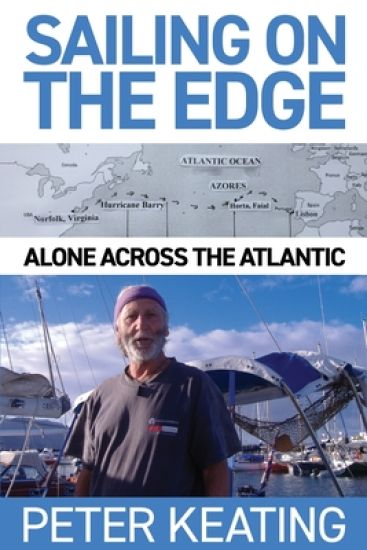
Sailing on the Edge

Sailing on the Edge

Peter Keating

The Book Reality Experience
2021
nidottu
At the age of 57, Peter Keating set out to sail, single-handed, across the Atlantic. It was a lifelong dream of a lifelong sailor and though it was to be a solo journey, his waking and sleeping hours were spent in the 'company' of his memories and erstwhile companions and friends. From Werner and crocodile surfing, to Gerhardt and the Gulag. From Charlie of Morova Lagoon, to Fred from Fransesca. Their stories, along with the Mafiosa of Malta, Leo from the Chesapeake, the myth of Napoleon on St Helena and many more besides, were weaved into Peter's as they hauled along, day after day, from horizon to horizon on the voyage from Norfolk, Virginia to Lisbon, Portugal. They were there to help and inspire him and, when he was caught in the middle of Hurricane Barry, to ensure he reached out and survived. When at his lowest ebb, along came the ghost of Sam, a friendly old sailor who kept Peter entertained through the long, lonely hours of the dog watch. Together they fill the pages of this book, yet this is not simply a sailing log of a trip from the New World to the Old. This is a story of individuals who have all lived on the edge. It shows what happens when you are brave enough to push yourself beyond your current boundaries and above all, go out on a limb. Yes, it will help you to understand more about deep oceaning, its joys and terrors, but perhaps it will also help the adventurer inside you to reflect on how you would cope in similar circumstances. Ultimately, this is not just Peter Keating's journey alone, but the journey of us all when we go out on the edge - to peer over any horizon - and to finally emerge the better for having left our safe harbour.
The Working-Classes in Victorian Fiction
First published in 1971. The book examines the presentation of the urban and industrial working classes in Victorian fiction. It considers the different types of working men and women who appear in fiction, the environments they are shown to inhabit, and the use of phonetics to indicate the sound of working class voices. Evidence is drawn from a wide range of major and minor fiction, and new light is cast on Dickens, Mrs Gaskell, Charles Kingsley, George Gissing, Rudyard Kipling and Arthur Morrison. This book would be of interest to students of literature, sociology and history.
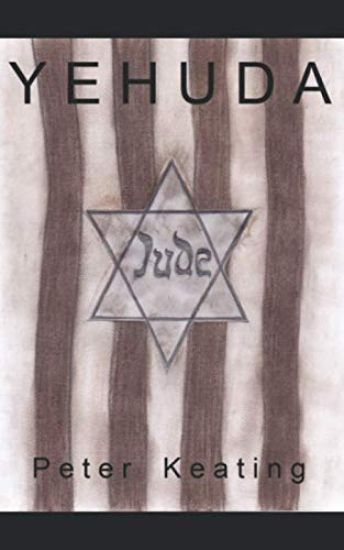
Yehuda

Yehuda

Peter Keating

Independently Published
2017
pokkari
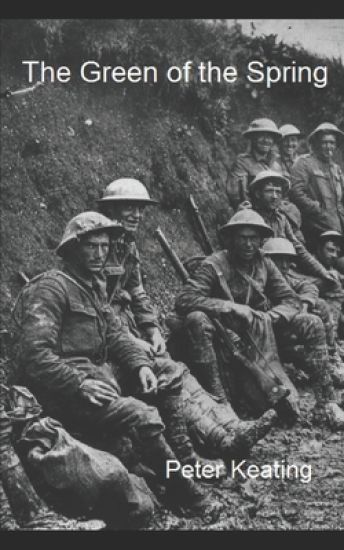
YEHUDA is a dark, fast-paced thriller from the author of THE GREEN OF THE SPRING. A beautiful but deadly Israeli agent forms part of a disparate Mossad trio sent to West Germany in 1969 to track down and kill a wanted Nazi war criminal, but all is not as it seems - and mistakes can be fatal...
The Working-Classes in Victorian Fiction
First published in 1971. The book examines the presentation of the urban and industrial working classes in Victorian fiction. It considers the different types of working men and women who appear in fiction, the environments they are shown to inhabit, and the use of phonetics to indicate the sound of working class voices. Evidence is drawn from a wide range of major and minor fiction, and new light is cast on Dickens, Mrs Gaskell, Charles Kingsley, George Gissing, Rudyard Kipling and Arthur Morrison. This book would be of interest to students of literature, sociology and history.
Cancer on Trial

Cancer on Trial

Peter Keating; Alberto Cambrosio

University of Chicago Press
2014
nidottu
In Cancer on Trial Peter Keating and Alberto Cambrosio explore how practitioners established a new style of practice, at the center of which lies the cancer clinical trial. Far from mere testing devices, these trials have become full-fledged experiments that have redefined the practices of clinicians, statisticians, and biologists. Keating and Cambrosio investigate these trials and how they have changed since the 1960s, all the while demonstrating their significant impact on the progression of oncology. A novel look at the institution of clinical cancer research and therapy, this book will be warmly welcomed by historians, sociologists, and anthropologists of science and medicine, as well as clinicians and researchers in the cancer field.
Cancer on Trial

Cancer on Trial

Peter Keating; Alberto Cambrosio

University of Chicago Press
2012
sidottu
Until the early 1960s, cancer treatment consisted primarily of surgery and radiation therapy. Most practitioners then viewed the treatment of terminally ill cancer patients with heroic courses of chemotherapy as highly questionable. The randomized clinical trials that today sustain modern oncology were relatively rare and prompted stiff opposition from physicians loath to assign patients randomly to competing treatments. And yet today these trials form the basis of medical oncology. How did such a spectacular change occur? And how did medical oncology pivot from a nonentity and, in some regards, a reviled practice to the central position it now occupies in modern medicine? In "Cancer on Trial" Peter Keating and Alberto Cambrosio explore how practitioners established a new style of practice, at the center of which lies the clinical cancer trial. Far from mere testing devices, these trials have become full-fledged experiments that have redefined the practices of clinicians, statisticians, and biologists. Keating and Cambrosio investigate these trials and how they have changed since the 1960s, all the while demonstrating their significant impact on the progression of oncology. A novel look at the institution of clinical cancer research and therapy, this book will be warmly welcomed by historians, sociologists, and anthropologists of science and medicine, as well as clinicians and researchers in the cancer field.