Kirjojen hintavertailu. Mukana 12 390 323 kirjaa ja 12 kauppaa.

Kirjailija

Peter Kelton

Kirjat ja teokset yhdessä paikassa: 7 kirjaa, julkaisuja vuosilta 2019-2021, suosituimpien joukossa Heather and the Jabberwocky. Vertaile teosten hintoja ja tarkista saatavuus suomalaisista kirjakaupoista.

7 kirjaa

Kirjojen julkaisuhaarukka 2019-2021.

Doctor Bob

Doctor Bob

Peter Kelton

Peter Kelton DBA as Edit Ink
2021
pokkari
With his life imperiled by the Mafia, Dr. Bob earns his keep by treating addicted Clairvoyants who fear they've lost their ability to reach souls in the hereafter - a rambunctious character's story told as literary fiction with a tongue-in-cheek sense of humor, according to critics. He learned to listen to the downtrodden of Skid Row by indulging in the ubiquitous squalor of their misery. Then he scrubbed up to court female patients beyond all ethical boundaries. The true love he found demanded that he straighten up and fly right. Wrapped up in the mysteries of the Universe as a sort of security blanket, he wandered toward infinity and his mysterious destination, an awkward pioneer of self-discovery. His exploitations ranged from creating one of Florida's most pristine upscale treatment centers to dallying in West Coast neighborhoods named after Tarzan of the Apes. Along the way Dr. Robert Bennett pioneered the kind of treatments that put nutty astrophysicists back on track to explore the Universe, observe time run backwards to the exploding Hindenburg where the fallen zeppelin actually went unnoticed. He learns from the scientists he treats the Albert Einstein belief that imagination is the preview of life's coming attractions. So, Dr. Bob indulged his adventurous life as best he could imagine it. Complete and unadulterated. As in all his novels the author remains steady in his belief that well-written literary fiction doesn't have to be "highbrow"; it has to embrace ideas about destiny in a storyline that holds the readers' attention and occasionally prompts laughter. No room for the hoity-toity. During his classic presentation at the 200th anniversary writers' conference of North American Review, the nation's oldest literary magazine, he poked fun at his own novels for their obscurity, implying clarity in the digital age demands simplicity. Then he toyed with the digital age itself: "Some nut will find a way to blow up the electric grid. All these electronic gadgets that rely on electricity will go dark. The batteries will run down. We're talking Cormac McCarthy darkness, black on black. . . except for one distant flicker of light. It's on a beach probably Australia. Survivors will make their way through the dark and find the light from a single candle. Next to the candle will be a lad with a notebook scribbling away with the last pencil on earth. He's writing about what happened. He hopes someone will read what he writes. That's what writers do. They hope."In "Doctor Bob" Kelton's characters are marvelously extraordinary, eccentric and bizarre. They are just as real as Studs Terkel's real folks in "The Great War." Instead of a war to bind them together, they share the odyssey of a fantasy.As a series A PETER KELTON NOVEL began to emerge in print in 2005 after 40 years of incubation. Originally conceived in 1965 with the help of literary agent Perry Knowlton, the series hoped to show that well-written literary fiction does not have to be "highbrow"; it should embrace ideas about destiny in a storyline that holds the readers' attention and occasionally prompts laughter. No room for the hoity-toity. The author believes the best way to do that is through characters who are as real as relatives and friends of readers, often odd but compelling people we all know. .
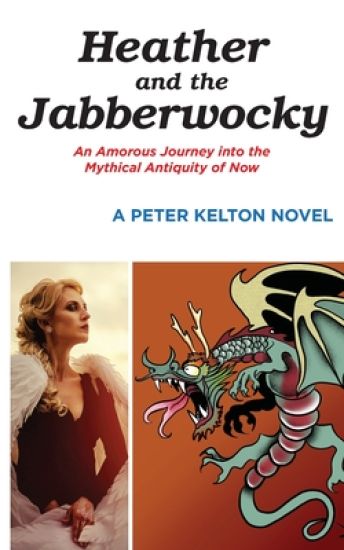
Heather and the Jabberwocky

Heather and the Jabberwocky

Peter Kelton

Peter Kelton DBA as Edit Ink
2020
pokkari
Heather and the JabberwockyAn Amorous Journey into the Mythical Antiquity of NowA vengeful stalker tracks lovely Heather mercilessly from Hong Kong to France to Georgia as her artist husband fends off a Mexican drug cartel's attempts to disrupt their tranquil academic lives. It's an intelligent fantasy, a daunting mystery and a tantalizing adventure in literary fiction, told with a tongue-in-cheek sense of humor.All hope for Heather depends on the Jabberwocky, a nonsense poem written by Lewis Carroll. When Alice of Alice's Adventures in Wonderland reads the poem, she says, "Somehow it seems to fill my head with ideas -- only I don't exactly know what they are." Heather escapes the Caribbean monster Lusca only to rise to the heights of an Aztec sacrificial pyramid. In her desperation she discovers unfathomable ideas from her mind. They aren't understood until made visual by her artist husband. Or is that another illusion from behind the looking glass? As with Alice, everything mirrors everything.The reflective answers lie in the characters created by the author. As in earlier novels, described by critics as "marvelously extraordinary, eccentric and bizarre," Peter Kelton's characters emerge from their regular roles in life and slowly unmask their true selves from the cover of a stealthily constructed delusion - that idiosyncratic impression firmly maintained despite being contradicted by what is generally accepted as reality. For one character, tis a symptom of mental disorder; or is it?In "Heather and the Jabberwocky" Kelton's characters are indeed marvelously extraordinary, eccentric and bizarre. They are just as real as Studs Terkel's real folks in "The Great War." Instead of a war to bind them together, they share the odyssey of a fantasy. "Heather and the Jabberwocky" is a companion to a seven-novel bookshelf that also includes "Splat " "A Light in Polanco," "The Trevor Truculence," "Reminds Me of My Innocence," "The Junk Yard Solution" and "The Yesterlings," written in a span of 50 years after Lewis H. Lapham, editor of Harper's, wrote to the author's agent, "I love the way Kelton writes." Psychologist B. G. Stice wrote in a review of Kelton's first novel, in 2006. "The author is a master of plot twists. His writing is lyrical and stunning in its simplicity. He draws characters with a thin pencil and leaves the rest to your imagination. And he's not above pulling your leg." "Splat " has been described as "a surrealistic, erudite literary novel of romantic intrigue set on the slippery approaches to the dot.com era."
News of the Day Adventures of a Wildly Cantankerous Veteran Newsroom Saving Dying Newspapers
News of the DayAdventures of a Wildly Cantankerous Veteran Newsroom Saving Dying NewspapersWhen billion dollar Hedge Funds decide to revive news empires they destroyed, who do they recruit but Big Burt, the one-eyed editor who rounds up a scurrilous gang of hardened reporters who've seen it all. Burt leads them on an adventure that includes unlikely romance, tons of mystery, suspense; and satire about the news. They operate out of a feed store in rural Kentucky with the aid of Chinese technology a decade ahead of U.S. newspapers, expanding and expounding on local news that's been left behind in the digital age. The gathered news ranges from routine obituaries to black bears trapped with doughnuts, local elections to disgruntled native Americans. All sorts of lives matter as the veterans teach reporting to the next generation of truth seekers. Some of the reporting touches on secret endeavors in which the Hedge Funds have an invested stake. Covering up back room dealings has never been part of the reporters' heritage and several versions of invented conspiracies leak to the supermarket tabloids. Will the sensational publicity destroy the true local news revival? Much depends on the rambunctious characters one-eyed Burt has put together. They plow fields of journalism with fresh minds. Whether it lasts depends on how you read Burt's philosophy: "When you know everything is temporary, especially being infallible, you have reason to hope." Of course, a lot of events were laughable.As in all his novels the author remains steady in his belief that well-written literary fiction doesn't have to be "highbrow"; it has to embrace ideas about destiny in a storyline that holds the readers' attention and occasionally prompts laughter. No room for the hoity-toity. During his classic presentation at the 200th anniversary writers' conference of North American Review, the nation's oldest literary magazine, he poked fun at his own novels for their obscurity, implying clarity in the digital age demands simplicity. Then he toyed with the digital age itself: "Some nut will find a way to blow up the electric grid. All these electronic gadgets that rely on electricity will go dark. The batteries will run down. We're talking Cormac McCarthy darkness, black on black. . . except for one distant flicker of light. It's on a beach probably Australia. Survivors will make their way through the dark and find the light from a single candle. Next to the candle will be a lad with a notebook scribbling away with the last pencil on earth. He's writing about what happened. He hopes someone will read what he writes. That's what writers do. They hope." , "News of the Day" is a companion to a nine-novel series, written in a span of 50 years after Lewis H. Lapham, editor of Harper's, encouraged him by writing to the author's agent, "I love the way Kelton writes." Psychologist B. G. Stice wrote in a review of Kelton's first published novel, in 2006. "The author is a master of plot twists. His writing is lyrical and stunning in its simplicity. He draws characters with a thin pencil and leaves the rest to your imagination. And he's not above pulling your leg." That novel, "Splat " has been described as "a surrealistic, erudite literary novel of romantic intrigue set on the slippery approaches to the dot.com era." The series label has been A PETER KELTON NOVEL. It began to emerge in print in 2005 after 40 years of incubation. Originally conceived in 1965 with the help of literary agent Perry Knowlton who promoted two earlier novels, the final novel, "Dr. Bob," is scheduled for publication in June 2022.
The Junk Yard Solution

The Junk Yard Solution

Peter Kelton

Peter Kelton DBA as Edit Ink
2019
pokkari
The Junk Yard SolutionAdventures Among the Boxcars and Other Lost CausesAs the rest of the world goes wild over smart phones, an odd assortment of eclectic characters hunkers down near Lebanon, Kansas, geographic center of the lower 48, at the middle of a square-mile junk yard where railroads dump old boxcars. The characters live in the boxcars. They don't like electronic gadgets. They're fed up with digital life.In a triumph of literary fiction, adventure, mystery, suspense and caustic comical digs at contemporary society and U.S. history, they create an acerbic satire in search of lost causes. Among them lovely Loretta campaigns to tear down a cell phone tower that rises above the boxcar village. The tower is owned by a communications company whose salesmen are Cheyenne Native Americans.But then Loretta is discovered one morning hanging dead from the tower. A large Federal Marshal and ex-NFL tight end investigates her death, grilling all residents, each with their own peculiar fantasy tale. Suspense builds. Who killed Loretta? Will the tower come down? Why are the Cheyenne circling the village? Why is this one of the most enjoyable, readable and fascinating novels published?The answers lie in the characters created by the author. As in earlier novels, described by critics as "marvelously extraordinary, eccentric and bizarre," Peter Kelton's characters emerge from boxcars where each life has had its ups and downs, tales of love, triumph and adventure, but never a defeat.As in all his novels the author remains steady in his belief that well-written literary fiction doesn't have to be high brow; it has to embrace ideas about destiny in a storyline that holds the readers' attention. During his classic presentation at the 200th anniversary writers' conference of North American Review, the nation's oldest literary magazine, he poked fun at his own novels for their obscurity, implying clarity in the digital age equals salvation. Then he toyed with the digital age itself: Some nut will find a way to blow up the electric grid. All these electronic gadgets that rely on electricity will go dark. The batteries will run down. We're talking Cormac McCarthy darkness, black on black. . . except for one distant flicker of light. It's on a beach probably Australia. Survivors will make their way through the dark and find the light from a single candle. Next to the candle will be a lad with a note book scribbling away with the last pencil on earth. He's writing about what happened. He hopes someone will read what he writes. That's what writers do. They hope.In "The Junk Yard Solution" Kelton's characters are indeed marvelously extraordinary, eccentric and bizarre. They are just as real as Studs Terkel's real folks in "The Great War." Instead of a war to bind them together, they share the Junk Yard in a fantasy. After a small standing ovation for his literary presentation, a local reporter in Cedar Falls, Iowa asked Kelton what his "style" was. "Wedged somewhere between the beautiful language of John Hawkes and the dense absurdity of Thomas Pynchon.""The Junk Yard Solution" is a companion to a six-novel bookshelf that also includes "Splat " "A Light in Polanco," "The Trevor Truculence," "Reminds Me of My Innocence," and "The Yesterlings," written in a span of 50 years after Lewis H. Lapham, editor of Harper's, wrote to the author's agent, "I love the way Kelton writes." His writing has been described as "lyrical and stunning in its simplicity."
Reminds Me of My Innocence

Reminds Me of My Innocence

Peter Kelton

Peter Kelton DBA as Edit Ink
2019
pokkari
Reminds Me of My InnocenceAmorous Adventures Among Kissing CousinsMark Evans, the handsome and rambunctiously wild younger brother, visits his grizzled story telling older brother James in a nursing home. James recounts from his frayed memory an oddly romantic tale of brother Mark seducing three cousins in a single night. Or did they seduce him? With snippets from beyond innocence, nestled in the cradle of discovery, the family emerges: The sisters are emotionally scarred by a heavy drinking father who is shaken with Parkinson's disease. Compared to the Texan brothers, the New York girls are relatively sophisticated. Their cultures collide head-on. From the opening line: "Sleeping with three sisters, now that's big trouble," (you can hear the drawl) the story traces brotherly and sisterly ties through a lifetime of misadventures. It seems as if, at every new turn in the brothers' lives, the sisters invade the scene in a complex litany of literary fiction, adventure, mystery, suspense, myth, romance and desire. Story telling James believes he hasn't lost his memory to Alzheimer's -- he's found the language of dementia -- "the language of our future." James explains his perspective as the equivalent of scientists' discovering Black Holes in the universe. The unseen dense matter we all think is way out there beyond our reach actually exists within our minds; it's where Alzheimer's takes us. He unravels tales from that unfathomed inner brain, spliced together with imagination, chewing gum and bailing wire, in a syncopated rhythm of humorous delight.As in earlier novels, described by critics as "marvelously extraordinary, eccentric and bizarre," Peter Kelton's characters emerge from their innocence in a parade of lust and occasional betrayal, sauntering through and sometimes tripping over basic truths about human nature. As in all his novels the author remains steady in his belief that well-written literary fiction doesn't have to be high-brow; it has to embrace ideas about destiny in a storyline that holds the readers' attention. During his classic presentation at the 200th anniversary writers' conference of North American Review, the nation's oldest literary magazine, he poked fun at his own novels for their obscurity, implying clarity in the digital age equals salvation. Then he toyed with the digital age itself: Some nut will find a way to blow up the electric grid. All these electronic gadgets that rely on electricity will go dark. The batteries will run down. We're talking Cormac McCarthy darkness, black on black. . . except for one distant flicker of light. It's on a beach probably Australia. Survivors will make their way through the dark and find the light from a single candle. Next to the candle will be a lad with a note book scribbling away with the last pencil on earth. He's writing about what happened. He hopes someone will read what he writes. That's what writers do. They hope.In "Reminds Me of My Innocence," Kelton's characters are indeed marvelously extraordinary, eccentric and bizarre. They are just as real as Studs Terkel's real folks in "The Great War." Instead of a war to bind them together, they are bound together by innocent lust and folly. After a small standing ovation for his literary presentation, a local reporter in Cedar Falls, Iowa asked Kelton what his "style" was. "Wedged somewhere between the beautiful language of John Hawkes and the dense absurdity of Thomas Pynchon."After Lewis H. Lapham, editor of Harper's, wrote to the author's agent, "I love the way Kelton writes," he completed six novels in 50 years.
The Trevor Truculence

The Trevor Truculence

Peter Kelton

Peter Kelton DBA as Edit Ink
2019
pokkari
The Trevor TruculenceAmorous Adventures Among the Phoenician Antiquitiesin the South of SpainThis novel thrust an ancient Spanish fishing village that dates from the Phoenician era about 800 BC suddenly into the modern world as foreigners disrupt traditions and import radical change. Conflict arises when an American writer (Paul) returns to the village after a10-year absence to fall in love with a former neighbor, Gerda. Together they investigate a conspiracy led by Gerda's former lover Trevor, a British adventurer, to exploit a hidden treasure of rhino horns buried deep in a cave thousands of years ago by Phoenicians who slaughtered the white rhinos in the Congo. Trevor is obsessed by the rhino horns' aphrodisiac qualities and has linked it to the sexual performance of the African bonobo monkey and the sterling good health of the villagers. Paul and Gerda discover in Trevor's endeavors a complex tale of literary fiction, adventure, mystery, suspense, myth, romance and Spanish history unlike any other ever written.As in earlier novels, described by critics as "marvelously extraordinary, eccentric and bizarre," Peter Kelton's characters emerge from their white-washed village homes in a parade of lust and occasional betrayal, sauntering through and sometimes tripping over basic truths about human nature. As in all his novels the author remains steady in his belief that well-written literary fiction doesn't have to be high-brow; it has to embrace ideas about destiny in a storyline that holds the readers' attention. During his classic presentation at the 200th anniversary writers' conference of North American Review, the nation's oldest literary magazine, he poked fun at his own novels for their obscurity, implying clarity in the digital age equals salvation. Then he toyed with the digital age itself: Some nut will find a way to blow up the electric grid. All these electronic gadgets that rely on electricity will go dark. The batteries will run down. We're talking Cormac McCarthy darkness, black on black. . . except for one distant flicker of light. It's on a beach probably Australia. Survivors will make their way through the dark and find the light from a single candle. Next to the candle will be a lad with a note book scribbling away with the last pencil on earth. He's writing about what happened. He hopes someone will read what he writes. That's what writers do. They hope.In "The Trevor Truculence," Kelton's characters are indeed marvelously extraordinary, eccentric and bizarre. They are just as real as Studs Terkel's real folks in "The Great War." Instead of a war to bind them together, they are bound together by sharing the village secrets. After a small standing ovation for his literary presentation, a local reporter in Cedar Falls, Iowa asked Kelton what his "style" was. "Wedged somewhere between the beautiful language of John Hawkes and the dense absurdity of Thomas Pynchon.""The Trevor Truculence" is a companion to a highly readable six-novel bookshelf that also includes "Splat " "A Light in Polanco," "The Junk Yard Solution" "Reminds Me of My Innocence," and "The Yesterlings," written in a span of 50 years after Lewis H. Lapham, editor of Harper's, wrote to the author's agent, "I love the way Kelton writes." Psychologist B. G. Stice wrote in a review of Kelton's first novel, in 2006. "The author is a master of plot twists. His writing is lyrical and stunning in its simplicity."
The Yesterlings

The Yesterlings

Peter Kelton

Peter Kelton DBA as Edit Ink
2019
pokkari
The YesterlingsSecrets Among the Wild Horses of Sable IslandSeeking adventure, Argentine dandy Balboa Brontine charms his way onto an expedition to film a remote Canadian island famed for wild horses and shipwrecks. He persuades Paul the filmmaker to let New Orleans femme fatale Geraldine join their yacht. At sea the two men vie for her affections, Balboa bold and brazen, Paul quietly nursing his attraction. She focuses on extracting the truth from Balboa - Why is he involved? He claims he was raised by horses when his father shipwrecked and wants to breed the tough horses with his Argentinean mounts. But in deliriums he tells of a secret the island hides. When the entangled trio shipwrecks, Balboa's hoax and secrets surface on the island's desolate beaches. They struggle to survive, surrounded by wild horses and the raw truth of Sable Island, figuratively a literary fiction of adventure, mystery, suspense, myth, romance and desire.As in earlier novels, described by critics as "marvelously extraordinary, eccentric and bizarre," Peter Kelton's characters emerge from their roles in a parade of lust, sauntering through and sometimes tripping over basic truths about human nature. As in all his novels the author remains steady in his belief that well-written literary fiction doesn't have to be high-brow; it has to embrace ideas about destiny in a storyline that holds the readers' attention. During his classic presentation at the 200th anniversary writers' conference of North American Review, the nation's oldest literary magazine, he poked fun at his own novels for their obscurity, implying clarity in the digital age equals salvation. Then he toyed with the digital age itself: Some nut will find a way to blow up the electric grid. All these electronic gadgets that rely on electricity will go dark. The batteries will run down. We're talking Cormac McCarthy darkness, black on black. . . except for one distant flicker of light. It's on a beach probably Australia. Survivors will make their way through the dark and find the light from a single candle. Next to the candle will be a lad with a note book scribbling away with the last pencil on earth. He's writing about what happened. He hopes someone will read what he writes. That's what writers do. They hope.In "The Yesterlings," Kelton's characters are indeed marvelously extraordinary, eccentric and bizarre. They are just as real as Studs Terkel's real folks in "The Great War." Instead of a war to bind them together, they are bound together by a quest to preserve a natural environment for wild birds and wild horses. After a small standing ovation for his literary presentation, a local reporter in Cedar Falls, Iowa asked Kelton what his "style" was. "Wedged somewhere between the beautiful language of John Hawkes and the dense absurdity of Thomas Pynchon.""The Yesterlings" is a companion to a highly readable six-novel bookshelf that also includes "Splat " "A Light in Polanco," "The Junk Yard Solution" "The Trevor Truculence," and "Reminds Me of My Inn Innocence," written in a span of 50 years after Lewis H. Lapham, editor of Harper's, wrote to the author's agent, "I love the way Kelton writes." Psychologist B. G. Stice wrote in a review of Kelton's first novel, in 2006. "The author is a master of plot twists. His writing is lyrical and stunning in its simplicity. He draws characters with a thin pencil and leaves the rest to your imagination. And he's not above pulling your leg." His style has been called "surrealistic, erudite and literary."