Kirjojen hintavertailu. Mukana 12 595 353 kirjaa ja 12 kauppaa.

Kirjailija

Peter Kennison

Kirjat ja teokset yhdessä paikassa: 5 kirjaa, julkaisuja vuosilta 2010-2021, suosituimpien joukossa Behind the Blue Lamp: Scotland Yard's Police Stations 1829-2020. Vertaile teosten hintoja ja tarkista saatavuus suomalaisista kirjakaupoista.

5 kirjaa

Kirjojen julkaisuhaarukka 2010-2021.

Behind the Blue Lamp: Scotland Yard's Police Stations 1829-2020

Behind the Blue Lamp: Scotland Yard's Police Stations 1829-2020

Alan Moss; David Swinden; Peter Kennison

Mango Books
2021
nidottu
Ever since its inception in 1829 the Metropolitan Police Service has seen change on a daily basis, not least in recent years with budget cuts and the closure of police stations. Recording the stories of these buildings, BEHIND THE BLUE LAMP reveals the histories of more than 400 police stations operated by the Metropolitan Police over the course of its existence, from pre-Peel Parish watch houses to the New Scotland Yard headquarters on Victoria Embankment. The lives of the officers who served and sometimes lived in these police stations are related, charting a developing social history across the capital of almost two centuries. An account of the evolution of the Metropolitan Police District is also given, including histories of the various Divisions, and details of the developing uniforms, equipment and badges of rank over the course of more that 190 years are recorded.
Policing from Bow Street

Policing from Bow Street

Peter Kennison

Mango Books
2021
pokkari
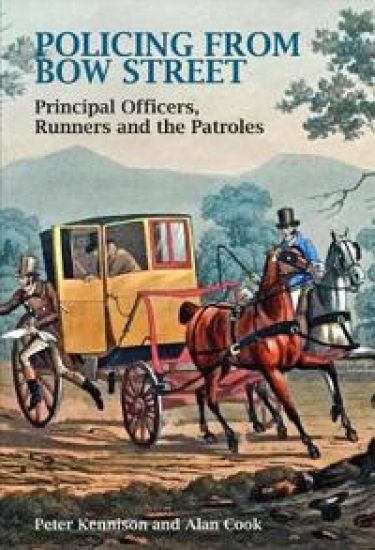
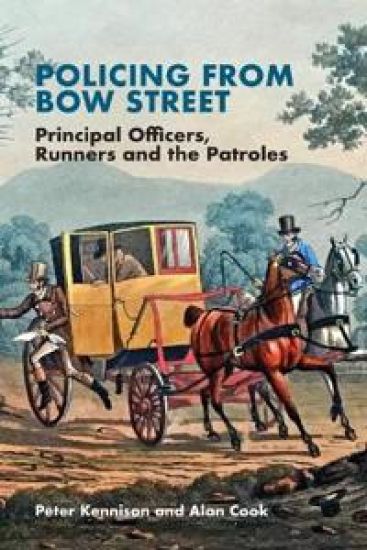
The starting point for many scholars studying the art and science of crime investigation wrongly begins with the creation of Robert Peel's New Police in 1829, yet basic policing and investigative elements had been tried and tested at least 80 years before that. In mid-Georgian times, the playwright and magistrate Henry Fielding realised the ineffectiveness of the Parish Police Parochial Watch system that press-ganged traders and merchants into doing their civil duty as Constables. Each Parish Watch operated independently within its own boundary, but since crime fails to respect boundaries many perpetrators escaped. Crimes committed often went unreported for want of a real central police organisation. An innovative plan was needed, and through Fielding's determination the Bow Street Public Office became the Centre Office for victims reporting their crimes in and around London. This was the first police station and court building; a hub for crime administration, accommodation for police officers, a place to detain prisoners. Fielding established the Criminal Records system of searchable registers at the Centre Office. Gathering intelligence on crime and criminals not only provided for the first time an understanding of criminality, but also allowed offenders to be caught after the crime had been committed. Fielding also formed the Foot Patroles, an organised and regulated body of men, to combat riots, gangs and street disorder, thus establishing an early police sub-culture. This detailed narrative seeks to go behind the scenes of Bow Street to a secret world denied to the majority. The professional and private lives of the Justices and Officers - often called the 'Runners' - are examined here for the first time, revealing their secrets, their experiences and their brave exploits which established them as honest thief-takers, constables and the first early detectives.
Policing From Bow Street

Policing From Bow Street

Peter Kennison; Alan Cook

Blue Lamp Books
2019
sidottu
The starting point for many scholars studying the art and science of crime investigation wrongly begins with the creation of Robert Peel's New Police in 1829, yet basic policing and investigative elements had been tried and tested at least 80 years before that. In mid-Georgian times, the playwright and magistrate Henry Fielding realised the ineffectiveness of the Parish Police Parochial Watch system that press-ganged traders and merchants into doing their civil duty as Constables. Each Parish Watch operated independently within its own boundary, but since crime fails to respect boundaries many perpetrators escaped. Crimes committed often went unreported for want of a real central police organisation. An innovative plan was needed, and through Fielding's determination the Bow Street Public Office became the "Centre Office" for victims reporting their crimes in and around London. This was the first police station and court building; a hub for crime administration, accommodation for police officers, a place to detain prisoners. Fielding established the Criminal Records system of searchable registers at the Centre Office. Gathering intelligence on crime and criminals not only provided for the first time an understanding of criminality, but also allowed offenders to be caught after the crime had been committed. Fielding also formed the Foot Patroles, an organised and regulated body of men, to combat riots, gangs and street disorder, thus establishing an early police sub-culture. This detailed narrative seeks to go behind the scenes of Bow Street to a secret world denied to the majority. The professional and private lives of the Justices and Officers - often called the 'Runners' - are examined here for the first time, revealing their secrets, their experiences and their brave exploits which established them as honest thief-takers, constables and the first early detectives.
Shooting to Kill?

Shooting to Kill?

Peter Squires; Peter Kennison

John Wiley Sons Inc
2010
sidottu
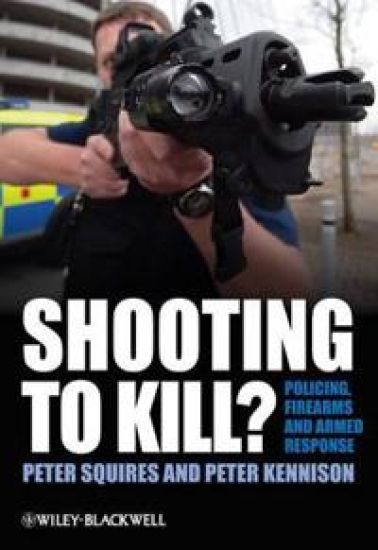
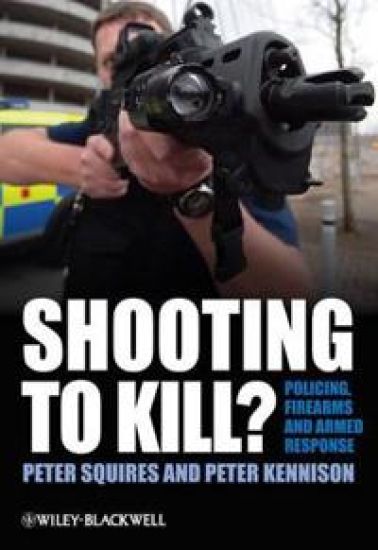
Shooting to Kill? Policing, Firearms and Armed Response explores the dilemma of armed response policing in the UK, and policing in a gun culture. Offers the first critical exploration of the ACPO code of guidance on Police Use of Firearms and other tactical manualsIncludes interviews with senior police firearms managers and critical case studies of police firearms incidentsFeatures the first in-depth, academic analysis of the Stockwell shooting incident and the Kratos policyProvides a review of key developments in armed response policing around the worldDescribes the crucial phases in armed response policy development in Britain and explores the consequences of arming the police
Shooting to Kill?

Shooting to Kill?

Peter Squires; Peter Kennison

John Wiley Sons Inc
2010
nidottu
Shooting to Kill? Policing, Firearms and Armed Response explores the dilemma of armed response policing in the UK, and policing in a gun culture. Offers the first critical exploration of the ACPO code of guidance on Police Use of Firearms and other tactical manualsIncludes interviews with senior police firearms managers and critical case studies of police firearms incidentsFeatures the first in-depth, academic analysis of the Stockwell shooting incident and the Kratos policyProvides a review of key developments in armed response policing around the worldDescribes the crucial phases in armed response policy development in Britain and explores the consequences of arming the police