Kirjailija
Peter Kivisto
Kirjat ja teokset yhdessä paikassa: 25 kirjaa, julkaisuja vuosilta 1988-2025, suosituimpien joukossa Max Weber. Vertaile teosten hintoja ja tarkista saatavuus suomalaisista kirjakaupoista.
25 kirjaa
Kirjojen julkaisuhaarukka 1988-2025.
Max Weber is surpassed only by Karl Marx in the breadth of his influence as a social scientist. This bio-bibliography presents a complete listing of printed translations of Weber's works into English and a comprehensive, annotated bibliography of the secondary literature in English about Weber and his work. The first part contains chapter-length biographies of Weber, an overview of Weber's reception in Anglo-America, and a brief discussion of archival holdings for those interested in primary sources. Kivisto and Swatos offer an assessment of existing studies of Weber's life and thought in lieu of a conventional biography. The bulk of the volume is devoted to providing a bibliographic guide to the secondary literature on Weber in English. Annotated entries are arranged in five topical chapters that focus on biography and intellectual history, social science methodology, religion, politics and social class, and modernity, rationality, and bureaucracy.Additional access to information is provided by two indexes: the author index lists the authors of all entries and the number(s) of their respective citations; the name and subject index identifies names that appear in titles or bibliographic entries and guides the researcher to subjects that may be treated in more than one chapter. This first annotated bibliography of works by and about one of modern sociology's founding fathers is a reference book for both scholars and students of social theory, historical sociology, the sociology of religion, and organizational sociology.

This book provides a comprehensive introduction to Jeffrey C. Alexander’s Civil Sphere Theory (CST). It reconstructs the development and key features of this theory and explains why it offers an original and compelling way of thinking about civil society. The book reveals the ways in which the various components of CST come together to offer an illuminating framework for making sense of the complexities, ambiguities, and tensions inherent in modern democratic societies located in highly differentiated and pluralistic societies. It compares CST to civil society theories from the past and present, along with the idea of the societal community and Habermas’s theory of the public sphere. Among the topics addressed are the relationship between CST and Alexander’s approach to cultural sociology, the binary character of cultural codes, normative philosophy, the role of social movements in effecting civil repair, and the idea of multiculturalism as a new mode of incorporation that makes possible a politics of recognition. The book assesses the main criticisms of CST and concludes by showing how CST has proven to be an ongoing, evolving project that has generated a wide range of empirical research and stimulated further theoretical refinement and development.
Sociology of Religion
Kevin J. Christiano; Peter Kivisto; Jr. Swatos; Swatos
BLOOMSBURY PUBLISHING PLC
2025
sidottu
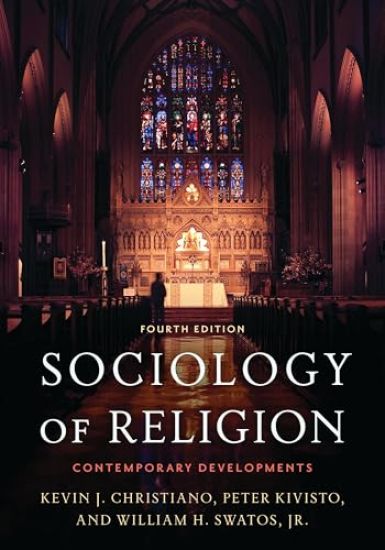
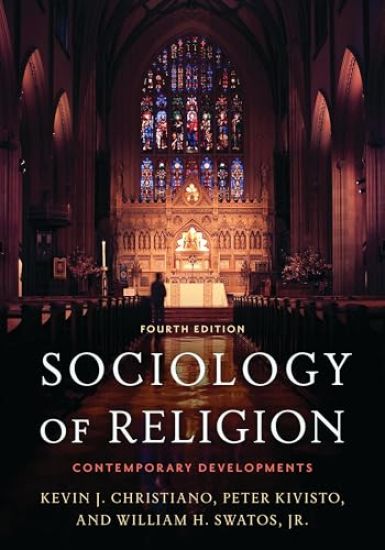
Sociology of Religion, Fourth Edition, introduces students to key principles in the sociological understanding of religion. It offers an overview of the nature and function of religious institutions and practices, asking sociological questions about the changing role of religion in today’s “post-traditional” world. After an introduction to the many facets of religion and key theories for its study, the book examines central themes such as changes in religious life in the United States; the intersections between religion, social class, and power and between gender, sexuality, and religion; globalization and religion; religion in mass media; and more.
Sociology of Religion
Kevin J. Christiano; Peter Kivisto; Jr. Swatos; Swatos
ROWMAN LITTLEFIELD
2025
nidottu
Sociology of Religion, Fourth Edition, introduces students to key principles in the sociological understanding of religion. It offers an overview of the nature and function of religious institutions and practices, asking sociological questions about the changing role of religion in today’s “post-traditional” world. After an introduction to the many facets of religion and key theories for its study, the book examines central themes such as changes in religious life in the United States; the intersections between religion, social class, and power and between gender, sexuality, and religion; globalization and religion; religion in mass media; and more.
SocietyNow Book Set (2016-2019)
Vincent Mosco; Matt Bolton; Crystal Abidin; Ellis Cashmore; Ruth A. Deller; Katrin Tiidenberg; Peter Kivisto; Graham Taylor
Emerald Publishing Limited
2020
muu
Why is our world the way it is, right now? SocietyNow presents the best academic expertise examining key events, trends and phenomenon of current times. Readable, accessible and digestible commentary on the most complex and defining topics of the 21st Century. Written by leading experts in their fields and published when the issues are a focal point across the globe, titles in the series offer a thoughtful and concise response to the major political and economic events and social and cultural trends of our time. Titles included in this set: The Trump Phenomenon: How the Politics of Populism Won in 2016;Becoming Digital: Toward a Post-Internet Society;Understanding Brexit: Why Britain Voted to Leave the European Union;Selfies: Why We Love (and Hate) Them;Internet Celebrity: Understanding Fame Online;Corbynism: A Critical Approach;The Smart City in a Digital World;Kardashian Kulture: How Celebrities Changed Life in the 21st Century;Reality Television: The TV Phenomenon that Changed the World;
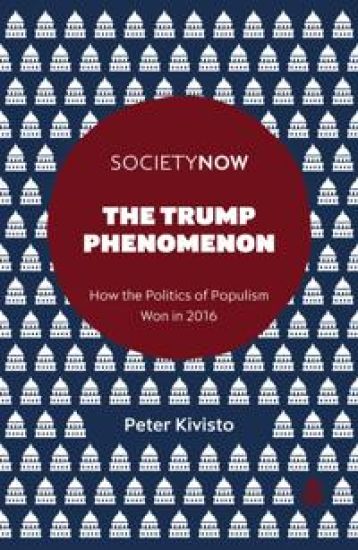
On November 8, 2016, American voters surprised the world by electing a rank outsider with no previous political experience, businessman and celebrity Donald J. Trump, to become the 45th President of the United States after one of the most divisive and contentious campaigns in recent history. In this short book, Peter Kivisto analyses how this happened, focusing on who Trump is and the narratives about him and his candidacy that evolved during the campaign, who his supporters are and what their worldview is, and the role of the media, right-wing Christians, and the Republican Party in making Trump’s victory possible. The Trump phenomenon must be viewed as a manifestation of right-wing populism, a movement which has serious implications for democratic values and practices, and this book examines how it took hold in America to put one of the most controversial presidents ever elected into the White House.
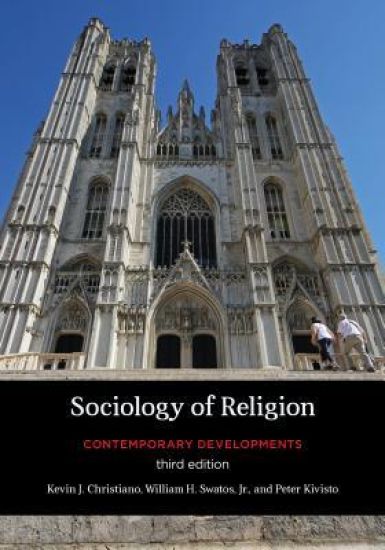
This third edition of Sociology of Religion introduces students to key principles in the sociological understanding of religion, with revisions and updates throughout. The book offers an overview of the nature and function of religious institutions and practices, asking sociological questions about the changing role of religion in today’s “post-traditional” world. After an introduction to the many facets of religion and key theories for its study, the book examines central themes such as changes in religious life in the United States; the intersections between religion, social class, and power and between gender, sexuality, and religion; globalization and religion; religion in mass media; and more. The third edition features new material on the relationship of race and ethnicity to religion, the perceived rises of both secularism and fundamentalism, and the role of religion in public debates on sexuality. Sociology of Religion addresses both the foundations of the field and the profound changes it has undergone, placing new examples against their historical background. Charts, photos, down-to-earth examples, and a readable style make the book an ideal introduction for students.
How is solidarity achieved in highly diverse societies - particularly those that have been until recently characterized by rather homogeneous populations? What are the implications of growing levels of diversity on existing social arrangements? These two fundamental questions are explored in this edited collection, which examines the challenges of minority integration in four Nordic countries: Denmark, Finland, Norway, and Sweden. These nations represent paradigmatic examples of social democratic welfare states that place a premium on a robust package of social rights, combined with policies aimed at reducing levels of class-based inequality and promoting gender equity. All four of these nations have witnessed growing levels of diversity due to immigration and three of them have been forced to rethink their policies concerning the indigenous Sámi, as well as old minority groups. Two introductory chapters, by Thomas Hylland Eriksen and Peter Kivisto, serve as a conceptual framework for the seven case studies that follow, and which, from a variety of perspectives and with differing emphases, analyze the evolving realities in these nations today. Taken together, they offer evidence of the critical issues surrounding attempts to achieve solidarity while valorizing diversity.
This concise book provides readers with a comprehensive overview and critical assessment of the key issues and varied strands of research relating to immigration and religion that have been produced during the past two decades. Religion, once a neglected topic in migration studies, is today seen as a crucially important aspect of the immigrant experience. For some - particularly those focusing on religion in North America - religion has been portrayed as a vital resource for many immigrants engaged in the essential identity work required in adjusting to the receiving society. For others - particularly those who have focused on Muslim immigrants in Western Europe - religion tends to be depicted as a source of conflict rather than one of comfort and consolation. In a judicious, engaging, and highly readable account, this book sorts through these contrasting viewpoints, pointing to an approach that will assist upper-level students and scholars alike in putting these competing analyses into perspective.
Race and ethnicity have shaped the social, cultural and political character of much of the world, and remain an important influence on contemporary life in the 21st Century. Race and Ethnicity: The Basics is an accessible introduction to these potent forces. Topics covered include: The forms and dynamics of racial and ethnic relationsThe dynamics of inequality The relationship between prejudice and discrimination Ethnic conflictModels of inclusionIncluding plenty of examples, chapter summaries and a glossary, this book is an essential read for all those interested in the contested field of race and ethnicity.
The Migration-Development Nexus
Thomas Faist; Margit Fauser; Peter Kivisto
Palgrave Macmillan
2011
sidottu
This book examines current policy discussions around the migration-development nexus and subjects them to rigorous conceptual and empirical criticism through a transnational lens, placing the current re-discovery of migrants as agents of development nexus into theoretical and historical perspective.
The Migration-Development Nexus
Thomas Faist; Margit Fauser; Peter Kivisto
Palgrave Macmillan
2011
nidottu
This book examines current policy discussions around the migration-development nexus and subjects them to rigorous conceptual and empirical criticism through a transnational lens, placing the current re-discovery of migrants as agents of development nexus into theoretical and historical perspective.
The most up-to-date analysis of today’s immigration issues As the authors state in Chapter 1, "the movement of people across national borders represents one of the most vivid dramas of social reality in the contemporary world." This comparative text examines contemporary immigration across the globe, focusing on 20 major nations. Noted scholars Peter Kivisto and Thomas Faist introduce students to important topics of inquiry at the heart of the field, including Movement: Explores the theories of migration using a historical perspective of the modern world. Settlement: Provides clarity concerning the controversial matter of immigrant incorporation and refers to the varied ways immigrants come to be a part of a new society. Control: Focuses on the politics of immigration and examines the role of states in shaping how people choose to migrate. Key Features Provides comprehensive coverage of topics not covered in other texts, such as state and immigration control, focusing on policies created to control migratory flow and evolving views of citizenshipOffers a global portrait of contemporary immigration, including a demographic overview of today’s cross-border moversOffers critical assessments of the achievements of the field to dateEncourages students to rethink traditional views about the distinction between citizen and alien in this global ageSuggests paths for future research and new theoretical developments Beyond a Border is a part of the SAGE Pine Forge Sociology for a New Century Series. It offers professors a powerful and timely option to incorporate the topic of immigration in their courses. Contributor to the SAGE Teaching Innovations and Professional Development Award
Citizenship
Peter Kivisto; Thomas Faist
Wiley-Blackwell (an imprint of John Wiley Sons Ltd)
2007
nidottu
A significant addition to the growing body of literature on citizenship, this wide-ranging overview focuses on the importance, and changing nature, of citizenship. It introduces the varied discourses and theories that have arisen in recent years, and looks toward future scholarship in the field. Offers an analytical assessment of the various thematic discourses and provides guidance in pulling together those discrete themes into a larger, more comprehensive frameworkIdentifies the four broadly conceived themes that shape the many discourses on contemporary citizenship – inclusion, erosion, withdrawal, and expansionIncludes a thorough introduction to the subject
Citizenship
Peter Kivisto; Thomas Faist
Wiley-Blackwell (an imprint of John Wiley Sons Ltd)
2007
sidottu
A significant addition to the growing body of literature on citizenship, this wide-ranging overview focuses on the importance, and changing nature, of citizenship. It introduces the varied discourses and theories that have arisen in recent years, and looks toward future scholarship in the field. Offers an analytical assessment of the various thematic discourses and provides guidance in pulling together those discrete themes into a larger, more comprehensive frameworkIdentifies the four broadly conceived themes that shape the many discourses on contemporary citizenship – inclusion, erosion, withdrawal, and expansionIncludes a thorough introduction to the subject
As the best single-source collection of classic and contemporary readings on the subject, this anthology will be a valuable reference to scholars of immigration, race and ethnicity, national identity, and the history of ideas, and indispensable for courses in history and the social sciences dealing with these topics.' Ruben G. Rumbaut, co-author of Immigrant America: A Portrait and Legacies: The Story of the Immigrant Second Generation Societies today are increasingly characterized by their ethnic, racial, and religious diversity. One key question raised by the global migration of people is how they do or do not come to be incorporated into their new social environments. For over a century, assimilation has been the concept used in explaining the processes of immigrant incorporation into a new society. It has also been applied to indigenous peoples, to refugees, and to involuntary migrants caught up in the slave trade. Assimilation has confronted many scholarly challenges which were often intermeshed with particular political agendas. This book allows readers to obtain a clearer sense of the canonical formulation of assimilation theory and an understanding of the key themes and issues contained in current efforts to rethink and revise the classical perspective for today's changing world.