Kirjailija
Peter Lewis
Kirjat ja teokset yhdessä paikassa: 20 kirjaa, julkaisuja vuosilta 1992-2023, suosituimpien joukossa Understanding Hume. Vertaile teosten hintoja ja tarkista saatavuus suomalaisista kirjakaupoista.
20 kirjaa
Kirjojen julkaisuhaarukka 1992-2023.
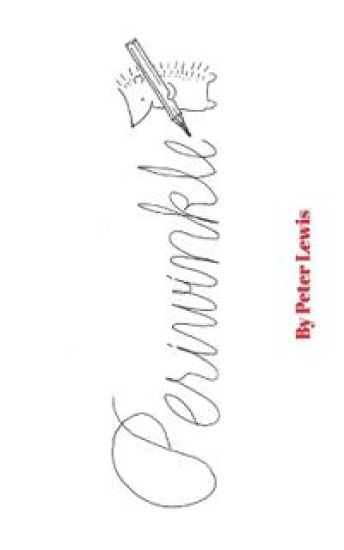
This book is healthy for all kids for 4 to 84. It tells the story of an adorable little hedgehog.
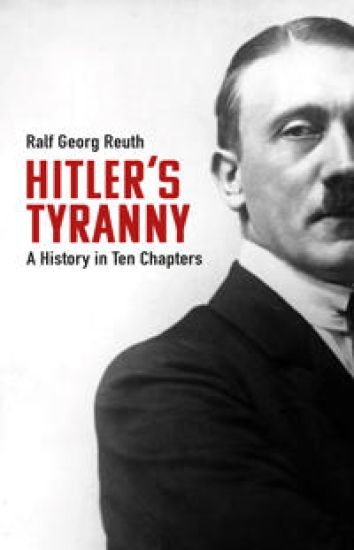
Hitler's tyranny is still difficult to understand today. In this book, Ralf Georg Reuth examines ten aspects of this catastrophe. Among other things, he asks: Was anti-Semitism more pronounced in Germany than elsewhere? Was Versailles responsible for Hitler's rise, and why did the Germans follow a racial fanatic like him? How did his war differ from all others before it? The disturbing answers provide an overall picture that shows: Hitler was not just the consequence of German history, but the result of chance, deception, and seduction. This thought-provoking new study takes aim at several of the 'sacred cows' of Hitler scholarship from the past forty years. Reuth interrogates and challenges a range of orthodox views on such topics as how mainstream politicians facilitated Hitler's rise to power, the Fuhrer's infamous pact with Stalin, and the complicity of ordinary Germans in his genocidal tyranny. Eschewing a conventional chronological approach in favour of a forensic analysis of Adolf Hitler's mainsprings of action both as chancellor and military commander, Reuth portrays Hitler as the apotheosis of a specifically German strain of militarism and imperialism, shifting the focus firmly back on to the mindset and modus operandi of Hitler himself. The portrait that emerges is one of a murderous fantasist and political opportunist driven by an all-embracing ideology of racial superiority. Reuth's account courts controversy on a few points but offers a fascinating counterpoint to much recent scholarship.
Western democracy has always been anchored by the idea of a public space where people gather to share ideas, mediate difference and make sense of the world. When Facebook blocked Australian users from viewing or sharing news in 2021, it sounded the alarm worldwide on our growing reliance on global tech companies to fulfil this critical role in a digital world. Facebook's hostile act, constituting a very real threat to participatory democracy, was a direct response to government attempts to regulate Big Tech's advertising monopoly and to mediate its impact on public interest journalism. The conflict sparked a new sense of urgency around the growing movement to imagine alternative digital spaces that operate in the public interest rather than simply for a commercial bottom line. Can we create sustainable media models to help us tackle society's problems? Can we engender a civic platform built on facts and civility? Can we control the power of our data and use it to promote the common good? The Public Square Project draws together leading tech scholars, industry experts, writers and activists to chart a path towards a public square worthy of the name.
In the decades since independence, the countries of sub-Saharan Africa have faced three central dilemmas of development. The first has been the challenge of state building. In the wake of colonial rule, governments have encountered the problems of establishing legitimate authority and constructing capable states. A second dilemma has been that of n
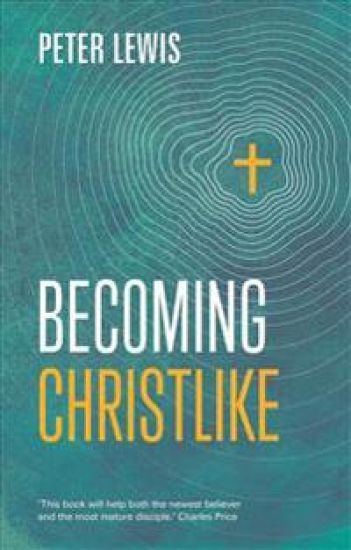
'God wants people to become like Christ,' said international preacher, writer and teacher John Stott in a public address at the end of his long life. Peter Lewis is similarly passionate about the Bible's message - that God has a plan which centres on Jesus and includes each one of us. In this accessible and helpful book, he focuses on the: - source of Christlikeness - model of Christlikenesshelps to Christlikeness - contradictions of Christlikeness an - triumph of Christlikeness Here, the reader who wants to become like Christ will find radical - sometimes challenging - teaching, practical wisdom and warm reassurance.
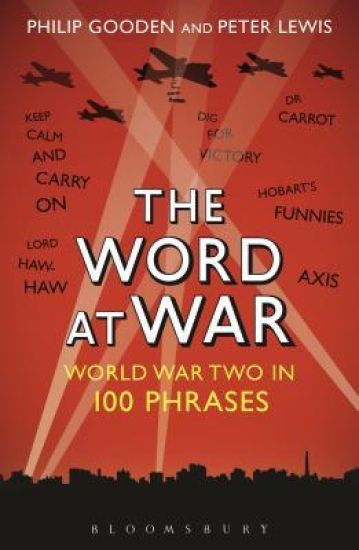
War words have embedded themselves in our collective psyche; British politicians are fond of invoking the ‘Dunkirk spirit’ whenever the country is faced with major crisis or even minor adversity, and Roosevelt’s famous description of Pearl Harbor as ‘a date which will live in infamy’ was echoed by many US commentators after the 9/11 attacks. So far, so familiar. Or is it? How many of us know, for instance, that ‘Keep Calm and Carry On’, far from achieving its morale-boosting aim, was considered at the time to be deeply patronizing by the people it was directed at, and so had only limited distribution? The Word at War explores 100 phrases spawned and popularized in the lead-up and during the conflict of World War Two. Substantial essays explore and explain the derivations of, and the stories behind, popular terms and phraseology of the period, including wartime speeches (and the words of Churchill, Hitler and FDR); service slang; national stereotypes; food and drink; and codewords.
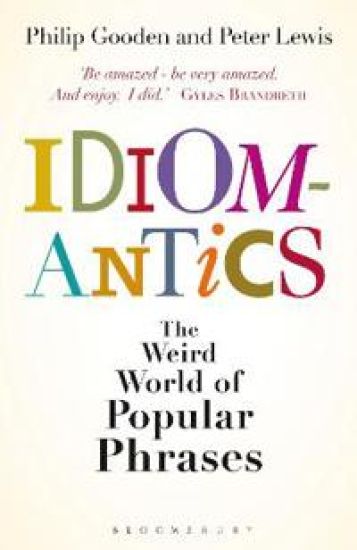
Idiomantics: The Weird World of Popular Phrases
Philip Gooden; Peter Lewis
A C Black Publishers Ltd
2012
sidottu
Idiomantics is a unique exploration of the world of idiomatic phrases. The very etymology of the word 'idiom' reveals what's so endlessly fascinating about the wide range of colourful phrases we use in everyday speech: their peculiarity. They're peculiar both in the sense of being particular or unique to the culture from which they originate, and in the sense of being downright odd. To cite three random examples - from American English, Dutch and Italian - what on Earth are a snow job, a monkey sandwich story, and Mr Punch's secret? Fascinating and illuminating, Idiomantics explains all...The ideal gift for word buffs and in fact, anyone who enjoys a good yarn, this playful book looks at 12 groups of idioms around the world, looking at subjects such as fun and games, gastronomic delights and the daily grind.
Analysis of Government Accountability Office Bid Protests in Air Force Source Selections Over the Past Two Decades
Thomas Light; Frank Camm; Mary E. Chenoweth; Peter Lewis; Rena Rudavsky
RAND
2012
pokkari
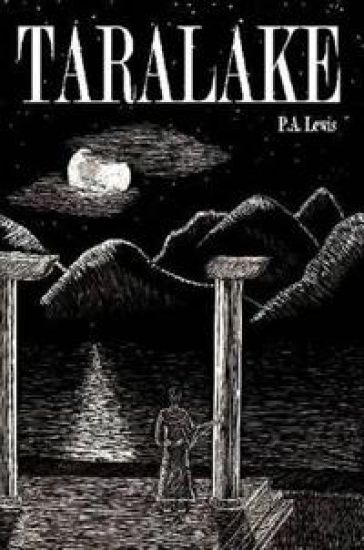
The journey of a soul from the death of one physical life as Josh, back to the spirit world as the soul Rhaner where decisions are made about his next incarnation. The tale continues with the same soul but in a new body known as Jordan and the unfolding story of his discovery of a portal into a parallel world of breathtaking beauty and his meeting up with Ellen who is the soul-mate he has shared many lives with before.
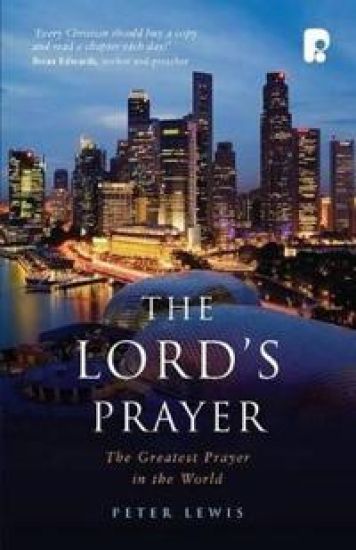
Using the example of the Lord's Prayer, Peter Lewis shows how an intimate relationship with God is a reality that can be experienced today. "Our Father ..." Quoted, memorised, spoken and sung, the Lord's Prayer is an inspiration to millions. Down the centuries and around the world it has expressed the deepest longings of all true Christians. However, the prayer that Jesus taught his followers reveals something far greater the character and purposes of God himself. In this sensitive and often moving book, Peter Lewis shows how an intimate relationship with God is a reality that can be experienced today.
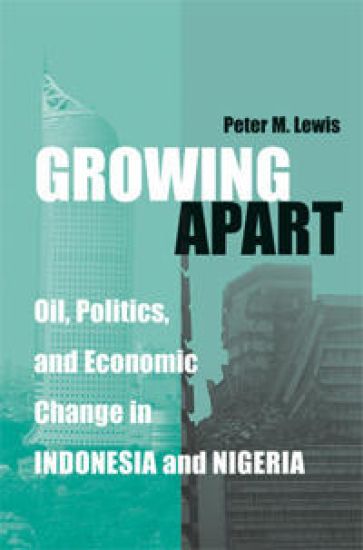
"Growing Apart is an important and distinguished contribution to the literature on the political economy of development. Indonesia and Nigeria have long presented one of the most natural opportunities for comparative study. Peter Lewis, one of America's best scholars of Nigeria, has produced the definitive treatment of their divergent development paths. In the process, he tells us much theoretically about when, why, and how political institutions shape economic growth."—Larry Diamond, Senior Fellow, Hoover Institution "Growing Apart is a careful and sophisticated analysis of the political factors that have shaped the economic fortunes of Indonesia and Nigeria. Both scholars and policymakers will benefit from this book's valuable insights."—Michael L. Ross, Associate Professor of Political Science, Chair of International Development Studies, UCLA"Lewis presents an extraordinarily well-documented comparative case study of two countries with a great deal in common, and yet with remarkably different postcolonial histories. His approach is a welcome departure from currently fashionable attempts to explain development using large, multi-country databases packed with often dubious measures of various aspects of 'governance.'"—Ross H. McLeod, Editor, Bulletin of Indonesian Economic Studies"This is a highly readable and important book. Peter Lewis provides us with both a compelling institutionalist analysis of economic development performance and a very insightful comparative account of the political economies of two highly complex developing countries, Nigeria and Indonesia. His well-informed account generates interesting findings by focusing on the ability of leaders in both countries to make credible commitments to the private sector and assemble pro-growth coalitions. This kind of cross-regional political economy is often advocated in the profession but actually quite rare because it is so hard to do well. Lewis's book will set the standard for a long time."—Nicolas van de Walle, John S. Knight Professor of International Studies, Cornell UniversityPeter M. Lewis is Associate Professor and Director of the African Studies Program, Johns Hopkins University, School of Advanced International Studies.
This book presents a look at one of the first major railway disasters in Britain, the fall of the Dee bridge in May 1847, which occurred just outside Chester with the loss of five lives. The main line from Holyhead to Chester had only been opened six months before, and the chief engineer Robert Stephenson was slated nationally (almost being accused of manslaughter) as his cast-iron bridge had failed so catastrophically. Luckily, only a local train was passing and so few lives were lost. Full of detailed technical insight and illustrated with a wealth of contemporary material, this informative book will be of great use for engineering students and historians, as the Dee bridge is an often cited case study of bridge failure along with the Tay and Tacoma Narrows bridges. It will also appeal to interested locals, and railway enthusiasts.
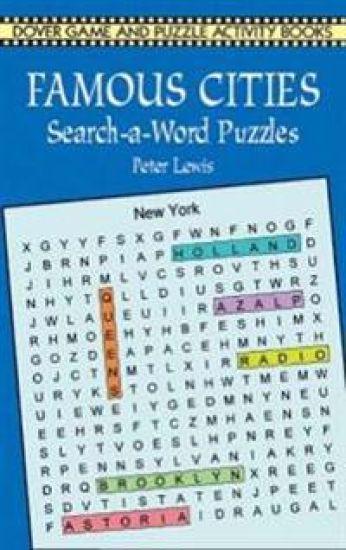
Have fun while learning about cities all over the world! Survey the grids to find groups of letters that spell the names of waterways, airports, landmarks, royal residences, and other notable aspects of such cities as Rome, Rio de Janeiro, Mecca, Oslo, Montreal, Hong Kong, Istanbul, Athens, New York, and many more. All subjects are listed and identified in a section below the letter grids. 50 puzzles. Solutions.
The God of the Bible is the living, active and self-revealing God. He takes the initiative in making himself known. He is a speaking God, and he calls for a listening people. Those who listen in faith, he draws in love into a relationship that engages every fibre of their humanity and enters every event in their lives. This is a book by a theologian and preacher who believes that the first purpose of a biblical theology is to lead us to the feet of the living God. The book ends with the theme of worship: an attitude and activity that takes us out into the world to serve this living God and to make him known.
Politics and Society in Contemporary Africa
Naomi Chazan; Robert A. Mortimer; Donald Rothchild; Peter Lewis; Stephen John Stedman
Red Globe Press
1999
nidottu
The new edition of this popular and widely-used text includes entirely new chapters on political economy and South Africa and has been thoroughly revised throughout to reflect the major changes in Africa and in the wider world since the end of the Cold War. Broadly encompassing, challenging and timely, the book is a major contribution to our understanding of the multiple forces at work on the continent.
In the decades since independence, the countries of sub-Saharan Africa have faced three central dilemmas of development. The first has been the challenge of state building. In the wake of colonial rule, governments have encountered the problems of establishing legitimate authority and constructing capable states. A second dilemma has been that of nation building and state-society relations. African countries have confronted the difficulties of managing ethnic diversity, forging national identities, and negotiating relations between citizens and rulers. The third challenge encompasses problems of economic development as the region has grappled with a legacy of poverty, slow growth, and external dependence.This collection provides an overview of the leading themes and issues in these three critical areas of Africa's postindependent development. A selection of pathbreaking articles provides insights into the key questions, the major theories, and the outstanding challenges in African development. Written by today's most influential African scholars, the readings cover a variety of topics including political leadership; forms of state power; the role of civil society; the importance of class, ethnicity, and gender; and the prospects for democratic change in the region. Changes in African political economies are also addressed, focusing special attention on the debt crisis and the problems of economic reform. A final section focuses on the present-day challenges to African development: the spread of refugees, pressures on the environment, the devastating toll of AIDS, and the threat of state collapse.Providing a broad historical perspective on Africa's political and economic development and an overview of current problems and prospects, this collection will be especially useful for advanced undergraduates, graduate students, and development professionals.
Understanding Hume
John J. Jenkins; Peter Lewis; Geoffrey Madell
Barnes Noble Books-Imports, Div of Rowman Littlefield Pubs., Inc
1992
sidottu
This is the first clear and non-technical introduction to philosophy through the works of the 18th century philosopher, David Hume. It covers every major philosophical issue commented upon by Hume, from epistemology, philosophy of mind, and metaphysics, to ethics and political philosophy, and the philosophy of religion. Looking first at Hume's discussion of each topic and clarifying his thoughts in jargon-free language, the book then relates his ideas to current contemporary thought. Readers are taken gently through both 18th century and contemporary philosophies and given lucid accounts of the key issues in each. Contents: Introduction; Where Does Thought Begin?; How Does Thought Proceed?; What Do We Mean by Cause and How Do We Reason from Experience?; What Do We Mean by Cause? II; Is It Rational to Be Guided by Experience?; What Is It to Believe that Something Is the Case?; Are Our Choices Free?; What Constitutes the Identity of a Person?; How Do Emotions Work?; The Mechanism of Sympathy; How to Make Moral Judgements; Is Religious Belief Rational?