
Kirjailija
Peter Longerich
Kirjat ja teokset yhdessä paikassa: 24 kirjaa, julkaisuja vuosilta 1992-2025, suosituimpien joukossa Heinrich Himmler. Vertaile teosten hintoja ja tarkista saatavuus suomalaisista kirjakaupoista.
24 kirjaa
Kirjojen julkaisuhaarukka 1992-2025.
The complete story of the Wannsee Conference, the meeting that paved the way for the Holocaust. On 20 January 1942, fifteen men arrived for a meeting in a luxurious villa on the shores of the Wannsee in the far-western outskirts of Berlin. They came at the invitation of Reinhard Heydrich and were almost all high-ranking Nazi Party, government, and SS officials. The exquisite position by the lake, the imposing driveway up to the villa, culminating in a generously sized roundabout in front of the house, the expansive, carefully landscaped park, the generous suite of rooms that opened on to the park and the lake, the three-level terrace that stretched the entire garden side of the house, and the winter garden with its marble fountain, all give today's visitor to the villa a good idea of its owner's aspiration to build a sophisticated, almost palatial structure as a testament to his cultivation and worldly success. But the beauty of the situation stood in stark contrast to the purpose of the meeting to which the fifteen had come in January 1942: the 'Final Solution of the Jewish Question'. According to the surviving records of the meeting, items on the agenda included the precise definition of exactly which group of people was to be affected, followed by a discussion of how upwards of eleven million people were to be deported and subjected to the toughest form of forced labour, and following on from this a discussion of how the survivors of this forced labour as well as those not capable of it were ultimately to be killed. The next item on the agenda was breakfast.
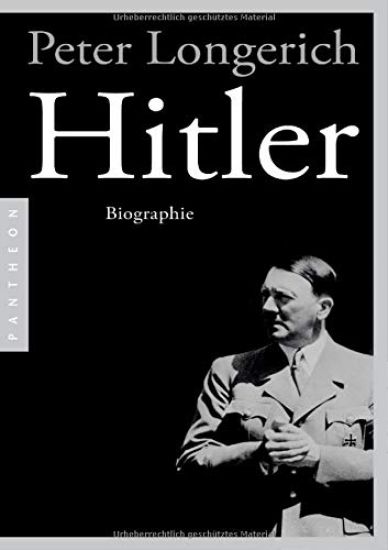
From one of the most prominent biographers of the Nazi period, a new and provocative portrait of the figure behind the century's worst crimesAcclaimed historian Peter Longerich, author of Goebbels and Heinrich Himmler now turns his attention to Adolf Hitler in this new biography. While many previous portraits have speculated about Hitler's formative years, Longerich focuses on his central role as the driving force of Nazism itself. You cannot separate the man from the monstrous movement he came to embody. From his ascendance through the party's ranks to his final hours as F hrer in April 1945, Longerich shows just how ruthless Hitler was in his path to power. He emphasizes Hitler's political skills as Germany gained prominence on the world's stage. Hitler's rise to, and ultimate hold on, power was more than merely a matter of charisma; rather, it was due to his ability to control the structure he created. His was an image constructed by his regime - an essential piece self-created of propaganda. This comprehensive biography is the culmination of Longerich's life-long pursuit to understand the man behind the century's worst crimes.
Tyrant, psychopath, and implementer of a ruthless programme of racial extermination, Adolf Hitler was also the charismatic Führer of millions of dedicated followers. In this major new biography, internationally acclaimed German historian Peter Longerich brings Hitler back to centre-stage in the history of Nazism, revealing a far more active and interventionist dictator than we are familiar with from recent accounts, with a flexibility of approach that often surprises. Whether it was foreign policy, war-making, terror, mass murder, cultural and religious affairs, or even mundane everyday matters, Longerich reveals how decisive a force Hitler was in the formulation of policy, sometimes right down to the smallest details, in a way which until now has not been fully appreciated. Consistently and ruthlessly destroying both the people and the power structures that stood in his way, Longerich shows how over time Hitler succeeded in forging his 'Führer dictatorship' - with terrifying and almost limitless power over the German people.
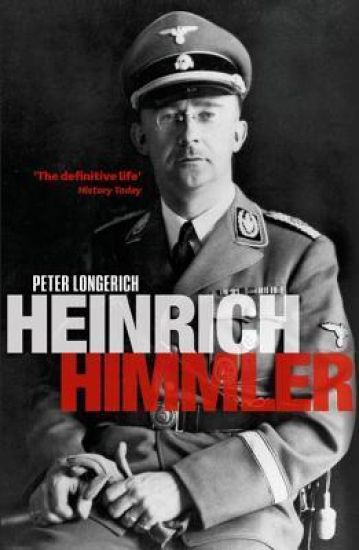
As head of the SS, chief of police, 'Reichskommissar for the Consolidation of Germanness', and Reich Interior Minister, Heinrich Himmler enjoyed a position of almost unparalleled power and responsibility in Nazi Germany. Perhaps more than any other single Nazi leader aside from Hitler, his name has become a byword for the terror, persecution, and destruction that characterized the Third Reich. His wide-ranging powers meant that he bore equal responsibility for the repression of the German people on the home front and the atrocities perpetrated by the SS in the East. Yet, in spite of his central role in the crimes of the Nazi regime, until now Himmler has remained a colourless and elusive figure in the history of the period. In this, the first-ever comprehensive biography of the SS-Reichsführer, leading German historian Peter Longerich puts every aspect of Himmler's life under the microscope. Masterfully interweaving the story of Himmler's personal life and political career with the wider history of the Nazi dictatorship, Longerich shows how skilfully he exploited and manipulated his disparate roles in the pursuit of his far-reaching and grandiose objectives. In the process, he illuminates the extraordinary degree to which Himmler's own personal prejudices, idiosyncrasies, and predilections made their mark on the organizations for which he was responsible - especially the SS, which in so many ways bore the characteristic hallmarks of its leader, and whose history remains both incomplete and incomprehensible without a detailed and intimate knowledge of its deeply sinister commander-in-chief.
A comprehensive history of the Nazi persecution and murder of European Jews, paying detailed attention to an unrivalled range sources. Focusing clearly on the perpetrators and exploring closely the process of decision making, Longerich argues that anti-Semitism was not a mere by-product of the Nazis' political mobilization or an attempt to deflect the attention of the masses, but that anti-Jewish policy was a central tenet of the Nazi movement's attempts to implement, disseminate, and secure National Socialist rule - and one which crucially shaped Nazi policy decisions, from their earliest days in power through to the invasion of the Soviet Union and the Final Solution. As Longerich shows, the 'disappearance' of Jews was designed as a first step towards a racially homogeneous society - first within the 'Reich', later in the whole of a German-dominated Europe.
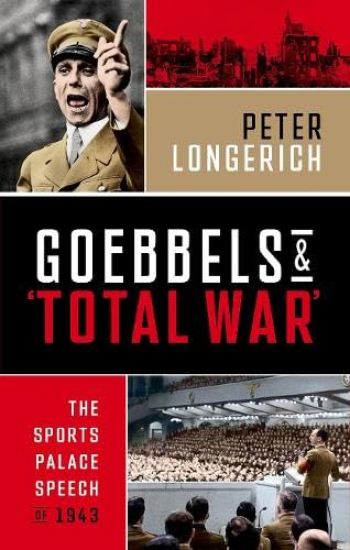
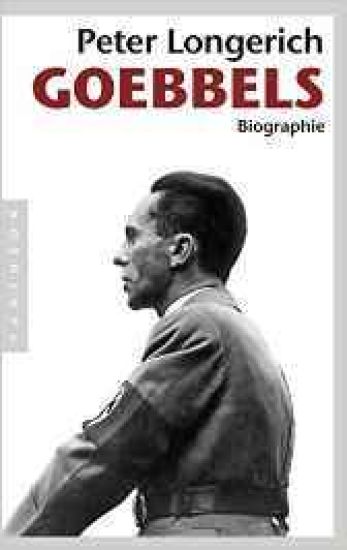
The Sports Palace speech was the climax of a campaign for 'total war'; the prime example of Nazi 'mass suggestion', a barrage of propaganda, seduction, and manipulation. On the 18th of February 1943 Nazi Propaganda Minister Joseph Goebbels made a speech in the Berlin Sports Palace that is regarded as one of the most chilling, and at the same time most effective, rhetorical performances of the twentieth century. In this definitive English translation, renowned historian Peter Longerich delves into the historical buildup to Goebbels's most notorious speech, the speech itself, and its lasting effect. Goebbels and 'Total War' singles out the Sports Palace speech to demystify the legend of Nazi propaganda by exposing the reality of the rally as a highly staged and prerecorded event, with a preselected audience and rehearsed reactions made to look spontaneous. For Goebbels, this spectacle was not only his chance to raise support for 'total war' in the German public but also the ultimate test to prove himself to his 'Führer'. Longerich traces Goebbels's path to 'total war' from his questionable demagogue skills and his tenuous relationship with Hitler, to the nation's losing battle at the front, and finally to total defeat.
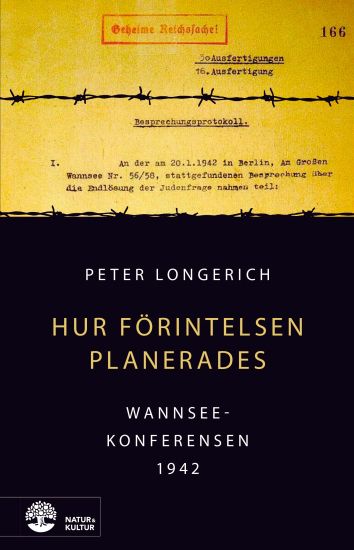
Hur Förintelsen planerades : Wannseekonferensen 1942
Peter Longerich
Natur Kultur Allmänlitteratur
2021
nidottu
"Boken borde vara obligatorisk läsning inom skolväsendet." Hemvärnet"ger en isande inblick i mordbyråkratins kärna." Östersunds-Posten"ett ohyggligt men viktigt dokument för den som vill få fördjupad konstap om Förintelsen." ETCDen 20 januari 1942, mitt under brinnande världskrig, samlades 15 tyska ämbetsmän i en luxuös villa vid Wannsee utanför Berlin för att samordna vad som kallades den ”slutgiltiga lösningen på judefrågan”. Vid det laget hade deportationer och massavrättningar av judar redan tagit fart – frågan ifall judar verkligen behövde ”evakueras”, som man sade, kände ingen längre behov av att diskutera; nu gällde snarare hur, var, av vilka. Tre år senare hade totalt sex miljoner judar mördats. Mötet leddes av Reinhard Heydrich, och vid protokollet satt Adolf Eichmann. Protokollet var inte avsett att spridas, men en kopia överlevde kriget, och upptäckten fick stor betydelse för kunskapen om hur Förintelsen planerades. Med en omfattande dokumentation till sin hjälp visar Peter Longerich här ideologin, byråkratin och maskineriet bakom Förintelsen. Själva Wannseeprotkollet, som granskas i detalj, finns återgivet i sin helhet och översatt till svenska – ett dokument man måste sätta sig in i om man vill nå kunskap om Förintelsen. Översättning av Viktor Englund. "ännu en stark ingång till något som egentligen inte går att förstå." Norrbottens-Kiruren"en unik inblick i det byråkratiska arbete som låg till grund för Förintelsens utveckling och praktik." Östersunds-Posten"Det är en makaber läsning. Ingen behöver tvivla längre, inte ens de mest inbitna Förintelseförnekarna." Dala-Demokraten"Peter Longerich ger en god bild av forskningsläget kring FÖrintelsens planering och upptakt." Forskning & Framsteg"Med en rikedom av lärdom och detaljer lotsar Longerich läsaren genom en mörk värld av ohyggliga mordplaner, mitt under brinnande världskrig." Süddeutsche Zeitung"Inte en behaglig bok – men en viktig" Hellweger Anzeiger"Ger underlag för vidare diskussion om Förintelsen" NDR
The Holocaust differs from other genocides in recent history for one main reason: there is no other example in which a minority was annihilated systematically and as completely as possible on the orders of a head of state and through the apparatus of government. To reconstruct Hitler’s central role in the Final Solution represents a particular challenge. Hitler treated the murder of the Jews as a matter of the utmost secrecy and was careful wherever possible not to leave behind any written orders. Wherever his instructions on this matter are recorded he has used codified language. He kept away from the implementation of the orders and feigned ignorance, even to his closest friends and colleagues. Under these conditions, the surviving source material can only be described as fragmentary. The Unwritten Order aims to offer documentary proof of Hitler’s central role in the murder of the European Jews. In order to achieve this aim, various documents and fragments of documents have been pieced together and the codified language of the dictator deciphered.
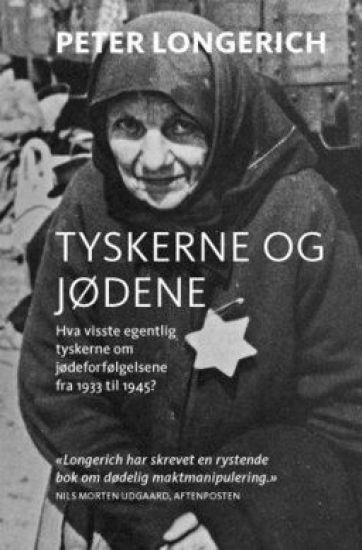
Peter Longerich, en av verdens fremste Holocaustforskere, forteller i boken Tyskerne og jødene hva den vanlige tysker visste og ikke visste om "den endelige løsning" i årene 1933-45. Det er ikke tidligere utgitt en så omfattende bok om dette tema på norsk. Longerich påviser at jødeforfølgelsene i Det tyske riket ikke bare fant sted i full åpenhet, men at nazi-regimet fra slutten av 1941 også informerte tydelig om utryddelsen av jødene. Selv om de konkrete detaljene i massemordet egentlig var strengt hemmelige, skjedde det hyppige lekkasjer. Gjennom sin propagandapolitikk signaliserte nazi-lederne overfor tyskerne at de var blitt gjort til medvitere og medskyldige i en forbrytelse av enorme dimensjoner - og at deres skjebne på godt og vondt var uløselig knyttet til regimets eksistens. Han viser hvorledes den tyske befolkningen forholdt seg til jødeforfølgelsenes ulike faser - diskrimineringen, segregasjonen, fordrivelsen, deportasjonen og det endelige massemordet. Boken er utgitt av forlaget Historie & Kultur.