Kirjojen hintavertailu. Mukana 12 459 402 kirjaa ja 12 kauppaa.

Kirjailija

Peter M. Gerhart

Kirjat ja teokset yhdessä paikassa: 6 kirjaa, julkaisuja vuosilta 2010-2022, suosituimpien joukossa Contract Law and Social Morality. Vertaile teosten hintoja ja tarkista saatavuus suomalaisista kirjakaupoista.

6 kirjaa

Kirjojen julkaisuhaarukka 2010-2022.

Contract Law and Social Morality

Contract Law and Social Morality

Peter M. Gerhart

Cambridge University Press
2022
pokkari
When people in a relationship disagree about their obligations to each other, they need to rely on a method of reasoning that allows the relationship to flourish while advancing each person's private projects. This book presents a method of reasoning that reflects how people reason through disagreements and how courts create doctrine by reasoning about the obligations arising from the relationship. Built on the ideal of the other-regarding person, Contract Law and Social Morality displays a method of reasoning that allows one person to integrate their personal interests with the interests of another, determining how divergent interests can be balanced against each other. Called values-balancing reasoning, this methodology makes transparent the values at stake in a disagreement, and provides a neutral and objective way to identify and evaluate the trade-offs that are required if the relationship is to be sustained or terminated justly.
Contract Law and Social Morality

Contract Law and Social Morality

Peter M. Gerhart

Cambridge University Press
2021
sidottu
When people in a relationship disagree about their obligations to each other, they need to rely on a method of reasoning that allows the relationship to flourish while advancing each person's private projects. This book presents a method of reasoning that reflects how people reason through disagreements and how courts create doctrine by reasoning about the obligations arising from the relationship. Built on the ideal of the other-regarding person, Contract Law and Social Morality displays a method of reasoning that allows one person to integrate their personal interests with the interests of another, determining how divergent interests can be balanced against each other. Called values-balancing reasoning, this methodology makes transparent the values at stake in a disagreement, and provides a neutral and objective way to identify and evaluate the trade-offs that are required if the relationship is to be sustained or terminated justly.
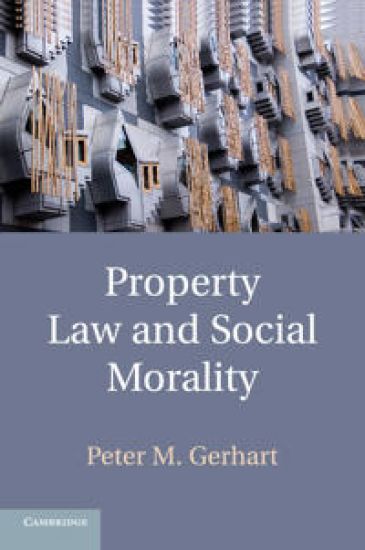
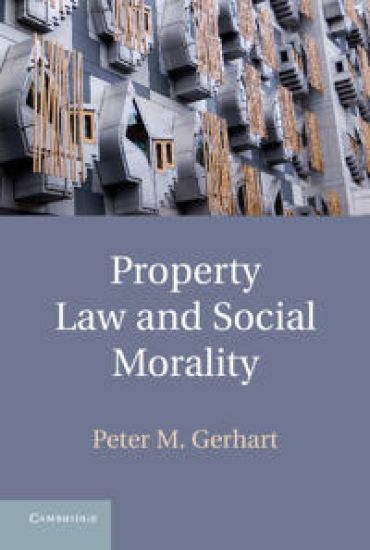
Property Law and Social Morality

Property Law and Social Morality

Peter M. Gerhart

Cambridge University Press
2016
pokkari
Property Law and Social Morality develops a theory of property that highlights the social construction of obligations that individuals owe each other. By viewing property law through the lens of obligations rather than through the lens of rights, the author affirms the existence of important property rights (when no obligation to another exists) and defines the scope of those rights (when an obligation to another does exist). By describing the scope of the decisions that individuals are permitted to make and the requirements of other-regarding decisions, the author develops a single theory to explain the dynamics of private and common property, including exclusion, nuisance, shared decision making, and decision making over time. The development of social recognition norms adds to our understanding of property evolution, and the principle of equal freedom underlying social recognition that limit government interference with property rights.
Property Law and Social Morality

Property Law and Social Morality

Peter M. Gerhart

Cambridge University Press
2013
sidottu
Property Law and Social Morality develops a theory of property that highlights the social construction of obligations that individuals owe each other. By viewing property law through the lens of obligations rather than through the lens of rights, the author affirms the existence of important property rights (when no obligation to another exists) and defines the scope of those rights (when an obligation to another does exist). By describing the scope of the decisions that individuals are permitted to make and the requirements of other-regarding decisions, the author develops a single theory to explain the dynamics of private and common property, including exclusion, nuisance, shared decision making, and decision making over time. The development of social recognition norms adds to our understanding of property evolution, and the principle of equal freedom underlying social recognition that limit government interference with property rights.
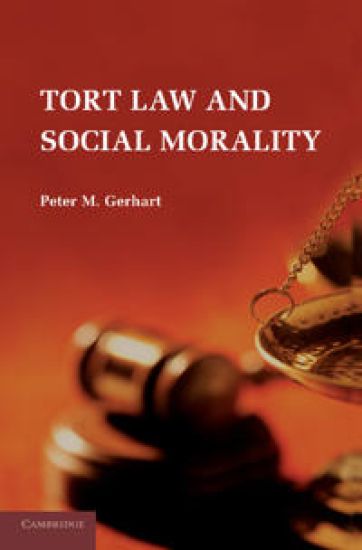
Tort Law and Social Morality

Tort Law and Social Morality

Peter M. Gerhart

Cambridge University Press
2013
pokkari
This book develops a theory of tort law that integrates deontic and consequential approaches by applying justificational analysis to identify the factors, circumstances, and values that shape tort law. Drawing on Kantian and Rawlsian philosophy, and on the insights of game theorist Ken Binmore, this book refocuses tort law on a single theory of responsibility that explains and justifies the broad range of tort doctrine and concepts. Under this theory, tort law asks people to appropriately incorporate the well-being of others into the decisions they make, explains when that duty applies, and explains the scope and limits of that duty. The theory also incorporates a theory of the evolutionary development of social values that people use, and ought to use, in meeting that duty and explains how decision-making from behind the veil of ignorance allows us to evaluate the is in light of the ought.
Tort Law and Social Morality

Tort Law and Social Morality

Peter M. Gerhart

Cambridge University Press
2010
sidottu
This book develops a theory of tort law that integrates deontic and consequential approaches by applying justificational analysis to identify the factors, circumstances, and values that shape tort law. Drawing on Kantian and Rawlsian philosophy, and on the insights of game theorist Ken Binmore, this book refocuses tort law on a single theory of responsibility that explains and justifies the broad range of tort doctrine and concepts. Under this theory, tort law asks people to appropriately incorporate the well-being of others into the decisions they make, explains when that duty applies, and explains the scope and limits of that duty. The theory also incorporates a theory of the evolutionary development of social values that people use, and ought to use, in meeting that duty and explains how decision-making from behind the veil of ignorance allows us to evaluate the is in light of the ought.