Kirjojen hintavertailu. Mukana 12 264 745 kirjaa ja 12 kauppaa.

Kirjailija

Peter Mangold

Kirjat ja teokset yhdessä paikassa: 7 kirjaa, julkaisuja vuosilta 1998-2016, suosituimpien joukossa The Almost Impossible Ally. Vertaile teosten hintoja ja tarkista saatavuus suomalaisista kirjakaupoista.

7 kirjaa

Kirjojen julkaisuhaarukka 1998-2016.

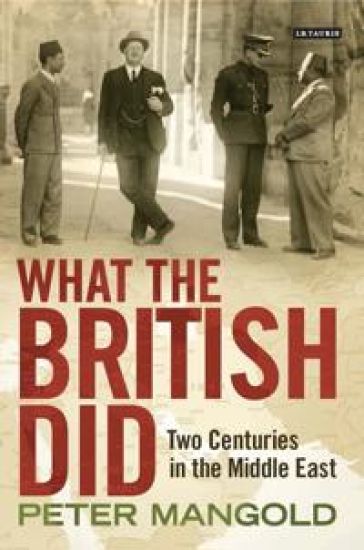
What the British Did

What the British Did

Peter Mangold

I.B. Tauris
2016
sidottu
Britain has been engaged in the Middle East for over two centuries. During the Napoleonic Wars it expelled the French from Egypt. During World War I it helped to dismantle the Ottoman empire. During World War II, it defeated the Italians and Germans. In the post-war years, it attempted to reassert its domination of the Middle East but with little success. Today British forces in the region are fighting ISIS. Variously seen as intruders by most of the local populations and nationalists and as protectors by local pliant rulers, the British have been key arbiters in Middle Eastern politics. They created new states, determined who could hold power, resolved disputes and offered security to their clients. In this major new study, Peter Mangold shows how Britain sought to protect its changing interests in the region and assesses the British response to Arab nationalism. He examines the successes and failures of British policy and the reasons it has often proved controversial and accident prone.And he evaluates Britain's complex legacy in the Middle East - its contribution to the stability of Jordan (at least to date) and the Gulf states, set against the instability which has plagued Iraq and the unresolved Palestine conflict. In tracing the history of Britain's relationship with the Middle East, Mangold reveals how Britain's involvement in the Middle East sowed the seeds for today's crises.
National Security and International Relations (Routledge Revivals)
First published in 1990, National Security and International Relations provides a concise analysis of the problem of national security in the twentieth century. It examines the criteria by which states decide what level of security they want to seek in an uncertain and essentially Hobbesian world, and why some states tend to underinsure, while obsessively insecure states overinsure, frequently making others more insecure in the process. In the wake of two world wars and the threat of nuclear destruction, the book argues that war was becoming as much a source of insecurity as the intentions of other states. It then explores the different approaches attempted during the twentieth century to ameliorate or ideally escape from the security dilemma. These range from international regimes, to the restructuring of the international politics of Western Europe so as to substitute cooperation for conflict, and U.S. and Soviet attempts to render nuclear competition safer through arms control and confidence building measures. Of special value to students of International Relations and Strategic Studies, this book will also interest those keen to understand the challenges embodied in Gorbachev’s ‘new thinking’ in foreign policy.
Superpower Intervention in the Middle East (Routledge Revivals)
Strategically placed on the global chess board, as well as controlling vast oil resources, the Middle East was one of the main theatres of Cold War. In the 1950s the Soviet Union had taken advantage of Arab Nationalists’ disillusion with British and French Imperialism, along with the emerging Arab-Israeli conflict, to establish relations with Egypt, Syria and Iraq. The United States responded by moving in to shore up the Western position. Confrontation was inevitable. Superpower Intervention in the Middle East was written in 1978, when this confrontation was at its height. The book’s main theme focuses on how the superpowers became competitively involved in local Middle East conflicts over which they could exercise only limited control, and the risks of nuclear confrontation of the kind which occurred at the end of the 1973 Arab-Israeli war. The threat to Western oil supplies is also examined. This is a fascinating work, of great relevance to scholars and students of Middle Eastern history and political diplomacy, as well as those with an interest in the relationship between the Western superpowers and this volatile region.
National Security and International Relations (Routledge Revivals)
First published in 1990, National Security and International Relations provides a concise analysis of the problem of national security in the twentieth century. It examines the criteria by which states decide what level of security they want to seek in an uncertain and essentially Hobbesian world, and why some states tend to underinsure, while obsessively insecure states overinsure, frequently making others more insecure in the process. In the wake of two world wars and the threat of nuclear destruction, Peter Mangold argues that war was becoming as much a source of insecurity as the intentions of other states. It then explores the different approaches attempted during the twentieth century to ameliorate or ideally escape from the security dilemma. These range from international regimes, to the restructuring of the international politics of Western Europe so as to substitute cooperation for conflict, and U.S. and Soviet attempts to render nuclear competition safer through arms control and confidence building measures. Of special value to students of International Relations and Strategic Studies, this book will also interest those keen to understand the challenges embodied in Gorbachev’s ‘new thinking’ in foreign policy.
Superpower Intervention in the Middle East (Routledge Revivals)
Strategically placed on the global chess board, as well as controlling vast oil resources, the Middle East was one of the main theatres of Cold War. In the 1950s the Soviet Union had taken advantage of Arab Nationalists’ disillusion with British and French Imperialism, along with the emerging Arab-Israeli conflict, to establish relations with Egypt, Syria and Iraq. The United States responded by moving in to shore up the Western position. Confrontation was inevitable. Superpower Intervention in the Middle East was written in 1978, when this confrontation was at its height. The book’s main theme focuses on how the superpowers became competitively involved in local Middle East conflicts over which they could exercise only limited control, and the risks of nuclear confrontation of the kind which occurred at the end of the 1973 Arab-Israeli war. The threat to Western oil supplies is also examined. This is a fascinating work, of great relevance to scholars and students of Middle Eastern history and political diplomacy, as well as those with an interest in the relationship between the Western superpowers and this volatile region.
The Almost Impossible Ally

The Almost Impossible Ally

Peter Mangold

I.B. Tauris
2006
sidottu
On 14 January 1963, General de Gaulle (described by the Foreign Office as an 'almost impossible ally') brutally vetoed Britain's first bid to join the Common Market. It was a blow that delayed Britain's entry for a decade and hastened the end of Harold Macmillan's political career. Peter Mangold writes in arresting detail about the fascinating personal duel that shaped high politics and Anglo-French diplomacy. He portrays two of the most complex and skilful leaders of the post-war era, old friends from their association in Algiers during World War II: de Gaulle the dour, lofty moralist obsessed with high notions of France; and Macmillan, the canny, ambitious fixer, always the pragmatist seeking to get things done. As Resident Minister, Allied Forces Headquarters in Algiers in 1943, Macmillan had done much to help de Gaulle, and protect him from Churchill's and Roosevelt's hostility. They next met in 1958, as leaders of their two countries, when Britain and France faced many similar problems ranging from decolonization and their determination to retain national Great Power status to relations with the impetuous Soviet leader, Nikita Khrushchev. But while both seemed anxious to retain their old wartime connection, they were now rivals with very different views of the world. Divided by the Atlantic as much as the Channel, the two leaders disagreed fundamentally over America. De Gaulle sought the leadership of a Europe independent of the United States; the pro-American Macmillan talked of Britain as a 'bridge' between the two sides of the Atlantic. When Macmillan finally sought EEC membership, de Gaulle played on the old alliance to keep the British Prime Minister off guard. Ultimately, Macmillan was outwitted, out-manoeuvred and even, perhaps, outclassed by the General. "The Almost Impossible Ally" is a fascinating story of a friendship turned sour, and of a compelling new episode in the turbulent relations between Britain and France.
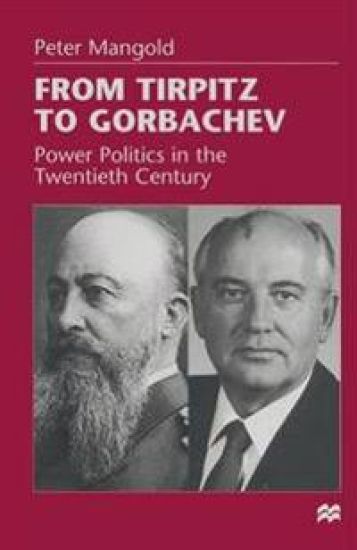
From Tirpitz to Gorbachev

From Tirpitz to Gorbachev

Peter Mangold

Palgrave Macmillan
1998
nidottu
A history of power politics from the construction of the German battlefleet to Gorbachev's 'new thinking'. The unwillingness of all the Great Powers to recognise that war, in Ivan Bloch's 1899 phrase, had become 'impossible except at the price of suicide', resulted in two unprecedentedly great wars. These in turn gave impetus to a decline of power politics which gathered pace after 1945. Nuclear weapons imposed a straitjacket which Soviet revisionism was unable to break out of. Moral revulsion, technological advance and economic growth facilitated the emergence of a norm-based 'accomodatory' culture, which now offers a basis for a wider post-Cold War order.