Kirjailija
Peter Mitchell
Kirjat ja teokset yhdessä paikassa: 26 kirjaa, julkaisuja vuosilta 1994-2026, suosituimpien joukossa Callan - Volume 1. Vertaile teosten hintoja ja tarkista saatavuus suomalaisista kirjakaupoista.
26 kirjaa
Kirjojen julkaisuhaarukka 1994-2026.
Full-cast adaptations of Callan stories originally published in the Sunday Express. Adapted from series creator James Mitchell's Sunday Express Short Stories by his son Peter Mitchell, four new adventures will expand the themes explored in the television show. Murder, betrayal and model soldiers. It's all in a day's work for Callan.
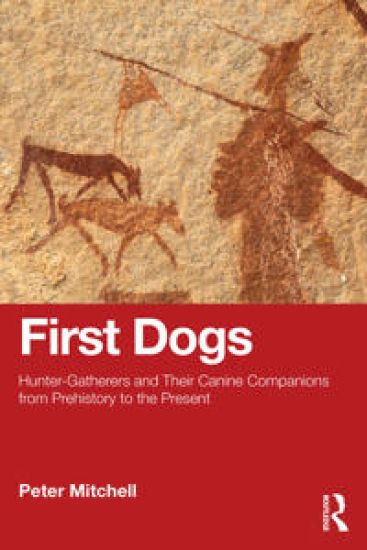
First Dogs provides the first comprehensive overview of the relationships between humanity’s best friend (and oldest domestic animal) and hunter-gatherers. The book uses archaeological and anthropological evidence to explore the hunter-gatherer/canine relationship from the beginnings of the domestication process to the present. As well as looking at conventional case-studies from the Global North, it also uses examples from Latin America, Africa, and Southeast Asia. The result is an understanding of how hunter-gatherers have lived with dogs that is novel in its thematic reach, its temporal span, and its global range. Having situated previous work on dogs and hunter-gatherers within the broader fields of archaeology and anthropology, the book first explores how, when, and where grey wolves became dogs before tracing their dispersal beyond Eurasia into North America, the tropics, and beyond. Four thematic chapters then consider their roles as hunting aids and transport technologies, as well as how they have been fed, cared for, and thought about by hunter-gatherer populations worldwide. A further chapter explores the canine dimension of European colonialism’s impacts on Indigenous peoples since 1492. The emphasis throughout is strongly interdisciplinary, drawing not only on archaeology and anthropology, but also on work in genetics, history, ecology, and linguistics. First Dogs offers an up-to-date account of all aspects of the relationship between hunter-gatherers and their canine companions aimed at academic and non-academic audiences alike.
Fundamentals of Developmental Psychology
Peter Mitchell; Fenja Ziegler; Sarah Rose
Routledge
2025
sidottu
Fundamentals of Developmental Psychology
Peter Mitchell; Fenja Ziegler; Sarah Rose
Routledge
2025
nidottu
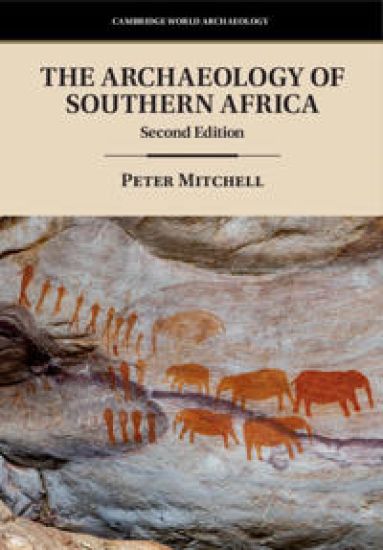
Some of humanity's earliest ancestors lived in southern Africa and evidence from sites there has inspired key debates on human origins and the emergence of complex cognition. Building on its rich rock art heritage, archaeologists have developed theoretical work that continues to influence rock art studies worldwide, with the relationship between archaeological and anthropological data central to understanding past hunter-gatherer, pastoralist, and farmer communities alike. New work on pre-colonial states contests models that previously explained their emergence via external trade, while the transformations wrought by European colonialism are being rewritten to emphasise Indigenous agency, feeding into efforts to decolonise the discipline itself. Inhabited by humans longer than almost anywhere else and with an unusually varied, complex past, southern Africa thus has much to contribute to archaeology worldwide. In this revised and updated edition, Peter Mitchell provides a comprehensive and extensively illustrated synthesis of its archaeology over more than three million years.
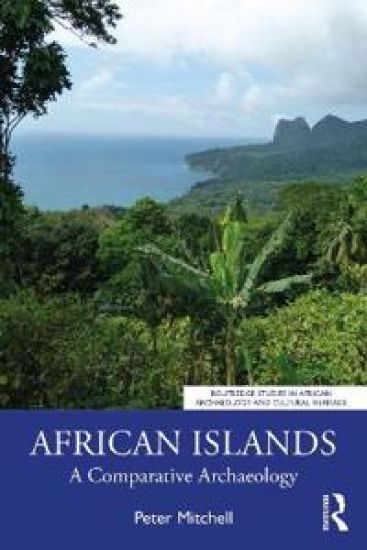
African Islands provides the first geographically and chronologically comprehensive overview of the archaeology of African islands. This book draws archaeologically informed histories of African islands into a single synthesis, focused on multiple issues of common interest, among them human impacts on previously uninhabited ecologies, the role of islands in the growth of long-distance maritime trade networks, and the functioning of plantation economies based on the exploitation of unfree labour. Addressing and repairing the longstanding neglect of Africa in general studies of island colonization, settlement, and connectivity, it makes a distinctively African contribution to studies of island archaeology. The availability of this much-needed synthesis also opens up a better understanding of the significance of African islands in the continent's past as a whole. After contextualizing chapters on island archaeology as a field and an introduction to the variety of Africa’s islands and the archaeological research undertaken on them, the book focuses on four themes: arriving, altering, being, and colonizing and resisting. An interdisciplinary approach is taken to these themes, drawing on a broad range of evidence that goes beyond material remains to include genetics, comparative studies of the languages, textual evidence and oral histories, island ecologies, and more. African Islands provides an up-to-date synthesis and account of all aspects of archaeological research on Africa’s islands for students and academics alike.
A strong emotional attachment to the memory of empire runs deep in British culture. In recent years, that memory has become a battleground in a long-drawn ideological war, inflecting debates on race, class, gender, culture, the UK’s future and its place in the world. This provocative and passionate book surveys the scene of the imperial memory wars in contemporary Britain, exploring how the myths that structure our views of empire came to be, and how they inform the present. Taking in such diverse subjects as Rory Stewart and inter-war adventure fiction, man’s facial hair and Kipling, the Alt-right and the Red Wall, Imperial Nostalgia asks how our relationship with our national past has gone wrong, and how it might be improved.
Ruling the World tells the story of how the largest and most diverse empire in history was governed, everywhere and all at once. Focusing on some of the most tumultuous years of Queen Victoria's reign, Alan Lester, Kate Boehme and Peter Mitchell adopt an entirely new perspective to explain how the men in charge of the British Empire sought to manage simultaneous events across the globe. Using case studies including Canada, South Africa, the Caribbean, Australia, India and Afghanistan, they reveal how the empire represented a complex series of trade-offs between Parliament's, colonial governors', colonists' and colonised peoples' agendas. They also highlight the compromises that these men made as they adapted their ideals of freedom, civilization and liberalism to the realities of an empire imposed through violence and governed in the interests of Britons.
Forty years after the publication of the first When The Boat Comes In novel, Jack High picks up the story of Jack Ford and the Seaton family just as the Post-First World War boom begins to subside. Jack's boat has finally come in. It is 1925 and with ample wealth from a risky land deal, the ex-army Sergeant and Great War survivor has left the struggling Tyneside town of Gallowshield for London. On a night out in Soho, he rescues a man from a beating outside the 1917 Club. The man is former Cabinet Minister Charles Needham, an unlikely North-Eastern Labour MP. They become firm friends and ambitious Jack is introduced to the underground club scene of the Jazz Age where the grim horrors of war are long forgotten. The privileged few regard life with a sense of entitlement and their hedonistic pastimes of drink, drugs and sex, are ferociously pursued in these new nightspots around hidden London. Needham, a wealthy landowner, invites Ford to return with him to Gallowshield and Jack agrees because his former fianc e and the only woman he has ever loved, Jessie Ashton, still lives there. Jessie is a principled Socialist and Jack had been the love of her life until he betrayed her for another woman. On his return, Jack realises the old town is worse off now than when he left it. The post-war boom has given way to bust as economic stagnation hits manufacturing industry. Trade across Europe is at a standstill and the familiar diseases of unemployment and poverty are beginning to bite. He despises the town as he's always done, but still it manages to surprise him. By sheer chance he encounters a woman he had last seen in Murmansk in 1919. He'd smuggled Countess Irena Goliksyn onto a train bound for Finland to escape the Bolsheviks after the Russian Revolution. What on earth was she doing representing a Russian Trade Union delegation in a grimy old town like Gallowshield? As Jessie and her family become embroiled in the chicanery, Jack's best friend Matt faces the political backlash which could cost him his job and his home. What unfolds is a story of love, jealousy, revenge and subterfuge against a backdrop of privileged escapism, greed and addiction. The war to end all wars is over but the Old Order and the New World are on a collision course. When Jack's friends desperately cry for help, he needs all his resourcefulness, guile and determination to help them. But what's in it for Jack? "Jack High - The fourth novel in the series - involves a brand-new storyline. It accounts for some of the missing years between Jack's rise to riches in the early 1920s and the Great Depression of the 1930s which were never covered in the hit BBC television series or the original books written by When The Boat Comes In creator, James Mitchell. The prolific author died in 2002 and Jack High was written by his son, former TV producer and journalist, Peter Mitchell.
Donkeys carried Christ into Jerusalem while in Greek myth they transported Hephaistos up to Mount Olympos and Dionysos into battle against the Giants. They were probably the first animals that people ever rode, as well as the first used on a large-scale as beasts of burden. Associated with kingship and the gods in the ancient Near East, they have been (and in many places still are) a core technology for moving people and goods over both short and long distances, as well as a supplier of muscle power for threshing and grinding grain, pressing olives, raising water, ploughing fields, and pulling carts, to name just a few of the uses to which they have been put. Yet despite this, they remain one of the least studied, and most widely ignored, of all domestic animals, consigned to the margins of history like so many of those who still depend upon them. Spanning the globe and extending from the donkey's initial domestication up to the present, this book seeks to remedy this situation by using archaeological evidence, in combination with insights from history and anthropology, to resituate the donkey (and its hybrid offspring such as the mule) in the unfolding of human history, looking not just at what donkeys and mules did, but also at how people have thought about and understood them. Intended in part for university researchers and students working in the broad fields of world history, archaeology, animal history, and anthropology, but it should also interest anyone keen to learn more about one of the most widespread and important of the animals that people have domesticated.
The Native American on a horse is an archetypal Hollywood image, but though such equestrian-focused societies were a relatively short-lived consequence of European expansion overseas, they were not restricted to North America's Plains. Horse Nations provides the first wide-ranging and up-to-date synthesis of the impact of the horse on the Indigenous societies of North and South America, southern Africa, and Australasia following its introduction as a result of European contact post-1492. Drawing on sources in a variety of languages and on the evidence of archaeology, anthropology, and history, the volume outlines the transformations that the acquisition of the horse wrought on a diverse range of groups within these four continents. It explores key topics such as changes in subsistence, technology, and belief systems, the horse's role in facilitating the emergence of more hierarchical social formations, and the interplay between ecology, climate, and human action in adopting the horse, as well as considering how far equestrian lifestyles were ultimately unsustainable.
Fundamentals of Developmental Psychology
Peter Mitchell; Fenja Ziegler
Psychology Press Ltd
2012
sidottu
This new edition of the highly successful Fundamentals of Development: The Psychology of Childhood has been thoroughly revised and updated to reflect the exciting new findings in the thriving area of developmental psychology. The book addresses a number of fascinating questions including:Are children born good or bad?What do children understand about the mind?What roles do nature and nurture play in child development?As in the previous edition, the book follows a thematic approach and outlines the main areas of developmental psychology, including classic theories and studies, and offers a broad overview of contemporary research in the field. Each chapter addresses a key topic – such as theory of mind, attachment, and moral development - and is self-contained and comprehensive in its coverage. New chapters in this edition include a detailed look at methods in developmental psychology, an overview of developmental disorders, and an introduction to the burgeoning area of numerical development.The book is student-friendly, with all topics described in straightforward language, illustrated in full colour, and organized as standalone chapters. The text will make an excellent companion to introductory courses on developmental psychology, and for instructors there are high-quality lecture slides, and a bank of multiple choice questions. The text is written to be both accessible and comprehensive, and to provide an engaging overview for students and professionals who have little or no background in this area.
Fundamentals of Developmental Psychology
Peter Mitchell; Fenja Ziegler
Psychology Press Ltd
2012
nidottu
This new edition of the highly successful Fundamentals of Development: The Psychology of Childhood has been thoroughly revised and updated to reflect the exciting new findings in the thriving area of developmental psychology. The book addresses a number of fascinating questions including:Are children born good or bad?What do children understand about the mind?What roles do nature and nurture play in child development?As in the previous edition, the book follows a thematic approach and outlines the main areas of developmental psychology, including classic theories and studies, and offers a broad overview of contemporary research in the field. Each chapter addresses a key topic – such as theory of mind, attachment, and moral development - and is self-contained and comprehensive in its coverage. New chapters in this edition include a detailed look at methods in developmental psychology, an overview of developmental disorders, and an introduction to the burgeoning area of numerical development.The book is student-friendly, with all topics described in straightforward language, illustrated in full colour, and organized as standalone chapters. The text will make an excellent companion to introductory courses on developmental psychology, and for instructors there are high-quality lecture slides, and a bank of multiple choice questions. The text is written to be both accessible and comprehensive, and to provide an engaging overview for students and professionals who have little or no background in this area.
Africa has the longest record - some 2.5 million years - of human occupation of any continent. For nearly all of this time, its inhabitants have made tools from stone and have acquired their food from its rich wild plant and animal resources. Archaeological research in Africa is crucial for understanding the origins of humans and the diversity of hunter-gatherer ways of life. This book is a synthesis of the record left by Africa's earliest hominin inhabitants and hunter-gatherers, combining the insights of archaeology with those of other disciplines, such as genetics and palaeo-environmental science. African evidence is critical to important debates, such as the origins of stone tool making, the emergence of recognisably modern forms of cognition and behaviour, and the expansion of successive hominins from Africa to other parts of the world.