Kirjojen hintavertailu. Mukana 12 142 939 kirjaa ja 12 kauppaa.

Kirjailija

Peter Neary

Kirjat ja teokset yhdessä paikassa: 8 kirjaa, julkaisuja vuosilta 1988-2021, suosituimpien joukossa Twentieth Century Newfoundland. Vertaile teosten hintoja ja tarkista saatavuus suomalaisista kirjakaupoista.

8 kirjaa

Kirjojen julkaisuhaarukka 1988-2021.

Joseph Roberts Smallwood

Joseph Roberts Smallwood

Melvin Baker; Peter Neary

McGill-Queen's University Press
2021
sidottu
No other figure, historical or political, features more prominently in recent Newfoundland history than Joey Smallwood. During his long career in Newfoundland politics, Smallwood used the literary, rhetorical, and theatrical skills honed in the first five decades of his life to create a distinct and celebrated persona. He told his own story in his lively autobiography, I Chose Canada, published in 1973 only a year after he left office.Talented, venturesome, and above all resilient, he was no ordinary Joe. Smallwood was born in Gambo, Bonavista Bay, but grew up in St John's. Leaving school at fifteen, he quickly established himself as a journalist and as a publicist for Sir William Coaker's Fishermen's Protective Union. In the early 1920s Smallwood sojourned twice in New York, where he planned a Newfoundland labour party. Ambition, however, led him to support the Liberal Party of Sir Richard Squires. Defeated as a candidate in the general election of June 1932, he next promoted producer and consumer cooperatives, but with mixed results. In 1937 he edited The Book of Newfoundland and thereafter enjoyed great success on the radio as "The Barrelman." The book culminates with Smallwood's adoption of the cause of Confederation and his swearing in on 1 April 1949 as premier of the new Province of Newfoundland.There are multiple J.R. Smallwoods, but the aspiring and ambitious figure presented in this biography stands apart. Melvin Baker and Peter Neary use the largely untapped sources of Smallwood's own papers and his extensive journalistic writing to add a documentary basis to what is known or conjectured about the first five decades of Smallwood's remarkable life, both public and private.
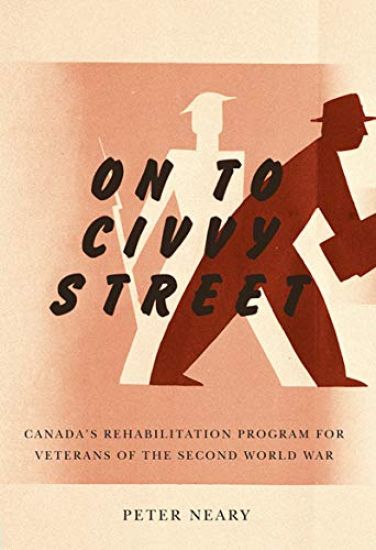
On to Civvy Street

On to Civvy Street

Peter Neary

McGill-Queen's University Press
2011
nidottu
Detailing the ways in which the Canadian government built on existing programs for veterans, Peter Neary identifies the key figures and events responsible for developing the orders and statutes that came to be known as the Veterans Charter, creating the Department of Veterans Affairs, and establishing sweeping new benefits for servicemen and women. Comparing rehabilitation programs after the Second World War with those after the First World War, Neary reveals the lasting importance of the country's new way of expressing its obligations to veterans. He shows that the measures developed to reintegrate them into civilian society became essential building blocks for the Canadian welfare state and helped pave the way for the unprecedented prosperity of the 1950s. A comprehensive study of a fundamental change in the relationship between government and citizens, On to Civvy Street is also a timely reminder of the debt the country owes its veterans.
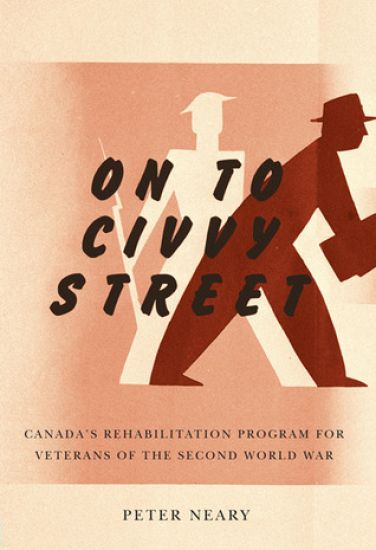
On to Civvy Street

On to Civvy Street

Peter Neary

McGill-Queen's University Press
2011
sidottu
Detailing the ways in which the Canadian government built on existing programs for veterans, Peter Neary identifies the key figures and events responsible for developing the orders and statutes that came to be known as the Veterans Charter, creating the Department of Veterans Affairs, and establishing sweeping new benefits for servicemen and women. Comparing rehabilitation programs after the Second World War with those after the First World War, Neary reveals the lasting importance of the country's new way of expressing its obligations to veterans. He shows that the measures developed to reintegrate them into civilian society became essential building blocks for the Canadian welfare state and helped pave the way for the unprecedented prosperity of the 1950s. A comprehensive study of a fundamental change in the relationship between government and citizens, On to Civvy Street is also a timely reminder of the debt the country owes its veterans.
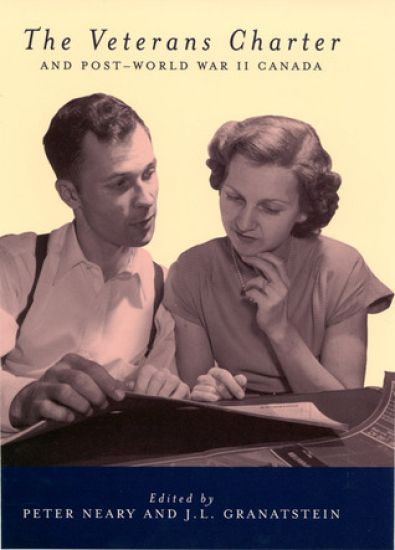
The Veterans Charter and Post-World War II Canada

The Veterans Charter and Post-World War II Canada

Peter Neary

McGill-Queen's University Press
1999
nidottu
Desmond Morton sets the scene with a survey of the experiences of veterans of the Great War, who found much to fault in Ottawa's policies; Jeff Keshen looks at the very different experience of Canada's veterans of World War II. Dean Oliver examines the organization and administration of the return of Canadian soldiers from Europe after VE-Day, and Don Ives examines the philosophy and program of the Veterans Charter. Focusing on specific benefits of the Charter, Michael Stevenson looks at issues surrounding veterans' right to reinstatement in civil employment, Peter Neary deals with educational benefits made available through the Veterans Rehabilitation Act of 1945, and Terry Copp and Mary Tremblay examine rehabilitation of veterans with psychiatric and physical disabilities. Taking a broader scope, James Struthers provides an insightful assessment of the construction of the Canadian welfare state and Doug Owram offers a revisionist appraisal of Canadian society in the postwar era. J.L. Granatstein concludes the volume with a probing reflection on the meaning for Canadians of the veteran experience and of their country's participation in World War II. The achievements of this generation of Canadian soldiers are sometimes downplayed; this collection of essays puts their achievements on the historical record and pays tribute to their memory and accomplishments.
The Veterans Charter and Post-World War II Canada

The Veterans Charter and Post-World War II Canada

Peter Neary

McGill-Queen's University Press
1997
sidottu
Desmond Morton sets the scene with a survey of the experiences of veterans of the Great War, who found much to fault in Ottawa's policies; Jeff Keshen looks at the very different experience of Canada's veterans of World War II. Dean Oliver examines the organization and administration of the return of Canadian soldiers from Europe after VE-Day, and Don Ives examines the philosophy and program of the Veterans Charter. Focusing on specific benefits of the Charter, Michael Stevenson looks at issues surrounding veterans' right to reinstatement in civil employment, Peter Neary deals with educational benefits made available through the Veterans Rehabilitation Act of 1945, and Terry Copp and Mary Tremblay examine rehabilitation of veterans with psychiatric and physical disabilities. Taking a broader scope, James Struthers provides an insightful assessment of the construction of the Canadian welfare state and Doug Owram offers a revisionist appraisal of Canadian society in the postwar era. J.L. Granatstein concludes the volume with a probing reflection on the meaning for Canadians of the veteran experience and of their country's participation in World War II. The achievements of this generation of Canadian soldiers are sometimes downplayed; this collection of essays puts their achievements on the historical record and pays tribute to their memory and accomplishments.
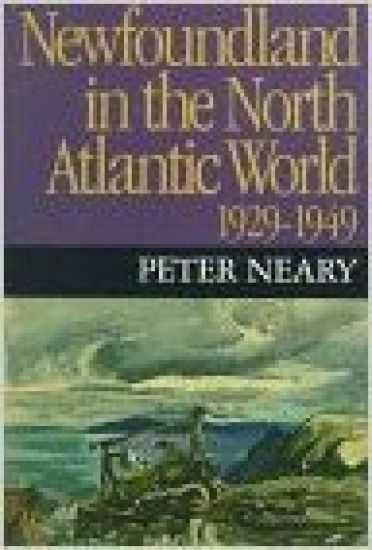
Newfoundland in the North Atlantic World, 1929-1949

Newfoundland in the North Atlantic World, 1929-1949

Peter Neary

McGill-Queen's University Press
1996
nidottu
Neary draws material from both public and private sources in the United Kingdom, Canada, the United States, and Newfoundland. Following a brief summary of major developments in Newfoundland before 1929, he gives an account of the tumultuous events that led to the demise of responsible self-government and the establishment of a British-appointed Commission of Government in 1934. He details and evaluates the major policies of the commission during three distinct phases: the continuing hard times of the 1930s, the boom years of the Second World War, and the period of post-war adjustment. The reasons for constitutional change are examined and Neary explains clearly why Newfoundland became a province of Canada in 1949. Through a fine blending of domestic and international history, he reveals the intricate connections between events in Newfoundland and in the rest of the North Atlantic World, providing a balanced view which takes into account constitutional, political, economic, and social developments. He acknowledges the role of British, Canadian, and American policymakers in determining the course of events in Newfoundland and illuminates the role that Newfoundlanders themselves played at a critical time in their history.
Newfoundland in the North Atlantic World, 1929-1949

Newfoundland in the North Atlantic World, 1929-1949

Peter Neary

McGill-Queen's University Press
1988
sidottu
Neary draws material from both public and private sources in the United Kingdom, Canada, the United States, and Newfoundland. Following a brief summary of major developments in Newfoundland before 1929, he gives an account of the tumultuous events that led to the demise of responsible self-government and the establishment of a British-appointed Commission of Government in 1934. He details and evaluates the major policies of the commission during three distinct phases: the continuing hard times of the 1930s, the boom years of the Second World War, and the period of post-war adjustment. The reasons for constitutional change are examined and Neary explains clearly why Newfoundland became a province of Canada in 1949. Through a fine blending of domestic and international history, he reveals the intricate connections between events in Newfoundland and in the rest of the North Atlantic World, providing a balanced view which takes into account constitutional, political, economic, and social developments. He acknowledges the role of British, Canadian, and American policymakers in determining the course of events in Newfoundland and illuminates the role that Newfoundlanders themselves played at a critical time in their history.