Kirjojen hintavertailu. Mukana 12 595 353 kirjaa ja 12 kauppaa.

Kirjailija

Peter Nijkamp

Kirjat ja teokset yhdessä paikassa: 26 kirjaa, julkaisuja vuosilta 1977-2019, suosituimpien joukossa Meta-Analysis in Environmental Economics. Vertaile teosten hintoja ja tarkista saatavuus suomalaisista kirjakaupoista.

26 kirjaa

Kirjojen julkaisuhaarukka 1977-2019.

Meta-Analysis in Environmental Economics

Meta-Analysis in Environmental Economics

J.C. van den Bergh; Kenneth J. Button; Peter Nijkamp; G.C. Pepping

Springer
2010
nidottu
Meta-analysis is a formal synthesis of results and findings of scientific studies, which can assist in gaining new insights, explaining differences between results of similar studies, or determine useful directions of research. In this book we focus on the use of meta-analysis in environmental economics and related fields of study. The first part of the book covers the overall meta-approach methodology for social sciences and economics in particular. This is followed by technical and non-technical discussions of statistical and rough-set techniques for analysis. At appropriate places this is supplemented with reviews of applications in environmental economics and related fields. In the second part of the book a number of case studies show different aspects of the application of meta-analysis. The research areas considered include, among others, tourism multipliers, air pollution valuation, risk and value of life, pesticide price policy, travel time savings, and transport externality and policy issues. The benefits of the appropriate application of meta-analysis in environmental economics are a better use of existing information and knowledge, removal of some of the subjectivity from analysis and forecasting, and greater clarity as to where future efforts in environmental economic analysis can most gainfully be deployed.

Meta-Analysis in Environmental Economics

Meta-Analysis in Environmental Economics

J.C. van den Bergh; Kenneth J. Button; Peter Nijkamp; G.C. Pepping

Springer
1997
sidottu
Meta-analysis is a formal synthesis of results and findings of scientific studies, which can assist in gaining new insights, explaining differences between results of similar studies, or determine useful directions of research. In this book we focus on the use of meta-analysis in environmental economics and related fields of study. The first part of the book covers the overall meta-approach methodology for social sciences and economics in particular. This is followed by technical and non-technical discussions of statistical and rough-set techniques for analysis. At appropriate places this is supplemented with reviews of applications in environmental economics and related fields. In the second part of the book a number of case studies show different aspects of the application of meta-analysis. The research areas considered include, among others, tourism multipliers, air pollution valuation, risk and value of life, pesticide price policy, travel time savings, and transport externality and policy issues. The benefits of the appropriate application of meta-analysis in environmental economics are a better use of existing information and knowledge, removal of some of the subjectivity from analysis and forecasting, and greater clarity as to where future efforts in environmental economic analysis can most gainfully be deployed.
The Emerging Economic Geography in EU Accession Countries
This title was first published in 2003. Since 1990, Central and Eastern European countries have experienced increased economic integration with the European Union. The spatial implications of this process have been little investigated so far. Have patterns of regional specialization and industrial concentration changed during the 1990s? How does regional specialization relate to economic performance? How has access to Western markets affected the regional wage structure? What types of regions are winners and what types of regions are losers? This book poses and answers such policy relevant questions. It is organized into three parts. The first introduces the main features of economic integration and transition processes in Central and Eastern Europe and discusses the theoretical and methodological framework of the research. The second part examines the cases of five countries: Bulgaria, Estonia, Hungary, Romania and Slovenia, and the final part includes three comparative analyses which explain the underlying factors that determine the changing patterns of location of manufacturing activity, the adjustment pattern of regional wages and adaptation processes in border regions in the five countries.
Regional Performance Measurement and Improvement

Regional Performance Measurement and Improvement

Soushi Suzuki; Peter Nijkamp

Springer Verlag, Singapore
2018
nidottu
This is the first book to fully introduce a newly developed distance friction minimization (DFM) model, which is one of the new efficiency improvement projection approaches in data envelopment analysis (DEA). The DFM model can produce a most effective solution in efficiency improvement projections for inefficient spatial entities (decision-making units). The book provides a set of fresh contributions to a quantitative assessment of the performance of such policy entities. First it offers a state-of-the art overview of current DEA models and approaches, followed by the operational design of various new types of DEA models, each of them addressing weaknesses in traditional DEA approaches. Then it illustrates the assessment potential of DEA — and its new variants, in particular, the DFM model and subsequent extensions — on the basis of a broadly composed collection of empirical case studies, centering mainly but not exclusively on Japan and other Asian nations.
The Emerging Economic Geography in EU Accession Countries
This title was first published in 2003. Since 1990, Central and Eastern European countries have experienced increased economic integration with the European Union. The spatial implications of this process have been little investigated so far. Have patterns of regional specialization and industrial concentration changed during the 1990s? How does regional specialization relate to economic performance? How has access to Western markets affected the regional wage structure? What types of regions are winners and what types of regions are losers? This book poses and answers such policy relevant questions. It is organized into three parts. The first introduces the main features of economic integration and transition processes in Central and Eastern Europe and discusses the theoretical and methodological framework of the research. The second part examines the cases of five countries: Bulgaria, Estonia, Hungary, Romania and Slovenia, and the final part includes three comparative analyses which explain the underlying factors that determine the changing patterns of location of manufacturing activity, the adjustment pattern of regional wages and adaptation processes in border regions in the five countries.
Regional Performance Measurement and Improvement

Regional Performance Measurement and Improvement

Soushi Suzuki; Peter Nijkamp

Springer Verlag, Singapore
2017
sidottu
This is the first book to fully introduce a newly developed distance friction minimization (DFM) model, which is one of the new efficiency improvement projection approaches in data envelopment analysis (DEA). The DFM model can produce a most effective solution in efficiency improvement projections for inefficient spatial entities (decision-making units). The book provides a set of fresh contributions to a quantitative assessment of the performance of such policy entities. First it offers a state-of-the art overview of current DEA models and approaches, followed by the operational design of various new types of DEA models, each of them addressing weaknesses in traditional DEA approaches. Then it illustrates the assessment potential of DEA — and its new variants, in particular, the DFM model and subsequent extensions — on the basis of a broadly composed collection of empirical case studies, centering mainly but not exclusively on Japan and other Asian nations.
Sustainable Cities in Europe

Sustainable Cities in Europe

Peter Nijkamp; Adriaan Perrels

Routledge
2016
nidottu
Although urbanization steadily increases, many modern cities are finding the accommodation of their populations an increasingly difficult task. Planners and policy-makers battling to alleviate the problem with a host of urban renewal initiatives have made environmental issues and policies central to their quest for urban sustainability.;Drawing on the CITIES programme of the EC, this study describes the urban energy and environmental policies now available. Through detailed case studies of various European cities, it explains how to devise and implement strategies for urban growth and development.
Traditional Food Production and Rural Sustainable Development

Traditional Food Production and Rural Sustainable Development

Teresa de Noronha Vaz; Peter Nijkamp

Routledge
2016
nidottu
The worldwide interest in sustainable development has not only prompted ecological developments in policy and research in key sectors such as industry or transportation, but also in the management and assessment of new lifestyles such as healthy food consumption and sustainable use of products. In this context, agriculture is an important example because of its dual nature as both a high-tech sector producing modern mass products and also a traditional sector producing environmentally-friendly goods. Illustrated by a range of case studies from across Europe, this volume examines the interface of agricultural - and sometimes rural - development and the social and economic feasibility of traditional modes of production and consumption. It provides an overview of the various strategies and policies concerning sustainable agriculture, presenting a critical review of the opportunities of traditional production modes, from local, regional, national and global perspectives.
Interaction, Evolution and Chaos in Space

Interaction, Evolution and Chaos in Space

Peter Nijkamp; Aura Reggiani

Springer-Verlag Berlin and Heidelberg GmbH Co. K
2012
nidottu
For many decades scholars from various disciplines have been intrigued by the question whether there are unifying principles or models that have a validity in different disciplines. The building of such analytical frameworks bridging the gaps between scientific traditions is a very ambitious task and has not been very successful up till now. In the past - in a static context - several such principles have been defined and advocated at the edge of the natural sciences on the one hand and social sciences (in particular, economics and geography) on the other hand, mainly based on the paradigm of 'social physics'. Some important contributions to the integration of the spatial systems sciences and physics can be found in gravity theory and entropy theory, which have formed the comer stones of interaction models in space. This book is about spatial interaction models. It describes the origin, the history and the correspondence of such models from a 'social physics' perspective. It is emphasized that such models need a clear behavioural underpinning as a sine qua non for a valid use in spatial systems analysis. This view also explains the use of micro-based disaggregate choice models as a tool for analyzing spatial systems. This is mainly analyzed in Part A of this book.
Telematics and Transport Behaviour

Telematics and Transport Behaviour

Peter Nijkamp; Gerard Pepping; David Banister

Springer-Verlag Berlin and Heidelberg GmbH Co. K
2012
nidottu
A major strategy to reduce transport congestion and other social costs of transport is to ensure that travellers make the best decisions, based on real time information. A wide range of technological systems have been developed to provide this information, but little is known about how travellers actually respond to it. This book offers an overview of various transport telematics options and provides an appropriate methodological framework, followed by a presentation of results from actual applications of these telematics systems from a range of European countries in various transport sectors. The empirical results are supplemented by analytical models and geographic information systems representations with a view on generalizing these findings and identifying the key parameters which determine user response.
Impact Assessment and Evaluation in Transportation Planning
Impact Assessment and Evaluation in Transportation Planning contains a refreshing approach to transportation planning by integrating impact analysis and evaluation methodology. It is original in that impact assessment and evaluation are brought together in a coherent framework. It is novel in the history of transportation science and particularly suitable as a pedagogical text, since methodologies are illustrated with various case studies and examples. It is particularly suitable for practitioners and students who want to become acquainted with conflict analysis and plan/project evaluation in the area of transportation planning.
Sustainable Cities and Energy Policies

Sustainable Cities and Energy Policies

Roberta Capello; Peter Nijkamp; Gerard Pepping

Springer-Verlag Berlin and Heidelberg GmbH Co. K
2010
nidottu
The aim of this book is to highlight the great potential of decentralized (i.e. local or urban) energy policies in achieving environmentally-benign developments for modern cities. Urban sustainability is placed in the context of the debate on global sustainable development. A wide array of policy initiatives is discussed and evaluated, ranging from market-based energy policies to technological innovation policies for the energy sector. A theoretical framework for technology adoption processes is developed and empirically tested. The main question addressed is: which are the critical success factors for successful urban energy policies? This question is also dealt with in a meta-analytic context by assessing and comparing the performance of energy policies in various European cities, with a particular view to renewable energy.
Sustainable Cities in Europe

Sustainable Cities in Europe

Peter Nijkamp; Adriaan Perrels

Earthscan Ltd
2009
nidottu
Worldwide, urbanization is steadily increasing, yet many modern cities are becoming less and less able to accommodate the growth in their population. Congestion, pollution, low-quality housing, social fragmentation, noise, crime and inadequate social services all contribute to a declining quality of urban life. Planners and policy makers are battling to alleviate the problems with a variety of urban renewal initiatives, and energy-environmental policies have become central to their quest for urban sustainability. Sustainable Cities in Europe gives a comprehensive introduction to the available urban energy and environmental policies. Drawing on a detailed analysis of the CITIES programme of the Commission of the European Communities, the book includes detailed case studies of European cities which are devising and implementing alternative strategies for sustainable growth and development. The cities discussed include: Amsterdam, Besancon, Braganca, Cadiz, Dublin, Esch/Alzette, Gent, Mannheim, Newcastle, Odense, Thessaloniki and Turin. The policy discussions and case studies in this book will be invaluable for all those professionally or academically involved in the pressing issue of city planning development. Peter Nijkamp is Professor in Regional, Urban and Environmental Economics at Free University, Amsterdam. Author of numerous books, he is a world authority on environmental economics and urban policy. Adriaan Perrels is head of the research department of the Energy Studies Centre in Petten, The Netherlands. He has worked extensively in the field of energy planning and electricity load management. Originally published in 1994
Traditional Food Production and Rural Sustainable Development

Traditional Food Production and Rural Sustainable Development

Teresa de Noronha Vaz; Peter Nijkamp

Ashgate Publishing Limited
2009
sidottu
The worldwide interest in sustainable development has not only prompted ecological developments in policy and research in key sectors such as industry or transportation, but also in the management and assessment of new lifestyles such as healthy food consumption and sustainable use of products. In this context, agriculture is an important example because of its dual nature as both a high-tech sector producing modern mass products and also a traditional sector producing environmentally-friendly goods. Illustrated by a range of case studies from across Europe, this volume examines the interface of agricultural - and sometimes rural - development and the social and economic feasibility of traditional modes of production and consumption. It provides an overview of the various strategies and policies concerning sustainable agriculture, presenting a critical review of the opportunities of traditional production modes, from local, regional, national and global perspectives.
Environmental Economics and Evaluation

Environmental Economics and Evaluation

Peter Nijkamp

Edward Elgar Publishing Ltd
2004
sidottu
This important collection brings together Peter Nijkamp's work in the area of environmental and resource economics. The essays selected pay particular attention to theory and modelling, environmental analysis as well as policy issues and implications. The first part focuses on the economic management of environmental goods and scarce resources, the analysis of spatial-environmental externalities, the study of biodiversity from an economic perspective, the economics of water use and the implications of climate change for global economic policy. The second part focuses on environmental-economic modelling. It presents new advances in modelling and evaluation, dealing with the role of endogenous technology and trade in economic growth models, the design of second-best energy policies and the implications of environmental externalities in the aviation sector. The third part considers the relevance and applicability of evaluation studies for environmental management and the final part examines the scope of environmental policy analysis. This collection will be essential reading for scholars and students in both environmental and ecological economics.
Innovation, Space and Economic Development

Innovation, Space and Economic Development

Peter Nijkamp

Edward Elgar Publishing Ltd
2004
sidottu
This collection brings together Peter Nijkamp's work in the areas of innovation, entrepreneurship, growth and spatial development. The first part comprises work of a theoretical nature and addresses issues such as the micro-economic foundation of spatial development, the relevance of spatial innovation and urban incubation theory, the role of network growth, policy and the importance of novel evolutionary perspectives for understanding regional economic dynamics. The second part focuses attention on empirical macro and meso dimensions of economic development, dealing inter alia with the economic growth impact of public policy, the local factors critical for successful innovation, the importance of networks for regional growth and the implications of the rational expectations paradigm for industrial dynamics. The third part focuses on empirical micro-studies of economic performance and the final part emphasises the scope and effect of public policy for spatial-economic performance, including policies for ICT, regional development, urban sustainability and learning capabilities. This collection will be essential reading for scholars and students interested in regional science, innovation studies, entrepreneurship and economic development.
Location, Travel and Information Technology

Location, Travel and Information Technology

Peter Nijkamp

Edward Elgar Publishing Ltd
2004
sidottu
This important book collects together Peter Nijkamp's work on spatial-economic markets, particularly housing and labour markets, and the increasing impact of information technology on mobility and the location of firms, residents and job seekers.The first part deals with applied modelling and theoretical advances in housing market dynamics and research. The papers address issues such as the implications of household dynamics for relocation decisions, migration movements in Europe, and the driving forces for migration decisions of ethnic groups. The second part focuses on the spatial labour market, dealing with recruitment channel and search channel choices by job seekers and firms, vacancy durations and the opportunities offered by ethnic entrepreneurship for improving the chances of ethnic groups. The third part comprises an analysis of spatial mobility flows and interaction patterns and the final part emphasises the scope and effect of information technology in transport. This includes the effect of real-time information on the behaviour of car drivers, the effect of telematics devices on public transport users, the importance of telematics for the freight transport sector and the adoption mechanisms of ICT users and their related policy implications.This collection will be essential reading for scholars and students interested in the housing and labour markets and the impact on both of developments in IT and transport.
Transport Systems and Policy

Transport Systems and Policy

Peter Nijkamp

Edward Elgar Publishing Ltd
2004
sidottu
Transport and mobility are critical for the economic development of cities and regions and are a key factor in achieving sustained economic growth. This collection brings together Peter Nijkamp's influential work in the areas of transport systems and transport policy. The first part offers new theoretical insights and a review of the state-of-the-art in transportation science. The essays address issues such as the costs and benefits of transport, the role of price in transport demand, the impact of information and the potential of congestion pricing. The second part focuses attention on the modelling of transport systems. The third part comprises papers on transport infrastructure and includes studies on the impact of infrastructure and superstructure on economic growth, the costs of infrastructure construction, the evaluation of airport expansion and airport efficiency. The final part considers issues of public policy, including governance principles for sustainable urban transport, welfare implications of information policy, the economic consequences of airline deregulation, the use of policy scenarios for the far future and the transferability of transport policy to other areas.This collection will be essential reading for scholars and students interested in all aspects of transport research and policy.
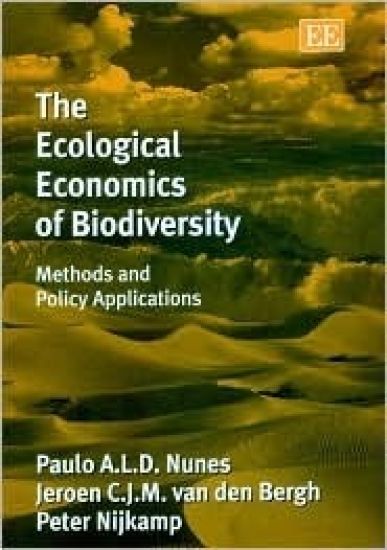
The Ecological Economics of Biodiversity

The Ecological Economics of Biodiversity

Paulo A.L.D. Nunes; Jeroen C.J.M. van den Bergh; Peter Nijkamp

Edward Elgar Publishing Ltd
2003
sidottu
The loss of biodiversity has put increasing pressure on the stability and continuity of ecosystems, and their ability to provide goods and services to mankind. This valuable new book addresses this issue and presents an integrated ecological-economic perspective on the analysis of biodiversity loss and conservation. It adopts a multidisciplinary approach and attempts both to provide a definition of biodiversity benefits as well as investigate alternative perspectives on biodiversity. The book also presents a classification of biodiversity values and effectively illustrates which economic valuation methods can best measure which type of biodiversity value. The distinguished authors move on to discuss the utility of the application of the economics-ecology interface and integrated modelling for the assessment of biodiversity values. In doing so, they consider the use of multi-criteria evaluation and meta-analytical methods to deal with the aggregation of information from multiple disciplines and past valuation studies, respectively. The book concludes by addressing the role of biodiversity indicators and monetary information for policy design and biodiversity management, devoting special attention to the certification and the ecolabeling of biodiversity benefits.The integration of economic and ecological theories and methods, and the strong methodological orientation will be of immense benefit to students, academics and researchers of environmental economics, environmental science and ecology. Policymakers involved with nature policy and management will also find this volume to be of great practical value.
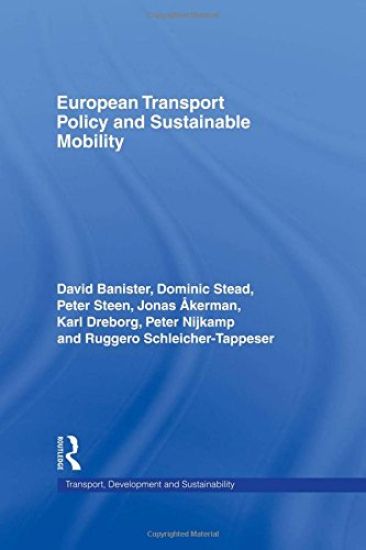
European Transport Policy and Sustainable Mobility

European Transport Policy and Sustainable Mobility

Jonas Akerman; David Banister; Karl Dreborg; Peter Nijkamp; Ruggero Schleicher-Tappeser; Dominic Stead; Peter Steen

Routledge
2000
sidottu
It is now widely accepted that transport is becoming increasingly unsustainable and that strong policy intervention is required to reduce both the growth in transport demand and the environmental costs of transport. This book challenges conventional approaches to transport by moving away from trend based analysis towards the use of scenarios to identify alternative sustainable transport futures. It both summaries the development of EU transport policy and presents a critique. The policy context is widened to include the global changes taking place in economics, society and technology. It develops new methodologies for policy making for the next 25 years.