Kirjojen hintavertailu. Mukana 12 595 353 kirjaa ja 12 kauppaa.

Kirjailija

Peter O'Connor

Kirjat ja teokset yhdessä paikassa: 13 kirjaa, julkaisuja vuosilta 1999-2025, suosituimpien joukossa Applied Theatre: Research. Vertaile teosten hintoja ja tarkista saatavuus suomalaisista kirjakaupoista.

13 kirjaa

Kirjojen julkaisuhaarukka 1999-2025.

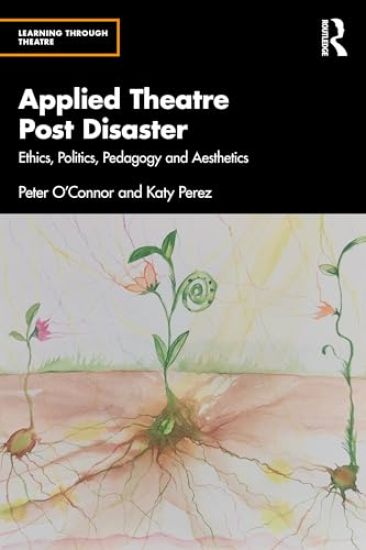
Applied Theatre and the Permacrisis

Applied Theatre and the Permacrisis

Peter O'Connor; Katy Pérez

TAYLOR FRANCIS LTD
2025
sidottu
Responding to the global state of permacrisis, this book explores the relationship between applied theatre and disaster.For millennia communities have learnt to live alongside disaster through their arts making. Building on the basis of this ancestral knowledge this book explores the current uses of applied theatre in times of constant crisis. Using a critical disaster studies lens, the authors recognise the role of governments and multinational businesses in profiteering from and manipulating for their own advantage the misery caused by disasters. Case studies of different stages of disaster, from risk reduction and disaster preparedness through to the almost inevitable resistance to failed government intervention, illustrate the possibilities and limitations of applied theatre and other art forms to navigate these times. Applied theatre is seen as a vital act of aesthetic and political hope.At a time of never-ending, overlapping disasters, this book will be important to researchers and postgraduate students working in applied theatre and disaster research in the social sciences. It will also appeal to applied arts practitioners who work in disaster zones and with relief organisations.
Applied Theatre and the Permacrisis

Applied Theatre and the Permacrisis

Peter O'Connor; Katy Pérez

TAYLOR FRANCIS LTD
2025
nidottu
Responding to the global state of permacrisis, this book explores the relationship between applied theatre and disaster.For millennia communities have learnt to live alongside disaster through their arts making. Building on the basis of this ancestral knowledge this book explores the current uses of applied theatre in times of constant crisis. Using a critical disaster studies lens, the authors recognise the role of governments and multinational businesses in profiteering from and manipulating for their own advantage the misery caused by disasters. Case studies of different stages of disaster, from risk reduction and disaster preparedness through to the almost inevitable resistance to failed government intervention, illustrate the possibilities and limitations of applied theatre and other art forms to navigate these times. Applied theatre is seen as a vital act of aesthetic and political hope.At a time of never-ending, overlapping disasters, this book will be important to researchers and postgraduate students working in applied theatre and disaster research in the social sciences. It will also appeal to applied arts practitioners who work in disaster zones and with relief organisations.
Insights in Applied Theatre

Insights in Applied Theatre

Peter O'Connor

INTELLECT
2023
nidottu
Much more than an archive, these are the vivid, still pertinent voices and messages of the pioneers worldwide. The nineteen articles chosen by the editors of Applied Theatre Research represent key themes and elements from the early days of applied theatre that are still – and indeed now more than ever – relevant. They are all high-quality articles, some of which were highly influential in their own time. All of them still have plenty to say to today’s applied theatre, both in their own terms and sometimes in terms of how their publication influenced the development at the time of this still-expanding field, or refracted it in ways that give us new insights with hindsight. They have been arranged in sections according to some of the key themes – and problematic issues – that were discovered, thought out and sometimes stumbled across by the pioneer writers in the collection. Each section is preceded by a critical editorial commentary on those themes, besides thorough introductions to all the articles and in some cases re-evaluations. The editors have added substantial additional new material to the collection and in doing so, bring their own applied theatre experience to bear on these themes, as they raise general questions that are wide-ranging, contemporary and urgent: from the vital and contested issues of power, partnerships and the giving of voice through theatre to applied theatre’s proactive response to COVID-19, to the need to identify, take account of and address the needs of all stakeholders in any applied theatre project. The articles are grouped in six sections, covering areas such as diversity of geography, community contexts, forms of applied theatre and organizational factors that characterize applied theatre; the definition and nature of applied theatre; how the best intentioned projects could be compromised by any of the many opportunities for applied theatre to go wrong; opportunities for change it can offer and the incorporation of new media technologies, and ethnographic performance, two factors that have now become major preoccupations for our field, particularly in the years since the articles were written. The final section recognizes that applied theatre has been around not for 30 years, but for thousands, and in countless cultures. The editorial chapters have strong connections with the rest of the book, but are written with the editors’ deep insights into the field, and are sharp in their focus and context. The book offers useful insights into the start of applied theatre and its development as an area of practice and research. The chapter collection is relevant and includes influential names in the field who have contributed significantly to the development of applied theatre over time. The primary market will be academics and advanced practitioners in applied theatre, drama education and theatre studies – including the expanding fields of drama therapy, theatre and health etc. It will also be useful for educators exploring creative pedagogy and drama in education strategies across the curriculum. It will be valuable introductory background reading for advanced undergraduate and post-graduate students in drama, theatre studies and theatre arts, performance studies and community theatre.
Slow Wonder

Slow Wonder

Peter O'Connor; Claudia Rozas Gómez

Cambridge University Press
2022
pokkari
Slow wonder bears witness to the possibilities of the imagination. In a series of letters the authors playfully imagine alternatives to current orthodoxies that privilege technocratic approaches to education that have strangled discussion about what it might mean to make education good and right, or even beautiful. The authors position the imagination as a powerful site of resistance within education and academic life. They unpack their philosophical positionings through vignettes of their teaching practice, poetry written as reflective musings and discursive theoretical pieces, including letters they have written to others. They attempt to marry the poetic and the academic, the rational and the affective, to model a slow approach to wondering about the joy, beauty and possibilities of life. In this spirit, they contemplate new ways to think and live in education.
Insights in Applied Theatre

Insights in Applied Theatre

Peter O'Connor

INTELLECT
2022
sidottu
Much more than an archive, these are the vivid, still pertinent voices and messages of the pioneers worldwide. The nineteen articles chosen by the editors of Applied Theatre Research represent key themes and elements from the early days of applied theatre that are still – and indeed now more than ever – relevant. They are all high-quality articles, some of which were highly influential in their own time. All of them still have plenty to say to today’s applied theatre, both in their own terms and sometimes in terms of how their publication influenced the development at the time of this still-expanding field, or refracted it in ways that give us new insights with hindsight. They have been arranged in sections according to some of the key themes – and problematic issues – that were discovered, thought out and sometimes stumbled across by the pioneer writers in the collection. Each section is preceded by a critical editorial commentary on those themes, besides thorough introductions to all the articles and in some cases re-evaluations. The editors have added substantial additional new material to the collection and in doing so, bring their own applied theatre experience to bear on these themes, as they raise general questions that are wide-ranging, contemporary and urgent: from the vital and contested issues of power, partnerships and the giving of voice through theatre to applied theatre’s proactive response to COVID-19, to the need to identify, take account of and address the needs of all stakeholders in any applied theatre project. The articles are grouped in six sections, covering areas such as diversity of geography, community contexts, forms of applied theatre and organizational factors that characterize applied theatre; the definition and nature of applied theatre; how the best intentioned projects could be compromised by any of the many opportunities for applied theatre to go wrong; opportunities for change it can offer and the incorporation of new media technologies, and ethnographic performance, two factors that have now become major preoccupations for our field, particularly in the years since the articles were written. The final section recognizes that applied theatre has been around not for 30 years, but for thousands, and in countless cultures. The editorial chapters have strong connections with the rest of the book, but are written with the editors’ deep insights into the field, and are sharp in their focus and context. The book offers useful insights into the start of applied theatre and its development as an area of practice and research. The chapter collection is relevant and includes influential names in the field who have contributed significantly to the development of applied theatre over time. The primary market will be academics and advanced practitioners in applied theatre, drama education and theatre studies – including the expanding fields of drama therapy, theatre and health etc. It will also be useful for educators exploring creative pedagogy and drama in education strategies across the curriculum. It will be valuable introductory background reading for advanced undergraduate and post-graduate students in drama, theatre studies and theatre arts, performance studies and community theatre.
Reviewed!

Reviewed!

Peter O'Connor

Soft Solutions
2019
pokkari
For hotels wanting to sell through online channels, user reviews have become incredibly influential. Every customer has an opinion and feels entitled to share it with the world. As a result, both on dedicated review sites such as TripAdvisor.com or built into property pages on Online Travel agency websites, what past customers are saying about you can make or break your business, making proactively managing your online reputation essential. However, responding to harsh and sometimes unwarranted criticism on a multitude of websites is often an uphill battle. With the process new to most hoteliers, many struggle to manage it effectively, or sometimes even know where to start, resulting in missed opportunities and a damaged online reputation. Thankfully help is at hand. Based on techniques learned working with both independent and chain hotels, Reviewed The hoteliers' unofficial guide will assist you in defending, controlling and enhancing your property's online reputation. Using a highly practical approach, this guide provides precise, detailed, step-by-step solutions, tactics and suggestions to help you to: - Better understand the role and importance of user reviews in today's highly competitive online booking environment- Manage your hotel's pre-purchase image so you can more easily exceed guest expectations and drive better user reviews- Use proven strategies to respond to reviews, both positive and negative- Challenge and remove suspicious or unwarranted reviews- Appreciate how the main review channels work and how best to manage their idiosyncrasies and requirements - Assess which software tools to use to assist in online reputation management - Understand how you can drive additional favourable reviews to increase your rating scores and positioning- Use reviews as a free corporate intelligence tool to better understand your, and your competitors', relative strengths and weaknesses.
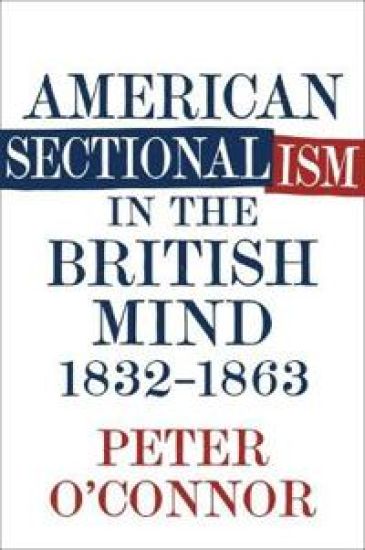
American Sectionalism in the British Mind, 1832-1863

American Sectionalism in the British Mind, 1832-1863

Peter O'Connor

Louisiana State University Press
2017
sidottu
In American Sectionalism in the British Mind, 1832- 1863, Peter O'Connor uses an innovative interdisciplinary approach to provide a corrective to simplified interpretations of British attitudes towards the United States during the antebellum and early Civil War periods. Exploring the many complexities of transatlantic politics and culture, O'Connor examines developing British ideas about U.S. sectionalism, from the abolition of slavery in the British Empire and the Nullification Crisis in South Carolina to the Civil War.Through a close reading of travelogues, fictional accounts, newspaper reports, and personal papers, O'Connor argues that the British literate population had a longstanding familiarity with U.S. sectionalism and with the complex identities of the North and South. As a consequence of their engagement with published accounts of America produced in the decades leading up to the Civil War, the British populace approached the conflict through these preexisting notions.O'Connor reveals even antislavery commentators tended to criticize slavery in the abstract and to highlight elements of the system that they believed compared favorably to the condition of free blacks in the North. As a result, the British saw slavery in the U.S. in national as opposed to sectional terms, which collapsed the moral division between North and South. O'Connor argues that the British identified three regions within America- the British Cavalier South, the British Puritan New England, and the ethnically heterogeneous New York and Pennsylvania region- and demonstrates how the apparent lack of a national American culture prepared Britons for the idea of disunity within the U.S. He then goes on to highlight how British commentators engaged with American debates over political culture, political policy, and states' rights. In doing so, he reveals the complexity of the British understanding of American sectionalism in the antebellum era and its consequences for British public opinion during the Civil War.American Sectionalism in the British Mind, 1832- 1863 re-conceptualizes our understanding of British engagements with the United States during the mid-nineteenth century, offering a new explanation of how the British understood America in the antebellum and Civil War eras.
Understanding Jung Understanding Yourself (RLE: Jung)
First published in 1985 this was the first introduction to Jung which related his theories to our everyday lives.Discover through this highly readable book that Jung’s views provide a full understanding of the concerns and anxieties of today. Sigmund Freud spoke to the generations who experienced the anxiety of sexual guilt and repression. Carl Jung speaks to our generation, who seek self-knowledge and a deeper understanding of life. This book outlines Jung’s theories and how we experience them in our personal relationships, marriages and dreams. It describes Jung’s eight psychological types and his thinking on the Self, alchemy, archetypes and the collective unconscious. Imperative for those who wish to gain insight into Jung and their own psyche.
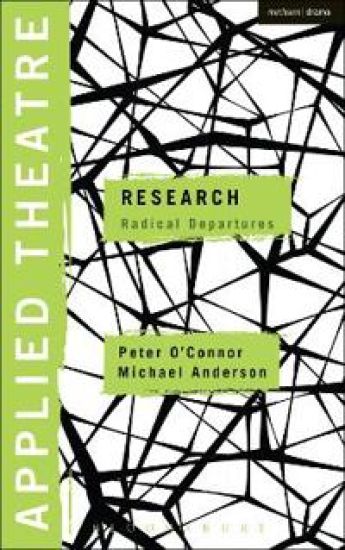
Applied Theatre: Research

Applied Theatre: Research

Peter O'Connor; Michael Anderson

Methuen Drama
2015
nidottu
Applied Theatre: Research is the first book to consolidate thinking about applied theatre as research through a thorough investigation of ATAR as a research methodology. It will be an indispensable resource for teachers and researchers in the area.The first section of the book details the history of the relationship between applied theatre and research, especially in the area of evaluation and impact assessment, and offering an examination of the literature surrounding applied theatre and research. The book then explores how applied theatre as research (ATAR) works as a democratic and pro-social adjunct to community based research and explains its complex relationship to arts informed inquiry, Indigenous research methods and other research epistemologies. The book provides a rationale for this approach focusing on its capacity for reciprocity within communities. The second part of the book provides a series of international case studies of effective practice which detail some of the key approaches in the method and based on work conducted in Australia, New Zealand, Singapore and the South Pacific. The case studies provide a range of cultural contexts for the playing out of various forms of ATAR, and a concluding chapter considers the tensions and the possibilities inherent in ATAR.This is a groundbreaking book for all researchers who are working with communities who require a method that moves beyond current research practice.
Applied Theatre: Research

Applied Theatre: Research

Peter O'Connor; Michael Anderson

Methuen Drama
2015
sidottu
Applied Theatre: Research is the first book to consolidate thinking about applied theatre as research through a thorough investigation of ATAR as a research methodology. It will be an indispensable resource for teachers and researchers in the area.The first section of the book details the history of the relationship between applied theatre and research, especially in the area of evaluation and impact assessment, and offering an examination of the literature surrounding applied theatre and research. The book then explores how applied theatre as research (ATAR) works as a democratic and pro-social adjunct to community based research and explains its complex relationship to arts informed inquiry, Indigenous research methods and other research epistemologies. The book provides a rationale for this approach focusing on its capacity for reciprocity within communities. The second part of the book provides a series of international case studies of effective practice which detail some of the key approaches in the method and based on work conducted in Australia, New Zealand, Singapore and the South Pacific. The case studies provide a range of cultural contexts for the playing out of various forms of ATAR, and a concluding chapter considers the tensions and the possibilities inherent in ATAR.This is a groundbreaking book for all researchers who are working with communities who require a method that moves beyond current research practice.
Understanding Jung Understanding Yourself (RLE: Jung)
First published in 1985 this was the first introduction to Jung which related his theories to our everyday lives.Discover through this highly readable book that Jung’s views provide a full understanding of the concerns and anxieties of today. Sigmund Freud spoke to the generations who experienced the anxiety of sexual guilt and repression. Carl Jung speaks to our generation, who seek self-knowledge and a deeper understanding of life. This book outlines Jung’s theories and how we experience them in our personal relationships, marriages and dreams. It describes Jung’s eight psychological types and his thinking on the Self, alchemy, archetypes and the collective unconscious. Imperative for those who wish to gain insight into Jung and their own psyche.
Electronic Information Distribution in Tourism and Hospitality
Electronic information distribution has become undeniably important in the hospitality and tourism sectors. Using a combination of narrative, analysis and case studies, this text traces the origins of electronic distribution in tourism and places current developments in context, while also looking at developing technologies and assessing their potential effect on the industry of the future. It is written from a managerial (rather than a technical) perspective, and takes an international approach with worldwide analysis and case studies encompassing Europe and the USA as well as the global marketplace. These include discussions of the distribution strategies of companies such as SABRE, Group Accor, Holiday Inn, Utell International, Best Western, as well as examinations of developing systems such as TIS, Gulliver, TravelWeb, Microsoft Expedia, Degriftour, Imminus and THG. Developments in all sectors of the tourism and hospitality industries are explored, but particular emphasis is placed on the accommodation product, illustrating its information distribution through each of the different systems.