Kirjojen hintavertailu. Mukana 12 595 353 kirjaa ja 12 kauppaa.
Kirjailija
Peter Oakes
Kirjat ja teokset yhdessä paikassa: 13 kirjaa, julkaisuja vuosilta 2000-2024, suosituimpien joukossa The Significance of Interpersonal Forgiveness in the Gospel of Matthew. Vertaile teosten hintoja ja tarkista saatavuus suomalaisista kirjakaupoista.
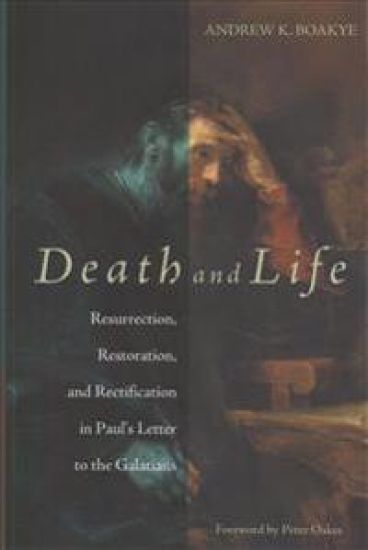
Oakes and Boakye rethink Galatians by examining the text as a vision for the lives of its hearers. They show how, in tackling the difficulties that he faces in Galatia, Paul offers a vision of what the Galatians are in their relationship with the living Christ. This offers a new understanding of the concept of unity in diversity expressed in Gal 3:28.The authors develop their views over six chapters. First, Oakes maps a route from the letter to a focus on its Galatian hearers and on Paul’s vision for their identity and existence. In the next chapter, Oakes uses the Christology of Galatians as a way to support the idea of pistis as current relationship with the living Christ. Boakye then offers three chapters analysing the letter’s scriptural quotations and ideas about salvation and law. Boakye sees a key dynamic at work in Galatians as being a movement from death to life, as prophesied metaphorically by Ezekiel and as made literal for Paul in his encounter with the resurrected Christ, trust in whom becomes the route to life. Life becomes a key category for evaluating law. Boakye also draws Galatians close to Romans 4 in seeing in both texts the promise of the birth of Isaac, with Paul closely tying that to the resurrection of Jesus. Oakes then argues that the letter has a thematic concern for unity in diversity. In the first instance this is between Jews and gentiles but, in principle, it is between any other socially significant pair of groups.
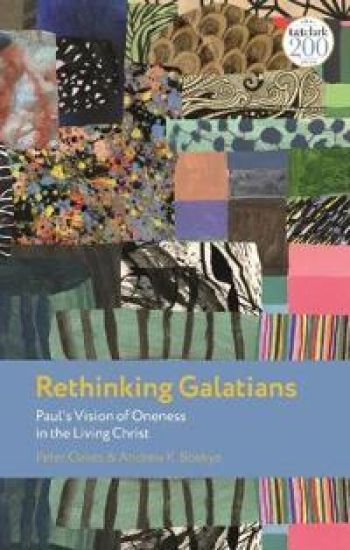
Oakes and Boakye rethink Galatians by examining the text as a vision for the lives of its hearers. They show how, in tackling the difficulties that he faces in Galatia, Paul offers a vision of what the Galatians are in their relationship with the living Christ. This offers a new understanding of the concept of unity in diversity expressed in Gal 3:28. The authors develop their views over six chapters. First, Oakes maps a route from the letter to a focus on its Galatian hearers and on Paul’s vision for their identity and existence. In the next chapter, Oakes uses the Christology of Galatians as a way to support the idea of pistis as current relationship with the living Christ. Boakye then offers three chapters analysing the letter’s scriptural quotations and ideas about salvation and law. Boakye sees a key dynamic at work in Galatians as being a movement from death to life, as prophesied metaphorically by Ezekiel and as made literal for Paul in his encounter with the resurrected Christ, trust in whom becomes the route to life. Life becomes a key category for evaluating law. Boakye also draws Galatians close to Romans 4 in seeing in both texts the promise of the birth of Isaac, with Paul closely tying that to the resurrection of Jesus. Oakes then argues that the letter has a thematic concern for unity in diversity. In the first instance this is between Jews and gentiles but, in principle, it is between any other socially significant pair of groups.
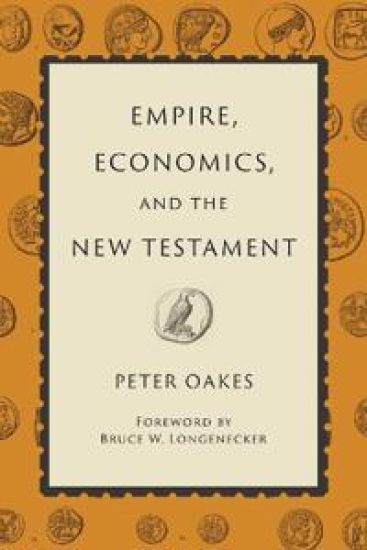
Peter Oakes has long been recognized for his illuminating use of Greco-Roman material culture and social-scientific criticism to interpret the New Testament. This volume brings together his best work and introduces a substantial new essay that challenges current scholarly approaches to paradoxical teachings of the New Testament. Of special interest to Oakes throughout this book is the concrete impact of economic realities and Roman imperialism on first-century Christian communities meeting in house churches. To address this, Oakes considers an array of textual and archaeological resources from first-century non-elite life, including extensive archaeological evidence available from Pompeii. Readers will find here a deep trove of wisdom for understanding the New Testament in the context of the Greco-Roman world.
In this volume, respected New Testament scholar Peter Oakes offers a translation and reading of Galatians as presenting a gospel of unity in diversity in Christ. He shows that Paul treats the Galatians' possible abandonment of his gospel as putting at stake their fidelity to Christ. As with other volumes in the Paideia series, this volume is conversant with contemporary scholarship, draws on ancient backgrounds, and attends to the theological nature of the text. Students, pastors, and other readers will appreciate the historical, literary, and theological insight offered in this practical commentary.
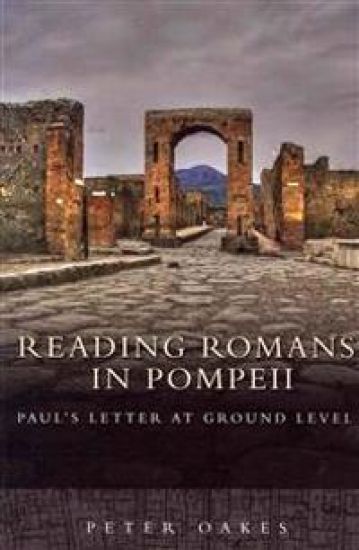
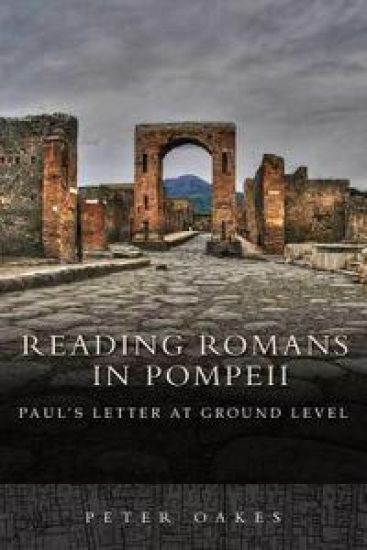
Peter Oakes relies on demographic information and data from excavations in nearby Pompeii to paint a compelling portrait of daily life in a typicalinsula, or apartment complex, like the ones in which Paul's audience in Rome likely lived. Imaginatively fleshing out profiles of the circumstances of actual residents of Pompeii, Oakes then uses these profiles to invite the reader into a new way to hear Paul's letter to the Romans as the apostle's contemporaries might have heard it. The result of this ground-breaking study is a fuller, richer appreciation of Paul's most important letter.
A case-study in modelling the social make-up of an early Christian community, including estimated figures for the various social groups in the model. A case-study in how such modelling can make an impact on the exegesis of a text. The result is a proposal for reading Philippians as a call for unity under economic suffering. In particular, the story of Christ in Philippians 2.6–11 is read as a reinforcement of this call in the specifically Roman context of Philippi. The book begins with a discussion of archaeological and literary evidence about the development of the Roman colony of Philippi. It also includes discussion of the likely effects of suffering among various social groups in the church, exploration of Paul's and Christ's roles as models for the Philippians, and comparison of Paul's language about Christ with Imperial ideology.
A case-study in modelling the social make-up of an early Christian community, including estimated figures for the various social groups in the model. A case-study in how such modelling can make an impact on the exegesis of a text. The result is a proposal for reading Philippians as a call for unity under economic suffering. In particular, the story of Christ in Philippians 2.6–11 is read as a reinforcement of this call in the specifically Roman context of Philippi. The book begins with a discussion of archaeological and literary evidence about the development of the Roman colony of Philippi. It also includes discussion of the likely effects of suffering among various social groups in the church, exploration of Paul's and Christ's roles as models for the Philippians, and comparison of Paul's language about Christ with Imperial ideology.