

Kirjailija
Peter Ochs
Kirjat ja teokset yhdessä paikassa: 21 kirjaa, julkaisuja vuosilta 1998-2021, suosituimpien joukossa Religion Without Violence. Vertaile teosten hintoja ja tarkista saatavuus suomalaisista kirjakaupoista.
21 kirjaa
Kirjojen julkaisuhaarukka 1998-2021.
Geschichte der Stadt und Landschaft Basel - Band 2, Teil 1 ist ein unver nderter, hochwertiger Nachdruck der Originalausgabe aus dem Jahr 1792. Hansebooks ist Herausgeber von Literatur zu unterschiedlichen Themengebieten wie Forschung und Wissenschaft, Reisen und Expeditionen, Kochen und Ern hrung, Medizin und weiteren Genres. Der Schwerpunkt des Verlages liegt auf dem Erhalt historischer Literatur. Viele Werke historischer Schriftsteller und Wissenschaftler sind heute nur noch als Antiquit ten erh ltlich. Hansebooks verlegt diese B cher neu und tr gt damit zum Erhalt selten gewordener Literatur und historischem Wissen auch f r die Zukunft bei.
This book is a searching reflection by one of the important philosophers of our time upon his own life and identity, interwoven with history, religion and culture. Born in 1936 in Budapest, Miklos Veto was a firsthand witness and protagonist of the great events of the twentieth century: as a child he lost his parents during the Holocaust, and then took part in the anti-Soviet Revolution of 1956, after which he escaped through Yugoslavian refugee camps and arrived in France. At the age of seventeen, he encountered Catholic faith through an intense spiritual experience. After studying at the Sorbonne in Paris and in Oxford, Veto undertook an academic career which spanned three continents, teaching at Yale and other universities in the United States, becoming director of the Department of Philosophy of the University of Abidjan (Ivory Coast), and settling back in France, with his wife and three children. He never lost contact with his native Hungary, where his contribution was recognized after the fall of the Berlin Wall, and in 2008 he was named exterior member of the Hungarian Academy of Sciences. This autobiography presents especially the founding period of Veto's life, with a ""postface"" on the last sixty years.
This book is a searching reflection by one of the important philosophers of our time upon his own life and identity, interwoven with history, religion and culture. Born in 1936 in Budapest, Miklos Veto was a firsthand witness and protagonist of the great events of the twentieth century: as a child he lost his parents during the Holocaust, and then took part in the anti-Soviet Revolution of 1956, after which he escaped through Yugoslavian refugee camps and arrived in France. At the age of seventeen, he encountered Catholic faith through an intense spiritual experience. After studying at the Sorbonne in Paris and in Oxford, Veto undertook an academic career which spanned three continents, teaching at Yale and other universities in the United States, becoming director of the Department of Philosophy of the University of Abidjan (Ivory Coast), and settling back in France, with his wife and three children. He never lost contact with his native Hungary, where his contribution was recognized after the fall of the Berlin Wall, and in 2008 he was named exterior member of the Hungarian Academy of Sciences. This autobiography presents especially the founding period of Veto's life, with a ""postface"" on the last sixty years.

Our Hearts Are Restless Till They Find Their Rest in Thee
Coleman B Brown; Peter Ochs; Chris Hedges
Cascade Books
2020
pokkari
Our Hearts Are Restless Till They Find Their Rest in Thee
Coleman B Brown; Peter Ochs; Chris Hedges
Cascade Books
2020
sidottu
Our Hearts Are Restless Till They Find Their Rest in Thee: Prophetic Wisdom in a Time of Anguish from Coleman B. Brown, edited by Michael Granzen and Lisa A. Masotta. The book includes powerful reflections from Chris Hedges, Peter Ochs, and Joshua Brown.
In 1992, Peter Ochs and a few Christian and Muslim colleagues began to gather small groups, in and outside the classroom, to practice close and attentive reading of the sacred Scriptures of the Jewish, Muslim, and Christian traditions. The hope was that members of different religions could hear one another through the patient, respectful reading of each other's Scripture. Hearing each other, participants might enter into interreligious relationships that might point a way to the peaceful engagement of religions--especially those who, after September 11, 2001, too often found themselves at each other's throats. It was a hope for religion without violence. Nearly thirty years later, this practice of study-across-difference has seeded an international movement, now named Scriptural Reasoning. The movement nurtures cooperative study among students, scholars, and congregants devoted to distinctly different religious and value traditions. In Religion without Violence, Ochs reflects on the practical and philosophic lessons he has learned from hosting hundreds of Scriptural Reasoning engagements. He introduces the ""scriptural pragmatism"" of Scriptural Reasoning."" He painstakingly recounts instances of successful scriptural reasoning and warns where and how it might fail. He provides guidance on how to introduce and facilitate Scriptural Reasoning in the classroom. He shows how reading out of the ""hearth"" of a faith can contribute to peace building across religions. And, drawing on the resources of rabbinic tradition, Augustine, and Charles Peirce, he moves beyond practice to reflect on the implications of Scriptural Reasoning for discerning what kinds of ""reasoning"" best address and help repair societal crises like religion-related violent conflict.
In 1992, Peter Ochs and a few Christian and Muslim colleagues began to gather small groups, in and outside the classroom, to practice close and attentive reading of the sacred Scriptures of the Jewish, Muslim, and Christian traditions. The hope was that members of different religions could hear one another through the patient, respectful reading of each other's Scripture. Hearing each other, participants might enter into interreligious relationships that might point a way to the peaceful engagement of religions--especially those who, after September 11, 2001, too often found themselves at each other's throats. It was a hope for religion without violence. Nearly thirty years later, this practice of study-across-difference has seeded an international movement, now named Scriptural Reasoning. The movement nurtures cooperative study among students, scholars, and congregants devoted to distinctly different religious and value traditions. In Religion without Violence, Ochs reflects on the practical and philosophic lessons he has learned from hosting hundreds of Scriptural Reasoning engagements. He introduces the "scriptural pragmatism" of Scriptural Reasoning." He painstakingly recounts instances of successful scriptural reasoning and warns where and how it might fail. He provides guidance on how to introduce and facilitate Scriptural Reasoning in the classroom. He shows how reading out of the "hearth" of a faith can contribute to peace building across religions. And, drawing on the resources of rabbinic tradition, Augustine, and Charles Peirce, he moves beyond practice to reflect on the implications of Scriptural Reasoning for discerning what kinds of "reasoning" best address and help repair societal crises like religion-related violent conflict.
Postmodern Jewish thinkers understand their Jewishness differently, but they all share a fidelity to what they call the ?Torah? and to communal practices of reading and social action that have their bases in rabbinic interpretations of biblical narrative, law, and belief. Thus, postmodern Jewish thinking is thinking about God, Jews, and the world?w
Geschichte der Stadt und Landschaft Basel - Siebter Band ist ein unver nderter, hochwertiger Nachdruck der Originalausgabe aus dem Jahr 1797. Hansebooks ist Herausgeber von Literatur zu unterschiedlichen Themengebieten wie Forschung und Wissenschaft, Reisen und Expeditionen, Kochen und Ern hrung, Medizin und weiteren Genres. Der Schwerpunkt des Verlages liegt auf dem Erhalt historischer Literatur. Viele Werke historischer Schriftsteller und Wissenschaftler sind heute nur noch als Antiquit ten erh ltlich. Hansebooks verlegt diese B cher neu und tr gt damit zum Erhalt selten gewordener Literatur und historischem Wissen auch f r die Zukunft bei.

Provides an understanding of reading and doing theology. This book talks about the change of the "Bible" from liturgy in worship to a physical object: a book. It reads two texts "Glossa Ordinaria" and "Aquinas' Summa Theologiae", in terms of the concepts of memory and itinerary. It renders the notion of separating Scripture from tradition absurd.
This is the first study of Charles Peirce's philosophy as a form of writing and the first study of his pragmatic writings as a critique of the modern attempt to change society by writing philosophy. According to Ochs, Peirce concluded that his own pragmatism displayed the errors of modernity, attempting to recreate rather than repair modern philosophy. His self-critique - which he called pragmaticism - refashions pragmatism as what Ochs calls a 'pragmatic method of reading': a method of, first, uncovering the conflicting beliefs that generate modern philosophies and, second, recommending ways of repairing these conflicts. Redescribing Peirce's pragmatism as 'the logic of scripture', Ochs suggests that Christians and Jews may in fact re-read pragmatism as a logic of Scripture: that is, as a modern philosopher's way of diagramming the Bible's rules for repairing broken lives and healing societal suffering.
Christianity In Jewish Terms
David Novak; David Sandmel; Michael Singer; Peter Ochs; Tikva Frymer-kensky
Basic Books
2002
pokkari
Over the past few decades, there has been a dramatic and unprecedented shift in Jewish-Christian relations, including signs of a new, improved Christian attitude towards Jews. Christianity in Jewish Terms is a Jewish theological response to the profound changes that have taken place in Christian thought. The book is divided into ten chapters, each of which features a main essay, written by a Jewish scholar, that explores the meaning of a set of Christian beliefs. Following the essay are responses from a second Jewish scholar and a Christian scholar. Designed to generate new conversations within the American Jewish community and between the Jewish and Christian communities, Christianity in Jewish Terms lays the foundation for better understanding. It was named a Choice Outstanding Academic Book of 2001.
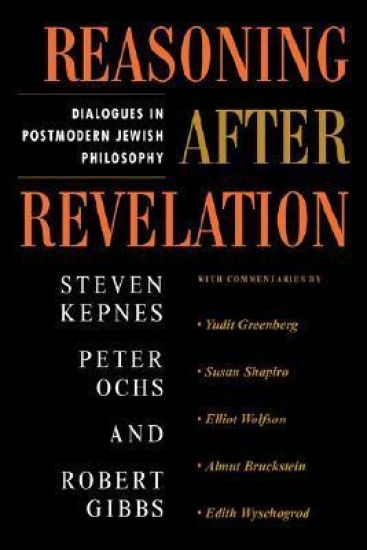
Postmodern Jewish thinkers understand their Jewishness differently, but they all share a fidelity to what they call the ?Torah? and to communal practices of reading and social action that have their bases in rabbinic interpretations of biblical narrative, law, and belief. Thus, postmodern Jewish thinking is thinking about God, Jews, and the world?with the texts of the Torah?in the company of fellow seekers and believers. It utilizes the tools of philosophy, but without their modern premises. Moreover, this form of Jewish thinking provides resources for philosophically disciplined readings of scripture by Jews, Christians, and Moslems seeking alternatives to the reductive discourses of secular academia, on the one hand, and to antimodern religious fundamentalisms, on the other. Postmodern Jewish Philosophy aims to utilize rabbinic modes of thinking to provide a model for ethical and religious thought in the twenty-first century, one which moves beyond the dichotomy of relativism and imperialism and is simultaneously definite and pluralistic.In Reasoning After Revelation: Dialogues in Postmodern Jewish Philosophy, three preeminent Jewish scholars debate the form and meaning of Postmodern Jewish Philosophy after the failures of the great secular ideologies of modern western civilization. Emulating the methods as well as the premises of Talmudic argumentation, the authors present their responses as dialogues joined by a common love of the rabbinic tradition of commentary and interpretation of the Bible. The composers, Peter Ochs, Robert Gibbs, and Steven Kepnes, contemplate where Judaism has been?and where it is headed: on what basis will modern Jews now reason about the meaning of Jewish existence and the relevance of age-old Biblical traditions to the moral and social crises of the twenty-first century? The dialogues are further enriched by a set of responses from leading Jewish philosophers: Elliot R. Wolfson, Edith Wyschogrod, Almut Sh. Bruckstein, Yudit Kornberg Greenberg, and Susan E. Shapiro.