
Kirjojen hintavertailu. Mukana 12 595 353 kirjaa ja 12 kauppaa.

Kirjailija

Peter P. Hill

Kirjat ja teokset yhdessä paikassa: 3 kirjaa, julkaisuja vuosilta 1988-2012, suosituimpien joukossa French Perceptions of the Early American Republic, 1783-1793: Memoirs, American Philosophical Society (Vol. 180). Vertaile teosten hintoja ja tarkista saatavuus suomalaisista kirjakaupoista.

3 kirjaa

Kirjojen julkaisuhaarukka 1988-2012.

Joel Barlow, American Diplomat and Nation Builder
Joel Barlow was the early Republic's most tenacious diplomat, a cheerful volunteer for difficult missions. His hard-won treaties with Algiers, Tunis, and Tripoli ended, at least briefly, the attacks of Barbary pirates on American shipping in the Mediterranean. And on the eve of the War of 1812, President Madison sent him to France, where he subsequently won important wartime concessions from Napoleon.Young Barlow wrote his epic poem The Vision of Columbus while serving as an army chaplain fresh out of Yale University. He later sold Western lands to French émigrés, ran for a seat in the French National Assembly, escaped the Terror, and ultimately made his fortune as a cargo broker. His ties with the Jeffersonian elite and longtime familiarity with the Paris political scene made him Madison's logical choice to keep the peace by trying to win enough concessions from France to demand the same of Britain.Peter P. Hill's fast-paced biography, while closing in on the intricacies of Barlow's diplomatic career, also portrays his subject as a conscious nation builder, a visionary who foresaw his country's worldwide role in spreading democratic institutions, committing itself to free trade, and involving its federal government in the cause of public education. Hill brings to life a true Enlightenment man whose love of country, democracy, and learning reveals the soul of an age.
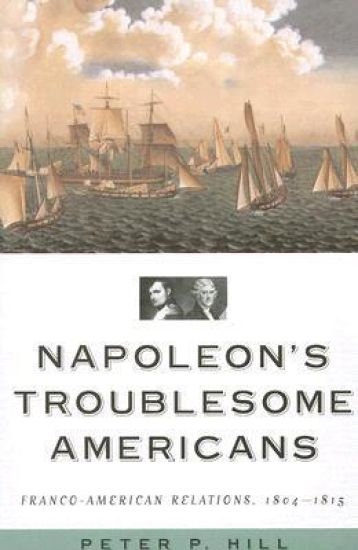
Napoleon'S Troublesome Americans

Napoleon'S Troublesome Americans

Peter P. Hill

Potomac Books Inc
2006
nidottu
Shortly before the United States declared war on Great Britain in June 1812, Congress came within two votes of declaring war on Napoleon Bonaparte’s French empire. For six years, France and Britain had both seized American shipping. While common wisdom says that America was virtually an innocent in this matter, caught in the middle of the epic wars between France and Britain, Peter Hill has uncovered a far more complex and interesting history. French privateers and Napoleon’s navy were seizing American merchant ships in a concerted attempt to disrupt Britain’s commerce. American ships were the principal carriers of British goods to the continent, and Napoleon believed his best, and perhaps only, hope to defeat Britain was to cut off that market. While the French emperor sought an accommodation with America, the administrations of Thomas Jefferson and James Madison continually frustrated him. American diplomatic fumbling sent mixed messages, and American neutrality policies, Hill finds, were more punishing to France than to Britain. Always interested in lucrative ventures, American merchant ships also became the main suppliers of food to British forces fighting Napoleon in Spain and Portugal. By 1812, the United States was on a collision course with both Britain and France over clashes on the high seas, and war with two major powers at once might have proven disastrous for the young United States. Hill’s engaging narrative details the fascinating history of America’s troubled relationship with Napoleon and how this crisis with France was finally averted.
French Perceptions of the Early American Republic, 1783-1793: Memoirs, American Philosophical Society (Vol. 180)
Hill contends that French officials in the postwar decade had already perceived a deep-rooted Amer. indifference, even hostility, to a number of vital French nat. interests. The author examines the harsh disappointments & frustrations these officials experienced in their dealings with Amer. in the 1780s, whether on the high seas, or in U.S. courts & customs houses, in the halls of Congress, or in their encounters with Amer. attitudes. These essays add to what is already known about France's difficulties with the U.S. in this era. Not so well known, however, are: how French officials perceived these problems; what solutions they sought; or how keenly frustrated they became when, despite Amer. protestations of gratitude for French assistance during the war for independence, they found self-interested Amer. unwilling to heed the least claims of an erstwhile ally.