
Kirjailija
Peter Paret
Kirjat ja teokset yhdessä paikassa: 15 kirjaa, julkaisuja vuosilta 1966-2018, suosituimpien joukossa Krieg, Geschichte, Theorie. Vertaile teosten hintoja ja tarkista saatavuus suomalaisista kirjakaupoista.
15 kirjaa
Kirjojen julkaisuhaarukka 1966-2018.


The compelling story of the military campaign that changed how we think about warResponding to the enemy's innovation in war presents problems to soldiers and societies of all times. This book traces Napoleon's victory over Prussia in 1806 and Prussia's effort to recover from defeat to show how in one particular historical episode operational analyses together with institutional and political decisions eventually turned defeat to victory.The author moves from a comparative study of French and Prussian forces to campaign narrative and strategic analysis. He examines processes of change in institutions and doctrine, as well as their dependence on social and political developments, and interprets works of art and literature as indicators of popular and elite attitudes toward war, which influence the conduct of war and the kind and extent of military innovation. In the concluding chapter he addresses the impact of 1806 on two men who fought on opposing sides in the campaign and sought a new theoretical understanding of war—Henri Jomini and Carl von Clausewitz.Fields of history that are often kept separate are brought together in this book, which seeks to replicate the links between different areas of thought and action as they exist in reality and shape events.

A new view of the years of Prussian reform is presented here, showing the military impact of Revolutionary and Napoleonic France on Prussia, the nature of the challenge, the efforts of Prussian institutions and society to master the new situation, the obstacles, and changes. Originally published in 1966. The Princeton Legacy Library uses the latest print-on-demand technology to again make available previously out-of-print books from the distinguished backlist of Princeton University Press. These editions preserve the original texts of these important books while presenting them in durable paperback and hardcover editions. The goal of the Princeton Legacy Library is to vastly increase access to the rich scholarly heritage found in the thousands of books published by Princeton University Press since its founding in 1905.

A new view of the years of Prussian reform is presented here, showing the military impact of Revolutionary and Napoleonic France on Prussia, the nature of the challenge, the efforts of Prussian institutions and society to master the new situation, the obstacles, and changes. Originally published in 1966. The Princeton Legacy Library uses the latest print-on-demand technology to again make available previously out-of-print books from the distinguished backlist of Princeton University Press. These editions preserve the original texts of these important books while presenting them in durable paperback and hardcover editions. The goal of the Princeton Legacy Library is to vastly increase access to the rich scholarly heritage found in the thousands of books published by Princeton University Press since its founding in 1905.
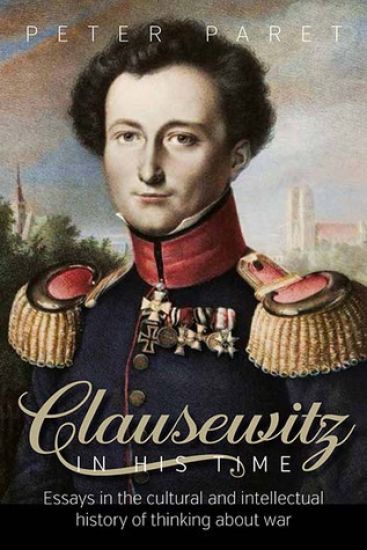
Anything but a detached theorist, Clausewitz was as fully engaged in the intellectual and cultural currents of his time as in its political and military conflicts. Late-eighteenth century thought helped shape the analytic methods he developed for the study of war. The essays in this volume follow his career in a complex military society, together with that of other students of war, both friends and rivals, providing a broad perspective that leads to significant documents so far unknown or ignored. They add to our understanding of Clausewitz’s early ideas and their expansion into a comprehensive theory that continues to challenge our thinking about war today.
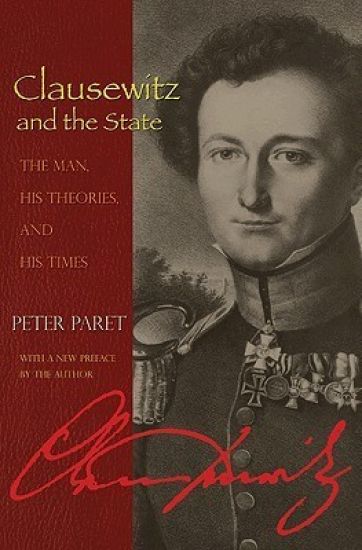
Originally published in 1976, Clausewitz and the State presents a comprehensive analysis of one of the significant thinkers of modern Europe. Peter Paret combines social and military history and psychological interpretation with a study of Clausewitz's military theories and of his unduly neglected historical and political writing. This timely new edition includes a preface which allows Paret to recount the past thirty years of discussion on Clausewitz and respond to critics. A companion volume to Clausewitz's On War, this book is indispensable to anyone interested in Clausewitz and his theories, and their proper historical context.
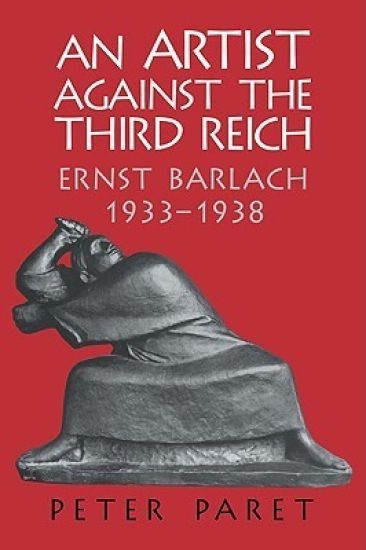
The conflict between National Socialism and Ernst Barlach, one of the most important sculptors of the twentieth century, is an unusual episode in the history of Hitler's efforts to rid Germany of 'international modernism'. Barlach did not passively accept the confiscation and destruction of his sculptures. He protested the injustice, and continued his work. Hitler's rejection of modernism, often dismissed as absurd ranting, is instead interpreted as an internally consistent and politically effective critique of liberal Western culture. That some radical national socialists nevertheless advocated a 'Nordic modernism' and tried to win Barlach over indicates the cultural cross-currents running through the early years of the Third Reich. Peter Paret's closely focused study of an artist in a time of crisis seamlessly combines the history of modern Germany and the history of modern art.
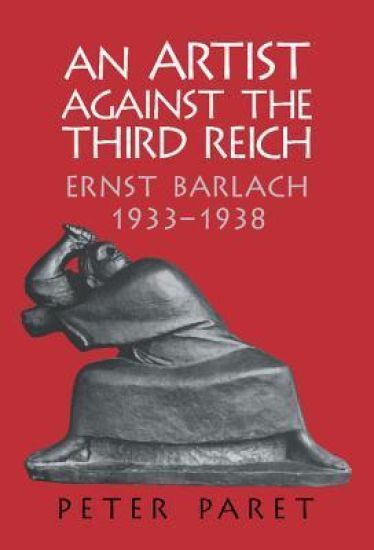
The conflict between National Socialism and Ernst Barlach, one of the most important sculptors of the twentieth century, is an unusual episode in the history of Hitler’s efforts to rid Germany of ‘international modernism’. Barlach did not passively accept the confiscation and destruction of his sculptures. He protested the injustice, and continued his work. Hitler’s rejection of modernism, often dismissed as absurd ranting, is instead interpreted as an internally consistent and politically effective critique of liberal Western culture. That some radical national socialists nevertheless advocated a ‘Nordic modernism’ and tried to win Barlach over indicates the cultural cross-currents running through the early years of the Third Reich. Peter Paret’s closely focused study of an artist in a time of crisis seamlessly combines the history of modern Germany and the history of modern art.
Offers new perspectives on the history of German art from the 1840s to 1940s.
In German Encounters with Modernism, Peter Paret traces the reception of modern art, from the 1840s through the Nazi era, through the lens of social and political developments in Germany. Addressing broad cultural topics, such as the early history of Expressionism, the role of anti-Semitism in German reactions to modernism, the impact of World War I on the arts, and the function of art, both as a political target and a political weapon, it also includes new interpretations of the work of artists such as the sculptor Ernst Barlach. Based on archival discoveries, this study combines a strong narrative approach with interdisciplinary analysis. It opens different perspectives on the history of German art in a critically important, and ultimately tragic period of German history.
These essays provide an authoritative introduction to Carl von Clausewitz and enlarge the history of war by joining it to the history of ideas and institutions and linking it with intellectual biography.

A new view of the years of Prussian reform is presented here, showing the military impact of Revolutionary and Napoleonic France on Prussia, the nature of the challenge, the efforts of Prussian institutions and society to master the new situation, the obstacles, and changes. Originally published in 1966. The Princeton Legacy Library uses the latest print-on-demand technology to again make available previously out-of-print books from the distinguished backlist of Princeton University Press. These editions preserve the original texts of these important books while presenting them in durable paperback and hardcover editions. The goal of the Princeton Legacy Library is to vastly increase access to the rich scholarly heritage found in the thousands of books published by Princeton University Press since its founding in 1905.