Kirjojen hintavertailu. Mukana 12 262 942 kirjaa ja 12 kauppaa.

Kirjailija

Peter R. Wolenski

Kirjat ja teokset yhdessä paikassa: 3 kirjaa, julkaisuja vuosilta 1997-2018, suosituimpien joukossa Linear Mathematical Models In Chemical Engineering. Vertaile teosten hintoja ja tarkista saatavuus suomalaisista kirjakaupoista.

Mukana myös kirjoitusasut: Peter R Wolenski

3 kirjaa

Kirjojen julkaisuhaarukka 1997-2018.

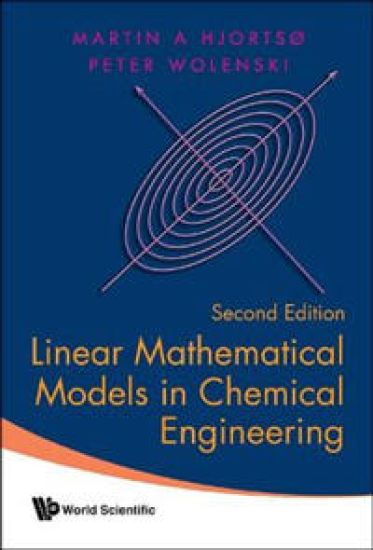
Linear Mathematical Models In Chemical Engineering

Linear Mathematical Models In Chemical Engineering

Martin Aksel Hjortso; Peter R Wolenski

World Scientific Publishing Co Pte Ltd
2018
sidottu
Mathematics remains a core area of engineering. Formulating and analyzing mathematical models of basic engineering systems is an essential skill that all engineering students should endeavor to acquire.This book will serve as an excellent introduction to linear mathematics for engineering students, both seniors and graduate students. It is the result of a collaboration between a chemical engineer and a mathematician, both of whom have taught classes on modelling and applied mathematics. It provides a broad collection of chemical engineering modelling examples to train students in model formulation and model simplification as well as give a thorough coverage of the mathematical tools used to analyze and solve linear chemical engineering models.Solution manual is provided for free to instructors who adopt this textbook. Please send your request to [email protected].
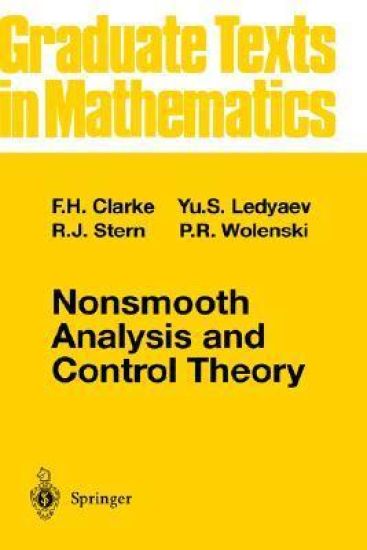
Nonsmooth Analysis and Control Theory

Nonsmooth Analysis and Control Theory

Francis H. Clarke; Yuri S. Ledyaev; Ronald J. Stern; Peter R. Wolenski

Springer-Verlag New York Inc.
2013
nidottu
In the last decades the subject of nonsmooth analysis has grown rapidly due to the recognition that nondifferentiable phenomena are more widespread, and play a more important role, than had been thought. In recent years, it has come to play a role in functional analysis, optimization, optimal design, mechanics and plasticity, differential equations, control theory, and, increasingly, in analysis. This volume presents the essentials of the subject clearly and succinctly, together with some of its applications and a generous supply of interesting exercises. The book begins with an introductory chapter which gives the reader a sampling of what is to come while indicating at an early stage why the subject is of interest. The next three chapters constitute a course in nonsmooth analysis and identify a coherent and comprehensive approach to the subject leading to an efficient, natural, yet powerful body of theory. The last chapter, as its name implies, is a self-contained introduction to thetheory of control of ordinary differential equations. End-of-chapter problems also offer scope for deeper understanding. The authors have incorporated in the text a number of new results which clarify the relationships between the different schools of thought in the subject. Their goal is to make nonsmooth analysis accessible to a wider audience. In this spirit, the book is written so as to be used by anyone who has taken a course in functional analysis.
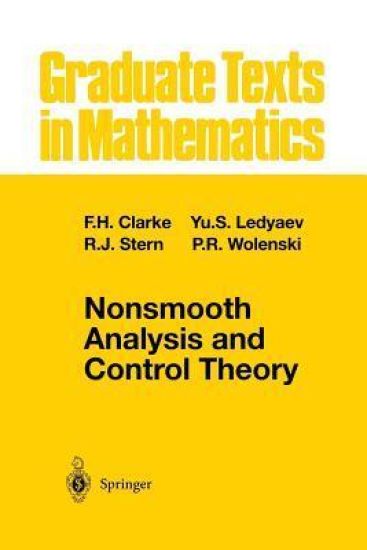
Nonsmooth Analysis and Control Theory

Nonsmooth Analysis and Control Theory

Francis H. Clarke; Yuri S. Ledyaev; Ronald J. Stern; Peter R. Wolenski

Springer-Verlag New York Inc.
1997
sidottu
In the last decades the subject of nonsmooth analysis has grown rapidly due to the recognition that nondifferentiable phenomena are more widespread, and play a more important role, than had been thought. In recent years, it has come to play a role in functional analysis, optimization, optimal design, mechanics and plasticity, differential equations, control theory, and, increasingly, in analysis. This volume presents the essentials of the subject clearly and succinctly, together with some of its applications and a generous supply of interesting exercises. The book begins with an introductory chapter which gives the reader a sampling of what is to come while indicating at an early stage why the subject is of interest. The next three chapters constitute a course in nonsmooth analysis and identify a coherent and comprehensive approach to the subject leading to an efficient, natural, yet powerful body of theory. The last chapter, as its name implies, is a self-contained introduction to thetheory of control of ordinary differential equations. End-of-chapter problems also offer scope for deeper understanding. The authors have incorporated in the text a number of new results which clarify the relationships between the different schools of thought in the subject. Their goal is to make nonsmooth analysis accessible to a wider audience. In this spirit, the book is written so as to be used by anyone who has taken a course in functional analysis.