Kirjojen hintavertailu. Mukana 12 595 353 kirjaa ja 12 kauppaa.

Kirjailija

Peter Reed

Kirjat ja teokset yhdessä paikassa: 14 kirjaa, julkaisuja vuosilta 1992-2025, suosituimpien joukossa Kurt Vonnegut. Vertaile teosten hintoja ja tarkista saatavuus suomalaisista kirjakaupoista.

14 kirjaa

Kirjojen julkaisuhaarukka 1992-2025.

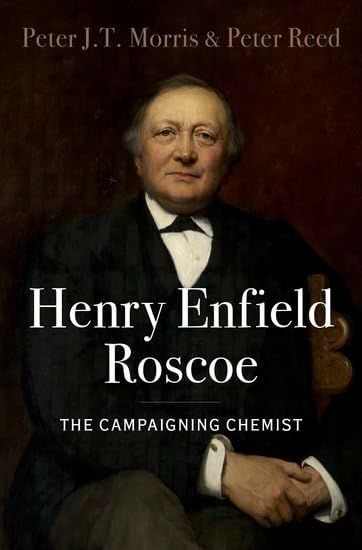
Henry Enfield Roscoe

Henry Enfield Roscoe

Peter J.T. Morris; Peter Reed

OXFORD UNIVERSITY PRESS INC
2024
sidottu
Little known today, Henry Enfield Roscoe was one of the most prominent chemists and educational reformers in Victorian Britain. Having studied in Heidelberg, he worked to transform English education by using Germany as a model. He made Owens College, Manchester, viable and converted it into Victoria University (now the University of Manchester). He then campaigned for the reform of technical education in an alliance with like-minded campaigners which resulted in the Technical Instruction Act of 1889. Roscoe was also the Liberal MP for South Manchester between 1885 and 1895, one of the few academic chemists to become a member of the House of Commons. In his "retirement," he helped found the Lister Institute of Preventive Medicine. Yet, despite his extensive impact on Britain at the time and our society today, he remains largely forgotten. In this detailed biography, authors Morris and Reed provide a timely and original contribution to the history of nineteenth-century British science and its relation to education, industry, and government policy, highlighting Roscoe's significant contributions and legacy as one of the leading scientists of his generation.
Kurt Vonnegut

Kurt Vonnegut

Marc Leeds; Peter Reed

Praeger Publishers Inc
2000
sidottu
Since the publication of his first short stories in the 1950s, Kurt Vonnegut has enjoyed much popular acclaim and has, since the 1970s, gained growing amounts of attention from the scholarly community. In the course of his career, he has become increasingly concerned with visual images. While such imagery occurs in his short fiction and novels, he has also written plays, in which ideas are visually represented on the stage. In recent years, he has devoted more and more of his time and energy to graphic art, producing paintings that are then silk screened. The contributors to this volume look at the visual images created by Vonnegut in his literary art, along with the images and representations of his thought that increasingly are being brought to life in other media. Much of Vonnegut's present significance, his talents as a mythmaker, and his impulse toward visual imagery were anticipated by Leslie Fiedler in The Divine Stupidity of Kurt Vonnegut, published in the September 1970 issue of Esquire. That essay is reprinted here as a prescient introduction to the volume. The essays that follow look at comic elements in Vonnegut's science fiction, the representation of authors in his works, and the translation of his writings into film. The book also examines Vonnegut's graphic art and includes photos of several of his works.
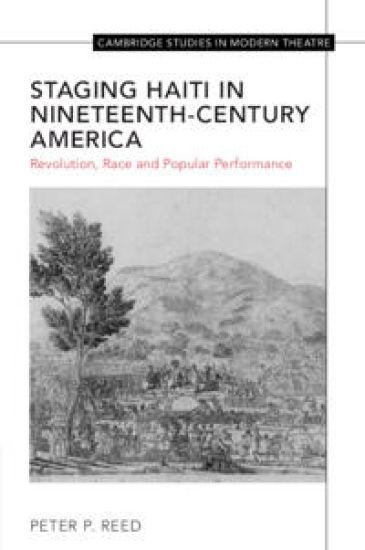
Staging Haiti in Nineteenth-Century America

Staging Haiti in Nineteenth-Century America

Peter Reed

Cambridge University Press
2025
pokkari
American culture maintained a complicated relationship with Haiti from its revolutionary beginnings onward. In this study, Peter P. Reed reveals how Americans embodied and re-enacted their connections to Haiti through a wide array of performance forms. In the wake of Haiti's slave revolts in the 1790s, generations of actors, theatre professionals, spectators, and commentators looked to Haiti as a source of both inspiring freedom and vexing disorder. French colonial refugees, university students, Black theatre stars, blackface minstrels, abolitionists, and even writers such as Herman Melville all reinvented and restaged Haiti in distinctive ways. Reed demonstrates how Haiti's example of Black freedom and national independence helped redefine American popular culture, as actors and audiences repeatedly invoked and suppressed Haiti's revolutionary narratives, characters, and themes. Ultimately, Haiti shaped generations of performances, transforming America's understandings of race, power, freedom, and violence in ways that still reverberate today.
Staging Haiti in Nineteenth-Century America

Staging Haiti in Nineteenth-Century America

Peter Reed

Cambridge University Press
2022
sidottu
American culture maintained a complicated relationship with Haiti from its revolutionary beginnings onward. In this study, Peter P. Reed reveals how Americans embodied and re-enacted their connections to Haiti through a wide array of performance forms. In the wake of Haiti's slave revolts in the 1790s, generations of actors, theatre professionals, spectators, and commentators looked to Haiti as a source of both inspiring freedom and vexing disorder. French colonial refugees, university students, Black theatre stars, blackface minstrels, abolitionists, and even writers such as Herman Melville all reinvented and restaged Haiti in distinctive ways. Reed demonstrates how Haiti's example of Black freedom and national independence helped redefine American popular culture, as actors and audiences repeatedly invoked and suppressed Haiti's revolutionary narratives, characters, and themes. Ultimately, Haiti shaped generations of performances, transforming America's understandings of race, power, freedom, and violence in ways that still reverberate today.
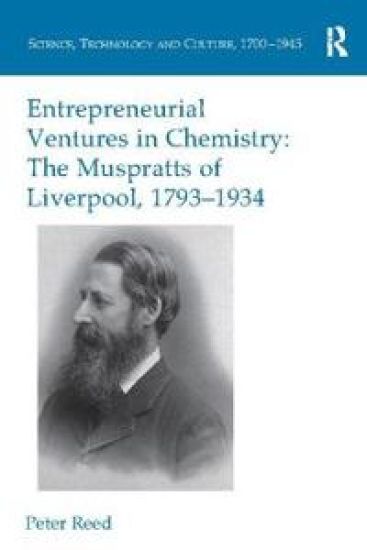
Entrepreneurial Ventures in Chemistry
The Muspratt family form a fascinating dynasty in the history of British commerce and manufacturing. Associated principally with the development of the chemical industry in Liverpool - James Muspratt (1793-1884) was the first person to make alkali on a large scale using the Leblanc Process - the three generations of the family also contributed to wider Victorian and Edwardian culture through their interests in politics, education (founding the Liverpool College of Chemistry in 1848), art, literature and theatre. This is the first study to present the history of the Muspratts as a family group and to consider the entrepreneurial spirit they brought to chemical manufacture in Britain and to their many other ventures.
Entrepreneurial Ventures in Chemistry
The Muspratt family form a fascinating dynasty in the history of British commerce and manufacturing. Associated principally with the development of the chemical industry in Liverpool - James Muspratt (1793-1884) was the first person to make alkali on a large scale using the Leblanc Process - the three generations of the family also contributed to wider Victorian and Edwardian culture through their interests in politics, education (founding the Liverpool College of Chemistry in 1848), art, literature and theatre. This is the first study to present the history of the Muspratts as a family group and to consider the entrepreneurial spirit they brought to chemical manufacture in Britain and to their many other ventures.
Strategic Marketing

Strategic Marketing

Peter Reed

Cengage Australia
2014
nidottu
This fully revised 4th edition of Strategic Marketing: Decision Making and Planning continues to set a framework for marketing decision making as a part of a holistic approach to an organisation’s strategic management. It integrates expanded theoretical coverage with a step-by-step guide to each stage of the strategy development and management processes. Strategic Marketing: Decision Making and Planning is written for those involved in the processes of developing and implementing marketing strategies. The book emphasises the role of marketing as an organisation-wide process rather than as a stand-alone organisational function. Accordingly, Strategic Marketing: Decision Making and Planning focuses on providing a framework for marketing decision making as part of a broad-based or holistic approach to strategic management. The framework provides for decision-making processes that are made both within and outside of formal strategic-planning processes. The guiding principle of Strategic Marketing: Decision Making and Planning is to provide strategists with the ability to develop and implement effective marketing strategies by drawing on relevant concepts and analytical tools. It is a book that emphasises the practical application of marketing and other strategy-related theories, concepts, tools and techniques. It is designed to be used by practising managers and students alike, from the first-timer to the experienced strategist. It is particularly appropriate for business students studying marketing in subjects such as strategic marketing, strategic marketing planning and strategic marketing management. The emphasis on the application of relevant marketing concepts, tools and techniques provides the basis for organizing this book.
Glasgow: The Forming of the City

Glasgow: The Forming of the City

Peter Reed

Edinburgh University Press
1999
nidottu
Glasgow is the prime British example of the industrial city, and this lavishly illustrated book traces its architectural and socio-economic history from its merchant origins, right through the nineteenth- and twentieth-century urban decline, and onwards to its present, much celebrated regeneration. This new edition offers the reader an insight to Glasgow at the Millennium, covering the most recent scholarship and opinion, and looking to the future of Glasgow in the coming century. Key Features * Published to coincide with Glasgow's year as City of Architecture and Design in 1999 * Every chapter has been updated to cover new developments and to look to the future of Glasgow in the twenty-first century * Includes a completely new chapter covering three sites crucial to the future forming of the city * Covers Glasgow's rich architectural history from the Medieval period to the present day, as well as looking forward to the next century
The Short Fiction of Kurt Vonnegut

The Short Fiction of Kurt Vonnegut

Peter Reed

Praeger Publishers Inc
1997
sidottu
Kurt Vonnegut's career as a novelist encompasses virtually the whole second half of the twentieth century, and his novels are among the most widely read in America. Yet Vonnegut enjoyed another successful career as a short story writer. His short fiction brought him much acclaim in the early years of his writing career and made him visible to a very large audience. His stories were illustrated by some of the best artists in the business and were featured prominently in leading magazines such as Collier's^ the Saturday Evening Post, Ladies Home Journal, Cosmopolitan, and Argosy. Commentary on Vonnegut has generally separated his career as a novelist from his career as a short story writer. This volume provides a detailed analysis of Vonnegut's short fiction and shows that his short stories are an integral part of his overall canon.The short stories do not simply precede Vonnegut's novels. There is an extensive overlap of the publication of his novels and his shorter works. In writing short fiction, Vonnegut learned and practiced many of the skills and techniques that he employs in his novels. This volume begins by examining the relationship of the short fiction to the larger body of Vonnegut's writings. It then examines Vonnegut's earliest training as a writer, during his high school years and as a college journalist. The chapters that follow are then devoted to later periods in his life, the development of his short stories, and the recurrence of their techniques and content in Vonnegut's novels. The study concludes with a reassessment of the importance of the short story to Vonnegut's canon.
The Vonnegut Chronicles

The Vonnegut Chronicles

Marc Leeds; Peter Reed

Praeger Publishers Inc
1996
sidottu
Since 1950, when his short stories first appeared, Kurt Vonnegut has published almost 50 short stories, 13 novels, two plays, and a teleplay. He has remained one of the shrewdest commentators—and often harshest critics—of American society, challenging the complacency of the Eisenhower years, watching the Kennedy's with admiration, and disliking Nixon. He has remained one of the most important chroniclers of American life, his message often foreboding though rarely gloomy. Yet he occupies an ambiguous place in American letters. The 14 essays in this collection seek to chronicle Vonnegut's career as it moves through changing times. The volume opens with a chronology of Vonnegut's life and three interviews with him. The essays consider his career, combining interest and readability for the general reader with critical commentary for the more serious scholar. The essays consider Vonnegut's later work or are retrospectives reevaluating aspects of his career. Some discuss individual works, particularly later novels, but most consider the ways Vonnegut pursues a theme or technique, the ways his mind works both in the construction of the novels and in the ideas embodied in them. There is also an Appendix discussing Vonnegut's most recent creative enterprise, graphic art, with 12 illustrations of his most recent art work.
Wisdom in the Open Air

Wisdom in the Open Air

Peter Reed

University of Minnesota Press
1992
nidottu
Wisdom in the Open Air traces the Norwegian roots of the strain of thinking called “deep ecology”-the search for the solutions to environmental problems by examining the fundamental tenets of our culture. Although Arne Naess coined the term in the 1970s, the insights of deep ecology actually reflect a tradition of thought that can be seen in the history of Norwegian culture, from ancient mountain myths to the radical ecoactivism of today.Beginning with an introduction to Norway’s emphasis on nature and the wild, Reed and Rothenberg explore the birth of the environmental movement in the 1960s and 1970s. What follows is a collection of writings by prominent Norwegian thinkers on humanity and nature, most never before published in English. From Peter Wessel Zapffe, a twentieth-century Kierkegaardian figure, the list goes on to include Norwegian philosopher Arne Naess, activist-critic-artist Sigmund Kvaloy, wilderness educator Nils Faarland, novelist Finn Alneas, sociologist Johan Galtung, and social reformer Erik Dammann. Their fascinating points of view offer thoughts on the significance of modern life and what it means to be human in the face of the deteriorating global environment of the twentieth century. Wisdom in the Open Air asks and answers a fundamental question concerning the ecomovement: what is the role of deep, often abstract, thinking in the attempt to avert a very real ecological crisis?
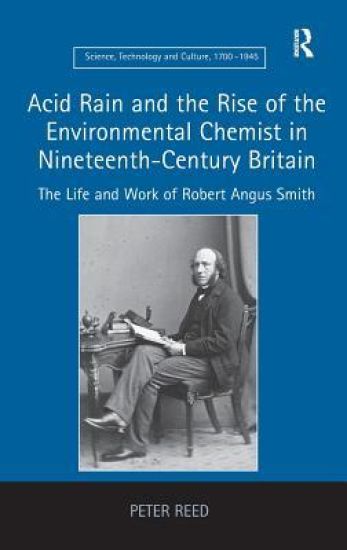
Acid Rain and the Rise of the Environmental Chemist in Nineteenth-Century Britain
Robert Angus Smith (1817-1884) was a Scottish chemist and a leading investigator into what came to be known as 'acid rain'. This study of his working life, contextualized through discussion of his childhood, education, beliefs, family, interests and influences sheds light on the evolving understanding of sanitary science during the nineteenth century. Born in Glasgow and initially trained for a career in the Church of Scotland, Smith instead went on to study chemistry in Germany under Justus von Liebig. On his return to Manchester in the 1840s, Smith's strong Calvinist faith lead him to develop a strong concern for the insanitary environmental conditions in Manchester and other industrial towns in Britain. His appointment as Inspector of the Alkali Administration in 1863 enabled him to marry his social concerns and his work as an analytical chemist, and this book explores his role as Inspector of the Administration from its inception through battles with chemical manufacturers in the courts, to the struggle to widen and tighten the regulatory framework as other harmful chemical nuisances became known. This study of Smith’s life and work provides an important background to the way that 'chemical' came to have such negative connotations in the century before publication of Rachel Carson's Silent Spring. It also offers a fascinating insight into the changing landscape of British politics as regulation and enforcement of the chemical industries came to be seen as necessary, and is essential reading for historians of science, technology and industry in the nineteenth century, as well as environmental historians seeking background context to the twentieth-century environmental movements.
Acid Rain and the Rise of the Environmental Chemist in Nineteenth-Century Britain
Robert Angus Smith (1817-1884) was a Scottish chemist and a leading investigator into what came to be known as 'acid rain'. This study of his working life, contextualized through discussion of his childhood, education, beliefs, family, interests and influences sheds light on the evolving understanding of sanitary science during the nineteenth century. Born in Glasgow and initially trained for a career in the Church of Scotland, Smith instead went on to study chemistry in Germany under Justus von Liebig. On his return to Manchester in the 1840s, Smith's strong Calvinist faith lead him to develop a strong concern for the insanitary environmental conditions in Manchester and other industrial towns in Britain. His appointment as Inspector of the Alkali Administration in 1863 enabled him to marry his social concerns and his work as an analytical chemist, and this book explores his role as Inspector of the Administration from its inception through battles with chemical manufacturers in the courts, to the struggle to widen and tighten the regulatory framework as other harmful chemical nuisances became known. This study of Smith’s life and work provides an important background to the way that 'chemical' came to have such negative connotations in the century before publication of Rachel Carson's Silent Spring. It also offers a fascinating insight into the changing landscape of British politics as regulation and enforcement of the chemical industries came to be seen as necessary, and is essential reading for historians of science, technology and industry in the nineteenth century, as well as environmental historians seeking background context to the twentieth-century environmental movements.