Kirjojen hintavertailu. Mukana 12 657 676 kirjaa ja 12 kauppaa.

Kirjailija

Peter Roberts

Kirjat ja teokset yhdessä paikassa: 87 kirjaa, julkaisuja vuosilta 1994-2026, suosituimpien joukossa Regional Planning and Development in Europe. Vertaile teosten hintoja ja tarkista saatavuus suomalaisista kirjakaupoista.

87 kirjaa

Kirjojen julkaisuhaarukka 1994-2026.

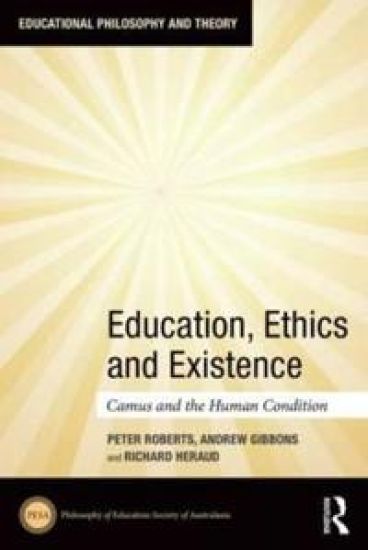
Education, Ethics and Existence

Education, Ethics and Existence

Peter Roberts; Andrew Gibbons; Richard Heraud

Routledge
2015
sidottu
Best known today for his novels, plays and short stories, but also an accomplished essayist, editor and journalist, Albert Camus was one of the most influential literary figures of the 20th century. He has gained widespread recognition for works such as The Stranger, Caligula, The Plague and Exile and the Kingdom. In 1957 Camus was awarded the Nobel Prize for Literature. In 1960 he was killed in a car accident, aged just 46. Since Camus’ untimely death, his work has been engaged by scholars in literature, politics, philosophy and many other fields. This volume is one of the first book-length studies of Camus with a specifically educational focus. Camus’ writings raise and address ethical and political questions that resonate strongly with current concerns and debates in educational theory, and the difficulties and dilemmas faced by his characters mirror those encountered by many teachers in school classrooms. This book will appeal to all who wish to consider the connections between education, ethics and the problem of human existence.This book was originally published as a special issue of Educational Philosophy & Theory.
Paulo Freire in the 21st Century

Paulo Freire in the 21st Century

Peter Roberts

Paradigm
2013
nidottu
This book explores the implications of world renowned educationalist Paulo Freire's theories for educational practice and how his ideas can help in bridging different genres and traditions. It addresses themes, questions and issues that have received little attention to date, including Freire's conception of the critical intellectual, the problem of defining literacy, and the possibility of a Freirean response to debates over political correctness. Roberts also relates Freire's ideas to those of other writers: Israel Scheffler, Fyodor Dostoevsky and Hermann Hesse, among others. Paulo Freire in the 21st Century makes a distinctive contribution to the international literature on Freire's work.
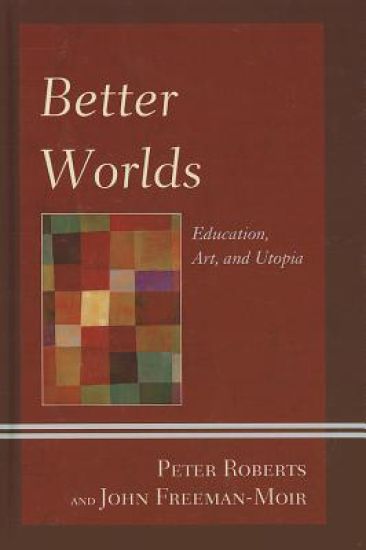
Better Worlds

Better Worlds

Peter Roberts; John Freeman-Moir

Lexington Books
2013
sidottu
Better Worlds: Education, Art, and Utopia provides a fresh examination of utopia and education. Adopting an interdisciplinary approach and drawing on literature and the visual arts as well as traditional non-fiction sources, the authors explore utopia not as a model of social perfection but as the active, imaginative building of better worlds. Utopian questions, they argue, lie at the heart of education, and addressing such questions demands attention not just to matters of theoretical principle but to the particulars of everyday life and experience. Taking utopia seriously in educational thought also involves a consideration of that which is dystopian. Utopia, this book suggests, is not something that is fixed, final, or ever fully realized; instead, it must be constantly recreated, and education, as an ongoing process of reflection, action, and transformation, has a central role to play in this process.
Virtues of Openness

Virtues of Openness

Michael A. Peters; Peter Roberts

Paradigm
2012
nidottu
The movement toward greater openness represents a change of philosophy, ethos, and government and a set of interrelated and complex changes that transform markets altering the modes of production and consumption, ushering in a new era based on the values of openness: an ethic of sharing and peer-to-peer collaboration enabled through new architectures of participation. These changes indicate a broader shift from the underlying industrial mode of production—a “productionist” metaphysics—to a postindustrial mode of consumption as use, reuse, and modification where new logics of social media structure different patterns of cultural consumption and symbolic analysis becomes a habitual and daily creative activity. The economics of openness constructs a new language of “presuming” and “produsage” in order to capture the open participation, collective co-creativity, communal evaluation, and commons-based production of social and public goods. Information is the vital element in the “new” politics and economy that links space, knowledge, and capital in networked practices and freedom is the essential ingredient in this equation if these network practices are to develop or transform themselves into 'knowledge cultures'. The Virtues of Openness investigates the social processes and policies that foster openness as an overriding educational value evidenced in the growth of open source, open access, and open education and their convergences that characterize global knowledge communities. The book argues that openness seems also to suggest political transparency and the norms of open inquiry, indeed, even democracy itself as both the basis of the logic of inquiry and the dissemination of its results. The Virtues of Openness examines the complex history of the concept of the open society before beginning a systematic investigation of openness in relation to the book, the “open text” and the written word. These changes are discussed in relation to the development of new open spaces of scholarship with their impact upon open journal systems, open peer review, open science, and the open global digital economy.
Virtues of Openness

Virtues of Openness

Michael A. Peters; Peter Roberts

Paradigm
2011
sidottu
Should all academic writings be free for us by anyone on the Web? The Virtues of Openness examines the complex history of the concept of the open society before beginning a systematic investigation of openness in relation to the book, the "open text" and the written word. These changes are discussed in relation to the development of new open spaces of scholarship with their impact upon open journal systems, open peer review, open science, and the open global digital economy. The Virtues of Openness argues that openness suggests political transparency and the norms of open inquiry, indeed, even democracy itself as both the basis of the logic of inquiry and the dissemination of its results.
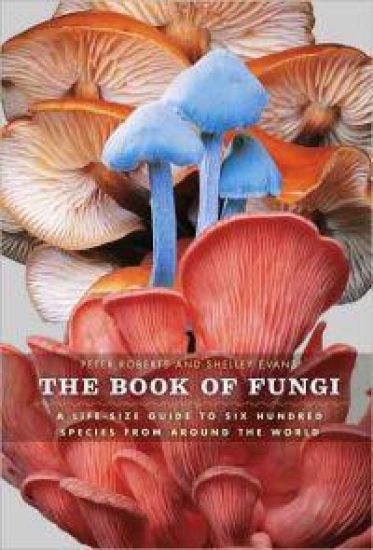
The Book of Fungi: A Life-Size Guide to Six Hundred Species from Around the World

The Book of Fungi: A Life-Size Guide to Six Hundred Species from Around the World

Peter Roberts; Shelley Evans

University of Chicago Press
2011
sidottu
Colorful, mysterious, and often fantastically shaped, fungi have been a source of wonder and fascination since the earliest hunter-gatherers first foraged for them. Today there are few, if any, places on Earth where fungi have not found themselves a home. And these highly specialized organisms are an indispensable part of the great chain of life. They not only partner in symbiotic relationships with over ninety percent of the world's trees and flowering plant species, they also recycle and create humus, the fertile soil from which such flora receive their nutrition. Some fungi are parasites or saprotrophs; many are poisonous and, yes, hallucinogenic; others possess life-enhancing properties that can be tapped for pharmaceutical products; while a delicious few are prized by epicureans and gourmands worldwide. In this lavishly illustrated volume, six hundred fungi from around the globe get their full due. Each species here is reproduced at its actual size, in full color, and is accompanied by a scientific explanation of its distribution, habitat, association, abundance, growth form, spore color, and edibility. Location maps give at-a-glance indications of each species' known global distribution, and specially commissioned engravings show different fruitbody forms and provide the vital statistics of height and diameter. With information on the characteristics, distinguishing features, and occasionally bizarre habits of these fungi, readers will find in this book the common and the conspicuous, the unfamiliar and the odd. There is a fungal predator, for instance, that hunts its prey with lassos, and several that set traps, including one that entices sows by releasing the pheromones of a wild boar. Mushrooms, morels, puffballs, toadstools, truffles, chanterelles--fungi from habitats spanning the poles and the tropics, from the highest mountains to our own backyards--are all on display in this definitive work.
The Cambrian Popular Antiquities, or an Account of Some Traditions, Customs and Supersitions of Wales, with Observations as to Their Origin, Etc.
Title: The Cambrian Popular Antiquities, or an account of some traditions, customs and supersitions of Wales, with observations as to their origin, etc.Publisher: British Library, Historical Print EditionsThe British Library is the national library of the United Kingdom. It is one of the world's largest research libraries holding over 150 million items in all known languages and formats: books, journals, newspapers, sound recordings, patents, maps, stamps, prints and much more. Its collections include around 14 million books, along with substantial additional collections of manuscripts and historical items dating back as far as 300 BC.The HISTORY OF BRITAIN & IRELAND collection includes books from the British Library digitised by Microsoft. As well as historical works, this collection includes geographies, travelogues, and titles covering periods of competition and cooperation among the people of Great Britain and Ireland. Works also explore the countries' relations with France, Germany, the Low Countries, Denmark, and Scandinavia. ++++The below data was compiled from various identification fields in the bibliographic record of this title. This data is provided as an additional tool in helping to insure edition identification: ++++ British Library Roberts, Peter; 1815. viii. 360 p.; 8 . G.4035.
Paulo Freire in the 21st Century

Paulo Freire in the 21st Century

Peter Roberts

Paradigm
2009
sidottu
This book explores the implications of world renowned educationalist Paulo Freire's theories for educational practice and how his ideas can help in bridging different genres and traditions. It addresses themes, questions and issues that have received little attention to date, including Freire's conception of the critical intellectual, the problem of defining literacy, and the possibility of a Freirean response to debates over political correctness. Roberts also relates Freire's ideas to those of other writers: Israel Scheffler, Fyodor Dostoevsky and Hermann Hesse, among others. Paulo Freire in the 21st Century makes a distinctive contribution to the international literature on Freire's work.