Kirjailija
Peter Russell
Kirjat ja teokset yhdessä paikassa: 41 kirjaa, julkaisuja vuosilta 1980-2027, suosituimpien joukossa Johannes Brahms und Klaus Groth. Vertaile teosten hintoja ja tarkista saatavuus suomalaisista kirjakaupoista.
41 kirjaa
Kirjojen julkaisuhaarukka 1980-2027.
Two Cheers for Minority Government presents a concise, accessible analysis of the prevalence of minority governments in Canada. Using the Canadian case to reflect on the processes and procedures of the parliamentary system, Peter H. Russell explores the tendency for people in parliamentary government to prefer elections which result in one party getting a margin of seats. Russell aims to explain why a minority government is not only a likely outcome of parliamentary elections in Canada but is also, for most, the best possible outcome. He argues that the best result of parliamentary actions is for no party to end up with a majority of seats in the lower house. This makes for government that is more accountable to the people. The new edition reveals how the increasing frequency of parliamentary elections that do not result in majority governments is a positive development for democracy. Ultimately, Two Cheers for Minority Government aims to help both citizens and politicians understand and make the most of the opportunities presented by minority governments.
In this special edition of his award-winning bestseller, visionary scientist Peter Russell updates his classic manifesto for awakening to the mounting planetary crisis while deepening the connection to inner tranquility. Amid fears of ecological catastrophe and political chaos, this book stands out for its message of sanity and hope.
Originally published in 1982 The Awakening Earth explores the idea of the Earth as a collective, self-regulatory living organism, and considers in this context, the function of the human race. The book provides an exploration of humanity’s potential and explores the possibility of mankind’s evolutionary future. Drawing on the work of physicists, psychologists, philosophers and mystics, the book argues that humanity is on the verge of another evolutionary leap and explores evolution in the context of spiritual growth, arguing that widespread inner awakenings could lead to a more analogous society, functioning as a single social super-organism, much in the way cells in a body function as a biological organism.
The power and versatility of the human brain far surpasses that of any computer, indeed, it is the most complex and involved system on this planet. Yet no human being has ever come close to using its full potential. In Part One of this handbook for brain users, Peter Russell sets out the brain's development and structure; in Part Two he examines its function and potential, discussing memory, imagery, mnemonics, the holographic theory of mind, reading and note-taking. He also introduces readers to mind maps using color, key words and organic structure. Among the many intriguing features of the book is the rejection of the notion that our brain deteriorates after middle age.
Zwei Freunde, wie sie ungleicher kaum sein könnten: Der Komponist Johannes Brahms vertonte nicht nur viele Gedichte von Klaus Groth, sondern schätzte in ihm den Ton seiner eigenen holsteinischen Herkunftswelt. Peter Russell, der bis vor kurzem an der Universität von Wellington (Neuseeland) deutsche Literaturgeschichte gelehrt hat, zeichnet anhand des Briefwechsels - den er um zwei bisher unveröffentlichte Postkarten von Brahms ergänzt - kenntnisreich und einfühlsam die Entwicklung der Freundschaft des Musikers mit dem Dichter nach. Großes Gewicht haben dabei die Kapitel, die den Vertonungen von Gedichten Groths durch Brahms sowohl von ihrer musikalischen als auch von ihrer literarischen Seite gewidmet sind. Russell kommt dabei spürbar zugute, dass er sich auch als Sänger mit dem Liedschaffen gerade von Brahms auseinandergesetzt hat.
We've seen the power of the internet to connect people around the world in ways never before known. This remarkable book argues that the billions of messages and pieces of information flying back and forth are linking the minds of humanity together into a single, global brain: a brain with astonishing potential for the Earth.Peter Russell, an acclaimed author and speaker, weaves together modern technology and ancient mysticism to present a startling vision of the world to come, where humanity is a fully conscious superorganism in an awakening universe. The human potential movement, he shows, is growing fast and influencing business, politics and medicine.This new edition is fully updated for the challenges we face in the twenty-first century.
Over the past twenty years musicologists and theorists have been intensely preoccupied with Brahms's compositions. The same, however, could not be said for biographical issues. The relationship between the composer Johannes Brahms and the poet Klaus Groth, both important creative forces with strong roots in the Dithmarschen region of northern Germany, was a very special one that deserves greater recognition. In his lifetime Klaus Groth was a celebrated German poet because of his works in Plattdeutsch, a dialect with which Brahms was familiar. Unlike any of Brahms's other friends, Groth and his family had ties to the family of Brahms's father that extended back a number of generations. That he came from the same region as Brahms seems to have endeared the poet to the composer. Aside from Daumer, Brahms chose to set Groth's poems more frequently than those of any other writer. Both Groth and his wife Doris were greatly indebted for these settings, and they showered Brahms with praise. Peter Russell has made careful selections from the 89 letters that have been preserved, placing them in the context of the personalities, lives and works of both men. Alongside the letters, Russell provides a substantial commentary that includes analyses of Brahms's music and critical assessment of Groth's poems. The book includes two appendices: Brahms's settings of Groth's poems and a list of Groth's publications in Brahms's library.
The best popular introduction to the human brain and how to make the most of it!
The Court and the Constitution
Thomas Bateman; Mark S. Harding; Janet Hiebert; Rainer Knopff; Peter Russell
UNIVERSITY OF TORONTO PRESS
2027
pokkari
Canada’s Constitution cannot be understood without a thorough foundation in the judicial interpretation of its provisions and principles. This collection of leading decisions by the relevant high courts – the Judicial Committee of the Privy Council until 1949 and the Supreme Court of Canada thereafter – provides that grounding. The third edition of this seminal text is updated to include the most salient, enduring, and influential high court decisions to date. It introduces students to trends and nuances in jurisprudence affecting the major dimensions of the Canadian Constitution, including the federal division of powers, the Canadian Charter of Rights and Freedoms, Indigenous rights, and constitutional change. Each of the 58 decisions in this collection features an introductory essay and discussion questions . The book contains a comprehensive essay on the institutional and historical determinants of judicial interpretation of the Constitution and a bibliography for further reading. Readers will acquire an appreciation of both the legal and political influences on judicial interpretation, the complexity of our constitutional structures, and the influences of the personalities and predilections of Canada’s senior jurists. Proceeding from the conviction that history and institutions matter, this collection will give readers a sophisticated understanding of the Constitution, the work of Canada’s courts, and the development of the Canadian liberal democratic regime.
The Court and the Charter
Thomas Bateman; Mark S. Harding; Rainer Knopff; Peter Russell
UNIVERSITY OF TORONTO PRESS
2026
pokkari
Canada’s Constitution cannot be understood without a thorough foundation in the judicial interpretation of its provisions and principles. This collection of leading decisions by the relevant high courts – the Judicial Committee of the Privy Council until 1949 and the Supreme Court of Canada thereafter – provides that grounding. The third edition of this seminal text is updated to include the most salient, enduring, and influential high court decisions to date. It introduces students to trends and nuances in jurisprudence affecting the major dimensions of the Canadian Constitution, including the federal division of powers, the Canadian Charter of Rights and Freedoms, Indigenous rights, and constitutional change. Each of the 58 decisions in this collection features an introductory essay and discussion questions . The book contains a comprehensive essay on the institutional and historical determinants of judicial interpretation of the Constitution and a bibliography for further reading. Readers will acquire an appreciation of both the legal and political influences on judicial interpretation, the complexity of our constitutional structures, and the influences of the personalities and predilections of Canada’s senior jurists. Proceeding from the conviction that history and institutions matter, this collection will give readers a sophisticated understanding of the Constitution, the work of Canada’s courts, and the development of the Canadian liberal democratic regime.
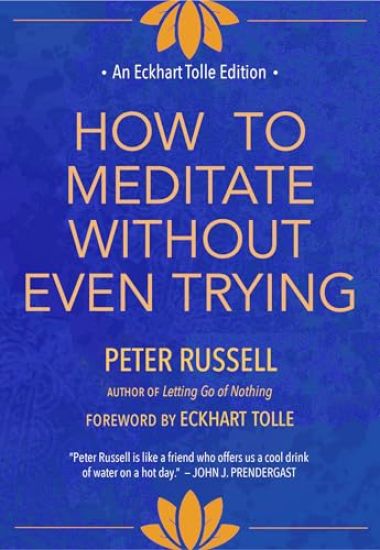
A refreshingly simple approach to meditation that replaces effort with ease and shows how true peace of mind is always closer than we think. What if meditation didn't require discipline, technique, or hours of sitting still but was actually something you looked forward to? In How to Meditate Without Even Trying, Peter Russell shares the liberating insight at the heart of his decades-long teaching: the harder we try to meditate, the more we get in our own way. Russell shows that true meditation is instead about the practice of allowing: releasing effort, relaxing the mind, and gently returning to the present moment. In clear and calming prose, he walks readers through a minimalist approach to meditation designed to help them: - cultivate presence without controlling their thoughts - let go of resistance, tension, and emotional discomfort - reclaim their natural inner calm -- even in a noisy, busy world - integrate mindfulness into daily life through "mini" and "micro" meditations - rediscover the practice as a source of joy, clarity, and deep contentment Rooted in both lived experience and timeless wisdom, this is a book to keep within arm's reach -- an invitation to stop striving and start being.
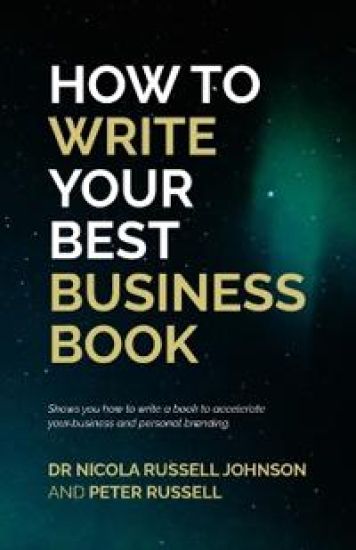
Have you ever thought that you should write a book? A book about your business and you? Have you ever been told you could write a book about your business, your journey, your story? HOW TO WRITE YOUR BEST BUSINESS BOOK not only tells you how to write it. It shows you how to write it too. Step by step, holding your hand through the process. You are the expert in your field. Become the AUTHORity in your field. In this book you'll learn how to: Showcase your expertise, products, and services Plan before you even start writing Turn your knowledge into an engaging read Become the expert in your field Build your ultimate Personal Branding Establish your know, like, and trust with your audience Give your ideal client 24/7 access to you Plan, structure, and write with confidence Review, proofread, edit, and publish your book If you're ready to showcase your expertise, accelerate your business, and finally become the author you've always wanted to be, scroll up and grab your copy and start writing your business book today.
Why has the most innovative of species become so dangerous? The answer, suggests Peter Russell, lies in humanity's accelerating pace of development. He shows how innovation breeds further innovation-a positive feedback loop that leads to exponentially increasing rates of change. But our minds cannot grasp the full implications of exponential growth. This creates a blind spot on the future. We think more in terms of linear change rather than exponential change. However fast the pace of change may be today, it will be much faster in the years to come, bringing ever more rapid scientific and technological advances. But ever-accelerating change also creates stress on the systems involved-personal, social, and planetary. The greater the pace of change, the greater the stress and the more likely systemic breakdown. We are heading into a future with technology beyond our dreams, but in a world that is breaking at the seams.Russell proposes there is no blame for this. Spiraling rates of development, with all their consequences, positive and negative, are the inevitable fate of any intelligent, technologically-empowered species. How do we live with exponential change? How can we prepare for a world that is becoming increasingly unpredictable? What does it mean for the future of humanity?
Déjalo IR: Relaja La Mente Y Descubre El Milagro de Tu Verdadera Naturaleza
Peter Russell
Editorial Kairos
2023
nidottu
Anyone who has practiced any of the planet's spiritual traditions will know that the key lies in letting go, but how to carry it out? In this original, sincere and practical guide, Peter Russell shows us that the things we don't cling to are often not tangible problems, but thoughts, emotions, interpretations, beliefs, or expectations; that is, they are not reality, they only exist in our mind. We can strip them of their power and release them, simply by making a small change of mind. Russell summarizes this relinquishing in a series of steps consisting of accepting, becoming aware of, acknowledging or befriending what we tend to avoid. This paradoxical practice generates peace of mind, new perspectives, and wisdom in action. In a turbulent time like ours, this is a tool available to everyone.
In this special edition of his award-winning bestseller, visionary scientist Peter Russell updates his classic manifesto for awakening to the mounting planetary crisis while deepening the connection to inner tranquility. Amid fears of ecological catastrophe and political chaos, this book stands out for its message of sanity and hope.
The Upanishads are key texts of the ageless wisdom known as the Perennial Philosophy.This lucid new translation presents selections from the eleven traditionally considered the most important: the Māṇḍūkya, Kena, Chāndogya, Īsha, Brihadāranyaka, Taittirīya, Mundaka, Kaushītaki, Maitrī, Katha and Shvetāshvatara. Each selection is preceded by an incisive introduction that explains simply and clearly Sanskrit terms and yogic concepts that might otherwise be obscure. What emerges is that these writings, composed in the forest retreats of India some twenty-five centuries ago, address still vital questions about the nature and destiny of humankind and the consequences of disregarding the natural order and the greater whole.This vibrant revisioning of long-established classics offers both insight and inspiration to anyone who seeks the truth, whatever their chosen path.
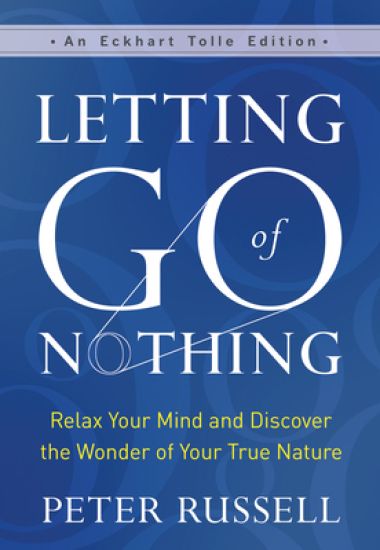
A practical and empowering approach to the age-old quest for letting go of the thoughts and feelings that block happiness, impede change, and hinder self-acceptance Anyone who has dipped a toe into any of the world's spiritual traditions knows that letting go and letting be is key. But how? In this fresh, frank, and accessible guide, Peter Russell allows readers to see that the things we get hung up on are generally not concrete, like tangible problems in the present, but are instead thoughts, feelings, interpretations, beliefs, or expectations. These are "no-things"; they exist only in our minds. And we can strip these no-things of their power and let them go by making a simple change -- a change of mind. Russell boils this "letting go" down to remarkably easy methods of accepting, acknowledging, recognizing, and even befriending what we tend to run from. This paradoxical practice generates peace of mind, fresh perspectives, and wisdom in action. In turbulent times like ours, this is a true power, one available to us all.