Kirjojen hintavertailu. Mukana 12 215 213 kirjaa ja 12 kauppaa.

Kirjailija

Peter S. Onuf

Kirjat ja teokset yhdessä paikassa: 16 kirjaa, julkaisuja vuosilta 1983-2026, suosituimpien joukossa Thomas Jefferson Survives. Vertaile teosten hintoja ja tarkista saatavuus suomalaisista kirjakaupoista.

Mukana myös kirjoitusasut: Peter S Onuf

16 kirjaa

Kirjojen julkaisuhaarukka 1983-2026.

Thomas Jefferson Survives

Thomas Jefferson Survives

Peter S. Onuf; Francis D. Cogliano; Annette Gordon-Reed

W W NORTON CO LTD
2026
sidottu
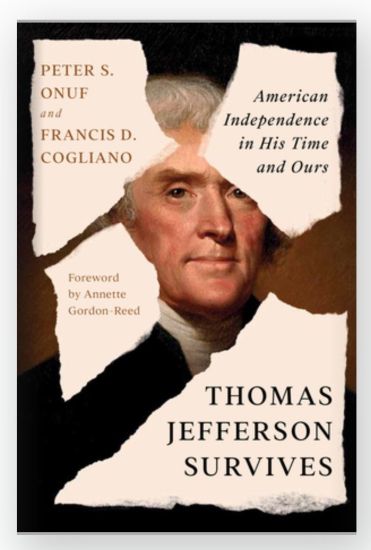
Fifty years after signing the Declaration of Independence, John Adams reassured the nation from his deathbed, “Thomas Jefferson survives”. Unaware that Jefferson had died hours earlier, Adams was in a larger sense correct: Jefferson had been immortalised in the American imagination. Today, Jefferson has effectively become a partisan talisman—jettisoned by the left for his moral failings, embraced and repurposed by the right as an avatar of white nationalism. Dissatisfied with the reductive clichés that now define Jefferson’s legacy, Peter S. Onuf and Francis D. Cogliano restore the founding father to his historical context, elucidating how Jefferson’s understanding of history shaped his responses to the crises of his time, how he conceived of the physical entity that became the United States and how he articulated a new national identity in 1776. Through their search for understanding, Onuf and Cogliano demonstrate not only why Jefferson matters but how his wisdom can be applied today. Peter S. Onuf and Annette Gordon-Reed’s “Most Blessed of the Patriarchs” was praised as: "An important book…[R]ichly rewarding. It is full of fascinating insights about Jefferson." —Gordon S. Wood, The New York Review of Books “A fresh and layered analysis...” –Peter Baker, The New York Times Book Review
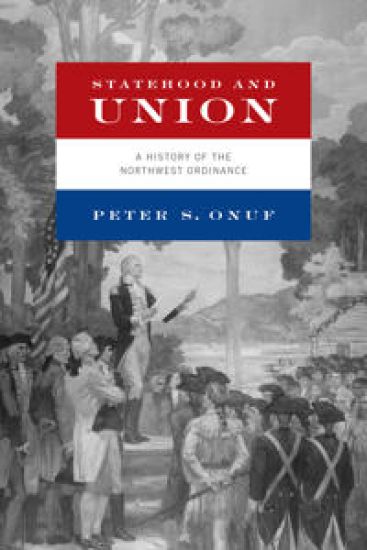
Statehood and Union

Statehood and Union

Peter S. Onuf

University of Notre Dame Press
2019
sidottu
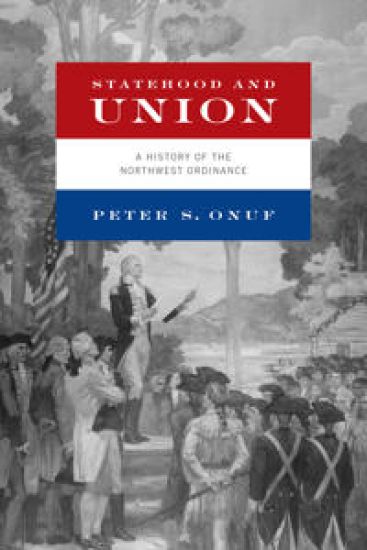
This new edition of Statehood and Union: A History of the Northwest Ordinance, originally published in 1987, is an authoritative account of the origins and early history of American policy for territorial government, land distribution, and the admission of new states in the Old Northwest. In a new preface, Peter S. Onuf reviews important new work on the progress of colonization and territorial expansion in the rising American empire.
Statehood and Union

Statehood and Union

Peter S. Onuf

University of Notre Dame Press
2019
nidottu
This new edition of Statehood and Union: A History of the Northwest Ordinance, originally published in 1987, is an authoritative account of the origins and early history of American policy for territorial government, land distribution, and the admission of new states in the Old Northwest. In a new preface, Peter S. Onuf reviews important new work on the progress of colonization and territorial expansion in the rising American empire.
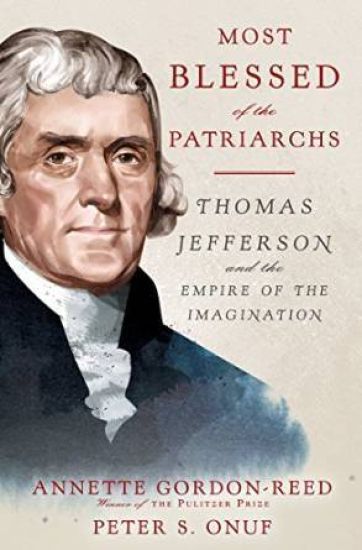
"Most Blessed of the Patriarchs"

"Most Blessed of the Patriarchs"

Annette Gordon-Reed; Peter S. Onuf

Liveright Publishing Corporation
2017
nidottu
Thomas Jefferson is still presented today as an enigmatic figure, despite being written about more than any other Founding Father. Lauded as the most articulate voice of American freedom, even as he held people in bondage, Jefferson is variably described as a hypocrite, an atheist and a simple-minded proponent of limited government. Now, a Pulitzer Prize-winning historian and leading Jefferson scholar team up to present an absorbing and revealing character study that finally clarifies the philosophy of Jefferson. The authors explore what they call the "empire" of Jefferson’s imagination—his expansive state of mind born of the intellectual influences and life experiences that led him into public life as a modern avatar of the enlightenment, who often likened himself to an ancient figure—"the most blessed of the patriarchs".
"Most Blessed of the Patriarchs"

"Most Blessed of the Patriarchs"

Annette Gordon-Reed; Peter S. Onuf

WW NORTON CO
2016
sidottu
Thomas Jefferson is still presented today as an enigmatic figure, despite being written about more than any other Founding Father. Lauded as the most articulate voice of American freedom, even as he held people in bondage, Jefferson is variably described as a hypocrite, an atheist and a simple-minded proponent of limited government. Now, a Pulitzer Prize-winning historian and leading Jefferson scholar team up to present an absorbing and revealing character study that finally clarifies the philosophy of Jefferson. The authors explore what they call the “empire” of Jefferson’s imagination—his expansive state of mind born of the intellectual influences and life experiences that led him into public life as a modern avatar of the enlightenment, who often likened himself to an ancient figure—“the most blessed of the patriarchs”.
The Mind of Thomas Jefferson

The Mind of Thomas Jefferson

Peter S. Onuf

University of Virginia Press
2007
nidottu
In ""The Mind of Thomas Jefferson"", one of the foremost historians of Jefferson and his time, Peter S. Onuf, offers a collection of essays that seeks to historicize one of our nation's founding fathers. Challenging current attempts to appropriate Jefferson to serve all manner of contemporary political agendas, Onuf argues that historians must look at Jefferson's language and life within the context of his own place and time. In this effort to restore Jefferson to his own world, Onuf reconnects that world to ours, providing a fresh look at the distinction between private and public aspects of his character that Jefferson himself took such pains to cultivate. Breaking through Jefferson's alleged opacity as a person by collapsing the contemporary interpretive frameworks often used to diagnose his psychological and moral states, Onuf raises new questions about what was on Jefferson's mind as he looked toward an uncertain future. Particularly striking is his argument that Jefferson's character as a moralist is nowhere more evident, ironically, than in his engagement with the institution of slavery. At once reinvigorating the tension between past and present and offering a new way to view our connection to one of our nationis founders, ""The Mind of Thomas Jefferson"" helps redefine both Jefferson and his time and American nationhood.
The Mind of Thomas Jefferson

The Mind of Thomas Jefferson

Peter S. Onuf

University of Virginia Press
2007
sidottu
In ""The Mind of Thomas Jefferson"", one of the foremost historians of Jefferson and his time, Peter S. Onuf, offers a collection of essays that seeks to historicize one of our nation's founding fathers. Challenging current attempts to appropriate Jefferson to serve all manner of contemporary political agendas, Onuf argues that historians must look at Jefferson's language and life within the context of his own place and time. In this effort to restore Jefferson to his own world, Onuf reconnects that world to ours, providing a fresh look at the distinction between private and public aspects of his character that Jefferson himself took such pains to cultivate. Breaking through Jefferson's alleged opacity as a person by collapsing the contemporary interpretive frameworks often used to diagnose his psychological and moral states, Onuf raises new questions about what was on Jefferson's mind as he looked toward an uncertain future. Particularly striking is his argument that Jefferson's character as a moralist is nowhere more evident, ironically, than in his engagement with the institution of slavery. At once reinvigorating the tension between past and present and offering a new way to view our connection to one of our nationis founders, ""The Mind of Thomas Jefferson"" helps redefine both Jefferson and his time and American nationhood.
Nations, Markets, and War

Nations, Markets, and War

Nicholas Onuf; Peter S. Onuf

University of Virginia Press
2006
sidottu
In this provocative interdisciplinary study, Nicholas and Peter Onuf argue that the American Civil War was the first great war between modern nations, emerging from the wreckage of a federal union that was supposed to secure perpetual peace. Situating conceptions of nationhood and war in the broader context of modern history, the authors draw attention to overlooked aspects of liberal thought that stand in tension with the a historical individuals and markets that are so familiar to us today. The liberal conception of the autonomous, rights-bearing individual is the product, not the predicate, of what has actually been a protracted process of development. New ways of historical thinking gave rise to new ideas about the nations that collectively constituted international society; the behavior of sovereign nations in turn provided a liberal model for the reorganization of domestic societies. Changing conceptions of markets provided the impetus for nation-making, as well as for war. In the book's second part the authors show how controversy over trade policy in the early American republic led to irreconcilable ideas about the nature of the union and the relationship between home and world markets. When Southerners embraced the logic of nationhood of their known region and insisted that slavery promoted the wealth and welfare of the civilized world, Northerners held that an expanding continental republic embodied their national aspirations. In this light, the clash between Southern concerns with free markets and Northern concerns about nation-making, each classically liberal in its own way, looms especially large in the sectional tensions that led to the Civil War. The Union and Confederacy went to war as great nations determined to secure their place in the modern, civilized world because they were so much alike. Their war should not be seen as a tragic, inexplicable anomaly in American history. It was, instead, the precedent for subsequent, and even more horrific, conflicts among nations.
Jeffersonian America

Jeffersonian America

Peter S. Onuf; Leonard Sadosky

Blackwell Publishers
2001
nidottu
This book analyzes Thomas Jefferson's conception of American nationhood in light of the political and social demands facing the post-Revolutionary Republic in its formative years.
Jeffersonian America

Jeffersonian America

Peter S. Onuf; Leonard Sadosky

Blackwell Publishers
2001
sidottu
This book analyzes Thomas Jefferson's conception of American nationhood in light of the political and social demands facing the post-Revolutionary Republic in its formative years.
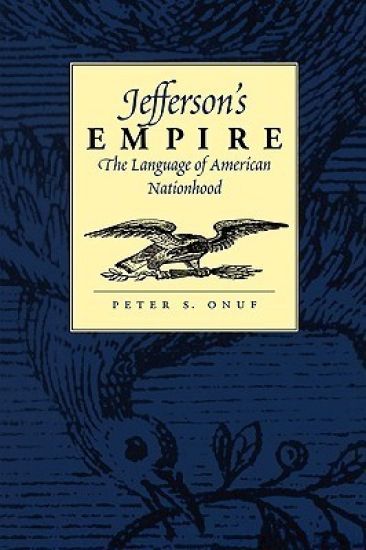
Jefferson's Empire

Jefferson's Empire

Peter S. Onuf

University of Virginia Press
2000
nidottu
Thomas Jefferson believed that the American revolution was a transformative moment in the history of political civilization. He hoped that his own efforts as a founding statesman and theorist would help construct a progressive and enlightened order for the new American nation that would be a model and inspiration for the world. Peter S. Onuf's new book traces Jefferson's vision of the American future to its roots in his idealized notions of nationhood and empire. Onuf's unsettling recognition that Jefferson's famed egalitarianism was elaborated in an imperial context yields strikingly original interpretations of our national identity and our ideas of race, of westward expansion and the Civil War, and of American global dominance in the twentieth century.Jefferson's vision of an American "empire for liberty" was modeled on a British prototype. But as a consensual union of self-governing republics without a metropolis, Jefferson's American empire would be free of exploitation by a corrupt imperial ruling class. It would avoid the cycle of war and destruction that had characterized the European balance of power.The Civil War cast in high relief the tragic limitations of Jefferson's political vision. After the Union victory, as the reconstructed nation-state developed into a world power, dreams of the United States as an ever-expanding empire of peacefully coexisting states quickly faded from memory. Yet even as the antebellum federal union disintegrated, a Jeffersonian nationalism, proudly conscious of America's historic revolution against imperial domination, grew up in its place.In Onuf's view, Jefferson's quest to define a new American identity also shaped his ambivalent conceptions of slavery and Native American rights. His revolutionary fervor led him to see Indians as "merciless savages" who ravaged the frontiers at the British king's direction, but when those frontiers were pacified, a more benevolent Jefferson encouraged these same Indians to embrace republican values. African American slaves, by contrast, constituted an unassimilable captive nation, unjustly wrenched from its African homeland. His great panacea: colonization.Jefferson's ideas about race reveal the limitations of his conception of American nationhood. Yet, as Onuf strikingly documents, Jefferson's vision of a republican empire—a regime of peace, prosperity, and union without coercion—continues to define and expand the boundaries of American national identity.
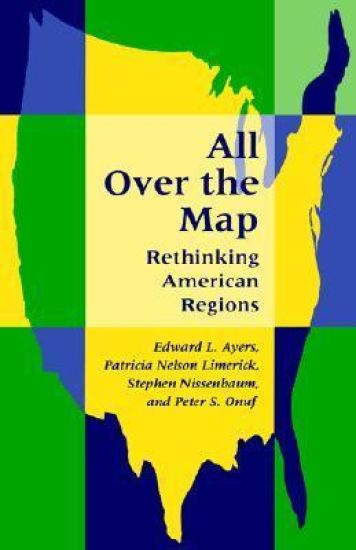
All Over the Map

All Over the Map

Edward L. Ayers; Patricia Nelson Limerick; Stephen Nissenbaum; Peter S. Onuf

Johns Hopkins University Press
1996
pokkari
Even as Americans keep moving "all over the map" in the late twentieth century, they cherish memories of the places they come from. But where do these places-these regions-come from? What makes them so real? In this groundbreaking book a distinguished group of historians explores the concept of region in America, traces changes the idea has undergone in our national experience, and examines its meaning for Americans today. Far from diminishing in importance, the authors conclude, regional differences continue to play a significant role in Americans' self-image. Regional identity, in fact, has always been fed by the very forces that many people think threaten its existence today: a central government, an aggressive economy, and connections with places beyond regional boundaries. Calling into question widely held notions about how Americans came to differ from one another and explaining why those differences continue to flourish, this iconoclastic study-by scholars with differing regional ties-will refresh and redirect the centuries-old discussion over Americans' conceptions of themselves.
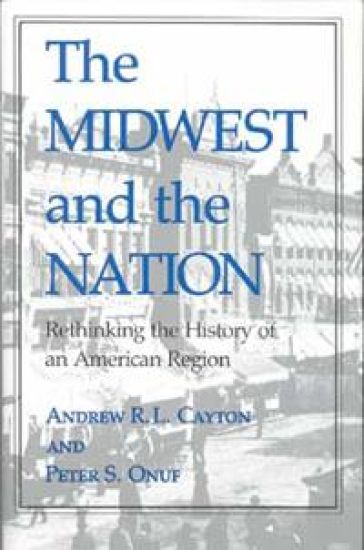
The Midwest and the Nation

The Midwest and the Nation

Andrew R. L. Cayton; Peter S. Onuf

Indiana University Press
1990
sidottu
"Cayton and Onuf have tried to recapture a central place for region in our thinking while, at the same time, incorporating into their analysis the latest scholarship on gender, political behavior, etc. Theirs is a fine blending of the old and the new: old scholarship and new directions." —Malcolm J. Rohrbough "This is an ambitious work that . . . truly beongs on the 'must do' reading list of all midwestern and American historians." —American Historical Review " . . . an impressive interpretive work that will command the attention of regional historians and national scholars alike." —Illinois Historical Journal " . . . an excellent extended historiographic essay that seeks not only to locate the significance of the region created by the early land ordinance but also to raise issues for the historical examination of other regions of the country." —South Dakota History "What makes this book especially interesting and valuable is that it is informed by the post-modern scholar's view that knowledge can never be objective and eternally true; rather, it is subjective and socially constructed, shaped by the political, social, intellectual, and economic environments in which it is formed." —Western Illinois Regional Studies "The book's review of scholarship about the region is exhaustive, as well as brisk and lucid." —American Studies International " . . . a rigorous intellecutal analysis of the region's most important historiography." —Gateway Heritage " . . . an excellent book . . . " —The Annals of Iowa "What is impressive about this densely written work is the number of secondary works incorporated into the text and the importance of the authors' thesis of the considerable influence of happenings in the Midwest of the nineteenth century." —North Dakota History "There is . . . much to be praised in this book, and it will be frequently used and discussed by scholars of the early Midwest." —Journal of American History
A Union of Interests

A Union of Interests

Cathy D. Matson; Peter S. Onuf

University Press of Kansas
1990
nidottu
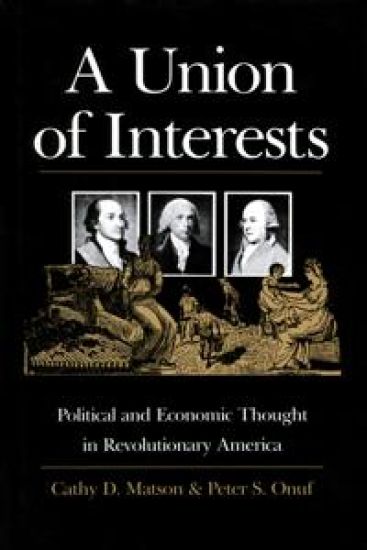
From the onset of the Revolution in 1776 to the inauguration of the federal government in 1789, the American political culture was transformed. The movement for an effective continental republic is here linked to the groundswell for development and economic freedom set off by the Revolution. A Union of Interests reconstructs the discourse of American federalism, a discourse grounded in the debate over the role of government in the regulation of the economy. Cathy Matson and Peter Onuf integrate analyses of economic ideas and interests with many of the critical problems facing the union after the war such as jurisdictional disputes, threats of secession, and new prospects for frontier settlement. The revolutionary ideology that had justified the creation of sovereign states under the Articles of Confederation seemed increasingly ""artificial"" in light of the pressing need to create a ""natural,"" extended republic that would be truer to the changing circumstances of the American people. The authors demonstrate that the movement for the Constitution drew upon increasingly popular political-economic ideas that sought to reconcile the apparent conflicts between a national interest and the ""enlightened"" self-interest of citizens. A pivotal chapter argues that the Constitutional Convention was itself both a product of this broad public discussion about America's future and a contribution to it in which the founders debated the limits to which they should compromise their distinct goals to fit this emerging vision.
The Origins of the Federal Republic

The Origins of the Federal Republic

Peter S. Onuf

University of Pennsylvania Press
1983
pokkari
Historians have emphasized the founding fathers' statesmanship and vision in the development of a more powerful union under the federal constitution. In The Origins of the Federal Republic, Peter S. Onuf clarifies the founders' achievement by demonstrating with case studies of New York, Pennsylvania, Vermont, and Virginia that territorial confrontations among the former colonies played a crucial role in shaping early concepts of statehood and union and provided the true basis of the American federalist system.