Kirjailija
Peter Samsonov
Kirjat ja teokset yhdessä paikassa: 8 kirjaa, julkaisuja vuosilta 2019-2026, suosituimpien joukossa British Tanks of the Red Army. Vertaile teosten hintoja ja tarkista saatavuus suomalaisista kirjakaupoista.
8 kirjaa
Kirjojen julkaisuhaarukka 2019-2026.
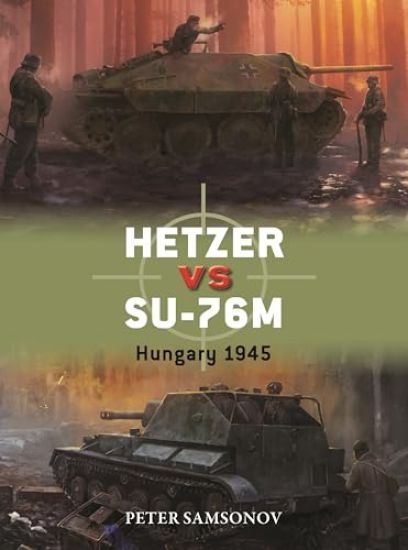
A noted authority examines the roles played by Germany’s Hetzer tank destroyer and the Soviet SU-76M self-propelled gun during the battle for Hungary in 1945. During World War II, Germany and the Soviet Union soon found that their light tanks were obsolete; while their small guns were no longer useful against the enemy’s armoured vehicles, the chassis allowed for installation of a larger gun at the cost of a rotating turret. Keen to utilize existing technology, Germany and the Soviet Union approached this challenge differently. While the Germans turned their PzKpfw 38(t) tank into a tank destroyer, first the open-topped Marder III and then the fully enclosed Jagdpanzer 38(t), nicknamed the ‘Hetzer’, the Soviet designers turned the T-70 light tank into an infantry support gun capable of engaging enemy armour, its open-topped fighting compartment adding communication with accompanying infantry. In this study, leading armour expert Peter Samsonov’s insightful analysis is complemented by specially commissioned artwork and mapping alongside carefully selected archive and present-day photographs, revealing the origins, development and combat performance of these two types at war. Both were widely employed amid the tank battles of early 1945, as Soviet forces reached deep into Hungary and the Axis armies mounted one last counter-offensive on the Eastern Front, Operation Spring Awakening.
The first encounter between British armour and the Red Army was not on friendly terms - with the British sending surplus tanks to reinforce the pro-monarchy White Army in the Russian Civil War. When the Reds won, war trophy Mark V heavy tanks as well as medium Mk.A Whippets and Mk.B Hornets entered service with the RKKA. As the political landscape changed during the 1920s, the Red Army assessed British designs available for export and a licensed copy of the Vickers Mk.E entered production in 1931 as the T-26.During the early days of the German invasion of the Soviet Union, armour losses were huge and the Red Army once again looked abroad to acquire new fighting vehicles. A large-scale programme of military aid to the USSR began in August 1941, with the US and Britain offering help under separate terms - though not for free. A deal was struck and Convoy PQ-1 with the first 20 British tanks for the Red Army left for Arkhangelsk on September 29, 1941. These tanks arrived in time to take place in the Battle of Moscow and as shipments continued, British armoured vehicles would remain in service with the Red Army until the conclusion of the Second World War nearly four years later.A wide range of British vehicles served under the Red flag during the war - ranging from Matildas and Valentines to Churchills and even Tetrarch light tanks.In British Tanks of the Red Army, tank expert Peter Samsonov presents a history of British tanks in the Soviet Union and provides a detailed account of their use on the battlefield, including what the Red Army tankers thought of them.

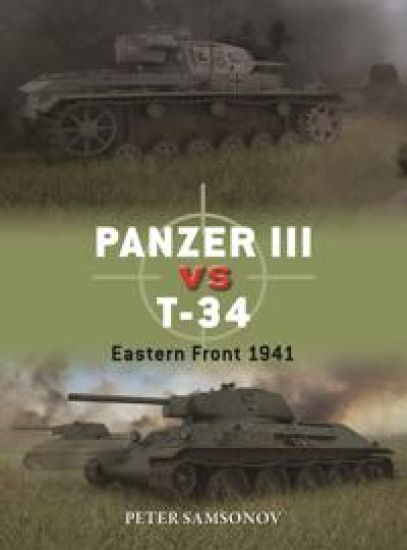
This illustrated study pits Germany’s PzKpfw III against the Soviet Union’s T-34 in the wake of Hitler’s 1941 invasion of the Soviet Union.This book evaluates the PzKpfw III and T-34 medium tanks fielded by Germany and the Soviet Union during 1941. Both designs were intended to be the primary medium tanks of their respective armies, but owing to manufacturing difficulties, neither was available in quite the numbers intended. Even though both tanks were relatively new, neither was deemed entirely satisfactory, and replacements for both were already on the drawing board. Nevertheless, it was these tanks that clashed in what the Soviet Union called the Great Patriotic War.While the T-34 rapidly established a fearsome reputation only sometimes borne out by its actual performance, the PzKpfw lII was smaller, lighter, and not as well armed as its Soviet opponent but benefited from the support of a more seasoned and better structured army. Full-colour artwork, archive photographs and authoritative text drawing upon Russian- and German-language sources combine to reveal how the Germans harnessed the advantages of combat experience and superior organization to counter the T-34’s tactical strengths, but also how the PzKpfw III quickly lost relevance as it became evident that it could not carry a gun powerful enough to destroy the T-34 at range.
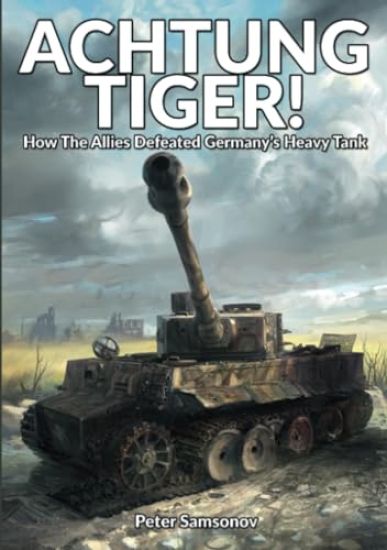
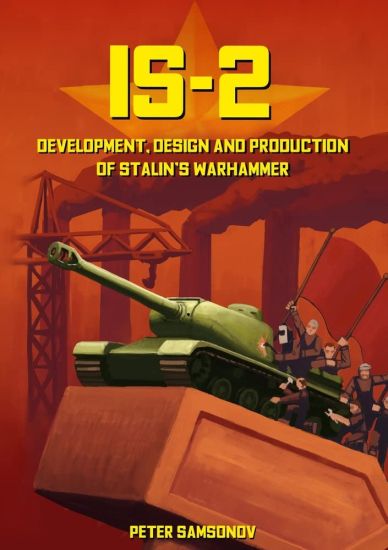
IS-2 - Development, Design & Production of Stalin's War Hammer
Peter Samsonov
Military History Group
2022
pokkari
The IS-2 is the quintessential Soviet heavy tank from World War 2. Heavily armored and boasting a fearsome 122mm gun, this tank matched the German panzers on the Eastern front by more than just its fierce appearance. This tank's history is told from the beginning of the Soviet heavy tank programme until the very end of World War 2, in the most detailed and complete account of its development, design and production available in English. Supported by extensive research of Russian language sources, this publication includes a comprehensive breakdown of prototypes, the Soviet analysis of weaknesses in German tanks including the Tiger and Panther, the development of the 122mm gun, the principles of the new tank's armor layout and a wealth of technical data.