Kirjojen hintavertailu. Mukana 12 595 353 kirjaa ja 12 kauppaa.

Kirjailija

Peter Sandborn

Kirjat ja teokset yhdessä paikassa: 10 kirjaa, julkaisuja vuosilta 2009-2024, suosituimpien joukossa Cost Analysis Of Electronic Systems. Vertaile teosten hintoja ja tarkista saatavuus suomalaisista kirjakaupoista.

10 kirjaa

Kirjojen julkaisuhaarukka 2009-2024.

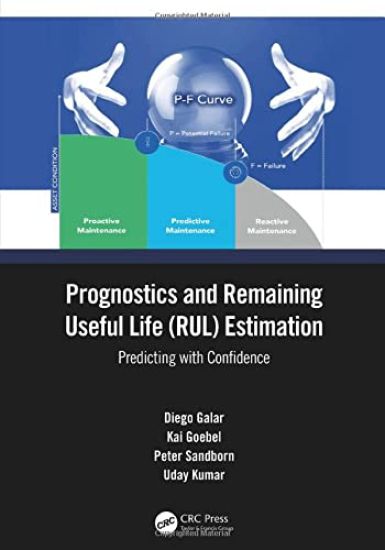
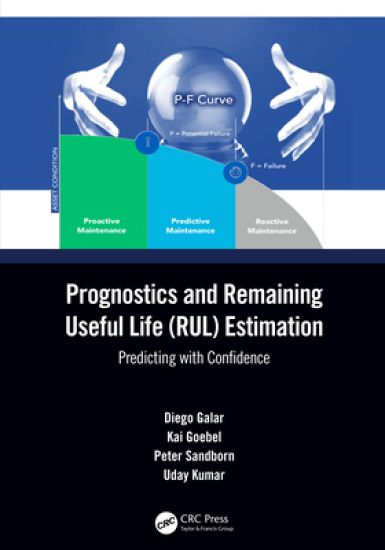
Prognostics and Remaining Useful Life (RUL) Estimation

Prognostics and Remaining Useful Life (RUL) Estimation

Diego Galar; Kai Goebel; Peter Sandborn; Uday Kumar

TAYLOR FRANCIS LTD
2024
nidottu
Maintenance combines various methods, tools, and techniques in a bid to reduce maintenance costs while increasing the reliability, availability, and security of equipment. Condition-based maintenance (CBM) is one such method, and prognostics forms a key element of a CBM program based on mathematical models for predicting remaining useful life (RUL). Prognostics and Remaining Useful Life (RUL) Estimation: Predicting with Confidence compares the techniques and models used to estimate the RUL of different assets, including a review of the relevant literature on prognostic techniques and their use in the industrial field. This book describes different approaches and prognosis methods for different assets backed up by appropriate case studies.FEATURES Presents a compendium of RUL estimation methods and technologies used in predictive maintenance Describes different approaches and prognosis methods for different assets Includes a comprehensive compilation of methods from model-based and data-driven to hybrid Discusses the benchmarking of RUL estimation methods according to accuracy and uncertainty, depending on the target application, the type of asset, and the forecast performance expected Contains a toolset of methods and a way of deployment aimed at a versatile audienceThis book is aimed at professionals, senior undergraduates, and graduate students in all interdisciplinary engineering streams that focus on prognosis and maintenance.
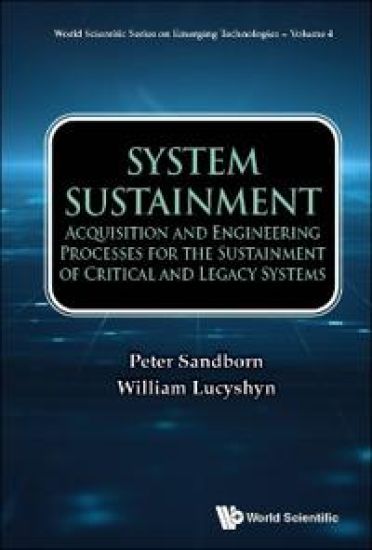
System Sustainment: Acquisition And Engineering Processes For The Sustainment Of Critical And Legacy Systems
'Sustainment' (as commonly defined by industry and government), is comprised of maintenance, support, and upgrade practices that sustain or improve the performance of a system and maximize the availability of goods and services while minimizing their cost and footprint or, more simply, the capacity of a system to endure. Sustainment is a multi-trillion-dollar enterprise for critical systems, in both government (infrastructure and defense) and industry (transportation, industrial controls, data centers, and energy generation).This book is a mix of engineering, operations research, and policy sciences intended to provide students with a thorough understanding of the concept of sustainability and sustainable product life-cycles, and an appreciation of the importance of sustaining critical systems. It starts from the key attributes for system sustainment that includes data analytics, engineering analysis and the public policy needed to support the development of technologies, processes, and frameworks required for the management of sustainable processes and practices. The specific topics covered include: acquisition of critical systems, reliability, maintenance, availability, readiness, inventory management, supply-chain management and risks, contracting for sustainment, and various analysis methodologies (discounted cash flow analysis, discrete-event simulation and Monte Carlo methods). Practice problems are included at the end of each chapter.
Prognostics and Remaining Useful Life (RUL) Estimation

Prognostics and Remaining Useful Life (RUL) Estimation

Diego Galar; Kai Goebel; Peter Sandborn; Uday Kumar

TAYLOR FRANCIS LTD
2021
sidottu
Maintenance combines various methods, tools, and techniques in a bid to reduce maintenance costs while increasing the reliability, availability, and security of equipment. Condition-based maintenance (CBM) is one such method, and prognostics forms a key element of a CBM program based on mathematical models for predicting remaining useful life (RUL). Prognostics and Remaining Useful Life (RUL) Estimation: Predicting with Confidence compares the techniques and models used to estimate the RUL of different assets, including a review of the relevant literature on prognostic techniques and their use in the industrial field. This book describes different approaches and prognosis methods for different assets backed up by appropriate case studies.FEATURES Presents a compendium of RUL estimation methods and technologies used in predictive maintenance Describes different approaches and prognosis methods for different assets Includes a comprehensive compilation of methods from model-based and data-driven to hybrid Discusses the benchmarking of RUL estimation methods according to accuracy and uncertainty, depending on the target application, the type of asset, and the forecast performance expected Contains a toolset of methods and a way of deployment aimed at a versatile audienceThis book is aimed at professionals, senior undergraduates, and graduate students in all interdisciplinary engineering streams that focus on prognosis and maintenance.
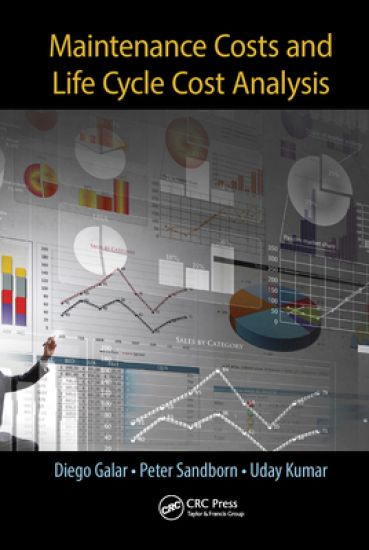
Maintenance Costs and Life Cycle Cost Analysis

Maintenance Costs and Life Cycle Cost Analysis

Diego Galar; Peter Sandborn; Uday Kumar

CRC Press
2020
nidottu
Authors have attempted to create coherent chapters and sections on how the fundamentals of maintenance cost should be organized, to present them in a logical and sequential order. Necessarily, the text starts with importance of maintenance function in the organization and moves to life cycle cost (LCC) considerations followed by the budgeting constraints. In the process, they have intentionally postponed the discussion about intangible costs and downtime costs later on in the book mainly due to the controversial part of it when arguing with managers. The book will be concluding with a short description of a number of sectors where maintenance cost is of critical importance. The goal is to train the readers for a deeper study and understanding of these elements for decision making in maintenance, more specifically in the context of asset management. This book is intended for managers, engineers, researchers, and practitioners, directly or indirectly involved in the area of maintenance. The book is focused to contribute towards better understanding of maintenance cost and use of this knowledge to improve the maintenance process. Key Features:• Emphasis on maintenance cost and life cycle cost especially under uncertainty.• Systematic approach of how cost models can be applied and used in the maintenance field.• Compiles and reviews existing maintenance cost models.• Consequential and direct costs considered.• Comparison of maintenance costs in different sectors, infrastructure, manufacturing, transport.
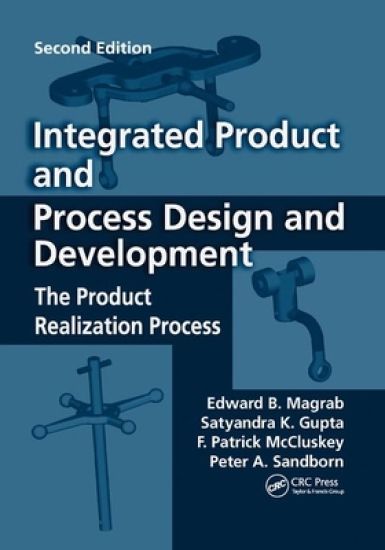
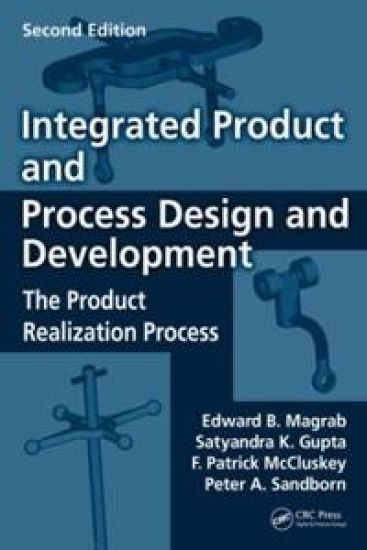
Integrated Product and Process Design and Development

Integrated Product and Process Design and Development

Edward B. Magrab; Satyandra K. Gupta; F. Patrick McCluskey; Peter Sandborn

CRC Press
2019
nidottu
Since the publication of the first edition of Integrated Product and Process Design and Development: The Product Realization Process more than a decade ago, the product realization process has undergone a number of significant changes. Reflecting these advances, this second edition presents a thorough treatment of the modern tools used in the integrated product realization process and places the product realization process in its new context.See what’s new in the Second Edition: Bio-inspired concept generation and TRIZComputing manufacturing cost, costs of ownership, and life-cycle costs of products Engineered plastics, ceramics, composites, and smart materialsRole of innovationNew manufacturing methods: in-mold assembly and layered manufacturing This book discusses how to translate customer needs into product requirements and specifications. It then provides methods to determine a product’s total costs, including cost of ownership, and covers how to generate and evaluate product concepts. The authors examine methods for turning product concepts into actual products by considering development steps such as materials and manufacturing processes selection, assembly methods, environmental aspects, reliability, and aesthetics, to name a few. They also introduce the design of experiments and the six sigma philosophy as means of attaining quality.To be globally viable, corporations need to produce innovative, visually appealing, quality products within shorter development times. Filled with checklists, guidelines, strategies, and examples, this book provides proven methods for creating competitively priced quality products.
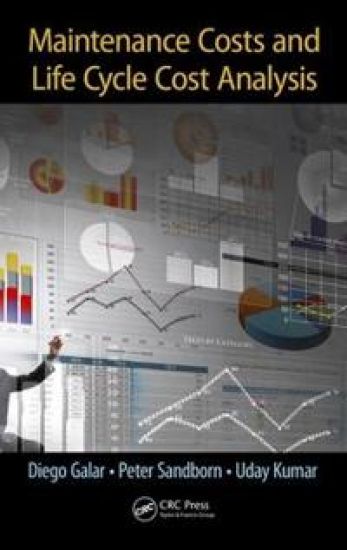
Maintenance Costs and Life Cycle Cost Analysis

Maintenance Costs and Life Cycle Cost Analysis

Diego Galar; Peter Sandborn; Uday Kumar

Productivity Press
2017
sidottu
Authors have attempted to create coherent chapters and sections on how the fundamentals of maintenance cost should be organized, to present them in a logical and sequential order. Necessarily, the text starts with importance of maintenance function in the organization and moves to life cycle cost (LCC) considerations followed by the budgeting constraints. In the process, they have intentionally postponed the discussion about intangible costs and downtime costs later on in the book mainly due to the controversial part of it when arguing with managers. The book will be concluding with a short description of a number of sectors where maintenance cost is of critical importance. The goal is to train the readers for a deeper study and understanding of these elements for decision making in maintenance, more specifically in the context of asset management. This book is intended for managers, engineers, researchers, and practitioners, directly or indirectly involved in the area of maintenance. The book is focused to contribute towards better understanding of maintenance cost and use of this knowledge to improve the maintenance process. Key Features:• Emphasis on maintenance cost and life cycle cost especially under uncertainty.• Systematic approach of how cost models can be applied and used in the maintenance field.• Compiles and reviews existing maintenance cost models.• Consequential and direct costs considered.• Comparison of maintenance costs in different sectors, infrastructure, manufacturing, transport.
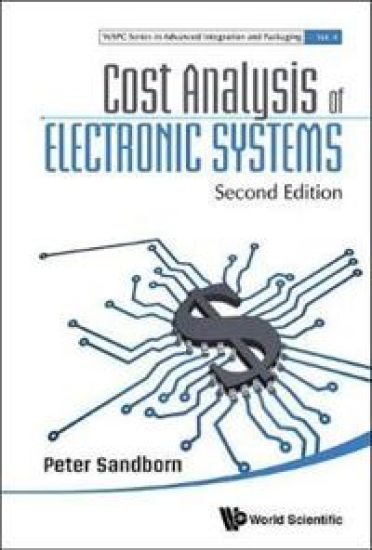
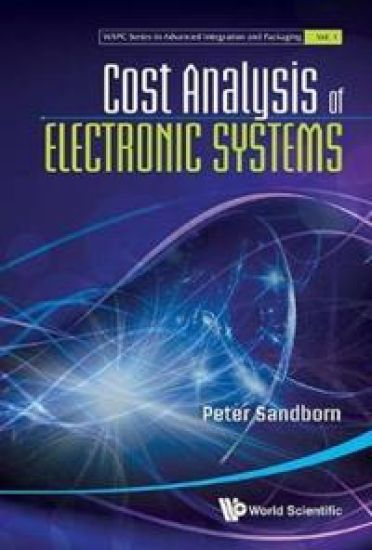
Cost Analysis Of Electronic Systems

Cost Analysis Of Electronic Systems

Peter Sandborn

World Scientific Publishing Co Pte Ltd
2017
sidottu
This book provides an introduction to the cost modeling for electronic systems that is suitable for advanced undergraduate and graduate students in electrical, mechanical and industrial engineering, and professionals involved with electronics technology development and management. This book melds elements of traditional engineering economics with manufacturing process and life-cycle cost management concepts to form a practical foundation for predicting the cost of electronic products and systems. Various manufacturing cost analysis methods are addressed including: process-flow, parametric, cost of ownership, and activity based costing. The effects of learning curves, data uncertainty, test and rework processes, and defects are considered. Aspects of system sustainment and life-cycle cost modeling including reliability (warranty, burn-in), maintenance (sparing and availability), and obsolescence are treated. Finally, total cost of ownership of systems, return on investment, cost-benefit analysis, and real options analysis are addressed.
Cost Analysis Of Electronic Systems

Cost Analysis Of Electronic Systems

Peter Sandborn

World Scientific Publishing Co Pte Ltd
2012
sidottu
Understanding the cost ramifications of design, manufacturing and life-cycle management decisions is of central importance to businesses associated with all types of electronic systems. Cost Analysis of Electronic Systems contains carefully developed models and theory that practicing engineers can directly apply to the modeling of costs for real products and systems. In addition, this book brings to light and models many contributions to life-cycle costs that practitioners are aware of but never had the tools or techniques to address quantitatively in the past.Cost Analysis of Electronic Systems melds elements of traditional engineering economics with manufacturing process and life-cycle cost management concepts to form a practical foundation for predicting the cost of electronic products and systems. Various manufacturing cost analysis methods are addressed including: process-flow, parametric, cost of ownership, and activity-based costing. The effects of learning curves, data uncertainty, test and rework processes, and defects are considered. Aspects of system sustainment and life-cycle cost modeling including reliability (warranty, burn-in), maintenance (sparing and availability), and obsolescence are treated. Finally, total cost of ownership of systems and return on investment are addressed.Real life design scenarios from integrated circuit fabrication, electronic systems assembly, substrate fabrication, and electronic systems managementare used as examples of the application of the cost estimation methods developed within the book.
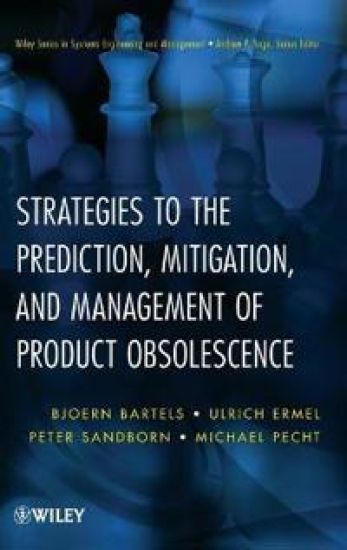
Strategies to the Prediction, Mitigation and Management of Product Obsolescence

Strategies to the Prediction, Mitigation and Management of Product Obsolescence

Bjoern Bartels; Ulrich Ermel; Peter Sandborn; Michael G. Pecht

John Wiley Sons Inc
2012
sidottu
Supply chains for electronic products are primarily driven by consumer electronics. Every year new mobile phones, computers and gaming consoles are introduced, driving the continued applicability of Moore's law. The semiconductor manufacturing industry is highly dynamic and releases new, better and cheaper products day by day. But what happens to long-field life products like airplanes or ships, which need the same components for decades? How do electronic and also non-electronic systems that need to be manufactured and supported of decades manage to continue operation using parts that were available for a few years at most? This book attempts to answer these questions. This is the only book on the market that covers obsolescence forecasting methodologies, including forecasting tactics for hardware and software that enable cost-effective proactive product life-cycle management. This book describes how to implement a comprehensive obsolescence management system within diverse companies. Strategies to the Prediction, Mitigation and Management of Product Obsolescence is a must-have work for all professionals in product/project management, sustainment engineering and purchasing.
Integrated Product and Process Design and Development

Integrated Product and Process Design and Development

Edward B. Magrab; Satyandra K. Gupta; F. Patrick McCluskey; Peter Sandborn

CRC Press Inc
2009
sidottu
Since the publication of the first edition of Integrated Product and Process Design and Development: The Product Realization Process more than a decade ago, the product realization process has undergone a number of significant changes. Reflecting these advances, this second edition presents a thorough treatment of the modern tools used in the integrated product realization process and places the product realization process in its new context.See what’s new in the Second Edition: Bio-inspired concept generation and TRIZComputing manufacturing cost, costs of ownership, and life-cycle costs of products Engineered plastics, ceramics, composites, and smart materialsRole of innovationNew manufacturing methods: in-mold assembly and layered manufacturing This book discusses how to translate customer needs into product requirements and specifications. It then provides methods to determine a product’s total costs, including cost of ownership, and covers how to generate and evaluate product concepts. The authors examine methods for turning product concepts into actual products by considering development steps such as materials and manufacturing processes selection, assembly methods, environmental aspects, reliability, and aesthetics, to name a few. They also introduce the design of experiments and the six sigma philosophy as means of attaining quality.To be globally viable, corporations need to produce innovative, visually appealing, quality products within shorter development times. Filled with checklists, guidelines, strategies, and examples, this book provides proven methods for creating competitively priced quality products.