Kirjojen hintavertailu. Mukana 12 595 353 kirjaa ja 12 kauppaa.

Kirjailija

Peter Schäfer

Kirjat ja teokset yhdessä paikassa: 37 kirjaa, julkaisuja vuosilta 1975-2027, suosituimpien joukossa Anziehung und Abstoßung. Vertaile teosten hintoja ja tarkista saatavuus suomalaisista kirjakaupoista.

Mukana myös kirjoitusasut: Peter Schafer

37 kirjaa

Kirjojen julkaisuhaarukka 1975-2027.

Die Geburt des Judentums aus dem Geist des Christentums
Peter Schäfer befasst sich mit den Rückwirkungen des sich herauskristallisierenden Christentums auf das zeitgenössische rabbinische Judentum, d.h. den Einflüssen, die das zu sich selbst findende Christentum auf das Judentum ausübte.Nach der viel diskutierten Erzählung vom verschwundenen Messiasbaby im Jerusalemer Talmud werden Auseinandersetzungen zwischen Rabbinen und diversen Häretikern bezüglich der Frage des einen Gottes oder einer möglichen Vielzahl von Göttern untersucht. Vor allem die im Christentum allmählich konkrete Gestalt annehmende Idee einer göttlichen Zweiheit (Vater und Sohn) bzw. Dreiheit (Vater, Sohn und Heiliger Geist) hat im rabbinischen Judentum deutlichere Spuren hinterlassen als bisher meist angenommen. Daneben spielen Vorstellungen eine wichtige Rolle, die sich aus dem Menschensohn des Danielbuches im Judentum und im Christentum entwickelten; im babylonischen Talmud und in der frühen jüdischen Mystik tritt uns dann die Gestalt eines höchsten Engels mit Namen Metatron entgegen, der sogar den Beinamen "Kleiner Gott" erhält. Abschliessend wird ein klassischer rabbinischer Midrasch vorgestellt, der ganz unbefangen den Gedanken des stellvertretenden Sühneleidens des Messias (wieder) in das Judentum einführt.Die Grenzen zwischen "Rechtgläubigkeit" und "Häresie" erweisen sich auch im Judentum als fließend, und mehr als einmal drängt sich die häretische Überlegung auf, ob man nicht nur von der "Geburt des Christentums aus dem Geist des Judentums" sprechen sollte, sondern umgekehrt auch von der "Geburt des Judentums aus dem Geist des Christentums".

Jesus in the Talmud

Jesus in the Talmud

Peter Schäfer

Princeton University Press
2009
pokkari
Scattered throughout the Talmud, the founding document of rabbinic Judaism in late antiquity, can be found quite a few references to Jesus--and they're not flattering. In this lucid, richly detailed, and accessible book, Peter Schafer examines how the rabbis of the Talmud read, understood, and used the New Testament Jesus narrative to assert, ultimately, Judaism's superiority over Christianity. The Talmudic stories make fun of Jesus' birth from a virgin, fervently contest his claim to be the Messiah and Son of God, and maintain that he was rightfully executed as a blasphemer and idolater. They subvert the Christian idea of Jesus' resurrection and insist he got the punishment he deserved in hell--and that a similar fate awaits his followers. Schafer contends that these stories betray a remarkable familiarity with the Gospels--especially Matthew and John--and represent a deliberate and sophisticated anti-Christian polemic that parodies the New Testament narratives. He carefully distinguishes between Babylonian and Palestinian sources, arguing that the rabbis' proud and self-confident countermessage to that of the evangelists was possible only in the unique historical setting of Persian Babylonia, in a Jewish community that lived in relative freedom. The same could not be said of Roman and Byzantine Palestine, where the Christians aggressively consolidated their political power and the Jews therefore suffered. A departure from past scholarship, which has played down the stories as unreliable distortions of the historical Jesus, Jesus in the Talmud posits a much more deliberate agenda behind these narratives.
The Origins of Jewish Mysticism

The Origins of Jewish Mysticism

Peter Schäfer

Mohr Siebeck
2009
sidottu
This book provides the reader for the first time with a history of pre-kabbalistic Jewish mysticism. It covers the period from the Hebrew Bible (Ezekiel) up to Merkavah mysticism, the first full-fledged mystical movement in late antiquity. Many scholars have dealt with Merkavah mysticism proper and its ramifications for classical rabbinic Judaism, but very few have paid full attention to the evidence of the Hebrew Bible, the apocalyptic literature, Qumran, and Philo. It is this gap between the Hebrew Bible and Merkavah mysticism that Peter Schäfer wishes to fill in a systematic and reflective manner. In addressing the question of the origins of Jewish mysticism, he asks whether we can rightfully and sensibly speak of Jewish mysticism as a uniform and coherent phenomenon that started some time in the mythical past of the Hebrew Bible and later developed into what would become Merkavah mysticism and ultimately the Kabbalah. Instead of imposing a preconceived notion of "mysticism" on a great variety of relevant literatures, belonging to different communities at different times and on different places, the author proceeds heuristically and asks what these literatures wish to convey about the age-old human desire to get close to and communicate with God.Peter Schäfer has dedicated much of his scholarly life to the history of Jewish mysticism. The Origins of Jewish Mysticism summarizes his views in an accessible way, directed at specialists as well as at a broader audience.
Jesus Im Talmud

Jesus Im Talmud

Peter Schafer

Mohr Siebeck
2007
nidottu
Peter Schäfer unterzieht die seltenen, aber viel und kontrovers diskutierten Passagen über Jesus im Talmud einer neuen Prüfung. Nicht die verschütteten Fakten, die sich aus ihnen ableiten lassen (oder auch nicht), sondern die historischen Aussagen dieser Texte über das Verhältnis des Judentums zum aufkommenden Christentum sind Gegenstand der durch sorgfältige Textanalysen abgesicherten Untersuchung. Entgegen bisherigen Erkenntnissen formulierten die Rabbinen nach Schäfer im babylonischen Talmud eine kraftvolle und selbstbewusste Gegenerzählung zum Bericht des Neuen Testamentes, die sie in dieser Form nur unter den relativ freiheitlichen Bedingungen im Sassanidenreich wagen konnten, während die christliche Herrschaft in Palästina von Anbeginn mit der Unterdrückung der Mutterreligion einherging.
Mirror of His Beauty

Mirror of His Beauty

Peter Schäfer

Princeton University Press
2004
pokkari
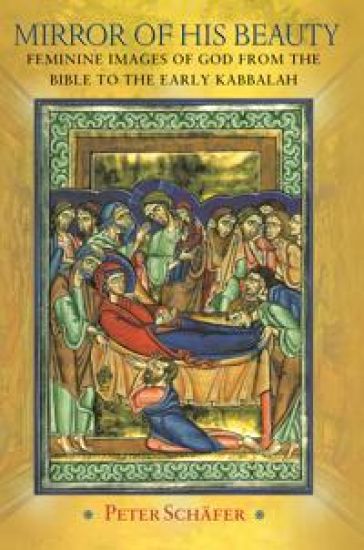
In this beautifully realized study, Peter Schafer investigates the origins of a female manifestation of God in Jewish mysticism. The search itself is a fascinating exploration of the idea of a feminine divinity. And Schafer's surprising but persuasive conclusions yield deeper understanding of the complex but frequently intimate relationship between Christianity and Judaism--and of the development of religious concepts more generally. Toward the end of the twelfth century, a small book titled the Bahir (Light) appeared in Provence. The first document of Judaism's emerging kabbalistic movement, it introduced a completely new view of God, one that included a divine potency that was essentially female. This female divinity was portrayed both as a mediator between Jews and God and as part of the Godhead itself. Examining Judaic history from the biblical Wisdom tradition to the Middle Ages, Schafer finds some precedents for the Kabbalah's feminine divinity. But he cannot account for her forceful appearance in twelfth-century southern France without reference to the immediate Christian environment, particularly the flourishing veneration of the Virgin Mary. Indeed, twelfth-century Jews and Christians were simultaneously rediscovering the feminine as an aspect of the Godhead after having abandoned it in favor of either an abstract, disembodied God or an exclusively male one. In proposing that the medieval cult of Mary--rather than eastern Gnosticism--is the appropriate framework for understanding the feminine elements in Jewish mysticism, Mirror of His Beauty represents a sea change in Kabbalah and Jewish-Christian cultural studies. It shifts our attention from the Byzantine East to the Latin Christian West. And in contrast to histories that treat the development of Judaism and Christianity in isolation, it leads us to a fuller understanding of Jews and Christians living in proximity, aware of each other.
The History of the Jews in the Greco-Roman World
The History of the Jews in the Greco-Roman World examines Judaism in Palestine throughout the Hellenistic period, from Alexander the Great's conquest in 334BC to its capture by the Arabs in AD 636. Under the Greek, Roman and finally Christian supremacy which Hellenism brought, Judaism developed far beyond its biblical origins into a form which was to influence European history from the Middle Ages to the present day. The book focuses particularly on the social, economic and religious concerns of this period, and the political status of the Jews as both active agents and passive victims of history.The author provides a straightforward chronological survey of this important period through analysis and interpretation of the existing sources. With its accessible style and explanation of technical terms, the book provides a useful introduction to students and anybody with an interest in post-biblical Judaism.
The History of the Jews in the Greco-Roman World
The History of the Jews in the Greco-Roman World examines Judaism in Palestine throughout the Hellenistic period, from Alexander the Great's conquest in 334BC to its capture by the Arabs in AD 636. Under the Greek, Roman and finally Christian supremacy which Hellenism brought, Judaism developed far beyond its biblical origins into a form which was to influence European history from the Middle Ages to the present day. The book focuses particularly on the social, economic and religious concerns of this period, and the political status of the Jews as both active agents and passive victims of history.The author provides a straightforward chronological survey of this important period through analysis and interpretation of the existing sources. With its accessible style and explanation of technical terms, the book provides a useful introduction to students and anybody with an interest in post-biblical Judaism.
Europaeische Integration Und Soziale Arbeit
Gegenstand der interdisziplinar angelegten Untersuchung sind die sozialpolitischen Auswirkungen des europaischen Integrationsprozesses auf Soziale Arbeit in Deutschland. Eine Analyse europaischer Sozialpolitik und ihrer Grundlagen ergibt deren wirtschafts- und beschaftigungspolitische Ausrichtung, die zu Verwerfungen und Dilemmata in der deutschen Sozialpolitik und in den sozialen Sicherungs-, Hilfs- und Foerdersystemen fuhrt. Eine Ausnahme bildet die europaische Gleichstellungspolitik, die in ihrer neuen Form des Gender-Mainstreaming-Konzepts in allen anderen Politikbereichen berucksichtigt werden muss. Sie koennte als ein Regulierungs- und Orientierungsmuster fur eine nachhaltige Sozialpolitik dienen, ebenso wie europaische Umweltpolitik mit dem Konzept der nachhaltigen Entwicklung und der Zielsetzung sozialer Integration, sozialer Gerechtigkeit und Sozialvertraglichkeit. Die Akteure Sozialer Arbeit sind daher gehalten, diese europaischen und internationalen Entwicklungen zur Kenntnis zu nehmen, zu analysieren und zu reflektieren, um zu der stattfindenden Neugestaltung des Sozialen professionell und verantwortlich beitragen zu koennen.
Judeophobia

Judeophobia

Peter Schäfer

Harvard University Press
1998
nidottu
Taking a fresh look at what the Greeks and Romans thought about Jews and Judaism, Peter Schäfer locates the origin of anti-Semitism in the ancient world. Judeophobia firmly establishes Hellenistic Egypt as the generating source of anti-Semitism, with roots extending back into Egypt’s pre-Hellenistic history.A pattern of ingrained hostility toward an alien culture emerges when Schäfer surveys an illuminating spectrum of comments on Jews and their religion in Greek and Roman writings, focusing on the topics that most interested the pagan classical world: the exodus or, as it was widely interpreted, expulsion from Egypt; the nature of the Jewish god; food restrictions, in particular abstinence from pork; laws relating to the sabbath; the practice of circumcision; and Jewish proselytism. He then probes key incidents, two fierce outbursts of hostility in Egypt: the destruction of a Jewish temple in Elephantine in 410 B.C.E. and the riots in Alexandria in 38 C.E. Asking what fueled these attacks on Jewish communities, the author discovers deep-seated ethnic resentments. It was from Egypt that hatred of Jews, based on allegations of impiety, xenophobia, and misanthropy, was transported first to Syria-Palestine and then to Rome, where it acquired a new element: fear of this small but distinctive community. To the hatred and fear, ingredients of Christian theology were soon added—a mix all too familiar in Western history.
The History of the Jews in Antiquity

The History of the Jews in Antiquity

Peter Schäfer

Harwood-Academic Publishers
1995
nidottu
First Published in 1995, the main emphasis of this book is on the political history of the Jews in Palestine, where "political" is to be understood not as the mere succession of rulers and battles but as the interaction between political activity and social, economic and religious circumstances. A particular concern is the investigation of social and economic conditions in the history of Palestinian Judaism.
The Hidden and Manifest God

The Hidden and Manifest God

Peter Schäfer

State University of New York Press
1992
pokkari
This book represents the first wide-scale presentation and interpretation of pre-kabbalistic, Jewish mysticism. This is the Hekhalot or Merkavah mysticism. The emphasis is on the conceptions of God, the angels, and man that the texts provide and that are the framework of the Judaic world view in late antiquity and the early Middle Ages.This interpretation is based on the major works of this early Jewish mysticism: Hekhalot Rabbati ("The Greater Palaces"), Hekhalot Zutarti ("The Lesser Palaces"), Ma'aseh Merkavah ("The Working of the Chariot"), Merkavah Rabbah ("The Great Chariot)" and the Third (Hebrew) Book of Enoch. Many quotations from this largely unknown body of esoteric literature are included.The experience of the mystical heroes of this literature moves between the two poles of the heavenly journey-between the ascent of the mystic through the seven palaces to the Throne of Glory and the adjuration, the attempt to invoke God and his angels in order to force them to fulfill man's will. Both are permeated by magic, and the world view of this first stage of Jewish mysticism is thus deeply magical. The circles which formed it were concerned with nothing less than a radical transformation of the world of normative Judaism that for centuries was determined by the Rabbis.
Rivalität zwischen Engeln und Menschen
Die vorliegende Untersuchung geht davon aus, dass abstrakte Kategorienwie die des reinen Gottesbegriffes," der Transzendenz Gottes" oder der Vermeidung von Anthropomorphismen" von aussen an die rabbinischen Texteherangetragen werden und nicht geeignet sind, diese zu erhellen. Denkformen, unter denen eine bestimmte Vorstellung zu subsumieren und von denen hersie zu interpretieren ist, konnen sich nur aus der rabbinischen Literatur selbstergeben. Der Ausgangspunkt der Arbeit war daher die Sammlung und Sichtungsamtlicher Stellen in der rabbinischen Literatur, in denen die Engel erwahntwerden."
Der Bar-Kokhba-Aufstand

Der Bar-Kokhba-Aufstand

Peter Schäfer

Mohr Siebeck
sidottu
The Second Jewish Revolt against the Roman dominion (132-135 CE) considerably changed the political and cultural landscape of Jewish Palestine. Judaea was almost completely devastated, and Jewish life shifted from Judaea to the Galilee. The Roman victory, however, was won at great cost.The last decade has seen some stunning developments in research on the Bar Kokhba War. In particular, recent archaeological findings provide new material for evaluation. This volume is based on a conference which took place in November 2001 at Princeton University and gathers a distinguished array of scholars working at the forefront of research on the Bar Kokhba period. It appraises the state of the subject in light of the present scholarly discussion and evaluates the historical importance of this major event and its repercussions for the subsequent history of the Jews in Roman Palestine. A concluding essay investigates the use of Bar Kokhba's image in modern Israeli culture. Survey of contents: Peter Schäfer: Preface - Peter Schäfer: Bar Kokhba and the Rabbis - Martin Goodman: Trajan and the Origins of the Bar Kokhba War - Yoram Tsafrir: Numismatics and the Foundation of Aelia Capitolina: A Critical Review - Benjamin Isaac: Roman Religious Policy and the Bar Kokhba War - Aharon Oppenheimer: The Ban of Circumcision as a Cause of the Revolt: A Reconsideration - Ra'anan Abusch: Negotiating Difference: Genital Mutilation in Roman Slave Law and the History of the Bar Kokhba Revolt - Hanan Eshel: The Dates Used during the Bar Kokhba Revolt - Menahem Mor: The Geographical Scope of the Bar Kokhba Revolt - Hannah M. Cotton: The Bar Kokhba Revolt and the Documents from the Judaean Desert: Nabataean Participation in the Revolt (P. Yadin 52) - Werner Eck: Hadrian, the Bar Kokhba Revolt, and the Epigraphic Transmission - Glen W. Bowersock: The Tel Shalem Arch and P. Nahal Hever/Seiyal 8 - Amos Kloner and Boaz Zissu: Hiding Complexes in Judaea: An Archaeological and Geographical Update on the Area of the Bar Kokhba Revolt - Yuval Shahar: The Underground Hideouts in Galilee and their Historical Meaning - Yaron Z. Eliav: The Urban Layout of Aelia Capitolina: A New View from the Perspective of the Temple Mount - Yael Zerubavel: Bar Kokhba's Image in Modern Israeli Culture