Kirjojen hintavertailu. Mukana 12 259 897 kirjaa ja 12 kauppaa.

Kirjailija

Peter Scott

Kirjat ja teokset yhdessä paikassa: 37 kirjaa, julkaisuja vuosilta 1994-2024, suosituimpien joukossa Kaleidopops - Ocean. Vertaile teosten hintoja ja tarkista saatavuus suomalaisista kirjakaupoista.

37 kirjaa

Kirjojen julkaisuhaarukka 1994-2024.

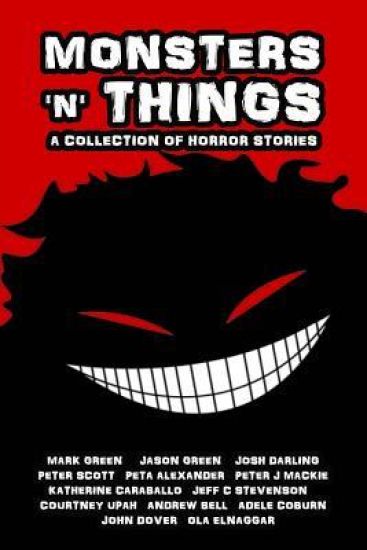
Monsters 'N' Things

Monsters 'N' Things

Peter Scott; Peta Alexander; Peter J. MacKie

Createspace Independent Publishing Platform
2017
nidottu
The second Halloween release of the 'N' Things Anthologies, written by authors from around the world, professional and amateur alike. Delight in the twisted darkness of our monster themed horror collection. With contributions by the following authors: 1) Dingir and the Abomination by Mark Green 2) Agony Host by Jason Green 3) Collector's Doll by Peta Alexander 4) Binds by Courtney Upah 5) The Cellular Family by Josh Darling 6) New Years Day by Andrew Bell 7) Kiss Chase by Adele Coburn 8) Special Delivery by John Dover 9) That's how I saw him by Peter J Mackie 10) Pumpkin Skin Man by Ola Elnaggar 11) Mister Malone and his Marvellous Monster Milkshakes by Peter Scott 12) Vampire Anonymous by Katherine Caraballo
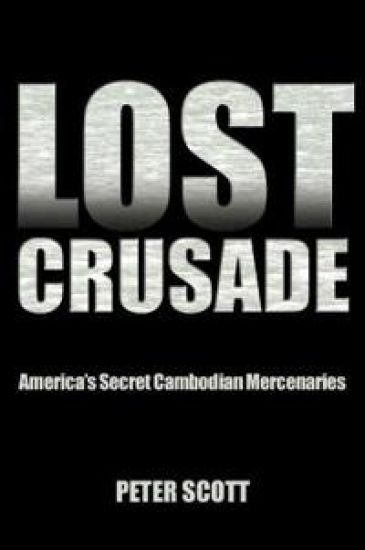
Lost Crusade

Lost Crusade

Peter Scott

Naval Institute Press
2014
nidottu
When Peter Scott began a 1968 tour in Vietnam advising ethnic Cambodian Khmer Krom paramilitaries, they shared only an earnest desire to check the spread of communism. It took nearly thirty years and a chance reunion for Scott to realize just how much they had become a part of him. This fascinating chronicle of Scott’s experiences with the secret army of brave, disciplined warriors is by far the most moving and richly detailed account ever published of the deep bonds forged in war between Americans and our Asian allies.Successfully blending intense combat narrative and stirring emotional drama, Scott vividly captures both the unique village culture of a little-known, highly spiritual people and their complex relationship with Special Forces soldiers, who found it increasingly difficult to match their charges’ commitment to the costly conflict. With a novelist’s powers of description and reflection and a professional soldier’s keen insight and analysis, Scott raises the standard for literature about the Vietnam War with this searing portrait of promise and betrayal.Building on his experiences as a Phoenix Program adviser near the Cambodian border, extensive interviews with Khmer Krom survivors, hundreds of hours of research in government archives, and requests for Freedom of Information Act disclosures, Scott seamlessly reconstructs the six-thousand-strong mercenary force’s final crusade against communism, beginning in their ancestral home in 1970 and ending on the U.S. West Coast in 1995. Such a hauntingly evocative and highly readable book will both entertain and shock, and it is assured of a place among the classics on Vietnam.
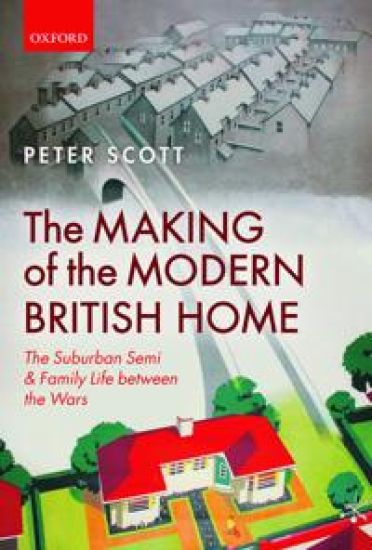
The Making of the Modern British Home

The Making of the Modern British Home

Peter Scott

Oxford University Press
2013
sidottu
The Making of the Modern British Home explores the impact of the modern suburban semi-detached house on British family life during the 1920s and 1930s - focusing primarily on working-class households who moved from cramped inner-urban accommodation to new suburban council or owner-occupied housing estates. Migration to suburbia is shown to have initiated a dramatic transformation in lifestyles - from a `traditional' working-class mode of living, based around long-established tightly-knit urban communities, to a recognisably `modern' mode, centred around the home, the nuclear family, and building a better future for the next generation. This process had far-reaching impacts on family life, entailing a change in household priorities to meet the higher costs of suburban living, which in turn impacted on many aspects of household behaviour, including family size. This volume also constitutes a general history of the development of both owner-occupied and municipal suburban housing estates in interwar Britain, including the evolution of housing policy; the housing development process; housing and estate design, lay-outs, and architectural features; marketing owner-occupation and consumer durables to a mass market; furnishing the new suburban home; making ends meet; suburban gardens; social filtering and conflict on the new estates; and problems of 'mis-selling' and 'Jerry building'. Peter Scott integrates the social history of the interwar suburbs with their economic, business, marketing, and architectural/planning histories, demonstrating how these elements interacted to produce a new model of working-class lifestyles and 'respectability' which marked a fundamental break with pre-1914 working-class urban communities.
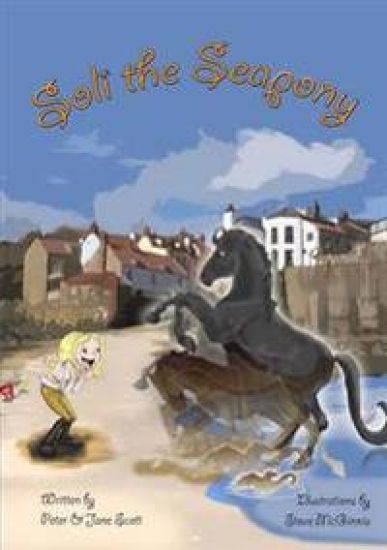
Soli The Seapony

Soli The Seapony

Peter Scott; Jane Scott

Lulu.com
2012
nidottu
Everyone knows about seahorses, but baby seahorses are called fry. Our heroine is too big to be a fry, but she hasn't grown into a full size seahorse yet, so Soli likes to be called a Seapony. After being caught in a strong tide, she finds herself on the shore, in a beautiful Yorkshire coastal village, in the North of England, An amazing transformation occurs, she discovers a new friend, and their adventures begin. The first of a series of books and adventures, 'Soli the Seapony' introduces the main characters and locations. As the story develops, amazing discoveries are made, unusual things happen, and our friends become true, unsung heroes.
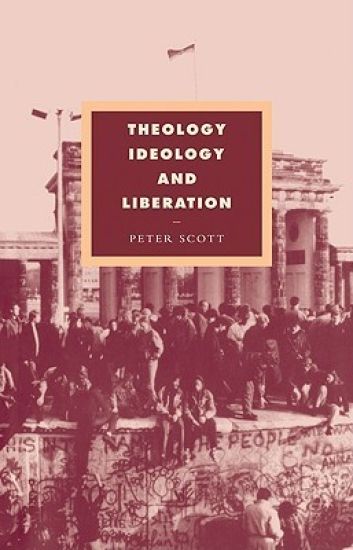
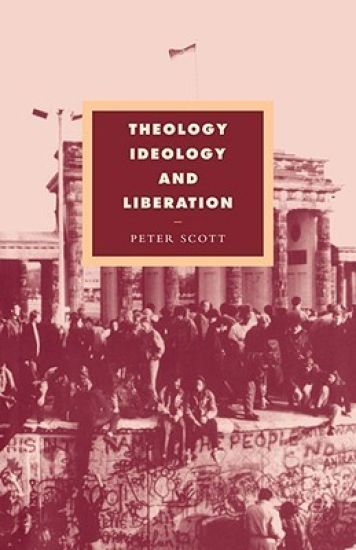
Theology, Ideology and Liberation

Theology, Ideology and Liberation

Peter Scott

Cambridge University Press
2008
pokkari
How is theology liberating? In the context of a post-Gorbachev world, where many demand freedom which the Western powers seem ill-equipped to deliver, is it even possible to envisage a liberative theology? Taking as his starting point the Marxist complaint that Christianity is ideological, Peter Scott argues that it is not enough for Christian theology to talk about liberation: it must be liberative. Stressing with feminist and liberation theologies the embodied, contextual nature of theology, the constructive proposal made here locates God's liberating abundance toward society in an interpretation of resurrection as social. Only in this way, in the author's view, can a trinitarian Christian account of liberation be adequately grounded. The book will be of interest to all those who wish to know if theology may speak truthfully about the transformation of society: it offers the shape of a liberative theology pointing towards social freedom.
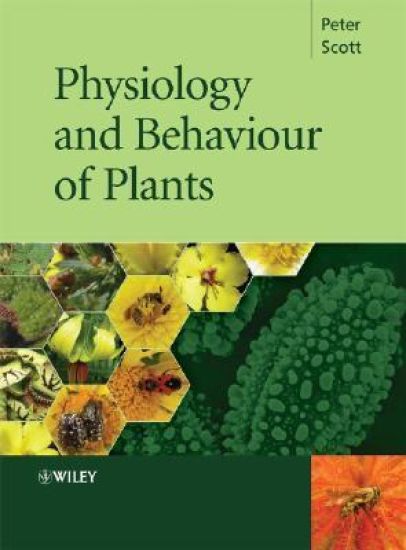
Physiology and Behaviour of Plants

Physiology and Behaviour of Plants

Peter Scott

John Wiley Sons Inc
2008
nidottu
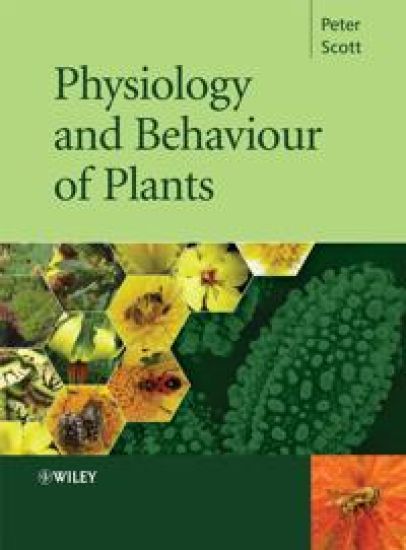
Physiology and Behaviour of Plants looks at plants and how they sense and respond to their environment. It takes the traditional plant physiology book into a new dimension by demonstrating how the biochemical observations underlie the behaviour of the plant. In many ways the book parallels courses studied at university on animal physiology and behaviour. The plant has to meet the same challenges as an animal to survive, but overcomes these challenges in very different ways. Students learn to think of plants not only as dynamic organisms, but aggressive, territorial organisms capable of long-range communication. Hallmark features include: Based on a successful course that the author has run for several years at Sussex University, UKRelates plant biochemistry to plant functionPrinted in four colour throughoutIncludes a wealth of illustrations and photographs that engages the reader's attention and reinforce key concepts explored within the textPresents material in a modern 'topic' based approach, with many relevant and exciting examples to inspire the studentAn accompanying web site will include teaching supplements This innovative textbook is the ultimate resource for all students in biology, horticulture, forestry and agriculture. Companion website for this title is available at www.wiley.com/go/scott/plants
Physiology and Behaviour of Plants

Physiology and Behaviour of Plants

Peter Scott

John Wiley Sons Inc
2008
sidottu
Physiology and Behaviour of Plants looks at plants and how they sense and respond to their environment. It takes the traditional plant physiology book into a new dimension by demonstrating how the biochemical observations underlie the behaviour of the plant. In many ways the book parallels courses studied at university on animal physiology and behaviour. The plant has to meet the same challenges as an animal to survive, but overcomes these challenges in very different ways. Students learn to think of plants not only as dynamic organisms, but aggressive, territorial organisms capable of long-range communication. Hallmark features include: Based on a successful course that the author has run for several years at Sussex University, UKRelates plant biochemistry to plant functionPrinted in four colour throughoutIncludes a wealth of illustrations and photographs that engages the reader's attention and reinforce key concepts explored within the textPresents material in a modern 'topic' based approach, with many relevant and exciting examples to inspire the studentAn accompanying web site will include teaching supplements This innovative textbook is the ultimate resource for all students in biology, horticulture, forestry and agriculture. Companion website for this title is available at www.wiley.com/go/scott/plants
Geography and Retailing

Geography and Retailing

Peter Scott

AldineTransaction
2007
nidottu
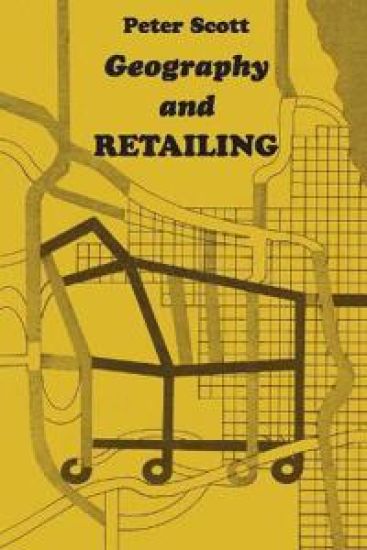
An important contribution to our understanding of the distribution of retail activities, particularly within cities, this book provides a critical review of the literature on the subject. It points out the major general propositions concerning retailing from the geographical point of view, and identifies key research problems, which need to be examined in order to push forward the frontiers of this sub field of economic geography. It presents a major critique of the central-place model, which has come to hold an important place in the methodology of economic geography, and clearly and decisively shows the model to be static, deterministic, retrospective and of little value for predictive purposes.
A Political Theology of Nature

A Political Theology of Nature

Peter Scott

Cambridge University Press
2003
pokkari
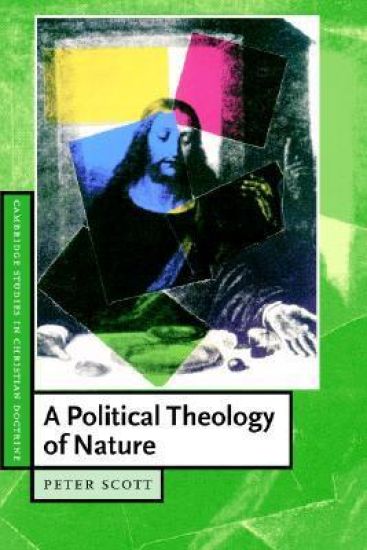
This book argues that the modern separation of humanity from nature can be traced to the displacement of the triune God. Locating the source of our current ecological crisis in this separation, Peter Scott argues that it can only be healed within theology, through a revival of a Trinitarian doctrine of creation interacting with political philosophies of ecology. Drawing insights from deep ecology, ecofeminism, and social and socialist ecologies, Scott proposes a common realm of God, nature and humanity. Both Trinitarian and political, the theology of this common realm is worked out by reference to Christ and Spirit. Christ's resurrection is presented as the liberation and renewal of ecological relations in nature and society, the movement of the Holy Spirit is understood as the renewal of fellowship between humanity and nature through ecological democracy, and the Eucharist is proposed as the principal political resource Christianity offers for an ecological age.
A Political Theology of Nature

A Political Theology of Nature

Peter Scott

Cambridge University Press
2003
sidottu
This book argues that the modern separation of humanity from nature can be traced to the displacement of the triune God. Locating the source of our current ecological crisis in this separation, Peter Scott argues that it can only be healed within theology, through a revival of a Trinitarian doctrine of creation interacting with political philosophies of ecology. Drawing insights from deep ecology, ecofeminism, and social and socialist ecologies, Scott proposes a common realm of God, nature and humanity. Both Trinitarian and political, the theology of this common realm is worked out by reference to Christ and Spirit. Christ's resurrection is presented as the liberation and renewal of ecological relations in nature and society, the movement of the Holy Spirit is understood as the renewal of fellowship between humanity and nature through ecological democracy, and the Eucharist is proposed as the principal political resource Christianity offers for an ecological age.
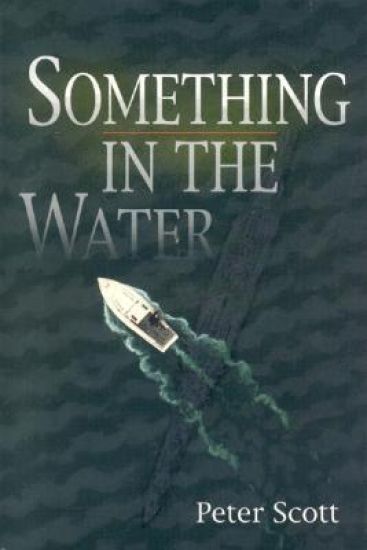
Something in the Water

Something in the Water

Peter Scott

Down East Books,U.S.
2000
pokkari
Maine lobster fisherman Amos Coombs knows that German U-boats are hiding out along the coast by day and sinking American merchant vessels at night. Until one terrifying day, however, he is unaware that the enemy is quite literally in his backyard or that the presence of a Nazi submarine is about to change his life and those of his fellow islanders forever. More than just a war novel, this excitingly original novel presents a vivid portrayal of a community and a way of life.
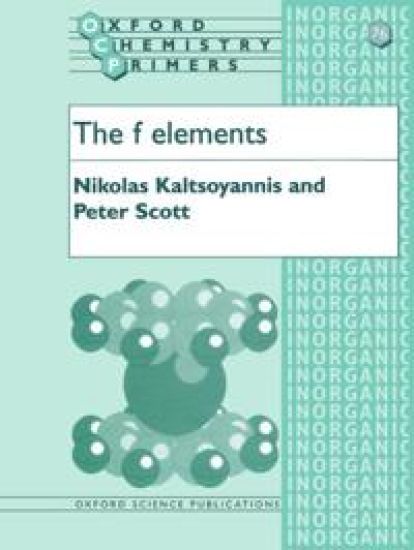
The f Elements

The f Elements

Nikolas Kaltsoyannis; Peter Scott

Oxford University Press
1999
nidottu
The lanthanides and actinides (the f elements) are rarely studied in detail by chemistry undergraduates. More often they appear as an afterthought in bonding, spectroscopy, magnetism, coordination chemistry, and organometallics courses. This is largely because of a lack of an accessible text treating the chemistry of these elements in one cover. Moreover, the placement of lanthanides and actinides in the closing pages of standard inorganic chemistry text books serves to marginalise these elements further. The f elements has therefore been written to fill a gap in the undergraduate chemistry textbook market. It covers much of the fundamental chemistry of the lanthanide and actinide elements, including coordination chemistry, solid state compounds, organometallic chemistry, electronic spectroscopy, and magnetism. Many comparisons are made between the chemistry of the lanthanides and actinides and that of the transition elements, which is generally much more familiar to undergraduate chemistry students. The book uses the chemistry of the f elements as a vehicle for the communication of several important chemical concepts that are not usually discussed in detail in undergraduate courses, for example the chemical consequences of relativity and the lanthanide and actinide contractions. Many important modern applications of f element chemistry, e.g. the use of actinides in nuclear power generation and of the lanthanides in magnetic resonance imaging and catalytic converters in motor vehicle exhausts, are also discussed in depth.
The Meanings Of Mass Higher Education

The Meanings Of Mass Higher Education

Peter Scott

Open University Press
1995
nidottu
This book is the first systematic attempt to analyse the growth of mass higher education in a specifically British context, while seeking to develop more theoretical perspectives on this transformation of elite university systems into open post-secondary education systems. It is divided into three main sections. The first examines the evolution of British higher education and the development of universities and other institutions. The second explores the political, social and economic context within which mass systems are developing. What are the links between post-industrial society, a post-Fordist economy and the mass university? The third section discusses the links between massification and wider currents in intellectual and scientific culture.
Theology, Ideology and Liberation

Theology, Ideology and Liberation

Peter Scott

Cambridge University Press
1994
sidottu
How is theology liberating? In the context of a post-Gorbachev world, where many demand freedom which the Western powers seem ill-equipped to deliver, is it even possible to envisage a liberative theology? Taking as his starting point the Marxist complaint that Christianity is ideological, Peter Scott argues that it is not enough for Christian theology to talk about liberation: it must be liberative. Stressing with feminist and liberation theologies the embodied, contextual nature of theology, the constructive proposal made here locates God’s liberating abundance toward society in an interpretation of resurrection as social. Only in this way, in the author’s view, can a trinitarian Christian account of liberation be adequately grounded. The book will be of interest to all those who wish to know if theology may speak truthfully about the transformation of society: it offers the shape of a liberative theology pointing towards social freedom.
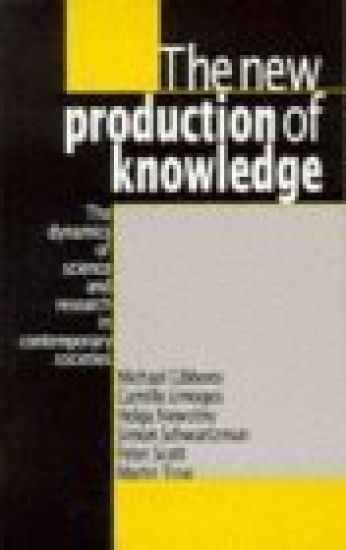
The New Production of Knowledge

The New Production of Knowledge

Michael Gibbons; Camille Limoges; Helga Nowotny; Simon Schwartzman; Peter Scott; Martin Trow

SAGE Publications Ltd
1994
nidottu
In this provocative and broad-ranging work, the authors argue that the ways in which knowledge - scientific, social and cultural - is produced are undergoing fundamental changes at the end of the twentieth century. They claim that these changes mark a distinct shift into a new mode of knowledge production which is replacing or reforming established institutions, disciplines, practices and policies. Identifying features of the new mode of knowledge production - reflexivity, transdisciplinarity, heterogeneity - the authors show how these features connect with the changing role of knowledge in social relations. While the knowledge produced by research and development in science and technology is accorded central concern, the authors also outline the changing dimensions of social scientific and humanities knowledge and the relations between the production of knowledge and its dissemination through education.