Kirjojen hintavertailu. Mukana 12 343 262 kirjaa ja 12 kauppaa.

Kirjailija

Peter Selg

Kirjat ja teokset yhdessä paikassa: 88 kirjaa, julkaisuja vuosilta 2004-2026, suosituimpien joukossa Selg, P: Die anthroposophische Weltgesellschaft. Vertaile teosten hintoja ja tarkista saatavuus suomalaisista kirjakaupoista.

88 kirjaa

Kirjojen julkaisuhaarukka 2004-2026.

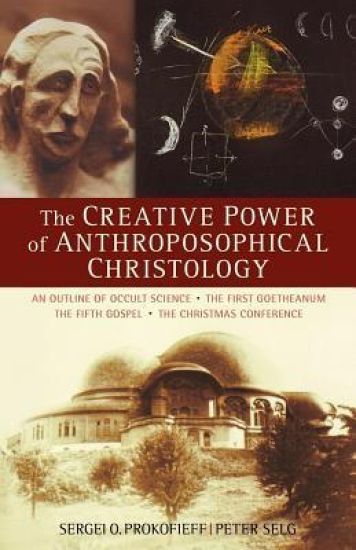
The Creative Power of Anthroposophical Christology

The Creative Power of Anthroposophical Christology

Sergei O. Prokofieff; Peter Selg

SteinerBooks, Inc
2011
nidottu
Sergei O. Prokofieff and Peter Selg, two leading authorities and spiritual researchers into the life and work of Rudolf Steiner, gave a series of conferences from 2009 to 2010 on the Christological foundations of Anthroposophy. Their aim was to show the power of anthroposophic Christology. Thus, they focused on key turning points in Steiner's exposition--his major work, An Outline of Esoteric Science; the first Goetheanum; the reappearance of Christ in the etheric realm and its relationship to Rudolf Steiner's lectures on the Fifth Gospel; and the Christmas Conference of 1923/1924 and the founding of the New Mysteries. The lectures from these conferences, published as four booklets in German, are collected here in a single volume. The Creative Power of Anthroposophical Christology will prove to be an important work for anyone interested in the true meaning and depth of Rudolf Steiner's experience and understanding of Christ's act on Golgotha and his continuing presence among us and within Anthroposophy.
The Agriculture Course, Koberwitz, Whitsun 1924

The Agriculture Course, Koberwitz, Whitsun 1924

Peter Selg

Temple Lodge Publishing
2010
nidottu
Biodynamic agriculture, which has consistently increased in popularity over the years, was born from a single course of eight lectures delivered by Rudolf Steiner in Koberwitz (now in Poland) in June 1924. In The Agriculture Course Peter Selg presents an unprecedented study of the context within which the lectures took place, conveying a tangible sense of the celebratory mood and atmosphere of those Whitsun events. He highlights Steiner's intentions for the course - as well as the parallel lectures he gave in Breslau - by drawing widely on the available literature and numerous archive materials. Recognizing that chemical manipulation of agriculture was neither desirable nor sustainable, Rudolf Steiner helped launch an agricultural movement with a truly pioneering outlook. As Selg describes, Steiner saw that '...what was needed instead was new, conscious insight into life forces and laws, into the nature of organisms, into the diverse realms of nature, and the determining factors of both earth and cosmos that influence them.' The vivid picture painted here reveals the importance Rudolf Steiner placed on launching this work, and the extent to which his initiative offered an answer to the emerging forces of cultural and political destruction that would lead to the Second World War.
The Figure of Christ

The Figure of Christ

Peter Selg

Temple Lodge Publishing
2009
nidottu
Rudolf Steiner referred to the wooden 'group' sculpture of the figure of Christ surrounded by adversary spiritual beings as the centre of the first Goetheanum. Steiner even told the architect of the second Goetheanum that the sculpture he made with Edith Maryon should occupy the same central position 'as in the first building'. What was Rudolf Steiner's essential aim for the sculptural group within the Mystery building he conceived, and why did he regard it as the crown of the building? What were Steiner's intentions - and, specifically, what were the spiritual aims behind this remarkable depiction of Christ? Rudolf Steiner described the core task of anthroposophical spiritual science as preparing for Christ's reappearance in the etheric realm. The Christ he sculpted was not the possession of a specific community with a religious world view, but rather a being active throughout humanity, and thus 'a figure of the future'. In this focused and powerful short book, Peter Selg engages with these highly-contemporary issues, providing thoughtful insights and answers that point to mysteries of the future involving humanity's further development and the transforming of evil.
Koberwitz 1924

Koberwitz 1924

Peter Selg

Steiner Verlag, Dornach
2009
nidottu
Erstmals wird hier der Landwirtschaftliche Kurs im Kontext seiner Entstehung und Durchführung betrachtet. Es zeigt sich, welche Bedeutung für Rudolf Steiner die Inaugurierung einer neuen Landwirtschaft besass und in welchem Ausmass die Initiative zur Pfingstzeit des Jahres 1924 als Antwort auf die sich zunehmend abzeichnenden Kräfte der Zerstörung zu verstehen war.
Ita Wegman and Karl König

Ita Wegman and Karl König

Peter Selg; Karl König; Ita Wegman

Floris Books
2008
nidottu
Ita Wegman, born in 1876 to a Dutch family living in Indonesia, first met Rudolf Steiner in Berlin in 1902 when she was 26 years old. She studied medicine at the University of Zurich and in 1917, following Steiner's indications, developed a treatment for cancer using mistletoe. In 1921 she founded the first anthroposophical medical clinic, in Arlesheim, Switzerland, followed in 1922 by the Sonnenhof home for children with special needs.Karl König first met Wegman in 1927, and she quickly recognized his great potential, as well as his weaknesses. She invited him to work at the Arlesheim clinic as her assistant, and encouraged and advised him in his medical work.This book includes the complete correspondence between König and Wegman.
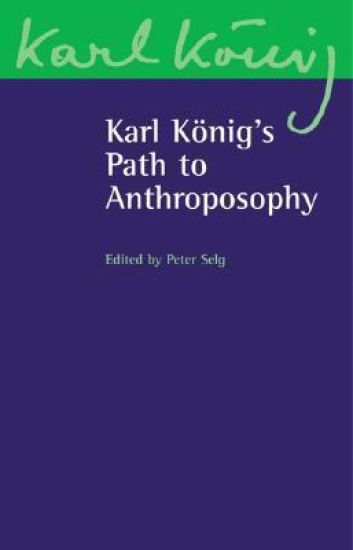
Karl König's Path into Anthroposophy

Karl König's Path into Anthroposophy

Peter Selg; Karl König

Floris Books
2008
nidottu
This book follows Karl König's spiritual journey from his early years to the end of his life. Through the words of his diaries, in which his battles with health and his impatient temperament are recorded with merciless honesty, we can follow his inner path that led to profound insights into the nature of children with special needs. His personal wrestlings and innate spirituality laid the foundation for his work in the Camphill Schools and Villages.Includes facsimile reproductions of some of König's original diary pages.About the Karl König Archive: Karl König, the founder of Camphill, was a prolific lecturer and writer on a wide range of subjects from anthroposophy and Christology through social questions and curative education to science and history. The Karl König Archive are working on a programme of publishing these works over the coming years.
Rainer Maria Rilke - Franz Kafka

Rainer Maria Rilke - Franz Kafka

Peter Selg

Futurum Verlag
2007
sidottu
Rainer Maria Rilke und Franz Kafka blieben von den Schrecken des Ersten Weltkriegs nahezu unberührt, und doch spiegelte ihr individuelles Schicksal die Tragik des beginnenden 20. Jahrhunderts in Form einer tödlich verlaufenden Krankheit. Während ihre Hoffnung auf körperliche Genesung zunehmend schwand, wurde die Krankheitserfahrung von beiden als existenzielle Aufforderung begriffen, bei weitgehender Ablehnung medizinisch-therapeutischer Hilfsmittel innere Heilungs- und Verwandlungskräfte zu aktivieren. In seinen biographischen Betrachtungen verbindet Peter Selg den jeweiligen Lebensweg und den individuellen Krankheitsverlauf - von Kafka als ?Sichtbarwerden der verborgenen Wunden? erlebt - zu einem Wesensbild beider Künstler, das überraschende Züge und unbekannte Schattierungen hervortreten lässt. Selbsterfahrungen und -zeugnisse von Rilke und Kafka an entscheidenden Wendepunkten ihres Lebens dokumentieren den Umgang mit biografischen Hindernissen, Krisen und Gefahren, der auf jeweils eigene Weise die geistigen Konturen ihrer Persönlichkeit schärfte und in ihrem Werk einen schöpferischen Ausdruck fand.