Kirjojen hintavertailu. Mukana 12 595 353 kirjaa ja 12 kauppaa.

Kirjailija

Peter Sloterdijk

Kirjat ja teokset yhdessä paikassa: 99 kirjaa, julkaisuja vuosilta 1988-2026, suosituimpien joukossa Ny Jord 3-4. Vertaile teosten hintoja ja tarkista saatavuus suomalaisista kirjakaupoista.

99 kirjaa

Kirjojen julkaisuhaarukka 1988-2026.

Ny Jord 3-4

Ny Jord 3-4

Andreas Malm; Margaret Mead; Emil Leth Meilvang; Peter Handke; Rune Engelbreht Larsen; Christoffer Basse Eriksen; Simone Weil; Anders Dunker; Francisco Goya; Liv Sejrbo Lidegaard; Arno Schmidt; Phillip Martinussen; Walt Whitman; Emil Bønnelycke; Signe Gjessing; Daniel Flendt Dreesen; Gaston Bachelard; Jørn H. Sværen; Michael Stoltze; Lao Zi; Ursula K. Le Guin; Peter Sloterdijk; Oliver Bak; Anna Marie Ortese; Edith Södergran; August Strindberg; C.Y. Frostholm; Lea Marie Løppenthin; Max Klinger; Charles Sanders Peirce

Forlaget Virkelig
2020
nidottu
Ny Jord – Tidsskrift for naturkritik er et multidisciplinært tidsskrift, der orienterer sig på tværs af århundreder og landegrænser og bringer videnskab, litteratur og kunst side om side i ønsket om at bidrage til en kvalificeret samtale om naturen i en tid, hvor vores forestillinger og idéer om den ændres markant.
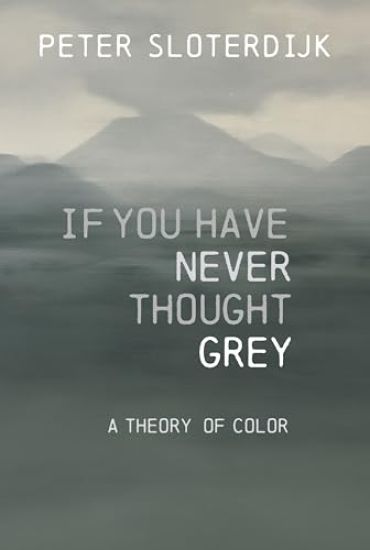
If You Have Never Thought Gray

If You Have Never Thought Gray

Peter Sloterdijk

JOHN WILEY AND SONS LTD
2025
sidottu
“You’re not a painter if you haven’t painted gray”, declared Paul Cézanne. The same could be said of philosophers: you’re not a philosopher if you have never thought gray. This simple four-letter word signifies much more than a quasi-neutral color lying between black and white: we use the same word to describe moods, November skies, the hair of the elderly, the withered features of faces, dusty shelves, faceless bureaucracies, dreary politicians and hundreds of other things. This plain, unassumiing word conceals a multitude of thoughts that we seldom pause to consider. In this exceptionally original book, Peter Sloterdijk follows the grey thread through the history of philosophy, art, literature and politics, enabling us to see familiar things in new ways and highlighting features of our lives that would otherwise remain unseen. Beginning with Plato’s allegory of the cave which introduced the concept of gray into thought, Sloterdijk unfolds a chiaroscuro narrative which recognizes the power of grey as a metaphor for the indefinite, the indifferent, the ordinary, the intermediate and the neutralizing. We see the invention of photography and monochrome’s journey through modern art – from Malevich’s Black Square to Richter’s grey panel paintings – in a new light, and we see modern states and modern politics as full of grey zones, from the hidden spheres of the security services to the extraterritorial spaces that harbor illegal activities like money laundering and the drug trade. A work of brilliance by one of the most creative philosophers writing today, If You Have Never Thought Gray will appeal to a wide readership interested in philosophy, art and politics, and to students and academics in philosophy, visual arts and the humanities generally.
If You Have Never Thought Gray

If You Have Never Thought Gray

Peter Sloterdijk

JOHN WILEY AND SONS LTD
2025
nidottu
“You’re not a painter if you haven’t painted gray”, declared Paul Cézanne. The same could be said of philosophers: you’re not a philosopher if you have never thought gray. This simple four-letter word signifies much more than a quasi-neutral color lying between black and white: we use the same word to describe moods, November skies, the hair of the elderly, the withered features of faces, dusty shelves, faceless bureaucracies, dreary politicians and hundreds of other things. This plain, unassumiing word conceals a multitude of thoughts that we seldom pause to consider. In this exceptionally original book, Peter Sloterdijk follows the grey thread through the history of philosophy, art, literature and politics, enabling us to see familiar things in new ways and highlighting features of our lives that would otherwise remain unseen. Beginning with Plato’s allegory of the cave which introduced the concept of gray into thought, Sloterdijk unfolds a chiaroscuro narrative which recognizes the power of grey as a metaphor for the indefinite, the indifferent, the ordinary, the intermediate and the neutralizing. We see the invention of photography and monochrome’s journey through modern art – from Malevich’s Black Square to Richter’s grey panel paintings – in a new light, and we see modern states and modern politics as full of grey zones, from the hidden spheres of the security services to the extraterritorial spaces that harbor illegal activities like money laundering and the drug trade. A work of brilliance by one of the most creative philosophers writing today, If You Have Never Thought Gray will appeal to a wide readership interested in philosophy, art and politics, and to students and academics in philosophy, visual arts and the humanities generally.
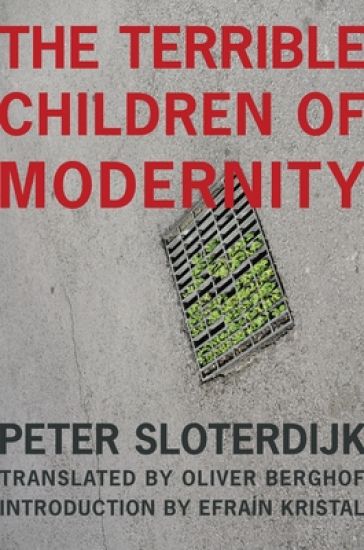
The Terrible Children of Modernity

The Terrible Children of Modernity

Peter Sloterdijk

Columbia University Press
2025
sidottu
Peter Sloterdijk is among the most acclaimed and widely read philosophers of the past half-century. Called “Germany’s most controversial thinker” by the New Yorker, he has challenged and provoked readers worldwide with extraordinarily ambitious and wide-ranging works of philosophical and cultural critique. In The Terrible Children of Modernity, Sloterdijk offers a magisterial and profound investigation into the vicissitudes of historical change and the nature of modernity.For Sloterdijk, modernity is defined by its need to break with the past. Moderns are perpetual rebels who seek to sever the ties of tradition and forms of inheritance that bind generations and eras together. With deep philosophical, historical, and literary range, he traces this antigenealogical experiment from the French Revolution onward, from Madame de Pompadour and Napoleon through Nietzsche, Marx, Wagner, the Dadaists, and Deleuze. Acutely aware of the destructive potential of cultural discontinuities, Sloterdijk is no less critical of the “fathers” who condemn change than the “terrible children” who seek a drastic rupture with their predecessors. Equally concerned with the grand sweep of history and our current predicaments, he instead calls for new ways to live together in the intersubjectivity of the human condition. Incisive and daring, breathtaking in its scope, this account of youthful rebellion against tradition asks us to reimagine the ethics of genealogy.
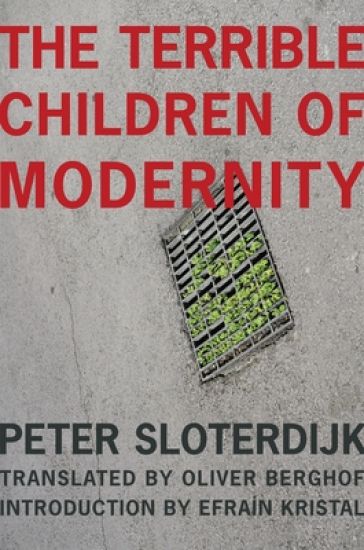
The Terrible Children of Modernity

The Terrible Children of Modernity

Peter Sloterdijk

Columbia University Press
2025
pokkari
Peter Sloterdijk is among the most acclaimed and widely read philosophers of the past half-century. Called “Germany’s most controversial thinker” by the New Yorker, he has challenged and provoked readers worldwide with extraordinarily ambitious and wide-ranging works of philosophical and cultural critique. In The Terrible Children of Modernity, Sloterdijk offers a magisterial and profound investigation into the vicissitudes of historical change and the nature of modernity.For Sloterdijk, modernity is defined by its need to break with the past. Moderns are perpetual rebels who seek to sever the ties of tradition and forms of inheritance that bind generations and eras together. With deep philosophical, historical, and literary range, he traces this antigenealogical experiment from the French Revolution onward, from Madame de Pompadour and Napoleon through Nietzsche, Marx, Wagner, the Dadaists, and Deleuze. Acutely aware of the destructive potential of cultural discontinuities, Sloterdijk is no less critical of the “fathers” who condemn change than the “terrible children” who seek a drastic rupture with their predecessors. Equally concerned with the grand sweep of history and our current predicaments, he instead calls for new ways to live together in the intersubjectivity of the human condition. Incisive and daring, breathtaking in its scope, this account of youthful rebellion against tradition asks us to reimagine the ethics of genealogy.
Prometeus' anger

Prometeus' anger

Peter Sloterdijk; Anders Dunker

Cappelen Damm akademisk
2025
nidottu
Den mytologiske titanen Prometeus stjal ilden fra de greske gudene og ga den til menneskene. Som menneskets kanskje eldste teknologi har ilden hjulpet oss å overleve, mestre våre naturomgivelser og forbedre våre liv. I dag har vår bruk av ild, i form av fossile brennstoffer, løpt løpsk, påpeker den tyske filosofen Peter Sloterdijk i dette essayet. Menneskene er i ferd med – både direkte og indirekte – å sette jorden i brann. Dersom Prometeus hadde sett nåtidens panorama av branner, bomber og overoppheting, ville han angret på sin gave.Dette er premisset for Sloterdijks essay, som i tillegg til å forbinde mytologi og miljøhistorie også trekker inn idéhistoriske perspektiver fra blant annet Karl Marx, Henri de Saint-Simon, Bruno Latour og Andreas Malm. Teksten munner ut i en rikholdig diskusjon av vår tids energipolitikk, der forfatteren går i dialog med nevnte tenkere, og kommer med provoserende innspill i diskusjonen av energipolitikkens fremtid. I sin karakteristiske syrlig-satirisk tone tegner Sloterdijk et tvetydig bilde av forholdet mellom frihet, luksusforbruk og fossile brennstoffer i vårt senmoderne samfunn, og drøfter klimakrisens historiske røtter og dypere kulturelle betydning.I norsk sammenheng er bokens ledemotiv svært aktuelt. Det norske oljeeventyret, som lenge har vært en nasjonsbyggende heltefortelling, slår sprekker. Er vi rede til å erkjenne i hvilken grad vår stadig mer effektive beherskelse av brennbare urtidsstoffer er kommet ut av kontroll? Og hvordan fossilbrennstoffene, som så langt har garantert velstand og velferd, i det lange løp vil få helt motsatte virkninger?Motsatsen til menneskehetens eksplosive tilbøyelighet til forbrenning, må ifølge Sloterdijk være en form for teknologisk og kulturell «energipasifisme». Spørsmålet om hva en slik ansvarlig energikultur skal innebære, er ifølge forfatteren en tankeoppgave som bare så vidt er påbegynt.Prometeus’ anger – fra ildens gave til global brannstifting er basert på et foredrag Peter Sloterdijk holdt i Lucerne i 2022. Oversettelsen er ved Anders Dunker, som også har skrevet bokens etterord. I den nye rekken av Cappelens upopulære skrifter kommer Prometeus’ anger som nummer 89.
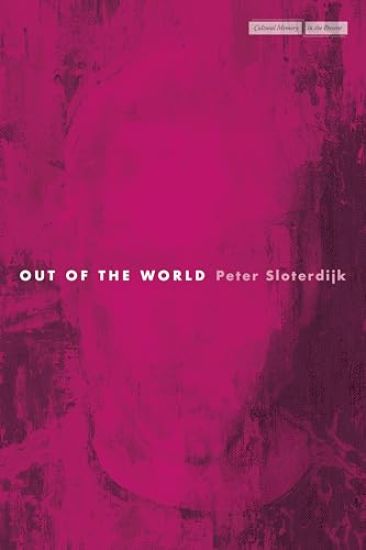
Out of the World

Out of the World

Peter Sloterdijk

STANFORD UNIVERSITY PRESS
2024
pokkari
In this essential early work, the preeminent European philosopher Peter Sloterdijk offers a cross-cultural and transdisciplinary meditation on humanity's tendency to refuse the world. Developing the first seeds of his anthropotechnics, Sloterdijk theorizes consciousness as a medium, tuned and retuned over the course of technological and social history. His subject here is the "world-alien" (Weltfremdheit) in man that was formerly institutionalized in religions, but is increasingly dealt with in modern times through practices of psychotherapy. Originally written in 1993, this almost clairvoyant work examines how humans seek escape from the world in cross-cultural and historical context, up to the mania and world-escapism of our cybernetic network culture. Chapters delve into artificial habitats and forms of intoxication, from early Christian desert monks to pharmaco-theology through psychedelics. In classic form, Sloterdijk recalibrates and reinvents concepts from the ancient Greeks to Heidegger to develop an astonishingly contemporary philosophical anthropology.
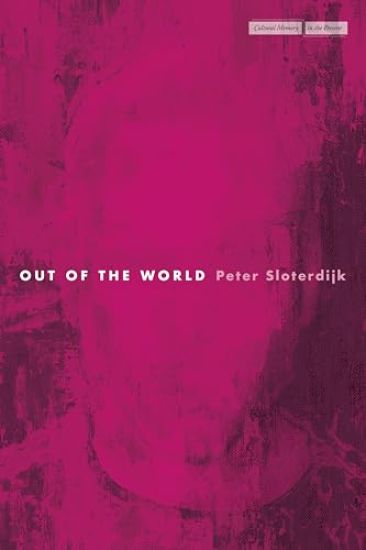
Out of the World

Out of the World

Peter Sloterdijk

STANFORD UNIVERSITY PRESS
2024
sidottu
In this essential early work, the preeminent European philosopher Peter Sloterdijk offers a cross-cultural and transdisciplinary meditation on humanity's tendency to refuse the world. Developing the first seeds of his anthropotechnics, Sloterdijk theorizes consciousness as a medium, tuned and retuned over the course of technological and social history. His subject here is the "world-alien" (Weltfremdheit) in man that was formerly institutionalized in religions, but is increasingly dealt with in modern times through practices of psychotherapy. Originally written in 1993, this almost clairvoyant work examines how humans seek escape from the world in cross-cultural and historical context, up to the mania and world-escapism of our cybernetic network culture. Chapters delve into artificial habitats and forms of intoxication, from early Christian desert monks to pharmaco-theology through psychedelics. In classic form, Sloterdijk recalibrates and reinvents concepts from the ancient Greeks to Heidegger to develop an astonishingly contemporary philosophical anthropology.
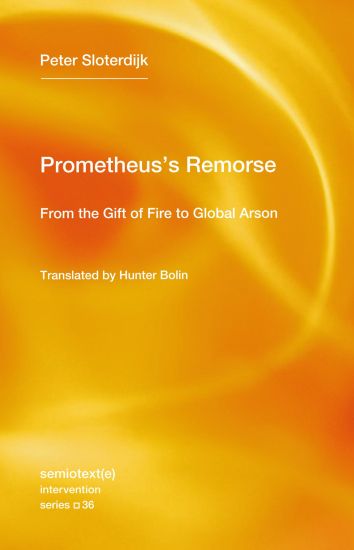
Prometheus's Remorse

Prometheus's Remorse

Peter Sloterdijk; Hunter Bolin

Semiotext (E)
2024
nidottu
The stirring speech given by Peter Sloterdijk in Lucerne in October 2022. From time immemorial, humanity has had to organize their "metabolism with nature." For Marx, the most important factor in this process was labor. When Prometheus, according to the myth, brought fire to earth, another crucial input was added. Fire has been used to cook food and harden tools for hundreds of thousands of years. In this sense, it can be said that all history implies the history of the uses of fire. But whereas trees could only be burnt once, labor and fire shifted with the discovery of underground deposits of coal and oil. Modern humanity, according to Peter Sloterdijk, can be considered a collective of arsonists who set fire to the underground forests and moors. If Prometheus were to return to earth today, he might regret his gift; after all, what looms is nothing less than Ekpyrosis, the demise of the world in fire. And only a new, energetic pacifism can prevent this catastrophe.
Making the Heavens Speak

Making the Heavens Speak

Peter Sloterdijk

JOHN WILEY AND SONS LTD
2022
sidottu
The idea of a connection between poetry and religion is as old as civilization. Homer consulted the Olympian gods on the fate of the fighters on the plain before Troy, and the poet made the heavenly ones speak. It was through poetry that the gods were brought within reach of human hearing. In the centuries after Homer, the Athenian stage became the setting where gods made their poetic interventions, resolving human impasses and contributing to the emotional synchronization of the public life of the city. Sloterdijk argues that, as with the culture of the Ancient Greeks, all religions inscribe a kind of “theopoetry” at the heart of their cultural life and thought, even as they strenuously obscure these poetic origins through the cultivation and enforcement of orthodox norms. Sloterdijk also shows how, in conditions of religious pluralism, religions poetically reshape themselves to accommodate the demands of the religious marketplace. This highly original study of the poetic devices that inform accounts of the otherworldly offers a new interpretation of religious practice and its theological elaboration through history, as well as a fresh perspective on our contemporary age in which collective life, interwoven with imaginative fabrications, is fraying under critical stress.