Kirjojen hintavertailu. Mukana 12 595 353 kirjaa ja 12 kauppaa.

Kirjailija

Peter Sluglett

Kirjat ja teokset yhdessä paikassa: 8 kirjaa, julkaisuja vuosilta 1990-2015, suosituimpien joukossa Britain in Iraq. Vertaile teosten hintoja ja tarkista saatavuus suomalaisista kirjakaupoista.

8 kirjaa

Kirjojen julkaisuhaarukka 1990-2015.

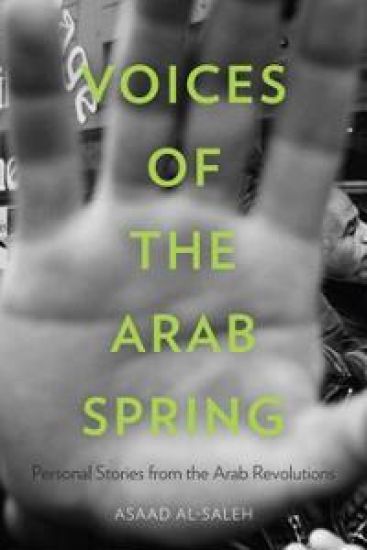
Voices of the Arab Spring

Voices of the Arab Spring

Asaad Alsaleh; Peter Sluglett

Columbia University Press
2015
pokkari
Narrated by dozens of activists and everyday individuals, this book documents the unprecedented events that led to the collapse of dictatorial regimes in Tunisia, Egypt, Libya, and Yemen. Beginning in 2011, these stories offer unique access to the message that inspired citizens to act, their experiences during revolt, and the lessons they learned from some of the most dramatic changes and appalling events to occur in the history of the Arab world. The riveting, revealing, and sometimes heartbreaking stories in this volume also include voices from Syria. Featuring participants from a variety of social and educational backgrounds and political commitments, these personal stories of action represent the Arab Spring's united and broad social movements, collective identities, and youthful character. For years, the volume's participants lived under regimes that brutally suppressed free expression and protest. Their testimony speaks to the multifaceted emotional, psychological, and cultural factors that motivated citizens to join together to struggle against their oppressors.

Voices of the Arab Spring

Voices of the Arab Spring

Asaad Alsaleh; Peter Sluglett

Columbia University Press
2015
sidottu
Narrated by dozens of activists and everyday individuals, this book documents the unprecedented events that led to the collapse of dictatorial regimes in Tunisia, Egypt, Libya, and Yemen. Beginning in 2011, these stories offer unique access to the message that inspired citizens to act, their experiences during revolt, and the lessons they learned from some of the most dramatic changes and appalling events to occur in the history of the Arab world. The riveting, revealing, and sometimes heartbreaking stories in this volume also include voices from Syria. Featuring participants from a variety of social and educational backgrounds and political commitments, these personal stories of action represent the Arab Spring's united and broad social movements, collective identities, and youthful character. For years, the volume's participants lived under regimes that brutally suppressed free expression and protest. Their testimony speaks to the multifaceted emotional, psychological, and cultural factors that motivated citizens to join together to struggle against their oppressors.
Atlas of Islamic History

Atlas of Islamic History

Peter Sluglett; Andrew Currie

Routledge
2015
sidottu
This Atlas provides the main outlines of Islamic history from the immediate pre-Islamic period until the end of 1920, that is, before most parts of the Muslim world became sovereign nation states. Each map is accompanied by a text that contextualises, explains, and expands upon the map, and are fully cross-referenced. All of the maps are in full colour: 18 of them are double-page spreads, and 25 are single page layouts. This is an atlas of Islamic, not simply Arab or Middle Eastern history; hence it covers the entire Muslim world, including Spain, North, West and East Africa, the Indian sub-continent, Central Asia and South-East Asia. The maps are not static, in that they show transitions within the historical period to which they refer: for instance, the stages of the three contemporaneous Umayyad, Fatimid and ‘Abbasid caliphates on Map 10, or the progress of the Mongol invasions and the formation of the various separate Mongol khanates between 1200 and 1300 on Map 21. Using the most up to date cartographic and innovative design techniques, the maps break new ground in illuminating the history of Islam. Brought right up to date with the addition of a Postscript detailing The Islamic World since c.1900, a Chronology from 500 BCE to 2014, and additional endpaper maps illustrating The Spread of Islam through the Ages and The Islamic World in the 21st Century, the Atlas of Islamic History is an essential reference work and an invaluable textbook for undergraduates studying Islamic history, as well as those with an interest in Asian History, Middle East History and World History more broadly.
Atlas of Islamic History

Atlas of Islamic History

Peter Sluglett; Andrew Currie

Routledge
2014
nidottu
This Atlas provides the main outlines of Islamic history from the immediate pre-Islamic period until the end of 1920, that is, before most parts of the Muslim world became sovereign nation states. Each map is accompanied by a text that contextualises, explains, and expands upon the map, and are fully cross-referenced. All of the maps are in full colour: 18 of them are double-page spreads, and 25 are single page layouts. This is an atlas of Islamic, not simply Arab or Middle Eastern history; hence it covers the entire Muslim world, including Spain, North, West and East Africa, the Indian sub-continent, Central Asia and South-East Asia. The maps are not static, in that they show transitions within the historical period to which they refer: for instance, the stages of the three contemporaneous Umayyad, Fatimid and ‘Abbasid caliphates on Map 10, or the progress of the Mongol invasions and the formation of the various separate Mongol khanates between 1200 and 1300 on Map 21. Using the most up to date cartographic and innovative design techniques, the maps break new ground in illuminating the history of Islam. Brought right up to date with the addition of a Postscript detailing The Islamic World since c.1900, a Chronology from 500 BCE to 2014, and additional endpaper maps illustrating The Spread of Islam through the Ages and The Islamic World in the 21st Century, the Atlas of Islamic History is an essential reference work and an invaluable textbook for undergraduates studying Islamic history, as well as those with an interest in Asian History, Middle East History and World History more broadly.
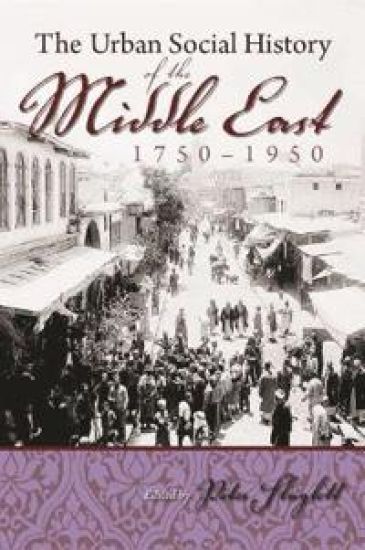
Urban Social History of the Middle East 1750-1950

Urban Social History of the Middle East 1750-1950

Peter Sluglett

Syracuse University Press
2008
sidottu
The great cities of the Middle East and North Africa have long attracted the attention and interest of historians. With the discovery and wider use over the last few decades of the Islamic court records and Ottoman administrative documents, our knowledge of Middle Eastern cities between the seventeenth and early twentieth centuries has vastly expanded. Drawing upon a treasure trove of documents and using a variety of methodologies, the contributors succeed in providing a significant overview of the ways in which Middle Eastern cities can be studied, as well as an excellent introduction to current literature in the field.Islam has often been characterized as an 'urban religion'; recognizing Islam's deep ties to civic matters and to the city itself, the essays gathered here explore the interconnectedness between religion and its geography. The authors effectively define and map out urban social history in the Middle East from the eighteenth to twentieth centuries, affording us a foundational volume that enriches our understanding of society in the late Ottoman and colonial periods.
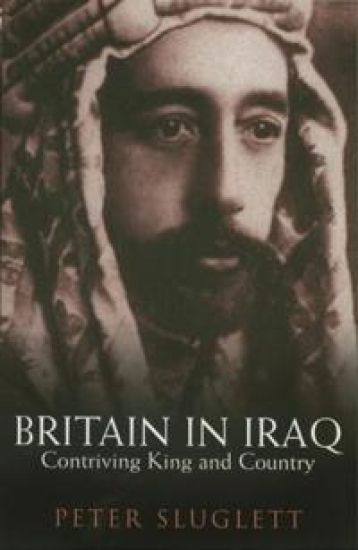
Britain in Iraq

Britain in Iraq

Peter Sluglett; Albert Hourani

Columbia University Press
2007
sidottu
After the end of World War I, international pressures prevented the Allies from implementing direct colonial rule over the former Arab provinces of the Ottoman Empire. Instead, the Allies created a system of mandates for the governance of the Middle East. France was assigned Lebanon and Syria, and Britain was assigned Iraq, Palestine, and Transjordan. First published in 1976, Britain in Iraq has long been recognized as the definitive history of the mandate period, providing a meticulous and engaging account of Britain's political involvement in Iraq as well as rare insights into the motives behind the founding of the Iraqi state. Peter Sluglett presents a historical narrative of the development and implementation of the mandate in the face of considerable opposition in both Iraq and Britain and shows how the British maintained a "reliable" group of Iraqi clients in power to protect imperial interests. Sluglett explores the changing relationship between Britain and Iraq over the eighteen years of occupation and mandate, the interactions between Shi'ite and Sunni populations, the position of the Kurds, the boundary between Turkey and northern Iraq, and policies relating to defense, land tenure and the tribes, and education. A new conclusion attempts to analyze the legacy of the mandate and to offer some explanation for Iraq's continuing weakness as a state and the structural obstacles preventing the emergence of a plural political system.
Britain in Iraq

Britain in Iraq

Peter Sluglett

I.B. Tauris
2007
nidottu
As the attention of the world is focused on the increasingly beleaguered U.S. and U.K. occupation of Iraq, Iraq expert and Middle East historian Peter Sluglett revisits Britain's creation of Iraq in the twentieth century in this thoroughly revised edition of his classic text 'Britain in Iraq'. Sluglett presents a comprehensive history of British policy towards Iraq from the beginnings of the Mesopotamia campaign in 1914 through the creation of Iraq in 1920 and the period of the mandate until Iraqi independence in 1932. As well as being a history of Britain's relations with Iraq, the book also traces the implementation of British policies in a number of key areas and the creation of the principal institutions of the state. As such it is an important contribution to both Middle Eastern and British imperial history, and crucial to our understanding of Iraq today.
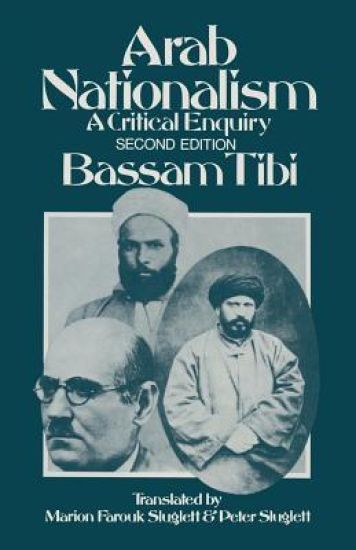
Arab Nationalism

Arab Nationalism

B. Tibi; trans Marion Farouk-Sluglett; Peter Sluglett

Palgrave Macmillan
1990
nidottu
In this new edition Professor Tibi analyses the impact and function of nationalism and its contribution to social and political change in the Third World, taking the rise of nationalism in the Middle East as a historical example. He concentrates on the period after the First World War, when many Arab intellectuals became disillusioned with Britain and France as a result of the occupation of their countries. Professor Tibi's careful study of the writings and influence of Sati' al-Husri illustrates the connection between modern Arab nationalism and nineteenth century German Romantic nationalism, which will be of particular interest to the English reader. Professor Tibi concludes that while nationalism has played a necessary and important role in the movement for national independence in the Middle East, it has since developed into an ideology which seems to obstruct further social and political emancipation. This book will be of particular interest to historians and social scientists as well as to specialists in the area itself.