Kirjojen hintavertailu. Mukana 12 390 323 kirjaa ja 12 kauppaa.

Kirjailija

Peter Smagorinsky

Kirjat ja teokset yhdessä paikassa: 16 kirjaa, julkaisuja vuosilta 2005-2025, suosituimpien joukossa Rozwój koncepcji spolecznych i praktycznych w nauczaniu. Vertaile teosten hintoja ja tarkista saatavuus suomalaisista kirjakaupoista.

16 kirjaa

Kirjojen julkaisuhaarukka 2005-2025.

Rozwój koncepcji spolecznych i praktycznych w nauczaniu

Rozwój koncepcji spolecznych i praktycznych w nauczaniu

Peter Smagorinsky

Wydawnictwo Nasza Wiedza
2025
pokkari
W niniejszym tomie poddano analizie, rozważono i rozszerzono koncepcję rozwoju pojęc autorstwa Wygotskiego. Dokonano przeglądu opis w rozwoju pojęc przedstawionych przez Wygotskiego, a następnie przeniesiono dyskusję z przyklad w biologicznych na bardziej kontrowersyjne przyklady spoleczne. Następnie Smagorinsky analizuje pojęcia jako konstrukcje kulturowe, zwracając uwagę na kulturowy charakter pojęc oraz pojęcia i telos spoleczny. Autor nakreśla następnie procesy, kt re uzupelniają i wzbogacają rozw j pojęc, w tym przyszlą orientację rozwoju pojęc, afektywny wymiar rozwoju pojęc oraz rolę kreatywności w rozwoju pojęc jako wyższej funkcji umyslowej. Następnie Smagorinsky podejmuje pojęcie "krętej ścieżki" rozwoju pojęc Wygotskiego i komplikuje je, kwestionując stopień, w jakim pojęcia spoleczne mają jasne znaczenie, do kt rego może prowadzic każda ścieżka, biorąc pod uwagę ich relatywistyczny i ideologiczny charakter. Dociekania te prowadzą do propozycji praktycznych pojęc, kt re slużą jako fragmentaryczne rozumienia, kt re og lnie są sp jne, ale są z natury ograniczone przez uwagę poświęcaną sprzecznym środkom mediacji w kontekstach spoleczno-kulturowo-historycznych.
Le développement des concepts sociaux et pratiques dans l'apprentissage de l'enseignement
Cet ouvrage interroge, examine et d veloppe la notion de d veloppement des concepts chez Vygotsky. Il passe en revue l'expos de Vygotsky sur le d veloppement des concepts, puis d place la discussion des exemples biologiques vers des exemples sociaux plus controvers s. Smagorinsky examine ensuite les concepts en tant que constructions culturelles, en accordant une attention particuli re la nature culturelle des concepts, ainsi qu'aux concepts et aux finalit s soci tales. L'auteur d crit ensuite les processus qui compl tent et enrichissent le d veloppement des concepts, notamment l'orientation future du d veloppement des concepts, la dimension affective du d veloppement des concepts et le r le de la cr ativit dans le d veloppement des concepts en tant que fonction mentale sup rieure. Smagorinsky reprend ensuite la notion de chemin sinueux du d veloppement conceptuel de Vygotsky et la complique en s'interrogeant sur la mesure dans laquelle les concepts sociaux ont une signification claire vers laquelle tout chemin peut mener, compte tenu de leur nature relativiste et id ologique. Cette question conduit la proposition de concepts pratiques qui servent de compr hensions fragment es, g n ralement coh rentes mais intrins quement compromises par l'attention port e aux moyens contradictoires de m diation dans les contextes socioculturels et historiques.
L. S. Vygotsky and English in Education and the Language Arts
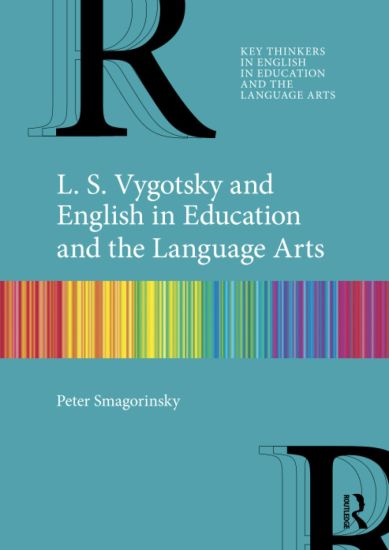
L. S. Vygotsky and English in Education and the Language Arts focuses on the hugely significant contributions of L. S. Vygotsky to research, theory, and practice in English and the Language Arts, exploring the relevance of Vygotsky’s works for today’s teachers and researchers.Drawing on his 30 years of study, Smagorinsky interprets Vygotsky in relation to literacy education, teacher education, special education, and how life outside school has an impact on how people function within them. This insightful and accessible text firstly explores Vygotsky’s early life to situate him historically and culturally and goes on to trace his understanding of human psychology as it relates to the social contexts of schools and pupils’ lives at home. Vygotsky’s pedagogical ideas are then discussed in depth, with specific attention on the role of emotions, the zone of proximal development, expanding textuality beyond writing, and his belief in the primacy of socialization. This book illuminates new areas of understanding, and challenges common perceptions available through limited and selective readings, establishing Vygotsky as a complex developmental psychologist rather than a classroom practitioner.With points for discussion and reflection provided throughout, this text will be invaluable for student teachers, teachers, and academics in the field of English and the Language Arts.
L. S. Vygotsky and English in Education and the Language Arts
L. S. Vygotsky and English in Education and the Language Arts focuses on the hugely significant contributions of L. S. Vygotsky to research, theory, and practice in English and the Language Arts, exploring the relevance of Vygotsky’s works for today’s teachers and researchers.Drawing on his 30 years of study, Smagorinsky interprets Vygotsky in relation to literacy education, teacher education, special education, and how life outside school has an impact on how people function within them. This insightful and accessible text firstly explores Vygotsky’s early life to situate him historically and culturally and goes on to trace his understanding of human psychology as it relates to the social contexts of schools and pupils’ lives at home. Vygotsky’s pedagogical ideas are then discussed in depth, with specific attention on the role of emotions, the zone of proximal development, expanding textuality beyond writing, and his belief in the primacy of socialization. This book illuminates new areas of understanding, and challenges common perceptions available through limited and selective readings, establishing Vygotsky as a complex developmental psychologist rather than a classroom practitioner.With points for discussion and reflection provided throughout, this text will be invaluable for student teachers, teachers, and academics in the field of English and the Language Arts.
Teaching Literacy in Troubled Times

Teaching Literacy in Troubled Times

Allison Skerrett; Peter Smagorinsky

SAGE PUBLICATIONS INC
2022
nidottu
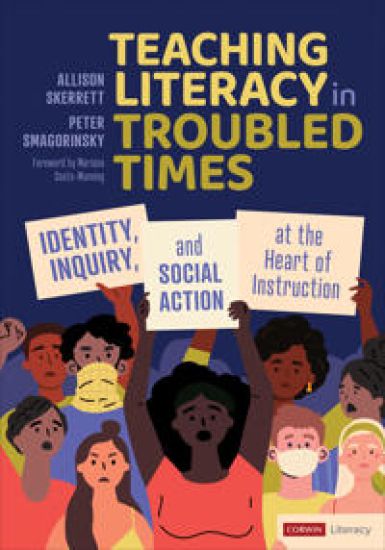
"Upending deficit narrative of learning loss, combating broken approaches to racial equity, and wading deep into the contested waters of democratic principles of learning within today’s schools, Dr. Skerrett and Dr. Smagorinsky offer an accessible guidebook for making our classrooms sites of justice and joy. Perhaps most importantly, theirs is a book that reveals classroom practices as they really are--the voices of teachers are situated as co-authors in this important journey. I cannot think of a more timely or relevant book for English educators than Teaching Literacy in Troubled Times." — Antero Garcia, Ph.D., Associate Professor, Graduate School of Education, Stanford University Relevant instruction to move education forward instead of "back to normal" Educators often bemoan the so-called learning gap that followed the upheaval to schooling in 2020, but the real learning gap will occur if the watershed events and social shifts of the early 2020s are not integrated into school instruction and learning. For today’s learning to be relevant to today’s students, it must reflect their lives and the true social worlds they inhabit. But how? Teaching Literacy in Troubled Times empowers educators to engage students in critical thinking, literacy activities, and inquiry to investigate the personal and social issues of pressing importance to today’s middle and high school students. Six units of study, each co-authored by a teacher who road-tested the activities in their own classroom, guide teachers through the process of teaching literacy around the topics of identity, social inequity, global justice, empathy, racism and racial literacy, and conflicting ideas of patriotism. This urgent, timely guide to creating a relevant classroom includes: Instructional methods, content knowledge, and learning activities for each unit that engage students in critical inquiry and social action.Insights and guidance from teachers who put the full unit plans in action with students.Reflection questions to help teachers envision the work in their own classrooms.Templates, rubrics, examples of student work, and other tools that help teachers to plan and implement activities that grow students’ capacity to understand and act in society. Prime your students with the critical thinking, investigative, and communicative skills they need to connect themselves to broader social movements and create a new generation of educated changemakers.
Learning to Teach English and the Language Arts

Learning to Teach English and the Language Arts

Peter Smagorinsky

Bloomsbury Academic
2021
nidottu
Drawing together Smagorinsky’s extensive research over a 20-year period, Learning to Teach English and the Language Arts explores how beginning teachers’ pedagogical concepts are shaped by a variety of influences. Challenging popular thinking about the binary roles of teacher education programs and school-based experiences in the process of learning to teach, Smagorinsky illustrates, through case studies in the disciplines of English and the Language Arts, that teacher education programs and classroom/school contexts are not discrete contexts for learning about teaching, nor are each of these contexts unified in the messages they offer about teaching. He explores the tensions, not only between these contexts and others, but within them to illustrate the social, cultural, contextual, political and historical complexity of learning to teach. Smagorinsky revisits familiar theoretical understandings, including Vygotsky’s concept development and Lortie’s apprenticeship of observation, to consider their implications for teachers today and to examine what teacher candidates learn during their teacher education experiences and how that learning shapes their development as teachers.
Learning to Teach English and the Language Arts

Learning to Teach English and the Language Arts

Peter Smagorinsky

Bloomsbury Academic
2020
sidottu
Drawing together Smagorinsky’s extensive research over a 20-year period, Learning to Teach English and the Language Arts explores how beginning teachers’ pedagogical concepts are shaped by a variety of influences. Challenging popular thinking about the binary roles of teacher education programs and school-based experiences in the process of learning to teach, Smagorinsky illustrates, through case studies in the disciplines of English and the Language Arts, that teacher education programs and classroom/school contexts are not discrete contexts for learning about teaching, nor are each of these contexts unified in the messages they offer about teaching. He explores the tensions, not only between these contexts and others, but within them to illustrate the social, cultural, contextual, political and historical complexity of learning to teach. Smagorinsky revisits familiar theoretical understandings, including Vygotsky’s concept development and Lortie’s apprenticeship of observation, to consider their implications for teachers today and to examine what teacher candidates learn during their teacher education experiences and how that learning shapes their development as teachers.
Teaching English by Design, Second Edition: How to Create and Carry Out Instructional Units

Teaching English by Design, Second Edition: How to Create and Carry Out Instructional Units

Leila Christenbury; Peter Smagorinsky

HEINEMANN EDUCATIONAL BOOKS
2018
nidottu
Teaching English by Design has become a classic resource for preservice teachers as well as in-service teachers who consider it their go-to guide to creating lessons and units organized around key concepts. In the Second Edition, Peter Smagorinsky updates the content for today's teachers with discussions of New Literacies, using technology in the classroom, LGBTQ issues, and an expansive new chapter on preparing for Beginning Teacher Performance Assessments. He also brings in a fresh new voice and outlook from Darren Rhym, a high school teacher in rural Georgia. Following a new chapter on "Teaching Stressed Students Under Stressful Circumstances," Peter and Darren collaborated to create a unit on Power and Race. Designed to help students develop agency in improving their lives and those of the people in their communities, this sample unit provides a practical framework for addressing the needs of low-SES students who rely on limited resources. Together with Peter's unique insight about students, how they learn, and the kinds of classrooms that support their achievement, Teaching English by Design, 2/e is more valuable and relevant than ever.
Teaching Students to Write Essays That Define

Teaching Students to Write Essays That Define

Peter Smagorinsky; Larry R. Johannessen; Elizabeth Kahn

HEINEMANN EDUCATIONAL BOOKS
2011
nidottu
"These books will support teachers in their understanding of designing process-based instruction and give them both useful lesson plans and a process for designing instruction on their own that follows the design principles." --Peter Smagorinsky, Larry Johannessen, Elizabeth Kahn, and Thomas McCann The Dynamics of Writing Instruction series helps middle and high school teachers teach writing using a structured process approach. Teachers may spread these books throughout a multiyear English language arts program, use all six books to constitute a yearlong writing course, or repeat modified sequences from one book at sequential grade levels so students deal with that particular genre at increasing degrees of complexity. Each book in the series includes classroom-tested activities, detailed lesson sequences, and supporting handouts. The instruction is detailed enough to use as a daily plan but general enough that teachers can modify it to accommodate their own curriculum and the specific needs of their students. The instructional activities in each book are tailored to a specific kind of writing: argument, essays that define, comparison/contrast essays, personal narratives, research reports, and fictional narratives. This six book series will show teachers how to: introduce issues, dilemmas, and scenarios that capture students' interest and invoke the critical and creative thinking necessary to write powerfully and effectively design and orchestrate activities within an interactive and collaborative environment move students through increasingly challenging activities designed to help them become independent writers.
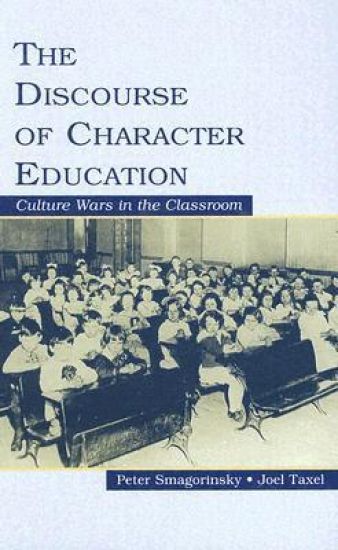
The Discourse of Character Education

The Discourse of Character Education

Peter Smagorinsky; Joel Taxel

Routledge Member of the Taylor and Francis Group
2005
nidottu
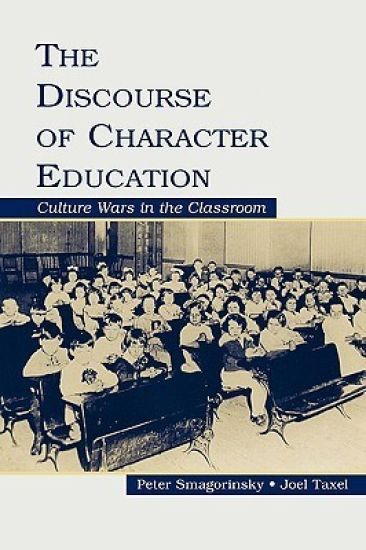
In this book Peter Smagorinsky and Joel Taxel analyze the ways in which the perennial issue of character education has been articulated in the United States, both historically and in the current character education movement that began in earnest in the 1990s. The goal is to uncover the ideological nature of different conceptions of character education. The authors show how the current discourses are a continuation of discourse streams through which character education and the national purpose have been debated for hundreds of years, most recently in what are known as the Culture Wars--the intense, often passionate debates about morality, culture, and values carried out by politicians, religious groups, social policy foundations, and a wide range of political commentators and citizens, in which the various stakeholders have sought influence over a wide range of social and economic issues, including education. The centerpiece is a discourse analysis of proposals funded by the United States Department of Education's Office of Educational Research and Improvement (OERI). Discourse profiles from sets of states that exhibit two distinct conceptions of character are examined and the documents from particular states are placed in dialogue with the OERI Request for Proposals. One profile reflects the dominant perspective promoted in the U.S., based on an authoritarian view in which young people are indoctrinated into the value system of presumably virtuous adults through didactic instruction. The other reflects the well-established yet currently marginal discourse emphasizing attention to the whole environment in which character is developed and enacted and in which reflection on morality, rather than didactic instruction in morality, is the primary instructional approach. By focusing on these two distinct regions and their conceptions of character, the authors situate the character education movement at the turn of the twenty-first century in the context of historical notions about the nature of character and regional conceptions regarding the nature of societal organization. This enlightening volume is relevant to scholars, practitioners, policymakers, and students across the field of education, particularly those involved in character education, moral development, discourse analysis, history and cultural foundations of education, and related fields, and to the wider public interested in character education.
The Discourse of Character Education

The Discourse of Character Education

Peter Smagorinsky; Joel Taxel

Routledge Member of the Taylor and Francis Group
2005
sidottu
In this book Peter Smagorinsky and Joel Taxel analyze the ways in which the perennial issue of character education has been articulated in the United States, both historically and in the current character education movement that began in earnest in the 1990s. The goal is to uncover the ideological nature of different conceptions of character education. The authors show how the current discourses are a continuation of discourse streams through which character education and the national purpose have been debated for hundreds of years, most recently in what are known as the Culture Wars--the intense, often passionate debates about morality, culture, and values carried out by politicians, religious groups, social policy foundations, and a wide range of political commentators and citizens, in which the various stakeholders have sought influence over a wide range of social and economic issues, including education. The centerpiece is a discourse analysis of proposals funded by the United States Department of Education's Office of Educational Research and Improvement (OERI). Discourse profiles from sets of states that exhibit two distinct conceptions of character are examined and the documents from particular states are placed in dialogue with the OERI Request for Proposals. One profile reflects the dominant perspective promoted in the U.S., based on an authoritarian view in which young people are indoctrinated into the value system of presumably virtuous adults through didactic instruction. The other reflects the well-established yet currently marginal discourse emphasizing attention to the whole environment in which character is developed and enacted and in which reflection on morality, rather than didactic instruction in morality, is the primary instructional approach. By focusing on these two distinct regions and their conceptions of character, the authors situate the character education movement at the turn of the twenty-first century in the context of historical notions about the nature of character and regional conceptions regarding the nature of societal organization. This enlightening volume is relevant to scholars, practitioners, policymakers, and students across the field of education, particularly those involved in character education, moral development, discourse analysis, history and cultural foundations of education, and related fields, and to the wider public interested in character education.