Kirjailija
Peter Stanley
Kirjat ja teokset yhdessä paikassa: 20 kirjaa, julkaisuja vuosilta 1998-2025, suosituimpien joukossa Quinn's Post. Vertaile teosten hintoja ja tarkista saatavuus suomalaisista kirjakaupoista.
20 kirjaa
Kirjojen julkaisuhaarukka 1998-2025.
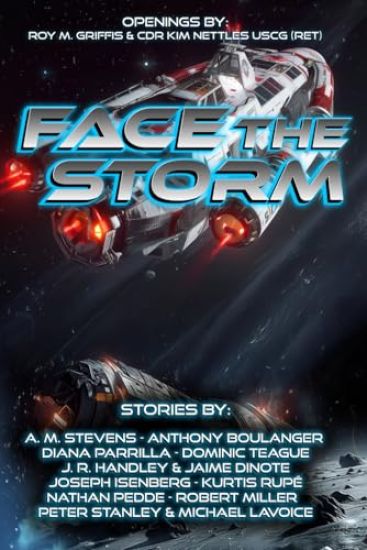
In the darkest corners of space... They protect the galaxy.When chaos strikes and the unknown threatens, only one force stands between civilization and destruction: The Space Coast Guard.Rescue. Defend. Survive.Elite officers face hostile aliens, deadly storms, and intergalactic warfare in a fight for survival. No mission is ever routine. No sacrifice too great.The galaxy needs them. Will they make it back?The stars are waiting. Answer the call. Are you ready to FACE THE STORM?
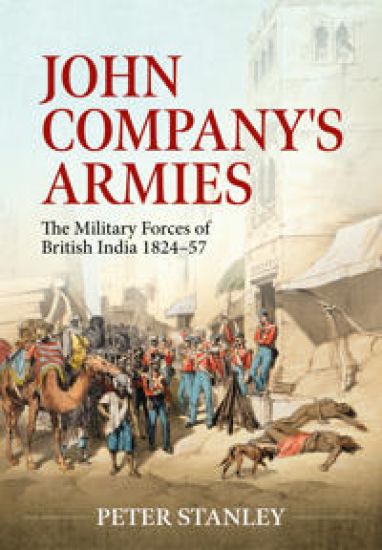
The armies of British India were, as one of its members wrote, 'the most extraordinary phenomenon in the history of the world'. Multi-ethnic, composed of men of diverse ethnicities and faiths, under the flag of the East India Company - 'John Company' - they conquered or controlled much of the Indian sub-continent by 1850, victorious in all but one major war (the first disastrous intervention in Afghanistan).Four armies served and fought for John Company: the three 'presidency armies' of Bengal, Madras and Bombay, and the regiments of the British Army, rented from the Crown by the Company. Together, this disparate collection of European and 'Native' corps - regular and irregular - numbered over 300,000 uniformed men at its height. The army that the 1857 Mutiny destroyed or changed out of recognition essentially dated from the reorganization of 1824. In the intervening 33 years, John Company's armies not only fought half-a-dozen major wars (in Burma, Afghanistan, China, the Punjab, and across India itself), it also faced dozens of insurrections and rebellions, some of which entailed such sustained conflict that they gained its units battle honors. In doing so the armies of British India created a distinctive military culture, one that the Mutiny decisively changed.John Company's Armies traces what those forces constituted and how they were commanded; how they lived and died in camps and cantonments; how they prepared for war (and how conflict in India changed) and how they fought against external foes and internal threats to the Company's rule. It uses a wealth of contemporary sources, archival, visual and published, including research on the sites of battles and cantonments, to evoke the armies' composition and character. It deals with both European and Native forces, explaining their idiosyncratic organization, practices and terminology, and shows how British-Indian armies both prepared for battle and how they experienced it, drawing on the words and images of dozens of its members.John Company's Armies is intended for both the specialist seeking the first comprehensive account of a force traditionally examined to explain the outbreak of the 1857 Mutiny, and for readers such as family historians needing to understand how the army of a distant relative was formed, functioned, and how it fought.
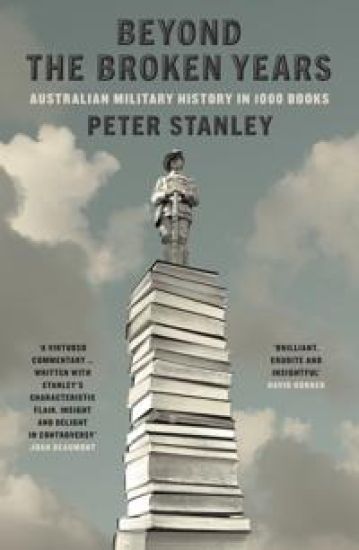
In Beyond The Broken Years – fifty years after The Broken Years, Bill Gammage's classic on World War One soldiers, was published – provocative military historian Peter Stanley argues why it's vital for Australians to understand how our military past has been created. By whom, how and with what consequences.Stanley explores military history and the storytellers – from historians Charles Bean, Henry Reynolds, Joan Beaumont and David Horner to ''storians' Peter FitzSimons and Les Carlyon. And grapples with what it means to write military history, its different approaches, the rise of popular writers and much more. He asks readers to consider a genre that plays a central role in the Australian identity, but many take for granted.
It finally happened... and the aliens were out for conquest. Amid a worldwide invasion, a secluded part of the world holds its own against the unwelcome intruders. Flight Lieutenant Nathan Harvey, a helicopter pilot from the Royal New Zealand Air Force is recruited into the CAVDEV, an experimental powered armor unit. He quickly finds himself leading the fight on the front lines against an overwhelming alien force. Can Harvey and his clandestine unit of powered armor drive back the invading forces and secure a foothold for the human race?
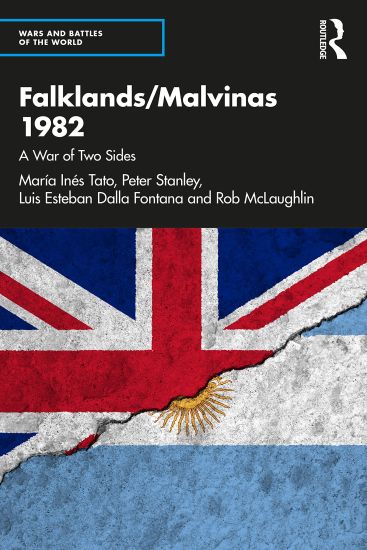
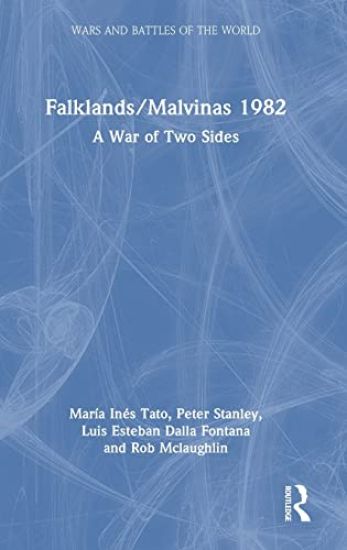
Falklands/Malvinas 1982
María Inés Tato; Peter Stanley; Luis Esteban Dalla Fontana; Rob Mclaughlin
TAYLOR FRANCIS LTD
2023
nidottu
After four decades from the 1982 war between Britain and Argentina over possession of the Falklands/Malvinas islands in the South Atlantic Ocean, this book allows for a new and rounded reading of the causes, course and consequences of the war. It provides a comprehensive overview of the Falkland/Malvinas War by integrating the military history of the conflict into the diplomatic, political, social and cultural aspects of the war. Including a substantial body of advocacy, chronicle, narrative and analysis, the volume draws upon an extensive range of published sources, in English and Spanish, primary sources from both sides and unpublished testimonies. The book, written by Argentine and Australian historians and scholars, discuss themes such as the background to the war, the offensive campaign for the islands and the English and Argentine experiences and memories of the war from the perspective of the islanders. Being part of the Wars and Battles of the World series, this book will be an essential read for scholars and researchers of military history, British history, Latin American history, defence and strategic studies, geopolitics and modern history.
Falklands/Malvinas 1982
María Inés Tato; Peter Stanley; Luis Esteban Dalla Fontana; Rob Mclaughlin
TAYLOR FRANCIS LTD
2023
sidottu
After four decades from the 1982 war between Britain and Argentina over possession of the Falklands/Malvinas islands in the South Atlantic Ocean, this book allows for a new and rounded reading of the causes, course and consequences of the war. It provides a comprehensive overview of the Falkland/Malvinas War by integrating the military history of the conflict into the diplomatic, political, social and cultural aspects of the war. Including a substantial body of advocacy, chronicle, narrative and analysis, the volume draws upon an extensive range of published sources, in English and Spanish, primary sources from both sides and unpublished testimonies. The book, written by Argentine and Australian historians and scholars, discuss themes such as the background to the war, the offensive campaign for the islands and the English and Argentine experiences and memories of the war from the perspective of the islanders. Being part of the Wars and Battles of the World series, this book will be an essential read for scholars and researchers of military history, British history, Latin American history, defence and strategic studies, geopolitics and modern history.
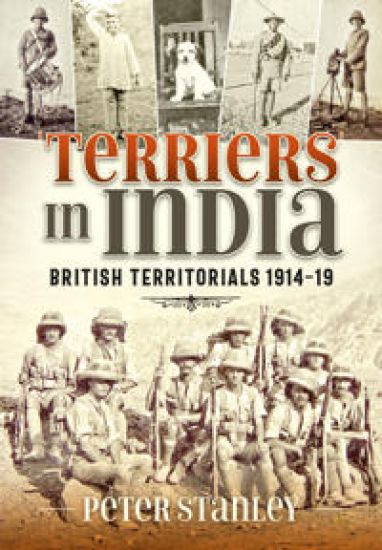
Some 50,000 British Territorials served in India during the Great War. Astonishingly, it has taken a century for a book on them to be written. The Territorials - citizen soldiers, members of a force formed before the war for home defence - never expected to serve abroad, but volunteered for 'Imperial Service' at Lord Kitchener's request. Instead of going to France, in 1914 they went to India, to release Regulars for the front. The Territorials - 'Terriers' - became responsible at first for garrison duty, not trusted to fight in Mesopotamia or on the North-West Frontier. Gradually, they gained the skill to be sent to war, and most of the 41 Territorial battalions sent to India saw active service, in Mesopotamia, in Frontier campaigns, in Aden and in the Third Anglo-Afghan war of 1919. (Territorials were retained in India for up to a year after the Armistice, unhappily.) Terriers in India, based on the abundant but almost untouched holdings of county archives and regimental museums mainly in southern English counties, tells their story for the first time. It shows how novice citizen soldiers learned to act as sahibs, how they responded to India and its people (often sensitively) and took part in the most dramatic upheaval in British India since the 1857 Mutiny. Terriers in India is a rich mix of social and military history, ranging from cantonment bungalows, bazaars and brothels to sangers on the Frontier and tragic actions on the Tigris; battles in which the Terriers played a full part.
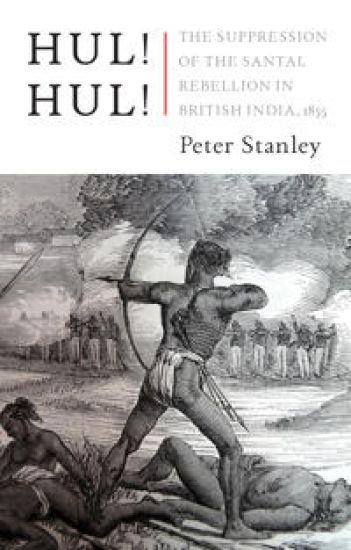
If not for the famous Indian mutiny-rebellion of 1857, the Santal 'Hul' (rebellion) of 1855 would today be remembered as the most serious uprising that the East India Company ever faced. Instead, this rebellion-to which 10 per cent of the Bengal Army's infantry was committed and in which at least 10,000 Santals died-has been forgotten. While its memory lived among Santals, British officers published little about it, and most of the sepoys involved died in 1857. In the words of one British officer, the Hul was 'not war ... but execution', and perhaps thus was dismissed as unworthy of attention by military historians. Drawing for the first time on the Bengal officers' voluminous reports on its suppression, Peter Stanley has produced the first comprehensive interpretation of the Hul, investigating why it occurred, how it was fought and why it ended as it did. Despite the Bengal Army virtually inventing counterinsurgency operations in the field (and the Santals improvising their first war), the Hul came to an end amid starvation and disease. But between its bloody outbreak, its protracted suppression and its far-reaching effects, Stanley demonstrates that the Hul was more than just 'execution'-it was indeed a war.
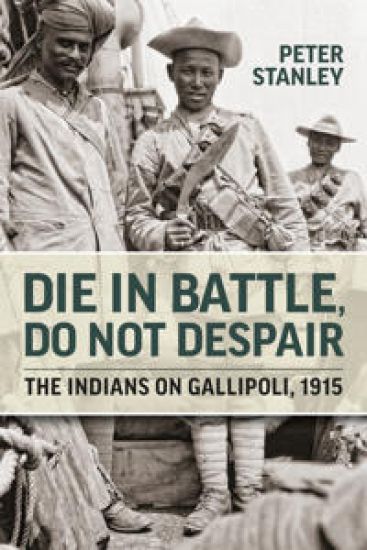
About 1,600 of the Indians who served on Gallipoli died, in actions at Gurkha Bluff and Hill 60. They took part in terrible, failed attacks, at Gully Ravine and Gully Spur and in the climactic attempt in August to seize the summit of Sari Bair - one of the Gurkhas’ most cherished battle honours. Though commemorated on the great memorial to the missing at Cape Helles (because most Indians' bodies were cremated or, actually, lost) they are practically invisible on Gallipoli today. The Indian story of Gallipoli has barely been told before. Not only is this the first book about their part in the campaign to be published in the century since 1915, but it also tells their story in new and unexpected ways. Though inescapably drawing on records created by the force's British officers, it strives to recapture the experience of the formerly anonymous sepoys, gunners and drivers, introducing Indians of note - Mit Singh, Gambirsing Pun, Kulbahadur Gurung, and Jan Mohamed – alongside the more familiar British figures such as Cecil Allanson, who led his Gurkhas to the crest of Sari Bair at dawn on 9 August 1915. It explores for the first time the remarkably positive relationship that grew on Gallipoli between Indians and Anzacs, and includes a complete list of the Indian Army dead commemorated on the Helles Memorial on Gallipoli. Professor Peter Stanley, one of Australia’s most distinguished military social historians, has drawn on an extensive range of unpublished evidence, including official and private records in Britain, Australia, New Zealand and India to tell the story of the Indian experience of Gallipoli that has waited a century to be told.
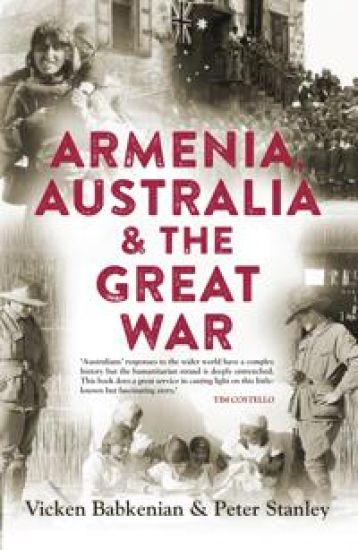
Armenia, Australia and the Great War
Vicken Babkenian; Peter Stanley
NewSouth Publishing
2016
nidottu
Australian civilians worked for decades supporting the survivors and orphans of the Armenian Genocide massacres. 24 April 1915 marks the beginning of two great epics of the First World War. It was the day the allied invasion forces set out for Gallipoli; and it marked the beginning of what became the Genocide of the Ottoman Empire’s Armenians. For the first time, this book tells the powerful, and until now neglected, story of how Australian humanitarians helped people they had barely heard of and never met, amid one of the twentieth century’s most terrible human calamities. With 50 000 Armenian– Australians sharing direct family links with the Genocide, this has become truly an Australian story.
Fighting Slavery - Faith in Action
Nick Kinsella; Peter Stanley
River Publishing Media Ltd
2015
nidottu
22 modern day slavery fighters tell their stories and explain how putting faith into action can bring about change and save lives. Over two hundred years ago William Wilberforce felt compelled by God to fight the evil of slavery. Today, God continues to raise up people like him to fight modern slavery with modern tools and methods. With over thirty years combined experience in fighting Human Trafficking, the executive editors of this book find themselves inspired by many individuals who are seeking to combat this evil. Many are unsung heroes, caring little for profile, but are motivated by faith and compassion to respond with action. Contributors Include...Baroness Butler-SlossBaroness Cox (HART)Ben Cooley (Hope for Justice)Danielle Strickland (Salvation Army, Canada)Beth Redman (Author, activist)Danny Smith (Jubilee Campaign)
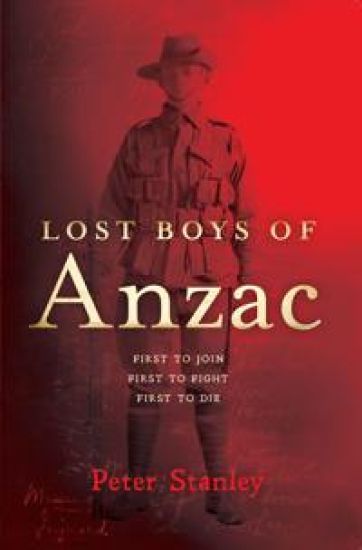
Australians remember the dead of 25 April 1915 on Anzac Day every year. But do we know the name of a single soldier who died that day? What do we really know about the men supposedly most cherished in the national memory of war?Peter Stanley goes looking for the Lost Boys of Anzac: the men of the very first wave to land at dawn on 25 April 1915 and who died on that day. There were exactly 101 of them. They were the first to volunteer, the first to go into action, and the first of the 60,000 Australians killed in that conflict.Lost Boys of Anzac traces who these men were, where they came from and why they came to volunteer for the AIF in 1914. It follows what happened to them in uniform and, using sources overlooked for nearly a century, uncovers where and how they died, on the ridges and gullies of Gallipoli - where most of them remain to this day. And we see how the Lost Boys were remembered by those who knew and loved them, and how they have since faded from memory.
Now You Can Build A Property Fortune (Working Part-time Hours) Too...Do you watch the property investment programmes thinking, "I should be doing that!" ...but don't know where to start? Do you know someone who has made money out of property, want to do the same ...but are afraid of making a bad decision? Wouldn't you just love to get started ...if it wasn't for those nagging doubts at the back of your mind? Don't you wish there was a resource full of simple, easy to understand answers to all your questions - in plain english? Well now there is! Written by a successful UK property investor, this book shows you how to confidently invest in property - working part time hours. You'll get the tools, confidence and know-how to make serious money at the property game whether you have a full-time job or are self-employed.Just some of the great stuff you'll get inside: * What you absolutely must do before you begin * How to shrewdly assess property deals like a professional * Which investment approach is right for you * Easy ways to put other people's time and money to work for you * How to finance your property deal - the options * How to handle tenants and find good estate/letting agents * Build your confidence with the jargon buster * ...and much, much more This book will enable you to...* Add an additional, proven, revenue stream to your business * Start building your nest-egg, in your spare time, while still employed * Become seriously wealthy working part-time hours * Invest positively in your future and the future of your family
For the entire Anzac campaign, Quinn's Post was central to the defence of the positions at Gallipoli. Its loss would have opened the way to a Turkish assault on the heart of the Anzac areas. It is one of the most evocative names at Gallipoli along with Anzac Cove, Lone Pine and the Nek. Yet we know very little more about Quinn's than we did in 1924. No one, since the publication of Bean's first two volumes, has studied the significance of the post of what it was like to serve there. Delving into the history of Quinn's as a key part of the Anzac line, this book illuminates what it was like to live, fight and die there for a succession of Australian, New Zealand and British units. It tells the story of Quinn's, drawing substantially on the words of those who served there. Peter Stanley concentrates on the dramatic first months of the campaign, but also devotes attention to the New Zealand period (June-July), to the underground war and to the forgotten months in the autumn and winter when the 17th Battalion held the post, exposing some aspects for the first time.
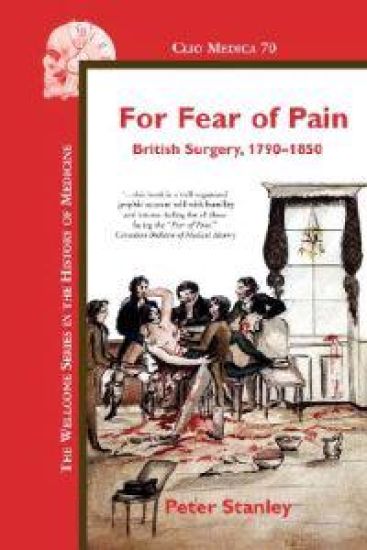
Oh, you hurt me, Sir! … are you going to do it again? – A patient, 1832 For Fear of Pain offers a social history of the operating room in Britain during the final decades of painful surgery. It asks profound questions: how could surgeons operate upon conscious patients? How could patients submit? It presents a revisionist view of surgery, hygiene, nursing, military and naval surgery and the introduction of anaesthesia. For Fear of Pain seeks to unite the clinical with the human. Drawing on fresh evidence, it offers powerful insights into the experience of painful surgery. It is populated by the characters, ambitions, and animosities of the ‘great men’ of contemporary medicine, by the young men who grew into surgeons, and by the patients whose ‘fortitude’ was so notable.
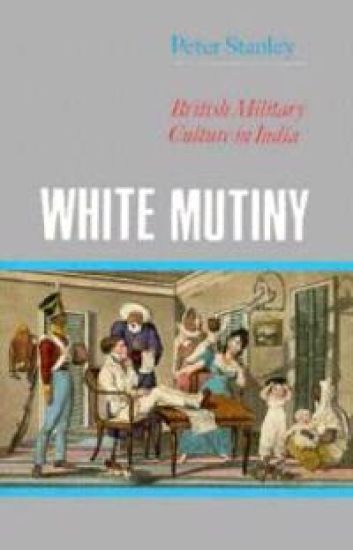
This study traces the composition and culture of the British East India Company's Europeans in the 30 years preceding the Indian uprising of 1857, and the Europeans' protest against their subsequent incorporation into the British Army.
In the White Mutiny of 1859-61--the largest revolt the British army ever faced--European troops operating on behalf of the East India Company rebelled against their transfer to the service of the Queen of England. Through an analysis of the White Mutiny, Peter Stanley provides a portrait of emerging working-class consciousness among the troops and reveals how the British army, the preeminent icon of English imperialism, first maintained, then lost, control over a vast and generally hostile sub-continent. In cantonment offices in Meerut and Calcutta, we find unimpaired the class distinctions and aspirations of contemporary Britain. Penetrating the hidden worlds of the barrack room and the officers' mess, White Mutiny demonstrates the intimate relationship between the military and the social history of British culture in India, and how awareness of each can enrich the other.