

Kirjailija
Peter Szendy
Kirjat ja teokset yhdessä paikassa: 26 kirjaa, julkaisuja vuosilta 2008-2025, suosituimpien joukossa ENSEIGNER LA COMPOSITION. Vertaile teosten hintoja ja tarkista saatavuus suomalaisista kirjakaupoista.
26 kirjaa
Kirjojen julkaisuhaarukka 2008-2025.
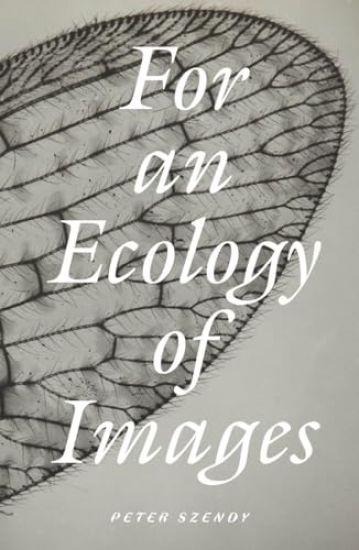
When Susan Sontag first proposed the idea of an "ecology of images," she meant it as an exhortation to be vigilant against the vast surplus of pictures threatening our ability to truly see. Today, beyond the deep anxieties over a diminishing attention economy, concern focuses on the environmental cost of storing and circulating the digital images that confront us with unprecedented speed.Against the disposable rapidity demanded by digital media, Peter Szendy emphasizes the labor and time required for images to develop and come into view. This inquisitive essay takes us from mimicry in the animal kingdom to the history of the shadow, Pliny's story about the birth of painting to Nabokov's butterflies, the first use of slo-mo in film to the first aerial photograph.Praise for Peter Szendy:"From book to book, Peter Szendy is in the process of constructing one of the most singular philosophical oeuvres of our time."- Laurent de Sutter, Focus vif"A writer of exquisite sensitivity and wit, as well as of impeccable clarity."- Gil Anidjar, Columbia University


Already in 1929, Walter Benjamin described "a one hundred per cent image-space." Such an image space saturates our world now more than ever, constituting the visibility in which we live. The Supermarket of the Visible analyzes this space and the icons that populate it as the culmination of a history of the circulation and general commodification of images and gazes. From the first elevators and escalators (tracking shots avant la lettre) to cinema (the great conductor of gazes), all the way down to contemporary eye-tracking techniques that monitor the slightest saccades of our eyes, Peter Szendy offers an entirely novel theory of the intersection of the image and economics. The Supermarket of the Visible elaborates an economy proper to images, icons, in other words, an iconomy. Deleuze caught a glimpse of this when he wrote that "money is the back side of all the images that cinema shows and edits on the front." Since "cinema," for Deleuze, is synonymous with "universe," Szendy argues that this sentence must be understood in its broadest dimension and that a reading of key works in the history of cinema allows us a unique vantage point upon the reverse of images, their monetary implications. Paying close attention to sequences in Hitchcock, Bresson, Antonioni, De Palma, and The Sopranos, Szendy shows how cinema is not a uniquely commercial art form among other, purer arts, but, more fundamentally, helps to elaborate what might be called, with Bataille, a general iconomy. Moving deftly and lightly between political economy, aesthetic theory, and popular movies and television, The Supermarket of the Visible will be a necessary book for anyone concerned with media, philosophy, politics, or visual culture.
Already in 1929, Walter Benjamin described "a one hundred per cent image-space." Such an image space saturates our world now more than ever, constituting the visibility in which we live. The Supermarket of the Visible analyzes this space and the icons that populate it as the culmination of a history of the circulation and general commodification of images and gazes. From the first elevators and escalators (tracking shots avant la lettre) to cinema (the great conductor of gazes), all the way down to contemporary eye-tracking techniques that monitor the slightest saccades of our eyes, Peter Szendy offers an entirely novel theory of the intersection of the image and economics. The Supermarket of the Visible elaborates an economy proper to images, icons, in other words, an iconomy. Deleuze caught a glimpse of this when he wrote that "money is the back side of all the images that cinema shows and edits on the front." Since "cinema," for Deleuze, is synonymous with "universe," Szendy argues that this sentence must be understood in its broadest dimension and that a reading of key works in the history of cinema allows us a unique vantage point upon the reverse of images, their monetary implications. Paying close attention to sequences in Hitchcock, Bresson, Antonioni, De Palma, and The Sopranos, Szendy shows how cinema is not a uniquely commercial art form among other, purer arts, but, more fundamentally, helps to elaborate what might be called, with Bataille, a general iconomy. Moving deftly and lightly between political economy, aesthetic theory, and popular movies and television, The Supermarket of the Visible will be a necessary book for anyone concerned with media, philosophy, politics, or visual culture.
What if our existence is a product of its interruptions? What if the words that structure our lives are themselves governed by the periods and commas that bring them to a close, or our images by the cinematic cuts that mark them off? Are we, like Chekhov's clerk, who dreams of being pursued by angry exclamation marks, or Scorsese's Jake LaMotta, bloodied by one violently edited fight after another, the products of punctuation—or as Peter Szendy asks us to think of it, punchuation? Of Stigmatology elaborates for the first time a general theory of punctuation. Beginning with punctuation marks in the common sense, Peter Szendy goes on to trace the effects of punctuation more broadly, arguing that looking and hearing are not passive acts of reception, but themselves punctuate the images and sounds they take in. Szendy reads an astonishing range of texts and traditions, from medical auscultation to literature (Chekhov, Sterne, Kafka), philosophy (Hegel, Nietzsche, Heidegger, Derrida), psychoanalysis (Lacan), and film (Raging Bull, The Trial, Fight Club). Repeatedly, what Szendy finds in these works is a punctuation that marks experience itself, that seeks (and ultimately fails) to bind the subject to itself. This is the stigmatology of the punctuation mark on the page that structures texts from ancient to digital, as well as the punchuation of experience, as though at the hands of a boxer.

What if our existence is a product of its interruptions? What if the words that structure our lives are themselves governed by the periods and commas that bring them to a close, or our images by the cinematic cuts that mark them off? Are we, like Chekhov's clerk, who dreams of being pursued by angry exclamation marks, or Scorsese's Jake LaMotta, bloodied by one violently edited fight after another, the products of punctuation—or as Peter Szendy asks us to think of it, punchuation? Of Stigmatology elaborates for the first time a general theory of punctuation. Beginning with punctuation marks in the common sense, Peter Szendy goes on to trace the effects of punctuation more broadly, arguing that looking and hearing are not passive acts of reception, but themselves punctuate the images and sounds they take in. Szendy reads an astonishing range of texts and traditions, from medical auscultation to literature (Chekhov, Sterne, Kafka), philosophy (Hegel, Nietzsche, Heidegger, Derrida), psychoanalysis (Lacan), and film (Raging Bull, The Trial, Fight Club). Repeatedly, what Szendy finds in these works is a punctuation that marks experience itself, that seeks (and ultimately fails) to bind the subject to itself. This is the stigmatology of the punctuation mark on the page that structures texts from ancient to digital, as well as the punchuation of experience, as though at the hands of a boxer.
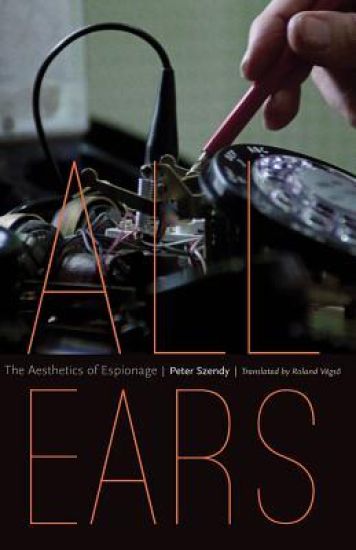
The world of international politics has recently been rocked by a seemingly endless series of scandals involving auditory surveillance: the NSA's warrantless wiretapping is merely the most sensational example of what appears to be a universal practice today. What is the source of this generalized principle of eavesdropping? All Ears: The Aesthetics of Espionage traces the long history of moles from the Bible, through Jeremy Bentham's "panacoustic" project, all the way to the intelligence-gathering network called "Echelon." Together with this archeology of auditory surveillance, Szendy offers an engaging account of spycraft's representations in literature (Sophocles, Shakespeare, Joyce, Kafka, Borges), opera (Monteverdi, Mozart, Berg), and film (Lang, Hitchcock, Coppola, De Palma). Following in the footsteps of Orpheus, the book proposes a new concept of "overhearing" that connects the act of spying to an excessive intensification of listening. At the heart of listening Szendy locates the ear of the Other that manifests itself as the originary division of a "split-hearing" that turns the drive for mastery and surveillance into the death drive.
The world of international politics has recently been rocked by a seemingly endless series of scandals involving auditory surveillance: the NSA's warrantless wiretapping is merely the most sensational example of what appears to be a universal practice today. What is the source of this generalized principle of eavesdropping? All Ears: The Aesthetics of Espionage traces the long history of moles from the Bible, through Jeremy Bentham's "panacoustic" project, all the way to the intelligence-gathering network called "Echelon." Together with this archeology of auditory surveillance, Szendy offers an engaging account of spycraft's representations in literature (Sophocles, Shakespeare, Joyce, Kafka, Borges), opera (Monteverdi, Mozart, Berg), and film (Lang, Hitchcock, Coppola, De Palma). Following in the footsteps of Orpheus, the book proposes a new concept of "overhearing" that connects the act of spying to an excessive intensification of listening. At the heart of listening Szendy locates the ear of the Other that manifests itself as the originary division of a "split-hearing" that turns the drive for mastery and surveillance into the death drive.

The prostheses Peter Szendy explores—those peculiar artifacts known as musical instruments—are not only technical devices but also bodies that live a strange phantom life, as uncanny as a sixth finger or a third lung. The musicological impulse to inventory those bodies that produce sound is called into question here. In Szendy's hands, its respectable corpus of scholarship is read aslant, so as to tease out what it usually prefers to hide: hybrids and grafts produced by active fictions, monsters, and chimera awaiting the opportunity to be embodied. Beyond these singular bodies that music composes and disposes there lies the figure of a collective "social" body ready to emerge amid an innervated apparatus that operates at a distance, telepathically. Phantom Limbs touches on bodies of all shapes and sizes that haunt the edges of music's conceptualizations. Music continually reinvents such bodies and reconvenes them in new collective formations. It is their dynamics and crystallizations that Szendy auscultates on a motley corpus that includes Bach, Diderot, Berlioz, Eisenstein, Disney, and Monk.

The prostheses Peter Szendy explores—those peculiar artifacts known as musical instruments—are not only technical devices but also bodies that live a strange phantom life, as uncanny as a sixth finger or a third lung. The musicological impulse to inventory those bodies that produce sound is called into question here. In Szendy's hands, its respectable corpus of scholarship is read aslant, so as to tease out what it usually prefers to hide: hybrids and grafts produced by active fictions, monsters, and chimera awaiting the opportunity to be embodied. Beyond these singular bodies that music composes and disposes there lies the figure of a collective "social" body ready to emerge amid an innervated apparatus that operates at a distance, telepathically. Phantom Limbs touches on bodies of all shapes and sizes that haunt the edges of music's conceptualizations. Music continually reinvents such bodies and reconvenes them in new collective formations. It is their dynamics and crystallizations that Szendy auscultates on a motley corpus that includes Bach, Diderot, Berlioz, Eisenstein, Disney, and Monk.
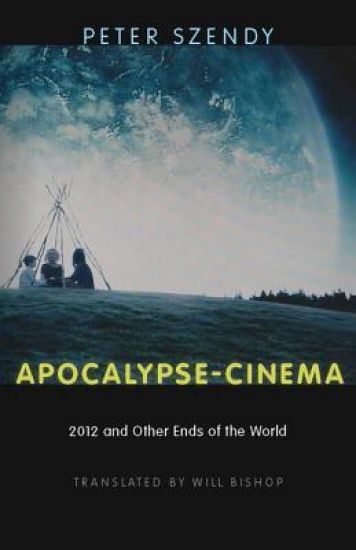
Apocalypse-cinema is not only the end of time that has so often been staged as spectacle in films like 2012, The Day After Tomorrow, and The Terminator. By looking at blockbusters that play with general annihilation while also paying close attention to films like Melancholia, Cloverfield, Blade Runner, and Twelve Monkeys, this book suggests that in the apocalyptic genre, film gnaws at its own limit. Apocalypse-cinema is, at the same time and with the same double blow, the end of the world and the end of the film. It is the consummation and the (self-)consumption of cinema, in the form of an acinema that Lyotard evoked as the nihilistic horizon of filmic economy. The innumerable countdowns, dazzling radiations, freeze-overs, and seismic cracks and crevices are but other names and pretexts for staging film itself, with its economy of time and its rewinds, its overexposed images and fades to white, its freeze-frames and digital touch-ups. The apocalyptic genre is not just one genre among others: It plays with the very conditions of possibility of cinema. And it bears witness to the fact that, every time, in each and every film, what Jean-Luc Nancy called the cine-world is exposed on the verge of disappearing. In a Postface specially written for the English edition, Szendy extends his argument into a debate with speculative materialism. Apocalypse-cinema, he argues, announces itself as cinders that question the "ultratestimonial" structure of the filmic gaze. The cine-eye, he argues, eludes the correlationism and anthropomorphic structure that speculative materialists have placed under critique, allowing only the ashes it bears to be heard.

Apocalypse-cinema is not only the end of time that has so often been staged as spectacle in films like 2012, The Day After Tomorrow, and The Terminator. By looking at blockbusters that play with general annihilation while also paying close attention to films like Melancholia, Cloverfield, Blade Runner, and Twelve Monkeys, this book suggests that in the apocalyptic genre, film gnaws at its own limit. Apocalypse-cinema is, at the same time and with the same double blow, the end of the world and the end of the film. It is the consummation and the (self-)consumption of cinema, in the form of an acinema that Lyotard evoked as the nihilistic horizon of filmic economy. The innumerable countdowns, dazzling radiations, freeze-overs, and seismic cracks and crevices are but other names and pretexts for staging film itself, with its economy of time and its rewinds, its overexposed images and fades to white, its freeze-frames and digital touch-ups. The apocalyptic genre is not just one genre among others: It plays with the very conditions of possibility of cinema. And it bears witness to the fact that, every time, in each and every film, what Jean-Luc Nancy called the cine-world is exposed on the verge of disappearing. In a Postface specially written for the English edition, Szendy extends his argument into a debate with speculative materialism. Apocalypse-cinema, he argues, announces itself as cinders that question the "ultratestimonial" structure of the filmic gaze. The cine-eye, he argues, eludes the correlationism and anthropomorphic structure that speculative materialists have placed under critique, allowing only the ashes it bears to be heard.
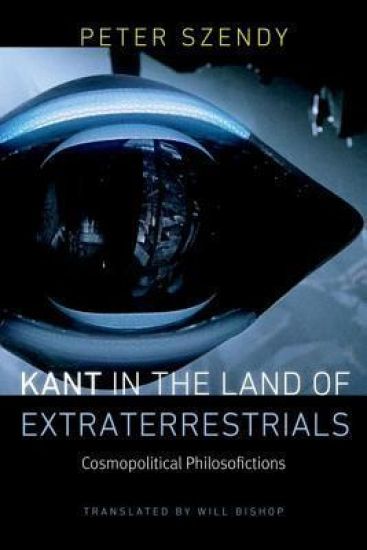
"Yes, Kant did indeed speak of extraterrestrials." This phrase could provide the opening for this brief treatise of philosofiction (as one speaks of science fiction). What is revealed in the aliens of which Kant speaks—and he no doubt took them more seriously than anyone else in the history of philosophy—are the limits of globalization, or what Kant called cosmopolitanism. Before engaging Kantian considerations of the inhabitants of other worlds, before comprehending his reasoned alienology, this book works its way through an analysis of the star wars raging above our heads in the guise of international treaties regulating the law of space, including the cosmopirates that Carl Schmitt sometimes mentions in his late writings. Turning to track the comings and goings of extraterrestrials in Kant's work, Szendy reveals that they are the necessary condition for an unattainable definition of humanity. Impossible to represent, escaping any possible experience, they are nonetheless inscribed both at the heart of the sensible and as an Archimedean point from whose perspective the interweavings of the sensible can be viewed. Reading Kant in dialogue with science fiction films (films he seems already to have seen) involves making him speak of questions now pressing in upon us: our endangered planet, ecology, a war of the worlds. But it also means attempting to think, with or beyond Kant, what a point of view might be.
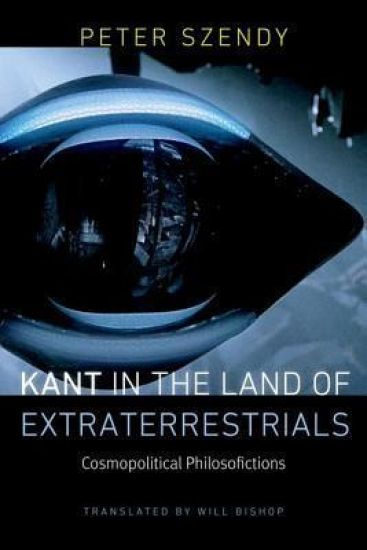
"Yes, Kant did indeed speak of extraterrestrials." This phrase could provide the opening for this brief treatise of philosofiction (as one speaks of science fiction). What is revealed in the aliens of which Kant speaks—and he no doubt took them more seriously than anyone else in the history of philosophy—are the limits of globalization, or what Kant called cosmopolitanism. Before engaging Kantian considerations of the inhabitants of other worlds, before comprehending his reasoned alienology, this book works its way through an analysis of the star wars raging above our heads in the guise of international treaties regulating the law of space, including the cosmopirates that Carl Schmitt sometimes mentions in his late writings. Turning to track the comings and goings of extraterrestrials in Kant's work, Szendy reveals that they are the necessary condition for an unattainable definition of humanity. Impossible to represent, escaping any possible experience, they are nonetheless inscribed both at the heart of the sensible and as an Archimedean point from whose perspective the interweavings of the sensible can be viewed. Reading Kant in dialogue with science fiction films (films he seems already to have seen) involves making him speak of questions now pressing in upon us: our endangered planet, ecology, a war of the worlds. But it also means attempting to think, with or beyond Kant, what a point of view might be.