Kirjojen hintavertailu. Mukana 12 657 676 kirjaa ja 12 kauppaa.

Kirjailija

Peter T. Coleman

Kirjat ja teokset yhdessä paikassa: 10 kirjaa, julkaisuja vuosilta 2013-2026, suosituimpien joukossa The Way Out. Vertaile teosten hintoja ja tarkista saatavuus suomalaisista kirjakaupoista.

Mukana myös kirjoitusasut: PETER T COLEMAN

10 kirjaa

Kirjojen julkaisuhaarukka 2013-2026.

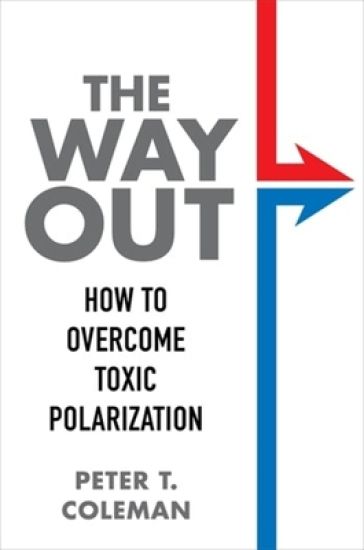
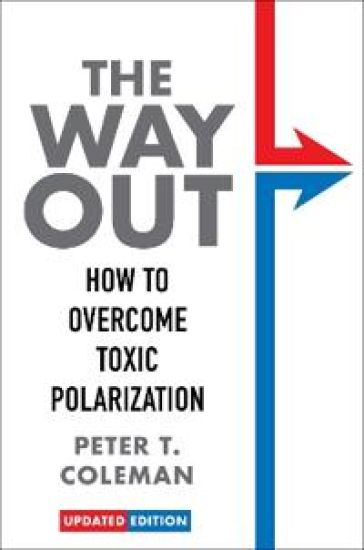
The Way Out

The Way Out

Peter T. Coleman

Columbia University Press
2026
pokkari
When The Way Out was first published in 2021, the partisan divide in the United States had widened to a chasm. Five years later, the crisis has metastasized. Political polarization continues to be personal but has also become more entrenched structurally. Today, our political, media, and digital systems reward outrage, punish moderation, and elevate those who escalate conflict. If we want a less contemptuous politics, we must come together across our differences to redesign the incentive systems that manufacture disdain. How can we loosen the grip of this toxic form of polarization and start redirecting our energies toward our most pressing problems? The Way Out offers an escape from this morass. The social psychologist Peter T. Coleman explores how conflict resolution and complexity science provide guidance for dealing with seemingly intractable political differences, explaining the unexpected ways that deeply rooted oppositions can and do change. Coleman meticulously details principles and practices for navigating and healing the difficult divides in our homes, workplaces, and communities, blending compelling personal accounts from his years of working on entrenched conflicts with lessons from leading-edge research. The Way Out is a vital and timely guide to breaking free from the cycle of mutual contempt in order to better our lives, relationships, and country. This updated edition includes practical plans and exercises for changing individual, social, and systemic practices. Coleman explores lessons learned since the first edition, considering how to transform the institutions that entrench conflict and find sustainable ways to live together.
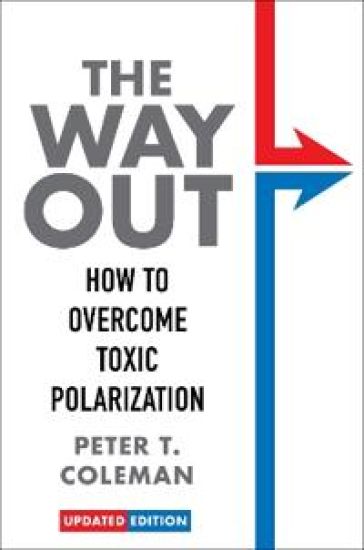
The Way Out

The Way Out

Peter T. Coleman

Columbia University Press
2026
sidottu
When The Way Out was first published in 2021, the partisan divide in the United States had widened to a chasm. Five years later, the crisis has metastasized. Political polarization continues to be personal but has also become more entrenched structurally. Today, our political, media, and digital systems reward outrage, punish moderation, and elevate those who escalate conflict. If we want a less contemptuous politics, we must come together across our differences to redesign the incentive systems that manufacture disdain. How can we loosen the grip of this toxic form of polarization and start redirecting our energies toward our most pressing problems? The Way Out offers an escape from this morass. The social psychologist Peter T. Coleman explores how conflict resolution and complexity science provide guidance for dealing with seemingly intractable political differences, explaining the unexpected ways that deeply rooted oppositions can and do change. Coleman meticulously details principles and practices for navigating and healing the difficult divides in our homes, workplaces, and communities, blending compelling personal accounts from his years of working on entrenched conflicts with lessons from leading-edge research. The Way Out is a vital and timely guide to breaking free from the cycle of mutual contempt in order to better our lives, relationships, and country. This updated edition includes practical plans and exercises for changing individual, social, and systemic practices. Coleman explores lessons learned since the first edition, considering how to transform the institutions that entrench conflict and find sustainable ways to live together.
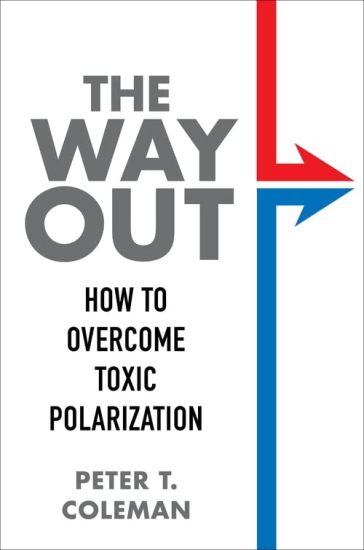
The Way Out

The Way Out

Peter T. Coleman

Columbia University Press
2022
pokkari
The partisan divide in the United States has widened to a chasm. Legislators vote along party lines and rarely cross the aisle. Political polarization is personal, too—and it is making us miserable. Surveys show that Americans have become more fearful and hateful of supporters of the opposing political party and imagine that they hold much more extreme views than they actually do. We have cordoned ourselves off: we prefer to date and marry those with similar opinions and are less willing to spend time with people on the other side. How can we loosen the grip of this toxic polarization and start working on our most pressing problems?The Way Out offers an escape from this morass. The social psychologist Peter T. Coleman explores how conflict resolution and complexity science provide guidance for dealing with seemingly intractable political differences. Deploying the concept of attractors in dynamical systems, he explains why we are stuck in this rut as well as the unexpected ways that deeply rooted oppositions can and do change. Coleman meticulously details principles and practices for navigating and healing the difficult divides in our homes, workplaces, and communities, blending compelling personal accounts from his years of working on entrenched conflicts with lessons from leading-edge research. The Way Out is a vital and timely guide to breaking free from the cycle of mutual contempt in order to better our lives, relationships, and country.
MAKING CONFLICT WORK HARNESSING THE POWER OF DISA
"This book is a necessity . . . Read it." --Leymah Gbowee, 2011 Nobel Peace Prize laureate and Liberian peace activist "Innovative and practical." --Lawrence Susskind, cofounder, Program on Negotiation, Harvard Law School Every workplace is a minefield of conflict, and all office tension is shaped by power. This book teaches you to identify the nature of a conflict, determine your power position relative to anyone opposing you, and to use the best strategy for achieving your goals. These strategies are equally effective for executives, managers and their direct reports, consultants and attorneys--anyone who has ever had a disagreement with someone in their organization. Packed with helpful self-assessment exercises and action plans, Making Conflict Work gives you the tools you need to achieve greater satisfaction and success. "Navigating conflict effectively is an essential component of leadership. Making Conflict Work illustrates when to compromise and when to continue driving forward." --Honorable David N. Dinkins, 106th mayor of the City of New York "An excellent workbook-like guide." --Booklist, starred review
The Way Out

The Way Out

Peter T. Coleman

Columbia University Press
2021
sidottu
The partisan divide in the United States has widened to a chasm. Legislators vote along party lines and rarely cross the aisle. Political polarization is personal, too—and it is making us miserable. Surveys show that Americans have become more fearful and hateful of supporters of the opposing political party and imagine that they hold much more extreme views than they actually do. We have cordoned ourselves off: we prefer to date and marry those with similar opinions and are less willing to spend time with people on the other side. How can we loosen the grip of this toxic polarization and start working on our most pressing problems?The Way Out offers an escape from this morass. The social psychologist Peter T. Coleman explores how conflict resolution and complexity science provide guidance for dealing with seemingly intractable political differences. Deploying the concept of attractors in dynamical systems, he explains why we are stuck in this rut as well as the unexpected ways that deeply rooted oppositions can and do change. Coleman meticulously details principles and practices for navigating and healing the difficult divides in our homes, workplaces, and communities, blending compelling personal accounts from his years of working on entrenched conflicts with lessons from leading-edge research. The Way Out is a vital and timely guide to breaking free from the cycle of mutual contempt in order to better our lives, relationships, and country.
Attracted to Conflict: Dynamic Foundations of Destructive Social Relations

Attracted to Conflict: Dynamic Foundations of Destructive Social Relations

Robin R. Vallacher; Peter T. Coleman; Andrzej Nowak; Lan Bui-Wrzosinska; Larry Liebovitch; Katharina Kugler; Andrea Bartoli

Springer-Verlag Berlin and Heidelberg GmbH Co. K
2015
nidottu
Conflict is inherent in virtually every aspect of human relations, from sport to parliamentary democracy, from fashion in the arts to paradigmatic challenges in the sciences, and from economic activity to intimate relationships. Yet, it can become among the most serious social problems humans face when it loses its constructive features and becomes protracted over time with no obvious means of resolution. This book addresses the subject of intractable social conflict from a new vantage point. Here, these types of conflict represent self-organizing phenomena, emerging quite naturally from the ongoing dynamics in human interaction at any scale—from the interpersonal to the international. Using the universal language and computational framework of nonlinear dynamical systems theory in combination with recent insights from social psychology, intractable conflict is understood as a system locked in special attractor states that constrain the thoughts and actions of the parties to the conflict. The emergence and maintenance of attractors for conflict can be described by means of formal models that incorporate the results of computer simulations, experiments, field research, and archival analyses. Multi-disciplinary research reflecting these approaches provides encouraging support for the dynamical systems perspective. Importantly, this text presents new views on conflict resolution. In contrast to traditional approaches that tend to focus on basic, short-lived cause-effect relations, the dynamical perspective emphasizes the temporal patterns and potential for emergence in destructive relations. Attractor deconstruction entails restoring complexity to a conflict scenario by isolating elements or changing the feedback loops among them. The creation of a latent attractor trades on the tendency toward multi-stability in dynamical systems and entails the consolidation of incongruent (positive) elements into a coherent structure. In the bifurcation scenario, factors are identified that can change the number and types of attractors in a conflict scenario. The implementation of these strategies may hold the key to unlocking intractable conflict, creating the potential for constructive social relations.
Morton Deutsch: A Pioneer in Developing Peace Psychology

Morton Deutsch: A Pioneer in Developing Peace Psychology

Peter T. Coleman; Morton Deutsch

Springer International Publishing AG
2015
nidottu
Commemorating Morton Deutsch’s 95th birthday, this book presents ten major texts by this highly respected social psychologist on war and peace. This first volume presents Deutsch in his role as a leading social science activist on issues of war and peace – writing papers, making speeches and participating in demonstrations. After serving in the U.S. Air Force during World War II and being awarded two Distinguished Flying Cross medals, as a psychologist he was determined to work for a more peaceful world. Influenced by Kurt Lewin, who believed that nothing was as practical as a good theory, Deutsch pursued theoretical work on such issues as cooperation-competition, conflict resolution and social justice with regard to issues of war and peace. As President of the Society for the Study of Peace, Conflict and Violence, the Society for the Psychological Study of Social Issues and the International Society of Political Psychology, he helped to foster social science efforts to make for a more peaceful world.
Morton Deutsch: Major Texts on Peace Psychology

Morton Deutsch: Major Texts on Peace Psychology

Peter T. Coleman; Morton Deutsch

Springer International Publishing AG
2015
nidottu
Commemorating Morton Deutsch’s 95th birthday, this book presents ten major texts by this highly respected social psychologist on war and peace. This second volume presents Deutsch in his role as a leading social science activist on issues of war and peace – writing papers, making speeches and participating in demonstrations. After serving in the U.S. Air Force during World War II and being awarded two Distinguished Flying Cross medals, as a psychologist he was determined to work for a more peaceful world. Influenced by Kurt Lewin, who believed that nothing was as practical as a good theory, Deutsch pursued theoretical work on such issues as cooperation-competition, conflict resolution and social justice with regard to issues of war and peace. As President of the Society for the Study of Peace, Conflict and Violence, the Society for the Psychological Study of Social Issues and the International Society of Political Psychology, he helped to foster social science efforts to make for a more peaceful world.
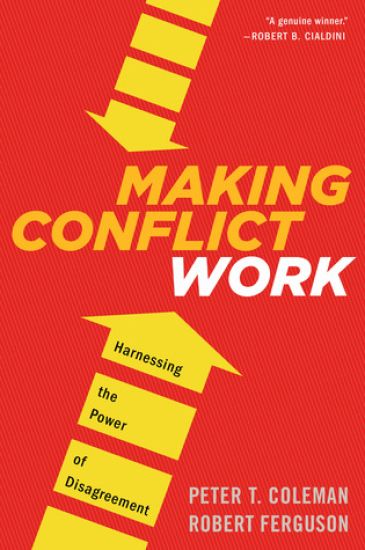
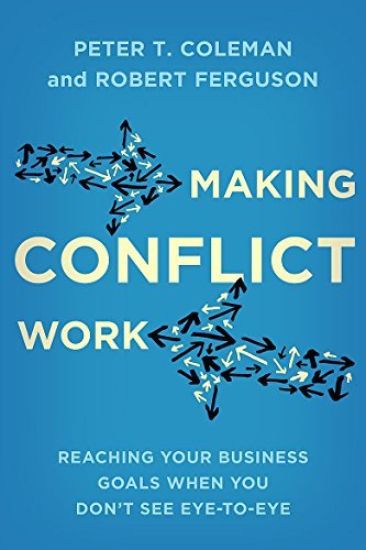
Making Conflict Work

Making Conflict Work

Peter T. Coleman; Robert Ferguson

Piatkus Books
2014
pokkari
'Coleman and Ferguson have done something remarkable: they've written an evidence-based book on the complex topic of conflict and made it easy to read, easy to understand, and, best of all, easy to use. A genuine winner' Robert B. Cialdini, author of Influence: The Psychology of PersuasionA PRACTICAL GUIDE TO NAVIGATING WORKPLACE CONFLICTS Work conflict is risky. It can go bad and poison employee health, work relationships and organizational climates, or it can go well and help to energize problem solving, innovation and bottom-line effectiveness. Managing conflicts up and down the chain of command at work can be particularly treacherous, as power differences complicate conflicts and constrain response options. Organizations are rife with stories of executives and managers who abuse their power, employees who overstep their authority, and the resulting conflicts that get stuck in downward spirals. When people find themselves in conflict, they immediately become aware of the balance of power in the situation or relationship: 'Hey, you work for me, so back off!', or 'Wow, he is much bigger and drunker than I thought he was before I told him to shut up', so understanding how conflict and power affect each other is vital to effective conflict management.In Making Conflict Work, Peter Coleman and Robert Ferguson, leading experts in the field of conflict resolution, address the key role of power in workplace tension. Coleman and Ferguson explain how power dynamics function and provide step-by-step guidance to determining your standing in a conflict and identifying and applying the strategies that will lead to the best resolution. Drawing on the authors' years of research and consulting experience, Making Conflict Work offers seven new strategies and dozens of tactics for negotiating disputes at all levels of an organization. This powerful approach can turn workplace tensions into catalysts for creativity, innovation, and meaningful change.
Attracted to Conflict: Dynamic Foundations of Destructive Social Relations

Attracted to Conflict: Dynamic Foundations of Destructive Social Relations

Robin R. Vallacher; Peter T. Coleman; Andrzej Nowak; Lan Bui-Wrzosinska; Larry Liebovitch; Katharina Kugler; Andrea Bartoli

Springer-Verlag Berlin and Heidelberg GmbH Co. K
2013
sidottu
Conflict is inherent in virtually every aspect of human relations, from sport to parliamentary democracy, from fashion in the arts to paradigmatic challenges in the sciences, and from economic activity to intimate relationships. Yet, it can become among the most serious social problems humans face when it loses its constructive features and becomes protracted over time with no obvious means of resolution. This book addresses the subject of intractable social conflict from a new vantage point. Here, these types of conflict represent self-organizing phenomena, emerging quite naturally from the ongoing dynamics in human interaction at any scale—from the interpersonal to the international. Using the universal language and computational framework of nonlinear dynamical systems theory in combination with recent insights from social psychology, intractable conflict is understood as a system locked in special attractor states that constrain the thoughts and actions of the parties to the conflict. The emergence and maintenance of attractors for conflict can be described by means of formal models that incorporate the results of computer simulations, experiments, field research, and archival analyses. Multi-disciplinary research reflecting these approaches provides encouraging support for the dynamical systems perspective. Importantly, this text presents new views on conflict resolution. In contrast to traditional approaches that tend to focus on basic, short-lived cause-effect relations, the dynamical perspective emphasizes the temporal patterns and potential for emergence in destructive relations. Attractor deconstruction entails restoring complexity to a conflict scenario by isolating elements or changing the feedback loops among them. The creation of a latent attractor trades on the tendency toward multi-stability in dynamical systems and entails the consolidation of incongruent (positive) elements into a coherent structure. In the bifurcation scenario, factors are identified that can change the number and types of attractors in a conflict scenario. The implementation of these strategies may hold the key to unlocking intractable conflict, creating the potential for constructive social relations.