Kirjojen hintavertailu. Mukana 12 595 353 kirjaa ja 12 kauppaa.

Kirjailija

Peter Tuffrey

Kirjat ja teokset yhdessä paikassa: 99 kirjaa, julkaisuja vuosilta 1995-2025, suosituimpien joukossa Askern and Norton. Vertaile teosten hintoja ja tarkista saatavuus suomalaisista kirjakaupoista.

99 kirjaa

Kirjojen julkaisuhaarukka 1995-2025.

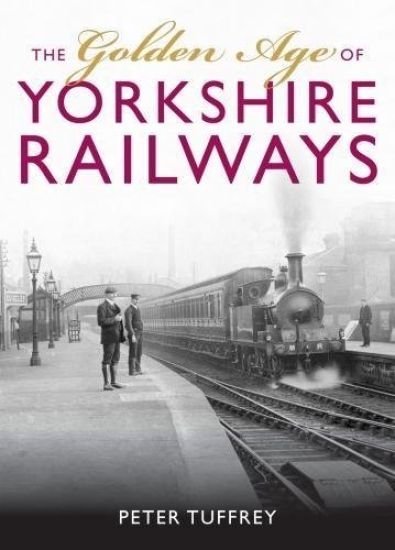
Golden Age of Yorkshire Railways

Golden Age of Yorkshire Railways

Peter Tuffrey

Great Northern Books Ltd
2017
sidottu
The prequel to Peter Tuffrey's successful 2016 title The Last Years of Yorkshire Steam. The period 1900 to 1948 has long been considered to be the Golden Age of Britain's railways and it is to be seen in Yorkshire in all its glory in this splendid book.
North Yorkshire Town and Villages

North Yorkshire Town and Villages

Peter Tuffrey

Fonthill Media
2016
nidottu
Delving once more into the depths of the Yorkshire Post's photographic files and newspaper archives, Peter Tuffrey has come up with a treasure trove of pictures and stories that quite marvellously capture the flavour of life in North Yorkshire during the 1940s, 1950s, 1960s and 70s. This part of the county, snuggling alongside the Yorkshire Dales and North Yorkshire Moors, is renowned for its association with the agricultural world and many former farming activities are featured. Additionally, we witness redevelopment taking place as well as the threat motorised transport will bring in future years to the numerous small and quaint villages. The book also finds time to illustrate well-known landmarks, country estates as well as hi-lighting quirky and eccentric events. Benningborough Hall, Castle Howard, Studley Royal are just a few of the country estates included. A stop off at the two renowned railway heritage sites the North Yorkshire Moors Railway and Embsay and Bolton Abbey Steam is also included. York, the main city in the region, is seen in all its quaint olde world glory in pictures dating from the 1940s. These, it may be stated, show the area long before it became a massive tourist attraction. This book will provide a worthy companion to the author's earlier publication featuring West Yorkshire Towns, Cities and Villages.
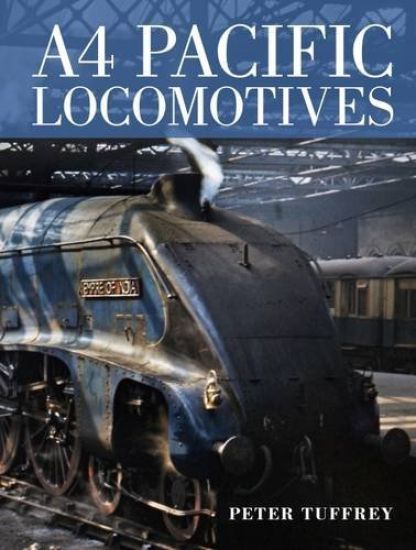
A4 Pacific Locomotives

A4 Pacific Locomotives

Peter Tuffrey

Ian Allan Publishing
2016
sidottu
The 'A4' class of Pacific locomotives, designed by Sir Nigel Gresley for the London & North Eastern Railway in the 1930s, was arguably the most distinctive type of steam locomotive built in Britain. Their streamlined design not only reflected the art deco and modernist style of the era but was also functional, enabling them to travel efficiently at high speeds. On 3 July 1938 the most famous locomotive in the class, Mallard, broke the world speed record for a steam locomotive, travelling at 126mph. This record has never been broken. A total of 35 of these beautiful locomotives were built from 1935-38. The efficiency and speed of Gresley's design ensured they continued in top link service into the BR era, particularly London-Edinburgh but also in later years on the hilly Glasgow-Aberdeen route. In 2013, to mark the 75th anniversary of Mallard's record breaking run, all six surviving A4s were gathered together in the UK for the first time since the 1960s and fittingly Bittern set a new world speed record of 93mph for a preserved steam locomotive.This is a glorious history of the construction, design and service of the 'A4s' for over 30 years with the LNER and British Railways, and an uplifting account of the career of the six remaining A4s in preservation.
Cock O' the North

Cock O' the North

Peter Tuffrey

Fonthill Media
2014
sidottu
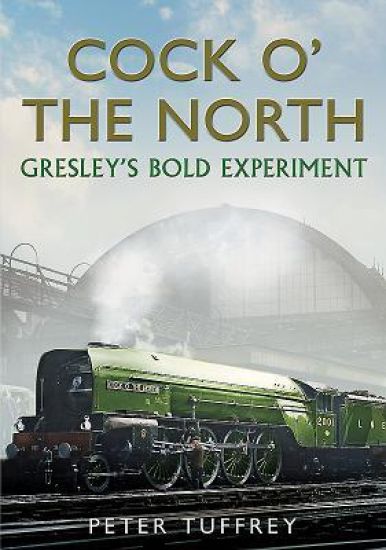
On 22 May 1934 a zenith of locomotive construction in the UK was reached when an enormous new locomotive entered traffic for the London & North Eastern Railway Company. The impressive engine was P2 Class no. 2001 Cock o' the North and it was painstakingly erected to the designs of eminent locomotive engineer H.N. Gresley (later Sir) at the company's sprawling Doncaster Works.Cock o' the North was equipped with number of new and experimental features and this created quite a stir in the highly critical railway world and with the wider general public. These features included; Kylala-Chapelon (Kylchap) double blastpipe and chimney, Lentz poppet valves and rotary cam valve gear, A.C.F.I feedwater heater, V-shaped cab front, streamlined steam passages and a 50 sq. ft firebox grate area. No. 2001 also had a 2-8-2 or 'Mikado' wheel arrangement and, while it was not the first engine in Britain to have such configuration (the Gresley P1 Class locomotives of 1925 were the pioneers), Cock o' the North was the first engine intended for use on express passenger traffic to be built as a 'Mikado'.This book is the first one to feature the entire history of Cock o' the North as a single subject.With detailed research and a remarkable selection of photographs it examines and illustrates many aspects of the locomotive including: the name derivation, construction, trial runs, trial tests, the controversial rebuilding by Gresley's successor, Edward Thompson, the involvement in the Balby Bridge crash, and final withdrawal from service. Locomotive developments at home and abroad during the first half of the 20th century are also chartered as well as Nigel Gresley's rise from Great Northern Railway Company Locomotive Superintendent to LNER Chief Mechanical Engineer. Having understood Gresley's motivation behind building the locomotive, readers are then armed with enough information to ask themselves whether his bold experiment of building the largest steam passenger locomotive Britain has ever seen was a success and achieved the intentions of its creator.
Early Tramways of  Yorkshire

Early Tramways of Yorkshire

Peter Tuffrey

Fonthill Media
2014
nidottu
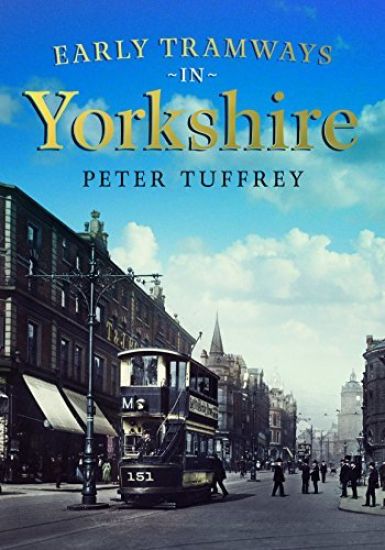
It has often been said that the world was horse-drawn before the introduction of electric tramways. So, the establishment of a new and relatively cheap mode of transport was a revelation to many people enabling them to travel, work and play beyond their immediate surroundings. The opening of a tramway route captured everyone's imagination, ensuring kids, and adults (and the occasional dog) would turn out to witness the event, always orchestrated by groups of local civic dignitaries. This book via breathtaking, pin sharp pictures - taken from rare postcards and exclusive glass plate negatives - lavishly illustrates the early years of tramways across Yorkshire, from Sheffield to Hull, from Doncaster to Keighley and areas in-between including, Rotherham, Bradford, Halifax, Huddersfield and Leeds. The onlooker today, besides being at one with the enthralled locals, celebrating their new tramway systems, will not resist being enchanted by the everyday street scenes and people going about their daily lives, examples of which abound page after page in this glimpse into a long-forgotten age.
The GNR and LNER in Doncaster

The GNR and LNER in Doncaster

Peter Tuffrey

Amberley Publishing
2013
nidottu
When the Great Northern Railway and London & North Eastern Railway operated in Doncaster, it was the most exciting period in the town's history, argues Peter Tuffrey. Yet, if it hadn't been for Doncaster MP Edmund Beckett Denison the railway and the railway workshops may never have come to the area. Having persuaded the GNR to extend their line from London to York through the town, he then coaxed the company to transfer its locomotive repair workshops from Boston to Doncaster. Thereafter, the town's reputation grew: it became known as a place where the latest designs for locomotives and carriages were conceived and brought to life to enrich the nation's railways. Sir Nigel Gresley was the architect of much of this success. Working first from Doncaster and then from his offices in London, he constantly kept in touch with the local Plant Works, as it became known, where many of his outstanding engines, including the Flying Scotsman and Mallard, were produced. Mention must also be made of his marvellous carriages, particularly the Coronation, Silver Jubilee and West Riding sets. These and many more are illustrated in this book. Sadly, the important role Doncaster once played in the country's rail network is now perhaps lost forever. But hopefully this book will go some way to illustrate and record the glorious past of the GNR and LNER in Doncaster.
Tram Disasters

Tram Disasters

Peter Tuffrey

Fonthill Media
2013
nidottu
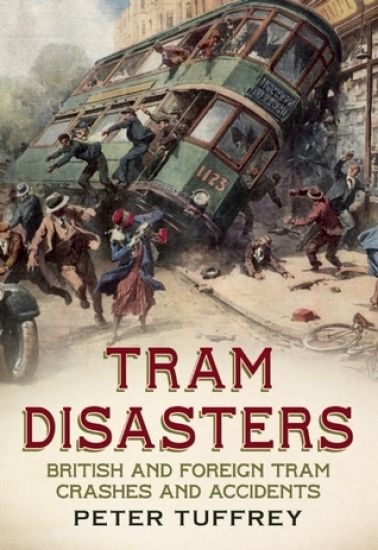
Peter Tuffrey has always been fascinated by trams, just as other people are captivated by racing cars, motorcars, steam locomotives and buses. He can't explain why, but it all began over thirty years ago when he bought a glass plate photographic collection which depicted, with pin sharp clarity, numerous Doncaster trams. From there he moved on to collecting tram crash postcards and helped Sheffield author Brian Hinchliffe produce a small tram crash booklet in 1990. Since that time Peter has collected many more tram crash pictures. Why the fascination with crashes? That's unexplainable too. But disasters hold people's fascination whether they involve aeroplanes, fires, explosions etc. So, offering no plausible rational explanations or excuses, this book boldly illustrates British and Foreign tram crashes from the late nineteenth century to the present day. In certain instances trams have also fallen victim of enemy aerial action and Peter has felt that dramatic pictures of those incidents has warranted them being included here. But, regardless of whether the reader is interested in trams, or disasters of any type, this book also has a wealth of interest for those fascinated by the changing transport scene over the last century.
East Yorkshire Railway Stations

East Yorkshire Railway Stations

Peter Tuffrey

Amberley Publishing
2012
nidottu
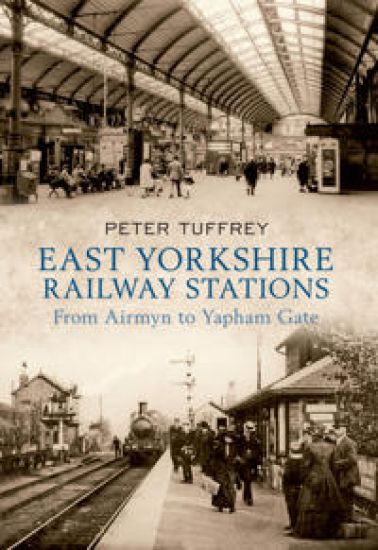
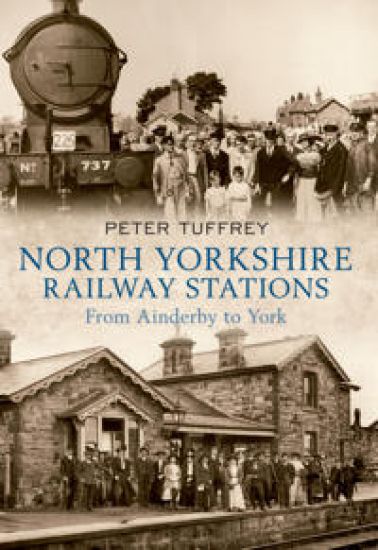
East Yorkshire Railway Stations is Peter Tuffrey's last book in the Yorkshire Stations series which began over a year ago, providing an A to Z list of railway stations in the area. A fair proportion of East Yorkshire stations were designed by G. T. Andrews, and we see some of the architect's more ambitious designs here, particularly when looking at Stamford Bridge and Nafferton stations. Some have even become listed buildings affording future generations a glimpse into the splendour of Victorian railway station architecture. A sizeable batch of pictures was provided by Alan Young and Nick Catford - two stalwarts of the Disused Stations website. These include many taken by the late John Mann. Naturally, stations were lost with Beeching's closure of branch lines and their fate then became uncertain. Some have survived intact, others been altered sensitively or rendered completely unrecognisable, and the remainder have been lost completely and their sites redeveloped. In this book numbering over 220 images we see them illustrated in both their glory and their decline.
Yorkshire People at Work

Yorkshire People at Work

Peter Tuffrey

Amberley Publishing
2012
nidottu
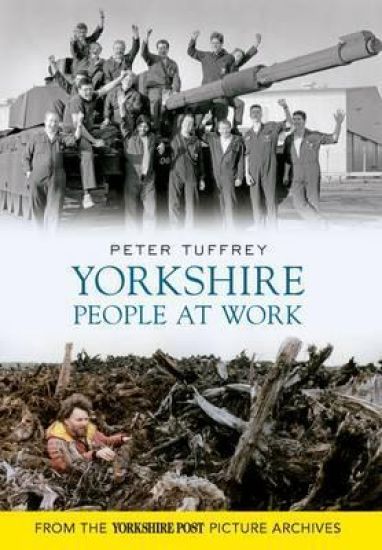
Delving once more into the colossal photographic archives of the Yorkshire Post, Peter Tuffrey has produced another fascinating publication: Yorkshire People at Work. Whilst trying to illustrate the areas of work for which the county is perhaps best known - railways, fishing, textiles and steel making - Peter quickly realised that the range of occupations was enormous not to mention intriguing. Consequently, the book is unpredictable and exciting. It includes fire eaters, bakers, buskers, model makers, train drivers, and undertakers to mention only a few. Peter admits to choosing jobs that he could never attempt himself but that is of no consequence because it all adds up to a marvellous catalogue of the many diverse professions in Yorkshire. From the many thousands of pictures perused over a long period, the final number for inclusion in the book was whittled down to around 225. The pictures owe much to the Yorkshire Post's staff photographers' ability to get the best out of a subject by means of clever camera angles and imaginative compositions. Each picture also has concise informative captions alongside, which complete this celebration of Yorkshire People at Work.
South Yorkshire's Cinemas & Theatres

South Yorkshire's Cinemas & Theatres

Peter Tuffrey

Amberley Publishing
2011
nidottu
Peter Tuffrey is saddened when looking at old, surviving cinema buildings. They have become ugly, disfigured structures, struggling for an alternative use in a street or landscape. Yet, who in the first half of the twentieth century could have predicted that 'going to the flicks' and the theatre would be largely superseded by television? In South Yorkshire, where industry was once rampant, there was a great need for entertainment. Therefore it was only natural that the new film industry should spawnpurpose-built cinemas in great numbers across the entire South Yorkshire area. In the late 1950s and early 1960s cinemas and theatres started introducing bingo part-time, and then full-time. For a period this was a moderate success, but not many survive as bingo venues today and full-scale demolition has taken place. A small number of venues have become snooker halls, but conjuring up uses for large buildings is a major problem and continues to be so for those still hanging on to survival. So, arguing that it is fascinating to look back at these old buildings in their prime, Peter is pleased to offer South Yorkshire's Cinemas & Theatres. It will remind older readers of those former halcyon days and give younger ones a reflection of how people once entertained themselves.
Central Sheffield Through Time

Central Sheffield Through Time

Peter Tuffrey

AMBERLEY PUBLISHING
2011
nidottu
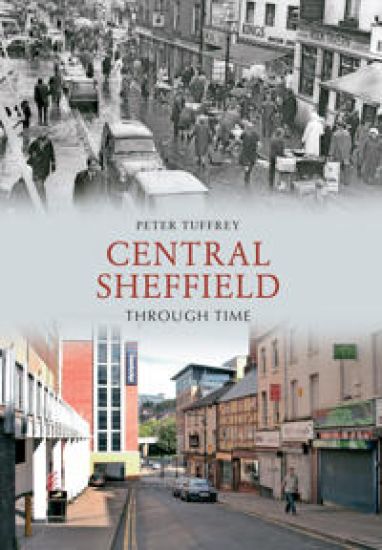
Sheffield city centre suffered heavily in the Luftwaffe attacks of December 1940. More than 660 lives were lost and many houses, buildings, and business premises were destroyed in the city centre. Rebuilding was slow and there were no signs of normality until the 1960s. This peaked in the 1970s, until a severe economic decline followed in the ensuing decade, resulting in the closure of many of Sheffield's steel mills and associated industries.In compiling this book Peter Tuffrey has tried to illustrate and describe how certain areas of the city centre have changed following the Blitz, economic decline, and regeneration through the City Centre Strategy. More importantly, it is a fitting tribute to all those people who lost their lives in the terrible nights during December 1940, and the thousands made redundant throughout the 1980s.
Doncaster & District

Doncaster & District

Peter Tuffrey

The History Press Ltd
2011
nidottu
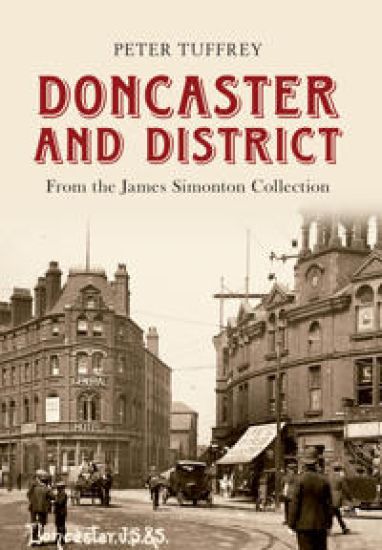
James Simonton, founder of the J.S. & S. postcard business, came to Doncaster around 1908, settling in the outlying village of Wadworth. His three sons, James junior, Frederick and Francis, were all initially involved in the family business, and between 1908 and 1950 the firm photographed virtually every street and numerous local events in the towns and villages within a twenty-mile radius of Doncaster, producing thousands of topographical picture postcard views of Doncaster and its environs at the dawn of the twentieth century. Illustrated with 200 images of shops, street scenes, buildings and the transport of yesteryear, and accompanied by informative captions, this fascinating book captures the Doncaster of the past. It is an essential guide for lovers of photography and for anyone with an interest in the history of the area.