Kirjojen hintavertailu. Mukana 12 514 221 kirjaa ja 12 kauppaa.
Kirjailija
Peter Vale
Kirjat ja teokset yhdessä paikassa: 7 kirjaa, julkaisuja vuosilta 2012-2023, suosituimpien joukossa South Africa, Race and the Making of International Relations. Vertaile teosten hintoja ja tarkista saatavuus suomalaisista kirjakaupoista.
Mbongiseni Buthelezi; Peter Vale; Karl von Holdt; Robyn Foley; Ryan Brunette; Jonathan Klaaren; Cherese Thakur; Devi Pillay; Luke Spiropoulos; Reg Rumney; Sizwe Mpofu-Walsh; Michael Marchant; Hennie van Vuuren; Patrick Heller; Barney Pityana
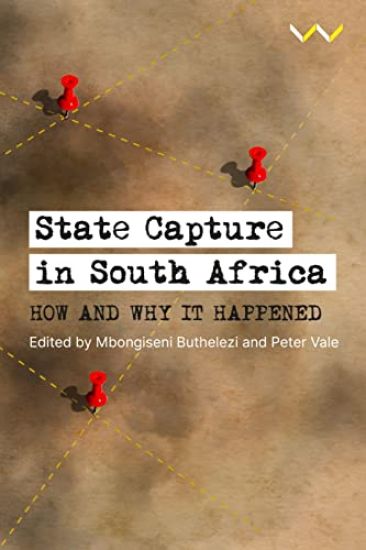
A multidisciplinary analysis of how state capture unfolded in South Africa and was contested within both civil society and the state itself. It presents a scholarly and empirical understanding of how things went awry, even with various regulating bodies in place, and how to prevent state capture from happening again in the future. The metaphor of 'state capture' has dominated South Africa's political discourse in the post-Zuma presidency era. What is state capture and how does it manifest? Is it just another example of a newly independent, failed African state? And is it unique to South Africa? The contributors in this collection try to explain the phenomenon from a variety of viewpoints and disciplines. All hold fast to the belief that the democracy that promised the country so much when apartheid ended has been significantly eroded, resulting in most citizens expressing a loss of hope for the future. Read together, the essays cumulatively show not only how state capture was enabled and who benefitted, but also how and by whom it was scrutinised and exposed in order to hold those in power accountable. The book aims to present a scholarly and empirical understanding of how things went awry, even with various regulating bodies in place, and how to prevent state capture from happening again in the future.
Mbongiseni Buthelezi; Peter Vale; Karl Von Holdt; Robyn Foley; Ryan Brunette; Jonathan Klaaren; Cherese Thakur; Devi Pillay; Luke Spiropoulos; Reg Rumney; Sizwe Mpofu-Walsh; Michael Marchant; Hennie Van Vuuren; Patrick Heller; Barney Pityana
A multidisciplinary analysis of how state capture unfolded in South Africa and was contested within both civil society and the state itself. It presents a scholarly and empirical understanding of how things went awry, even with various regulating bodies in place, and how to prevent state capture from happening again in the future. The metaphor of 'state capture' has dominated South Africa's political discourse in the post-Zuma presidency era. What is state capture and how does it manifest? Is it just another example of a newly independent, failed African state? And is it unique to South Africa? The contributors in this collection try to explain the phenomenon from a variety of viewpoints and disciplines. All hold fast to the belief that the democracy that promised the country so much when apartheid ended has been significantly eroded, resulting in most citizens expressing a loss of hope for the future. Read together, the essays cumulatively show not only how state capture was enabled and who benefitted, but also how and by whom it was scrutinised and exposed in order to hold those in power accountable. The book aims to present a scholarly and empirical understanding of how things went awry, even with various regulating bodies in place, and how to prevent state capture from happening again in the future.
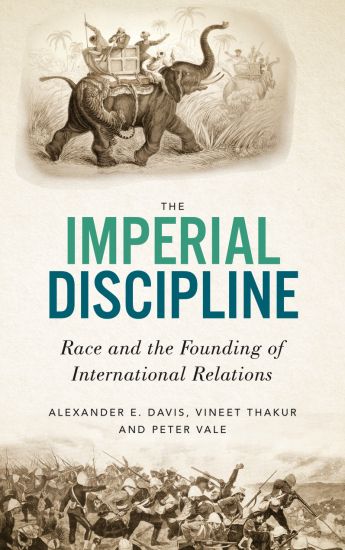
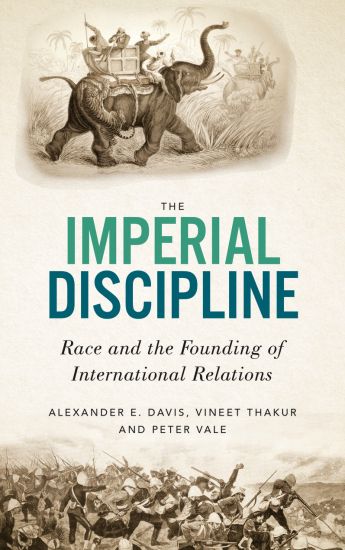
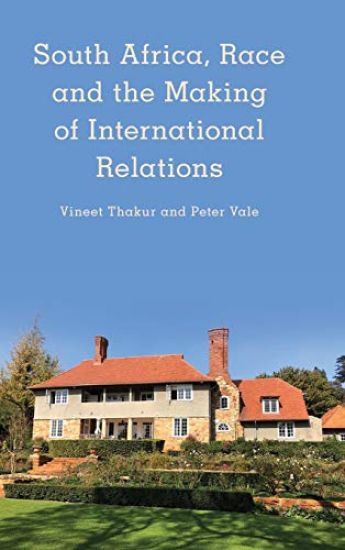
This book questions the accepted origins of the field of International Relations (IR). Commonly understood to have emerged from the horrors of WW1 with the goal of bringing about world peace, the authors argue that on the contrary, IR came from a somewhat less noble tradition – that of the Round Table. The Round Table were a network of imperialists emerging in the late 1800s across five key British imperial societies: Australia, Canada, New Zealand, South Africa and India. Their aim was to improve imperial governance, placing the empire into a position to control world affairs. Although they ultimately failed to rearrange world order according to their vision, they did help to build what we now call the discipline of IR. The Round Table's 'scientific method' for the study of world affairs was rapidly subsumed into each geopolitical context. Through telling this story, the authors recover it, and interrogate its meanings for the discipline of IR today. They show the importance of the Global South to IR's foundations, and argue that IR scholarship in this period was intertwined with imperial racial thought in ways that it should not and cannot forget.
This book offers readers an alternative history of the origins of the discipline of International Relations. Conventional, western histories of the discipline point to 1919 as the year of the ‘birth of the discipline’ with two seminal initiatives – setting up of the first Chair of IR at Aberystwyth and the founding of the Institute of International Relations on the side-lines of the Paris Peace Conference. From these events, International Relations is argued to have been established as a path to create peace in the post-War era and facilitated through a scientific study of international affairs. International Relations was therefore, both a field of study and knowledge production and a plan of action. This pathbreaking book challenges these claims by presenting an alternative narrative of International Relations. In this book, we make three interconnected arguments. First, we argue that the natal moment in the founding of IR is not World War I – as is generally believed – but the Second Anglo Boer War. Second, we argue that the ideas, methods and institutions that led to the making of IR were first thrashed out in South Africa – in Johannesburg, in fact. Finally, this South African genealogy of IR, we show in the book, allows us to properly investigate the emergence of academic IR at the interstices of race, Empire and science.