Kirjailija
Peter Watson
Kirjat ja teokset yhdessä paikassa: 40 kirjaa, julkaisuja vuosilta 1998-2026, suosituimpien joukossa On the Front Foot. Vertaile teosten hintoja ja tarkista saatavuus suomalaisista kirjakaupoista.
40 kirjaa
Kirjojen julkaisuhaarukka 1998-2026.

Der deutsche Genius. Das Standardwerk zur deutschen Geistes- und Kulturgeschichte
Peter Watson
Anaconda Verlag
2025
sidottu

The third in Peter Watson's spiritual trilogy, including THE GERMAN GENIUS and THE FRENCH MIND: a masterful and epic intellectual history of Britain
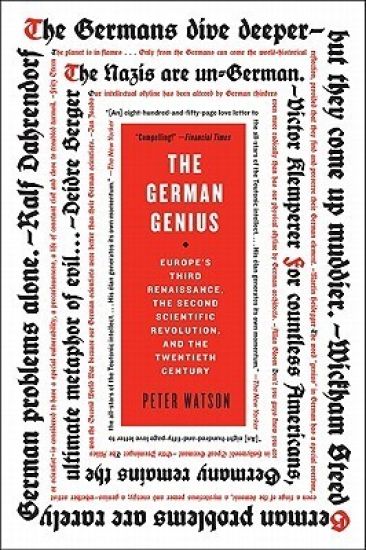
The German Genius is a virtuoso cultural history of German ideas and influence, from 1750 to the present day, by acclaimed historian Peter Watson (Making of the Modern Mind, Ideas). From Bach, Goethe, and Schopenhauer to Nietzsche, Freud, and Einstein, from the arts and humanities to science and philosophy, The German Genius is a lively and accessible review of over 250 years of German intellectual history. In the process, it explains the devastating effects of World War II, which transformed a vibrant and brilliantly artistic culture into a vehicle of warfare and destruction, and it shows how the German culture advanced in the war's aftermath.

An Introduction to Artificial Psychology
Hojjatollah Farahani; Marija Blagojevic; Parviz Azadfallah; Peter Watson; Forough Esrafilian; Sara Saljoughi
Springer International Publishing AG
2024
nidottu
Artificial Psychology (AP) is a highly multidisciplinary field of study in psychology. AP tries to solve problems which occur when psychologists do research and need a robust analysis method. Conventional statistical approaches have deep rooted limitations. These approaches are excellent on paper but often fail to model the real world. Mind researchers have been trying to overcome this by simplifying the models being studied. This stance has not received much practical attention recently. Promoting and improving artificial intelligence helps mind researchers to find a holistic model of mental models. This development achieves this goal by using multiple perspectives and multiple data sets together with interactive, and realistic models. In this book, the methodology of approximate inference in psychological research from a theoretical and practical perspective has been considered. Quantitative variable-oriented methodology and qualitative case-oriented methods are both used to explainthe set-oriented methodology and this book combines the precision of quantitative methods with information from qualitative methods. This is a book that many researchers can use to expand and deepen their psychological research and is a book which can be useful to postgraduate students. The reader does not need an in-depth knowledge of mathematics or statistics because statistical and mathematical intuitions are key here and they will be learned through practice. What is important is to understand and use the new application of the methods for finding new, dynamic and realistic interpretations. This book incorporates theoretical fuzzy inference and deep machine learning algorithms in practice. This is the kind of book that we wished we had had when we were students. This book covers at least some of the most important issues in mind research including uncertainty, fuzziness, continuity, complexity and high dimensionality which are inherent to mind data. These are elements of artificialpsychology. This book implements models using R software.

An Introduction to Artificial Psychology
Hojjatollah Farahani; Marija Blagojevic; Parviz Azadfallah; Peter Watson; Forough Esrafilian; Sara Saljoughi
Springer International Publishing AG
2023
sidottu
Artificial Psychology (AP) is a highly multidisciplinary field of study in psychology. AP tries to solve problems which occur when psychologists do research and need a robust analysis method. Conventional statistical approaches have deep rooted limitations. These approaches are excellent on paper but often fail to model the real world. Mind researchers have been trying to overcome this by simplifying the models being studied. This stance has not received much practical attention recently. Promoting and improving artificial intelligence helps mind researchers to find a holistic model of mental models. This development achieves this goal by using multiple perspectives and multiple data sets together with interactive, and realistic models. In this book, the methodology of approximate inference in psychological research from a theoretical and practical perspective has been considered. Quantitative variable-oriented methodology and qualitative case-oriented methods are both used to explainthe set-oriented methodology and this book combines the precision of quantitative methods with information from qualitative methods. This is a book that many researchers can use to expand and deepen their psychological research and is a book which can be useful to postgraduate students. The reader does not need an in-depth knowledge of mathematics or statistics because statistical and mathematical intuitions are key here and they will be learned through practice. What is important is to understand and use the new application of the methods for finding new, dynamic and realistic interpretations. This book incorporates theoretical fuzzy inference and deep machine learning algorithms in practice. This is the kind of book that we wished we had had when we were students. This book covers at least some of the most important issues in mind research including uncertainty, fuzziness, continuity, complexity and high dimensionality which are inherent to mind data. These are elements of artificialpsychology. This book implements models using R software.
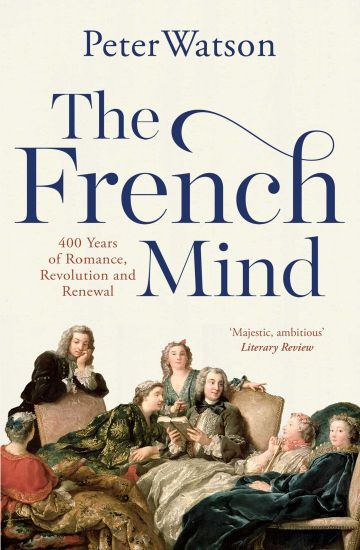
A sweeping tour of French history from the 17th century to the present day from the highly acclaimed author of The German Genius
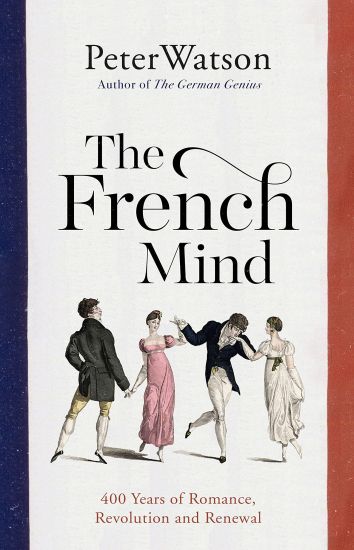
A sweeping tour of French history from the 17th century to the present day from the highly acclaimed author of The German Genius


This scintillating narrative of spies and science shows how the atomic bomb was the unnecessary product of mistrust and deceit between America and Britain--resulting in a threat of nuclear war that still haunts us today.
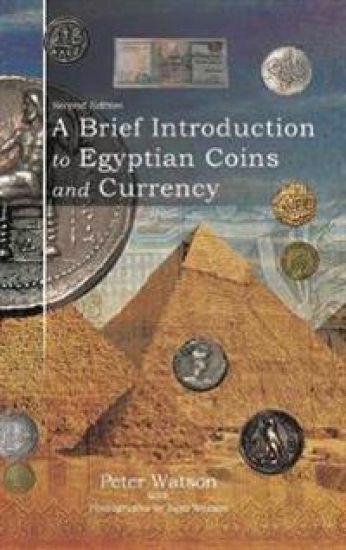
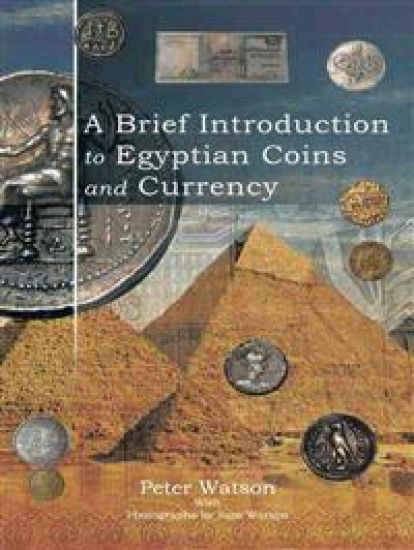
There are many books that discuss the coins from specific periods of Egyptian history, but there are none that consider the coins from the whole of that history. This work aims to provide such an account, covering the currency from ancient times through the Ptolemaic, Roman, Byzantine, Arabic, and Ottoman periods to modern times. An important feature of the work is the illustration of a selection of about 150 coins and banknotes that represent the major types throughout that history. Adjunct to this selection of these illustrations is a "key" that provides further numismatic detail about each of the coins in it. A difficulty with Egyptian coinage is that it includes inscriptions in many languages. Some notes in the key to the coins and in the appendices are provided to give a little help in this. In addition to providing a chronological account of the currency, the coins and notes are related to aspects of the daily lives of the people of each period and also to some aspects of the development of the state, particularly its architecture.
There are many books that discuss the coins from specific periods of Egyptian history, but there are none that consider the coins from the whole of that history. This work aims to provide such an account, covering the currency from ancient times through the Ptolemaic, Roman, Byzantine, Arabic, and Ottoman periods to modern times. An important feature of the work is the illustration of a selection of about 150 coins and banknotes that represent the major types throughout that history. Adjunct to this selection of these illustrations is a "key" that provides further numismatic detail about each of the coins in it. A difficulty with Egyptian coinage is that it includes inscriptions in many languages. Some notes in the key to the coins and in the appendices are provided to give a little help in this. In addition to providing a chronological account of the currency, the coins and notes are related to aspects of the daily lives of the people of each period and also to some aspects of the development of the state, particularly its architecture.

This scintillating narrative of spies and science shows how the atomic bomb was the unnecessary product of mistrust and deceit between America and Britain--resulting in a threat of nuclear war that still haunts us today.
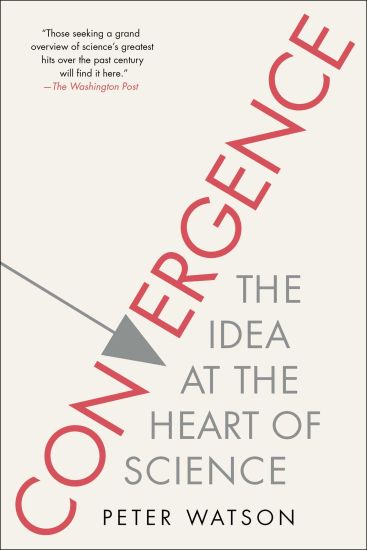
"Those seeking a grand overview of science's greatest hits over the past century will find it here" (The Washington Post). Peter Watson's bold history of science offers a powerful argument--that the many disparate scientific branches are converging on the same truths. Convergence is a history of modern science with an original and significant twist. Various scientific disciplines, despite their very different beginnings, have been coming together over the years, converging and coalescing. Intimate connections have been discovered between physics and chemistry, psychology and biology, genetics and linguistics. In this groundbreaking book, Peter Watson identifies one extraordinary master narrative, capturing how the sciences are slowly resolving into one overwhelming, interlocking story about the universe. Watson begins his narrative in the 1850s, the decade when, he argues, the convergence of the sciences began. The idea of the conservation of energy was introduced in this decade, as was Darwin's theory of evolution--both of which rocketed the sciences forward and revealed unimagined interconnections and overlaps between disciplines. Decade after decade, the story captures every major scientific advance en route to the present, proceeding like a cosmic detective story, or the world's most massive code-breaking effort. "Fascinating...Highly recommended...Watson treats biology, chemistry, and physics as entangled plotlines, and readers' excitement will build as more connections are made" (Library Journal, starred review). Told through the eyes of the scientists themselves, charting each discovery and breakthrough, Convergence is a "massive tour de force" (Publishers Weekly) and a gripping way to learn what we now know about the universe and where our inquiries are heading.

Since the problems of race relations are worldwide, the international origins and perspectives of this excellent and timely book are especially advantageous. More research has been done in the United States than elsewhere on the psychology of race relations, so it is appropriate that a plurality of the chapters of this book are by American authors--a stellar group that includes leading contributors to our contemporary knowledge of the topic. Contributors from the English-speaking Commonwealth countries are next in number, followed by authors from the United Kingdom, where race-related issues have only recently become a salient concern of politics and social ethics. The editor has assigned topics to his carefully chosen author-experts not by country or region, but by matching the expertise of each author against a need for coherent analysis of the important aspects of aepsychology and race.'Psychology and Race is divided into two major parts. The first half of the book looks at the interracial situation itself. The first section concentrates on the majority or dominant group, and describes the development and measurement of racial awareness and prejudice and techniques for reducing prejudice; the second section focuses on the reactions of subordinate or minority groups; and the third deals with specific aspects of interpersonal interaction-attitudes, behavior, and performance--when the people concerned are of different races. The book also looks at those areas of life where race is relevant and where psychology can help in an understanding of the situation.The scope of this volume, the distinction of its authors, and the hardheaded sense of reality it brings to the discussion of these extremely complex issues will make it an invaluable resource not only for teachers and students but also for everyone concerned in any way with this most pressing issue of our times.

A compulsively readable blend of romance and drama based on actual events in Britain and France leading up to D-Day in 1944 Matthew Hammond is a British military officer posted to the European theater during World War II. He sustained a serious injury on the front lines, so bad, in fact, that it cost him a lung. Now he is back in England, unable to fight, but he continues to serve his country by training new resistance fighters. One of the recruits under his command is Madeleine, a spellbinding, impassioned French-Canadian with eyes the burnished brown of whiskey. Despite military convention discouraging romance, they fall deeply in love, and Matthew is torn about putting Madeleine s life in danger. He already has one tragic affair with a Resistance fighter burdening his heart his former lover, Celestine, was killed because her assassination of a German doctor went awry. But the Allies are mustering all their resources for crucial beach landings in Normandy, and Matthew knows his unit will need to play a role. It will be a very dangerous mission: parachuting Madeleine in behind the Nazi lines. As she progresses through the training with her fellow recruits, Matthew can only hope that the skills he has taught her will keep her safe when the drop finally arrives. Drawing on true historical events, Watson delivers a tense, vivid tale of love during wartime, when the fates of men and women are caught in the sweep of history. "From the Hardcover edition.""
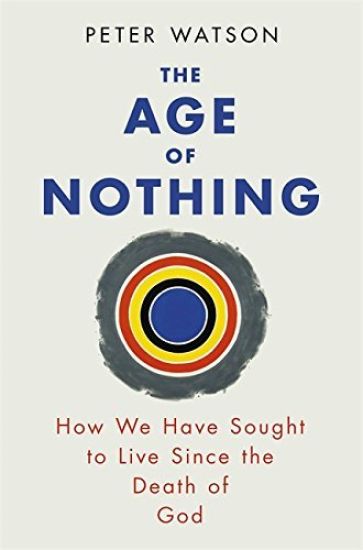
A dazzling investigation into psychology, art and religion; the demise of capitalism; and the beginning of a new era from the author of IDEAS.

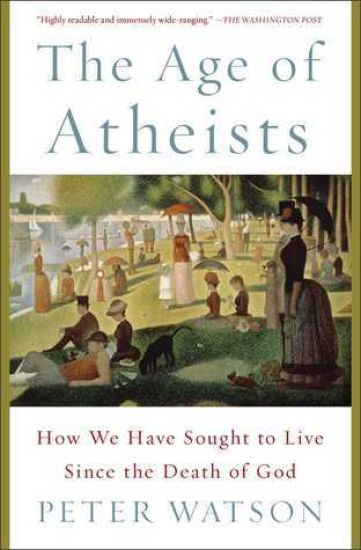
The Age of Atheists: How We Have Sought to Live Since the Death of God
Peter Watson
SIMON SCHUSTER
2014
nidottu
A Publishers Weekly Best Book of 2014 From one of England's most distinguished intellectual historians comes "an exhilarating ride...that will stand the test of time as a masterful account of" (The Boston Globe) one of the West's most important intellectual movements: Atheism. In 1882, Friedrich Nietzche declared that "God is dead" and ever since tens of thousands of brilliant, courageous, thoughtful individuals have devoted their creative energies to devising ways to live without God with self-reliance, invention, hope, wit, and enthusiasm. Now, for the first time, their story is revealed. A captivating story of contest, failure, and success, The Age of Atheists sweeps up William James and the pragmatists; Sigmund Freud and psychoanalysis; Pablo Picasso, James Joyce, and Albert Camus; the poets of World War One and the novelists of World War Two; scientists, from Albert Einstein to Stephen Hawking; and the rise of the new Atheists--Dawkins, Harris, and Hitchens. This is a story of courage, of the thousands of individuals who, sometimes at great risk, devoted tremendous creative energies to devising ways to fill a godless world with self-reliance, invention, hope, wit, and enthusiasm. Watson explains how atheism has evolved and reveals that the greatest works of art and literature, of science and philosophy of the last century can be traced to the rise of secularism. From Nietzsche to Daniel Dennett, Watson's stirring intellectual history manages to take the revolutionary ideas and big questions of these great minds and movements and explain them, making the connections and concepts simple without being simplistic. The Age of Atheists is "highly readable and immensely wide-ranging...For anybody who has wondered about the meaning of life...an enthralling and mind-expanding experience" (The Washington Post).