Kirjojen hintavertailu. Mukana 12 290 406 kirjaa ja 12 kauppaa.

Kirjailija

Peter Westoby

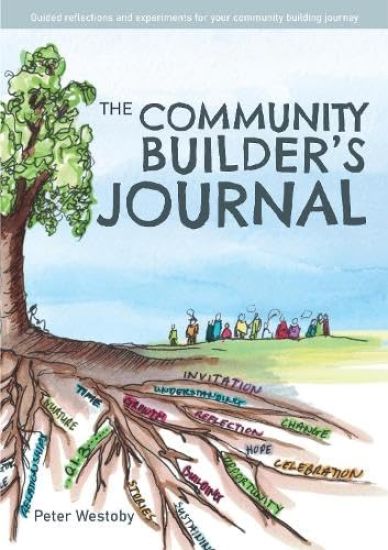
Kirjat ja teokset yhdessä paikassa: 18 kirjaa, julkaisuja vuosilta 2013-2025, suosituimpien joukossa The Community Builder's Journal. Vertaile teosten hintoja ja tarkista saatavuus suomalaisista kirjakaupoista.

18 kirjaa

Kirjojen julkaisuhaarukka 2013-2025.

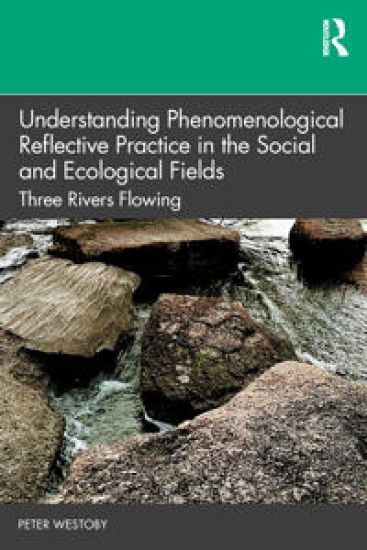
Understanding Phenomenological Reflective Practice in the Social and Ecological Fields
This book introduces social practitioners - community development workers, social workers, organisational change facilitators, social, ecological, cultural and political activists - to a phenomenological tradition of reflective practice. Critiquing reductionist, linear and ossified thinking in the social and ecological fields, the book offers an exciting new alternative that is honouring of the uncertainty of all living and therefore emergent social processes. Linking phenomenology and Goethe’s ‘delicate empiricism’, the book challenges practitioners to observe and work with living processes. As such, the book charts two stories, two inquiries. One personal and the other social. The first is the personal phenomenological inquiry into the author’s own practice, a search to make sense of the nuanced and subtle practice that he brings to the social world. The second journey is the inquiry into how this social practice, shaped as it is by a confluence of three rivers – dialogue and community, soul and depth psychology, Goethe and ‘delicate activism’, along with other thinkers on ‘observation’ and ‘aliveness’ – can be understood in the context of a wider phenomenological reflective practice. This second journey draws on years of experience and research in Brazil, South Africa, Australia, New Zealand and parts of Europe. Presenting a philosophical, personal and practical analysis, it offers a new approach to observation and action, while working with aliveness and complexity within the social and ecological fields. It will be of interest to all scholars and students of social work and community development and particularly courses on social complexity.
Understanding Phenomenological Reflective Practice in the Social and Ecological Fields
This book introduces social practitioners - community development workers, social workers, organisational change facilitators, social, ecological, cultural and political activists - to a phenomenological tradition of reflective practice. Critiquing reductionist, linear and ossified thinking in the social and ecological fields, the book offers an exciting new alternative that is honouring of the uncertainty of all living and therefore emergent social processes. Linking phenomenology and Goethe’s ‘delicate empiricism’, the book challenges practitioners to observe and work with living processes. As such, the book charts two stories, two inquiries. One personal and the other social. The first is the personal phenomenological inquiry into the author’s own practice, a search to make sense of the nuanced and subtle practice that he brings to the social world. The second journey is the inquiry into how this social practice, shaped as it is by a confluence of three rivers – dialogue and community, soul and depth psychology, Goethe and ‘delicate activism’, along with other thinkers on ‘observation’ and ‘aliveness’ – can be understood in the context of a wider phenomenological reflective practice. This second journey draws on years of experience and research in Brazil, South Africa, Australia, New Zealand and parts of Europe. Presenting a philosophical, personal and practical analysis, it offers a new approach to observation and action, while working with aliveness and complexity within the social and ecological fields. It will be of interest to all scholars and students of social work and community development and particularly courses on social complexity.
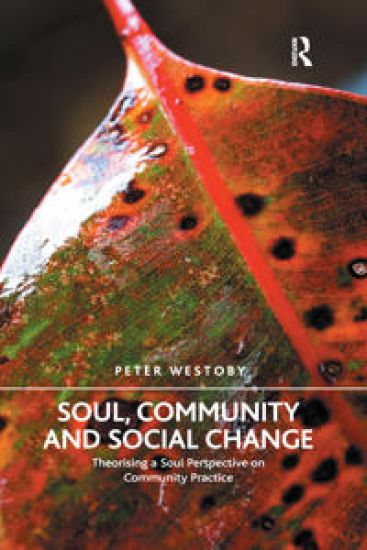
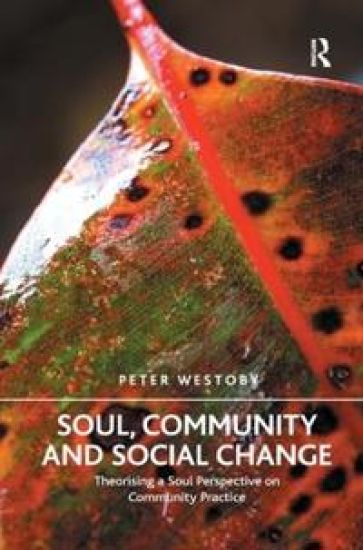
Soul, Community and Social Change

Soul, Community and Social Change

Peter Westoby

Routledge
2020
nidottu
At a time when inequalities are growing globally, when the pace of socio-economic transitions is rapid, and when traditional ties of community are under threat of dissolving, 'soul' offers a new way of thinking imaginatively about how people might respond both individually and collectively in social change work. In exploring ideas such as soul, soulful, 'soul of the world' and soul-force, Peter Westoby invites readers to disrupt their taken-for-granted assumptions about community practice and to foreground ethics, quality, being and the aesthetic. Drawing on work of people such as James Hillman, Thomas Moore and 'Bifo' Beradi, he insists on the need to bring more depth into practice, eschewing contemporary trends of soulless analysis, measuring, and technique. Written in dialogue with eight practitioner-scholars from around the world, the book suggests a fresh terrain for community work and social change theorising. Illustrated by images of Australian cartoonist-prophet Michael Leunig, the book also promises to unlock new imaginative spaces for dreaming. A soul perspective will resonate with people searching for both a robust socio-political response to the world and an imaginative, poetic and mindful centring of self, 'other' and the planet to their practice.
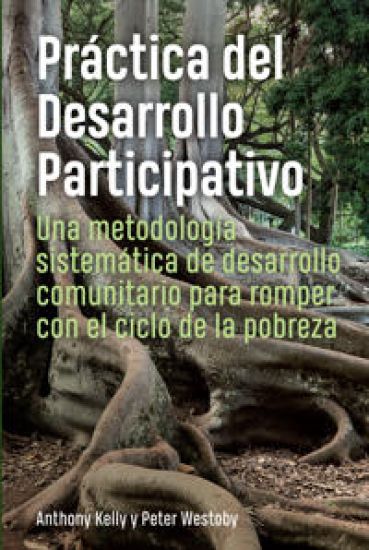
Participatory Development Practice

Participatory Development Practice

Anthony Kelly; Peter Westoby

Practical Action Publishing
2018
nidottu
From indigenous people's groups to classroom teachers, community workers and international development workers, comes the desire to build community. Participatory Development Practice provides a theoretical and applied base for rethinking development practice that is deeply influenced by a "community" development tradition, yet is broader, as it links the intra-personal dimension to the participatory, dialogical, community and international dimensions. The book is framed conceptually as implicate method (starting with self), micro (relational), mezzo (group), macro (structuring the work within people's organizations) and meta (the local-global dimension).
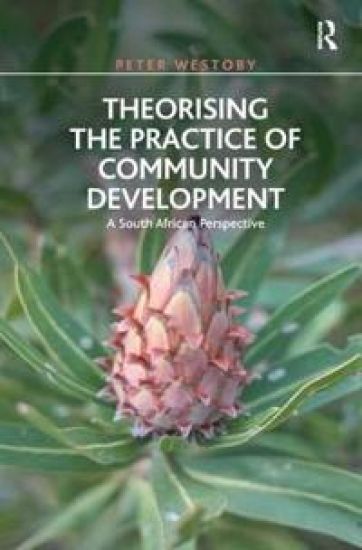
Theorising the Practice of Community Development
Based on 25 years of community development practice, six of which have been lived in South Africa, Peter Westoby’s ground-breaking monograph moves away from dominant normative accounts of community development to provide an appreciative and critical analysis of concrete examples of community development theory and practice. By examining community development stories as experienced on the ground, Westoby is able to show how the poor are organising themselves using various forms of community development as well as demonstrating how the state and non-state actors are attempting to organise, engage or accompany the poor through community development. The book also breaks new ground in theorising the practice of community development, drawing inductively from the stories analysed. The diversity of South African contexts and the proliferation of different kinds of community practice, make this a hugely difficult task. Despite this, Westoby argues it is one worth undertaking given the seriousness of the challenges facing the poor and progressive social change agents within South Africa. In this undertaking, Westoby draws upon a unique analytical framework to help illuminate current community development policy and programme challenges, along with practice dilemmas and wisdom.
Soul, Community and Social Change

Soul, Community and Social Change

Peter Westoby

Routledge
2015
sidottu
At a time when inequalities are growing globally, when the pace of socio-economic transitions is rapid, and when traditional ties of community are under threat of dissolving, 'soul' offers a new way of thinking imaginatively about how people might respond both individually and collectively in social change work. In exploring ideas such as soul, soulful, 'soul of the world' and soul-force, Peter Westoby invites readers to disrupt their taken-for-granted assumptions about community practice and to foreground ethics, quality, being and the aesthetic. Drawing on work of people such as James Hillman, Thomas Moore and 'Bifo' Beradi, he insists on the need to bring more depth into practice, eschewing contemporary trends of soulless analysis, measuring, and technique. Written in dialogue with eight practitioner-scholars from around the world, the book suggests a fresh terrain for community work and social change theorising. Illustrated by images of Australian cartoonist-prophet Michael Leunig, the book also promises to unlock new imaginative spaces for dreaming. A soul perspective will resonate with people searching for both a robust socio-political response to the world and an imaginative, poetic and mindful centring of self, 'other' and the planet to their practice.
Theory and Practice of Dialogical Community Development

Theory and Practice of Dialogical Community Development

Peter Westoby; Gerard Dowling

Routledge
2014
nidottu
This book proposes that community development has been increasingly influenced and co-opted by a modernist, soulless, rational philosophy - reducing it to a shallow technique for ‘solving community problems’. In contrast, this dialogical approach re-maps the ground of community development practice within a frame of ideas such as dialogue, hospitality and depth. For the first time community development practitioners are provided with an accessible understanding of dialogue and its relevance to their practice, exploring the contributions of internationally significant thinkers such as P. Freire, M. Buber, D. Bohm and H.G Gadamer, J. Derrida, G. Esteva and R. Sennett. What makes the book distinctive is that: first, it identifies a dialogical tradition of community development and considers how such a tradition shapes practice within contemporary contexts and concerns – economic, social, political, cultural and ecological. Second, the book contrasts such an approach with technical and instrumental approaches to development that fail to take complex systems seriously. Third, the approach links theory to practice through a combination of storytelling and theory-reflection – ensuring that readers are drawn into a practice-theory that they feel increasingly confident has been 'tried and tested' in the world over the past 25 years.
Theorising the Practice of Community Development
Based on 25 years of community development practice, six of which have been lived in South Africa, Peter Westoby’s ground-breaking monograph moves away from dominant normative accounts of community development to provide an appreciative and critical analysis of concrete examples of community development theory and practice. By examining community development stories as experienced on the ground, Westoby is able to show how the poor are organising themselves using various forms of community development as well as demonstrating how the state and non-state actors are attempting to organise, engage or accompany the poor through community development. The book also breaks new ground in theorising the practice of community development, drawing inductively from the stories analysed. The diversity of South African contexts and the proliferation of different kinds of community practice, make this a hugely difficult task. Despite this, Westoby argues it is one worth undertaking given the seriousness of the challenges facing the poor and progressive social change agents within South Africa. In this undertaking, Westoby draws upon a unique analytical framework to help illuminate current community development policy and programme challenges, along with practice dilemmas and wisdom.
Theory and Practice of Dialogical Community Development

Theory and Practice of Dialogical Community Development

Peter Westoby; Gerard Dowling

Routledge
2013
sidottu
This book proposes that community development has been increasingly influenced and co-opted by a modernist, soulless, rational philosophy - reducing it to a shallow technique for ‘solving community problems’. In contrast, this dialogical approach re-maps the ground of community development practice within a frame of ideas such as dialogue, hospitality and depth. For the first time community development practitioners are provided with an accessible understanding of dialogue and its relevance to their practice, exploring the contributions of internationally significant thinkers such as P. Freire, M. Buber, D. Bohm and H.G Gadamer, J. Derrida, G. Esteva and R. Sennett. What makes the book distinctive is that: first, it identifies a dialogical tradition of community development and considers how such a tradition shapes practice within contemporary contexts and concerns – economic, social, political, cultural and ecological. Second, the book contrasts such an approach with technical and instrumental approaches to development that fail to take complex systems seriously. Third, the approach links theory to practice through a combination of storytelling and theory-reflection – ensuring that readers are drawn into a practice-theory that they feel increasingly confident has been 'tried and tested' in the world over the past 25 years.