Kirjojen hintavertailu. Mukana 12 595 353 kirjaa ja 12 kauppaa.

Kirjailija

Peter Williams

Kirjat ja teokset yhdessä paikassa: 82 kirjaa, julkaisuja vuosilta 1989-2026, suosituimpien joukossa J. S. Bach. Vertaile teosten hintoja ja tarkista saatavuus suomalaisista kirjakaupoista.

82 kirjaa

Kirjojen julkaisuhaarukka 1989-2026.

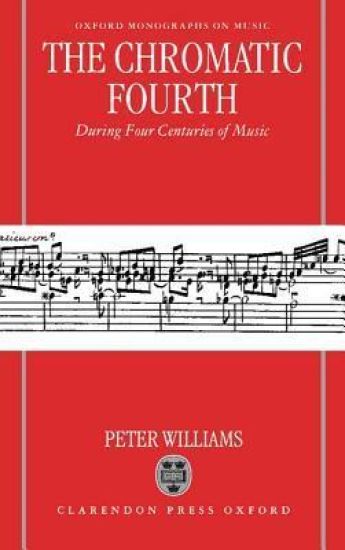
The Chromatic Fourth During Four Centuries of Music
Despite its rather forbidding name, the `Chromatic Fourth' is one of the most familiar short themes in virtually all western music over the four hundred years before the middle of our century. It is a sequence of six notes that can be heard in a huge variety of ways, most originally, effectively, and beautifully in the work of the greatest composers, from the madrigalists to Stravinsky, from Byrd to Bartók, with telling examples in the operas of Monteverdi, Mozart, and Wagner, or in the keyboard music of Bull, Bach, and Schubert. Although the existence of the chromatic fourth has long been recognized, and occasionally mentioned by music historians, this is the first thorough-going attempt to trace its likely origins and its evolution over four hundred years. With over 200 music examples, Peter Williams demonstrates the theme's wonderful variety, and shows that it was used by composers not only as a means of emotional expression, but also as a structural device.
The Organ Music of J. S. Bach: Volume 3, A Background

The Organ Music of J. S. Bach: Volume 3, A Background

Peter Williams

Cambridge University Press
1989
pokkari
This book, first published in 1984, is the third volume of Peter Williams' important reference work, The Organ Music of J. S. Bach. In this volume, Peter Williams lays before the reader the salient points that serve as an appropriate bckground to the pieces: notes on the church services of the area in question (Thuringia - Saxony), the fitful tradition of recitals, the duties of organists, the composer's indebtedness to former and contemporary styles in music, his knowledge of organs, the relevance (often over-valued today) of theorists, details of the instruments he was acquainted with and what can be assumed about the way they were registered and played. Throughout, the author has aimed to present a background to this music and its playing and has avoided stepping into areas of high conjecture, such as chronology or how specific pieces are to be played.