Kirjojen hintavertailu. Mukana 12 595 353 kirjaa ja 12 kauppaa.

Kirjailija

Peter Willis

Kirjat ja teokset yhdessä paikassa: 12 kirjaa, julkaisuja vuosilta 2005-2025, suosituimpien joukossa 6G: Evolution or Revolution?. Vertaile teosten hintoja ja tarkista saatavuus suomalaisista kirjakaupoista.

12 kirjaa

Kirjojen julkaisuhaarukka 2005-2025.

6G: Evolution or Revolution?

6G: Evolution or Revolution?

Peter Smyth; Peter Willis; David Wisely

INSTITUTION OF ENGINEERING AND TECHNOLOGY
2024
sidottu
There are numerous potential paths toward achieving the 6G network and various factors that could define it. Written by three telecom industry experts, this book explores the opportunities and challenges surrounding the next generation of wireless communication technology. Will 6G build solely on the future evolution success of the 5G network, or will the delivery of 6G facilitate a revolution in technology and infrastructure with the convergence of fixed/mobile networks and collaboration with hyperscalers to help fund it? The book presents a compelling vision of how 6G addresses the challenges that 5G faces for the broader digitalisation of society and industry. It defines new types of wireless communications and refines the smartphone and its use, revolutionising our digital landscape. While the introduction of mmWave phased arrays offers optical fibre-like bandwidths, many of the applications for this technology will not be telecoms-based. The authors also define a revolutionary 6G with new ideas for spectrum management, creating GHz of additional spectrum, convergence, privacy and core network infrastructure. They also review the evolution of 5G and Wi-Fi towards the end of the decade as a platform for 6G and the current worldwide 6G standards activities. Meanwhile, inside-out coverage could define how mobile networks are built. 6G: Evolution or Revolution? explores what the internet could be in 2030 and how it will influence 6G, particularly its intelligence layers. It covers the internet and the mobile core network and how these will change for the age of machines, with Wi-Fi and mmWave communications, AI, and the new uses of the smartphone. This book provides an informative and thought-provoking perspective for researchers, strategists, regulators, scientists, engineers, technology professionals, and academia interested in the future of communications technology.
Climate

Climate

Darcy Pattison; Peter Willis

Mims House
2025
sidottu
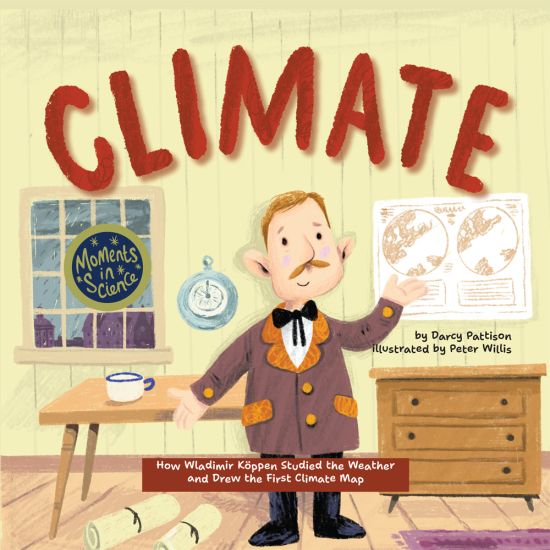
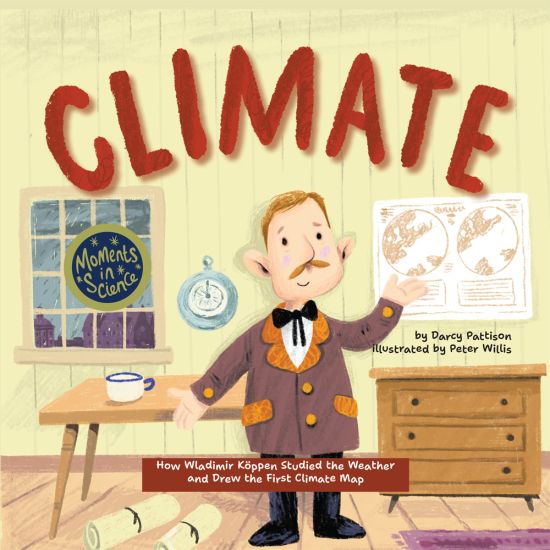
Elementary Science - Weather and ClimateAs a teenager, Wladimir K ppen became interested how the landscape changed as he traveled south from St. Petersburg on the Baltic Sea in northern Russia to Crimea on the Black Sea. Explaining that changing landscape became his life's work.In late 1800s, weather and climates were poorly understood. They needed someone to study it carefully over a long period of time. K ppen moved to Hamburg, Germany as head weatherman at the Deutsche Seewarte, the German Marine Observatory on the Baltic Sea. His job was to start one of the world's first daily weather reports. He helped set up weather stations on the North Sea and train its staff. From around the world, he gathered other weather data.The World's First Climate MapSlowly, that childhood problem of changing landscapes came into focus as he developed the world's first climate map. Still today, we use K ppen's maps, with some slight modifications. K ppen's maps still help us understand the world's ecosystems and plan for the future.
Climate

Climate

Darcy Pattison; Peter Willis

Mims House
2025
pokkari
Elementary Science - Weather and ClimateAs a teenager, Wladimir K ppen became interested how the landscape changed as he traveled south from St. Petersburg on the Baltic Sea in northern Russia to Crimea on the Black Sea. Explaining that changing landscape became his life's work.In late 1800s, weather and climates were poorly understood. They needed someone to study it carefully over a long period of time. K ppen moved to Hamburg, Germany as head weatherman at the Deutsche Seewarte, the German Marine Observatory on the Baltic Sea. His job was to start one of the world's first daily weather reports. He helped set up weather stations on the North Sea and train its staff. From around the world, he gathered other weather data.The World's First Climate MapSlowly, that childhood problem of changing landscapes came into focus as he developed the world's first climate map. Still today, we use K ppen's maps, with some slight modifications. K ppen's maps still help us understand the world's ecosystems and plan for the future.MOMENTS IN SCIENCE SERIESBURN: Michael Faraday's CandleCLANG Ernst Chladni's Sound Experiments 2019 NSTA Outstanding Science Trade BookPOLLEN: Darwin's 130 Year Prediction2019 Junior Library Guild selection, starred Kirkus review, Eureka Nonfiction Honor (California Reading Association), NSTA Outstanding Science Trade BookECLIPSE: How the 1919 Eclipse Proved Einstein's Theory of General RelativityEROSION: How Hugh Bennett Saved America's Soil and Stopped the Dust Bowl2021 Notable Social Studies BookA.I. How Patterns Helped Artificial Intelligence Defeat World Champion Lee SedolFEVER: How Tu Youyou Used Traditional Chinese Medicine to Find a Cure for Malaria (2022)AQUARIUM: How Jeannette Power Invented Aquariums to Study Marine Life (2023)MAGNET: How William Gilbert Discovered That Earth Is a Great MagnetCLIMATE: How Wladimir K ppen Studied Weather and Drew the First Climate Map
Chopin in Britain

Chopin in Britain

Peter Willis

Routledge
2020
nidottu
In 1848, the penultimate year of his life, Chopin visited England and Scotland at the instigation of his aristocratic Scots pupil, Jane Stirling. In the autumn of that year, he returned to Paris. The following autumn he was dead. Despite the fascination the composer continues to hold for scholars, this brief but important period, and his previous visit to London in 1837, remain little known. In this richly illustrated study, Peter Willis draws on extensive original documentary evidence, as well as cultural artefacts, to tell the story of these two visits and to place them into aristocratic and artistic life in mid-nineteenth-century England and Scotland. In addition to filling a significant hole in our knowledge of the composer’s life, the book adds to our understanding of a number of important figures, including Jane Stirling and the painter Ary Scheffer. The social and artistic milieux of London, Manchester, Glasgow and Edinburgh are brought to vivid life.
Eclipse

Eclipse

Darcy Pattison; Peter Willis

Mims House
2019
sidottu
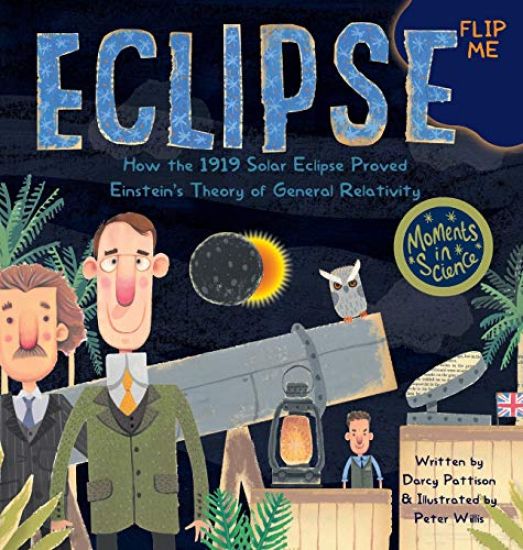
In 1915, British astronomer Arthur Stanley Eddington was fascinated with Einstein's new theory of general relativity. The theory talks about how forces push and pull objects in space. Einstein said that the sun's gravity could pull and bend light.To test this, astronomers decided to photograph a solar eclipse. The eclipse would allow them to photograph the stars before and during the solar eclipse. If the star's position moved, then it was evidence that that light had bent. Eddington and his team traveled from England to the island of Principe, just off the African coast, to photograph the eclipse. In simple language, this nonfiction illustrated picture book explains how the push (acceleration) and pull (gravity) of space affects light.Back matter includes information on Einstein, Eddington, and the original photograph of the 1919 solar eclipse.MOMENTS IN SCIENCE COLLECTIONThis exciting series focuses on small moments in science that made a difference. BURN: Michael Faraday's Candle CLANG Ernst Chladni's Sound Experiments (2019 NSTA Outstanding Science Trade Book) POLLEN: Darwin's 130 Year Prediction (Junior Library Guild selection, starred Kirkus review) ECLIPSE: How the 1919 Eclipse Proved Einstein's Theory of General Relativity
Pollen

Pollen

Darcy Pattison; Peter Willis

Mims House
2019
sidottu
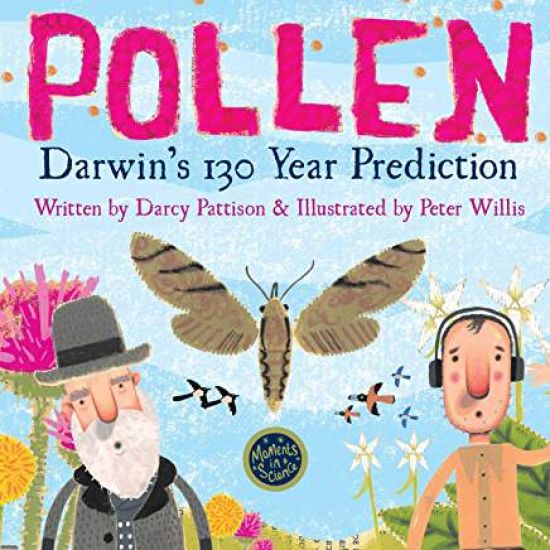
POLLEN: DARWIN'S 130 YEAR PREDICTION Elementary Science - POLLENHow long does it take for science to find an answer to a problem?On January 25, 1862, naturalist Charles Darwin received a box of orchids. One flower, the Madagascar star orchid, fascinated him. It had an 11.5" nectary, the place where flowers make nectar, the sweet liquid that insects and birds eat. How, he wondered, did insects pollinate the orchid? It took 130 years to find the answer.After experiments, he made a prediction. There must be a giant moth with a 11.5" proboscis, a straw-like tongue. Darwin died without ever seeing the moth, which was catalogued by entomologists in in 1903. But still no one had actually observed the moth pollinating the orchid.In 1992, German entomologist, Lutz Thilo Wasserthal, Ph.D. traveled to Madagascar. By then, the moths were rare. He managed to capture two moths and released them in a cage with the orchid. He captured the first photo of the moth pollinating the flower, as Darwin had predicted 130 years before.Backmatter includes information on the moth, the orchid, Charles Darwin, Lutz Wasserthal. Also included is Wasserthal's original photo taken in 1992.MOMENTS IN SCIENCE COLLECTIONThis exciting series focuses on small moments in science that made a difference. BURN: Michael Faraday's Candle CLANG Ernst Chladni's Sound Experiments (2019 NSTA Outstanding Science Trade Book) ECLIPSE: How the 1919 Eclipse Proved Einstein's Theory of General Relativity (Fall, 2019)
Chopin in Britain

Chopin in Britain

Peter Willis

Routledge
2017
sidottu
In 1848, the penultimate year of his life, Chopin visited England and Scotland at the instigation of his aristocratic Scots pupil, Jane Stirling. In the autumn of that year, he returned to Paris. The following autumn he was dead. Despite the fascination the composer continues to hold for scholars, this brief but important period, and his previous visit to London in 1837, remain little known. In this richly illustrated study, Peter Willis draws on extensive original documentary evidence, as well as cultural artefacts, to tell the story of these two visits and to place them into aristocratic and artistic life in mid-nineteenth-century England and Scotland. In addition to filling a significant hole in our knowledge of the composer’s life, the book adds to our understanding of a number of important figures, including Jane Stirling and the painter Ary Scheffer. The social and artistic milieux of London, Manchester, Glasgow and Edinburgh are brought to vivid life.
Good Little Ship

Good Little Ship

Peter Willis

Lodestar Books
2017
pokkari
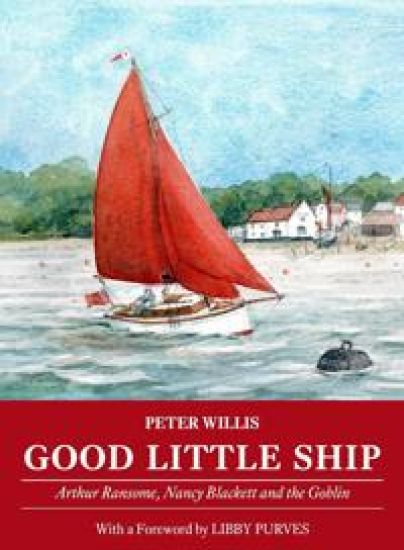
In "Good Little Ship" Peter Willis analyses a classic of maritime literature - Arthur Ransome's "We Didn't Mean to Go to Sea" - and tells the story of the "Nancy Blackett", Ransome's own boat which appears as the "Goblin" in his story, and survives today as an ambassador for Ransome and his tales.
Introduction to EU Competition Law

Introduction to EU Competition Law

Peter Willis

Informa Law
2005
sidottu
This book provides an introductory but thorough guide to EU competition law, covering the underlying economics, and the key substantive areas of anticompetitive agreements (Article 81), abuses of dominance (Article 82), the application to the most common types of commercial agreement, state aids, state measures limiting competition and mergers. It also examines the procedures under which the relevant competition authorities apply the rules, private enforcement of the rules before the courts, and minimising risk by implementing a compliance programme.The emphasis is practical rather than theoretical: the authors are practitioners in the field of competition law and economics, with many years’ individual and collective experience in the area.This will be an essential reference tool for practitioners, academics and students of EU Competition Law.