Kirjojen hintavertailu. Mukana 12 657 676 kirjaa ja 12 kauppaa.

Kirjailija

Peter Woods

Kirjat ja teokset yhdessä paikassa: 35 kirjaa, julkaisuja vuosilta 1986-2024, suosituimpien joukossa Creative Learning in the Primary School. Vertaile teosten hintoja ja tarkista saatavuus suomalaisista kirjakaupoista.

35 kirjaa

Kirjojen julkaisuhaarukka 1986-2024.

Critical Events in Teaching & Learning
This volume describes and analyses exceptional educational events – periods of particularly effective teaching representing ultimates in teacher and pupil educational experience. The events themselves are reconstructed in the book through teacher and pupil voices and through documentation. A model of ‘critical event’ is derived from the study, which might serve as a possible framework for understanding other such occurrences in schools.
Sociology and the School (RLE Edu L)
This is an introduction to interactionist work in education during the 1970s and 80s. The interactionist viewpoint concentrates on how people construct meanings in the ebb and flow of everyday life – what they think and do, how they react to one another – and has in recent years established itself as one of the leading approaches in education. It has generated illuminating research studies which, by being firmly based in the real world of teaching and dealing with the fine-grained details of school life, have helped to break down the barriers between teacher and researcher. This volume presents the results of this valuable work, within a coherent theoretical framework, by focusing on the major interactionist concepts of situation, perspectives, cultures, strategies, negotiation and careers. By bringing them together in this way, the author demonstrates their collective potential for the deeper understanding of school life and the possibilities for sociological theory. His book therefore offers both a summary of and a reflection on achievement in the area of interactionism as it relates to schools.
Divided School

Divided School

Peter Woods

Routledge
2011
sidottu
In this ethnographic study of a secondary school in the UK, the author presents an incisive account of school life from the various points of view of the pupils, teachers and parents. He describes and analyses major areas of experience and methods of adapting to school for both the children and their teachers; school experience is shown to be widely varying from boredom, despair and humiliation, to gaiety, exultation and comradeship some of it officially and some of it unofficially sponsored. The description reveals a number of marked and interpenetrating divisions within schools: between teachers and pupils, parents and teachers, parents and children and between pupils themselves. These divisions are explored, analysed and related both to institutional factors and to factors outside the school. The study suggests how these factors influence pupil and teacher strategies, and hence how the details of school life relates to wider society.
Creative Learning in the Primary School

Creative Learning in the Primary School

Bob Jeffrey; Peter Woods

Routledge
2008
nidottu
Creative Learning in the Primary School uses ethnographic research to consider the main features of creative teaching and learning within the context of contemporary policy reforms. In particular, the authors are interested in the clash between two oppositional discourses - creativity and performativity - and how they are resolved in creative teacher practice. The book complements previous work by these authors on creative teaching by giving more consideration to creative learning.The first section of the book explores the nature of creative teaching and learning by examining four key features: relevance, control, ownership and innovation. The authors devote a chapter to each of these aspects, outlining their properties and illustrating them with a wide range of examples, mainly from recent practice in primary schools. The second section presents some instructive examples of schools promoting creative learning, and how creative primary schools have responded to the policy reforms of recent years. The chapters focus specifically on:how pupils act as a powerful resource for creative learning for each other and for their teachers; how teachers have appropriated the reforms to enhance their creativity;and how one school has moved over a period of ten years from heavy constraint to high creativity.The blend of analysis, case-study material and implications for practice will make this book attractive to primary teachers, school managers, policy makers, teacher educators and researchers.
Creative Learning in the Primary School

Creative Learning in the Primary School

Bob Jeffrey; Peter Woods

Routledge
2008
sidottu
Creative Learning in the Primary School uses ethnographic research to consider the main features of creative teaching and learning within the context of contemporary policy reforms. In particular, the authors are interested in the clash between two oppositional discourses - creativity and performativity - and how they are resolved in creative teacher practice. The book complements previous work by these authors on creative teaching by giving more consideration to creative learning.The first section of the book explores the nature of creative teaching and learning by examining four key features: relevance, control, ownership and innovation. The authors devote a chapter to each of these aspects, outlining their properties and illustrating them with a wide range of examples, mainly from recent practice in primary schools. The second section presents some instructive examples of schools promoting creative learning, and how creative primary schools have responded to the policy reforms of recent years. The chapters focus specifically on:how pupils act as a powerful resource for creative learning for each other and for their teachers; how teachers have appropriated the reforms to enhance their creativity;and how one school has moved over a period of ten years from heavy constraint to high creativity.The blend of analysis, case-study material and implications for practice will make this book attractive to primary teachers, school managers, policy makers, teacher educators and researchers.
The Creative School

The Creative School

Bob Jeffrey; Peter Woods

Routledge
2003
sidottu
This book is about a unique school. It is a school that, despite the increasing pressure put upon it by changes in the curriculum and the organisation of education, has managed to successfully maintain the creative values that have won it international and governmental recognition.Written for teachers and headteachers who want to encourage creativity in their schools and classrooms, the book describes:the school's culture of holismits use and appreciation of its grounds and environment for learningits innovative approaches to curriculum organisationits appropriation of national initiatives such as the literacy and numeracy hoursits creative teaching and learning through the eyes of observers, teachers, children and parents.The success of Coombes School shows that it is possible to combine externally imposed prescription with a set of personal beliefs and values - making a real difference to the quality of teaching and learning. This is a truly inspirational read.
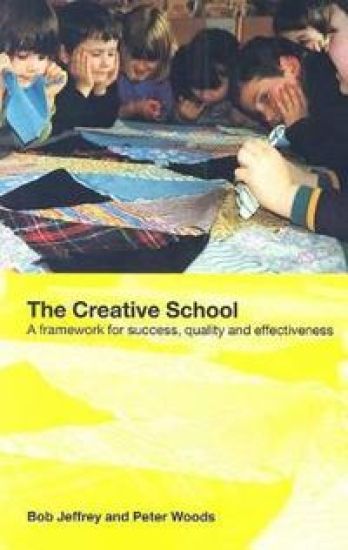
The Creative School

The Creative School

Bob Jeffrey; Peter Woods

Routledge
2003
nidottu
This book is about a unique school. It is a school that, despite the increasing pressure put upon it by changes in the curriculum and the organisation of education, has managed to successfully maintain the creative values that have won it international and governmental recognition.Written for teachers and headteachers who want to encourage creativity in their schools and classrooms, the book describes:the school's culture of holismits use and appreciation of its grounds and environment for learningits innovative approaches to curriculum organisationits appropriation of national initiatives such as the literacy and numeracy hoursits creative teaching and learning through the eyes of observers, teachers, children and parents.The success of Coombes School shows that it is possible to combine externally imposed prescription with a set of personal beliefs and values - making a real difference to the quality of teaching and learning. This is a truly inspirational read.
Testing Teachers

Testing Teachers

Bob Jeffrey; Peter Woods

Routledge Falmer
1998
sidottu
Since the 1992 Education Act inaugurated national arrangements for inspection, schools have operated within an 'inspection climate' which pervades every aspect of school life on a continual basis. The significance of OFSTED inspections cannot be overestimated. They are often the most challenging, searching, uncompromising and stressful events teacher have ever experienced. What effects do they have on teachers and their work, on their self and role, and on school policy and ethos? Drawing on case studies from contrasting primary schools over a three- year period, this book reveals how OFSTED inspections were received within primary schools. It meets the need for detailed, rigorous research into inspections and their effects on teachers.
Testing Teachers

Testing Teachers

Bob Jeffrey; Peter Woods

Routledge Falmer
1998
nidottu
Since the 1992 Education Act inaugurated national arrangements for inspection, schools have operated within an 'inspection climate' which pervades every aspect of school life on a continual basis. The significance of OFSTED inspections cannot be overestimated. They are often the most challenging, searching, uncompromising and stressful events teacher have ever experienced. What effects do they have on teachers and their work, on their self and role, and on school policy and ethos? Drawing on case studies from contrasting primary schools over a three- year period, this book reveals how OFSTED inspections were received within primary schools. It meets the need for detailed, rigorous research into inspections and their effects on teachers.
Researching the Art of Teaching

Researching the Art of Teaching

Peter Woods

Routledge
1996
nidottu
This book is a follow-up to Inside Schools. It reviews the position of ethnography in educational research in the light of current issues and of the author's own research over the past ten years. Starting from an analysis of teaching as science and as art, Peter Woods goes on to review the general interactionist framework in which his own work is situated, and how this relates to postmodernist trends in qualitative research. The approach is illustrated through reference to the author's own personal history and research career, and his recent research on creative teaching, critical events, and his teachers reactions to school inspections. How to represent such research is a central feature, and includes a consideration of the tools used in that task and how they relate to the ethnographer's self, whatever forms of representation are selected, however, the audiences' own concerns will guide them in their interpretation of the work.Prominent themes include:* the person of the ethnographer in research* the art of teaching and new ways of representing it, while not forgetting the science of teaching and of research* research for educational use, and the uses of educational research* collaborative work between researchers and teachersThe issues covered include such matters as research purposes, research design, research careers, access, data collection, data analysis, truth criteria, the relationship between theory and research methods, writing-up, and dissemination.
Researching the Art of Teaching

Researching the Art of Teaching

Peter Woods

TAYLOR FRANCIS LTD
1996
sidottu
This book is a follow-up to Inside Schools. It reviews the position of ethnography in educational research in the light of current issues and of the author's own research over the past ten years. Starting from an analysis of teaching as science and as art, Peter Woods goes on to review the general interactionist framework in which his own work is situated, and how this relates to postmodernist trends in qualitative research. The approach is illustrated through reference to the author's own personal history and research career, and his recent research on creative teaching, critical events, and his teachers reactions to school inspections. How to represent such research is a central feature, and includes a consideration of the tools used in that task and how they relate to the ethnographer's self, whatever forms of representation are selected, however, the audiences' own concerns will guide them in their interpretation of the work.Prominent themes include:* the person of the ethnographer in research* the art of teaching and new ways of representing it, while not forgetting the science of teaching and of research* research for educational use, and the uses of educational research* collaborative work between researchers and teachersThe issues covered include such matters as research purposes, research design, research careers, access, data collection, data analysis, truth criteria, the relationship between theory and research methods, writing-up, and dissemination.
The Happiest Days?

The Happiest Days?

Peter Woods

Routledge Falmer
1990
nidottu
This book examines pupils' experience of school from their own perspectives, showing a range of responses involving both pain and pleasure. It brings together a wide range of material to evoke pupil realities, to describe pupil cultures, and to consider the meanings of activities.
The Happiest Days?

The Happiest Days?

Peter Woods

Routledge Falmer
1990
sidottu
This book examines pupils' experience of school from their own perspectives, showing a range of responses involving both pain and pleasure. It brings together a wide range of material to evoke pupil realities, to describe pupil cultures, and to consider the meanings of activities.